Virtual Executive Assistant: What the Role Involves and How to Hire (or Become) One

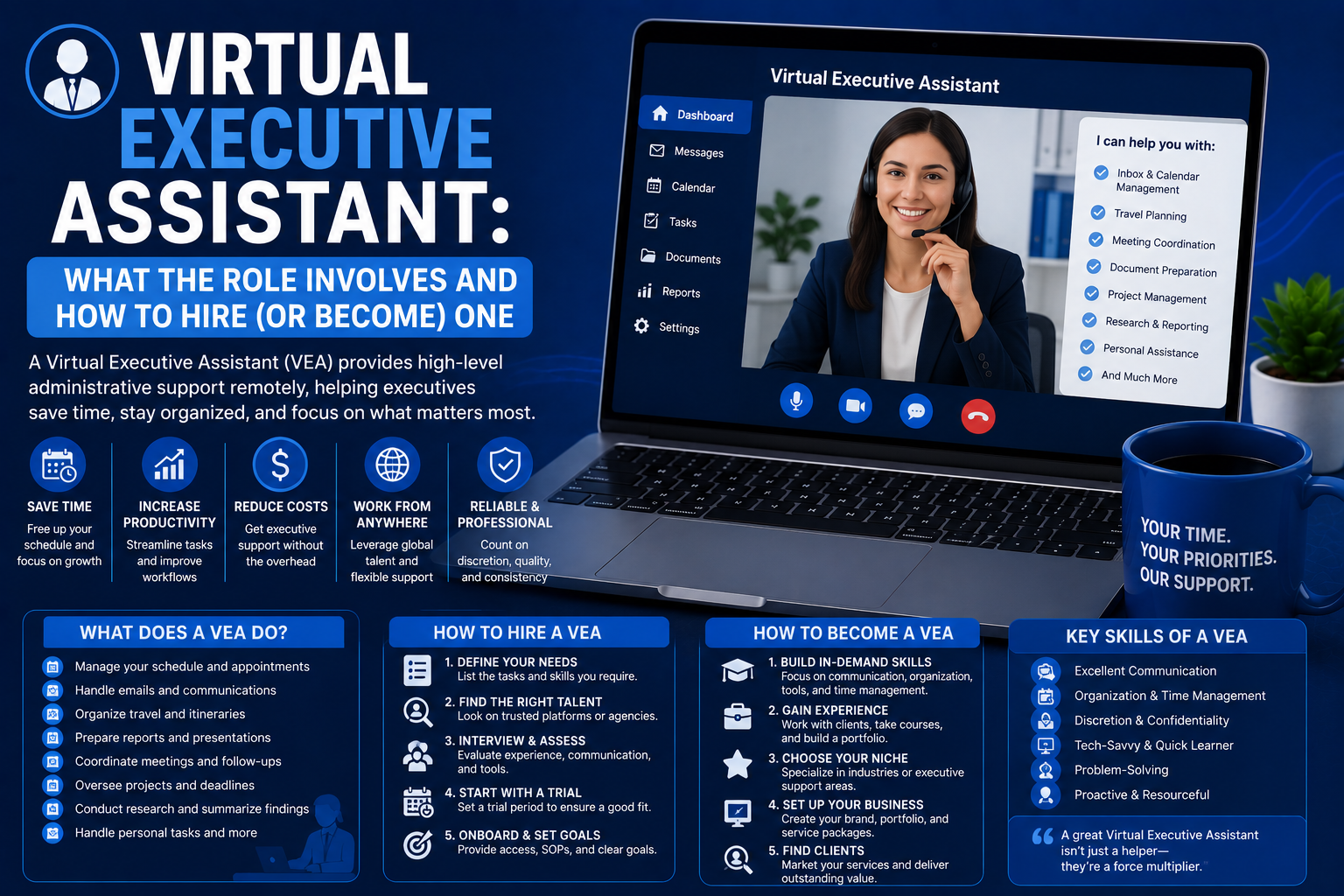
A Virtual Executive Assistant (EVA) is an upgrade from the common VA, in that whereas the latter takes care of general administrative duties, the former works closely with one executive and handles their time management, communication, and priorities in a more intimate manner similar to a regular executive assistant. Here are the details of the position from both perspectives.
What Makes “Executive” Different From a Regular VA
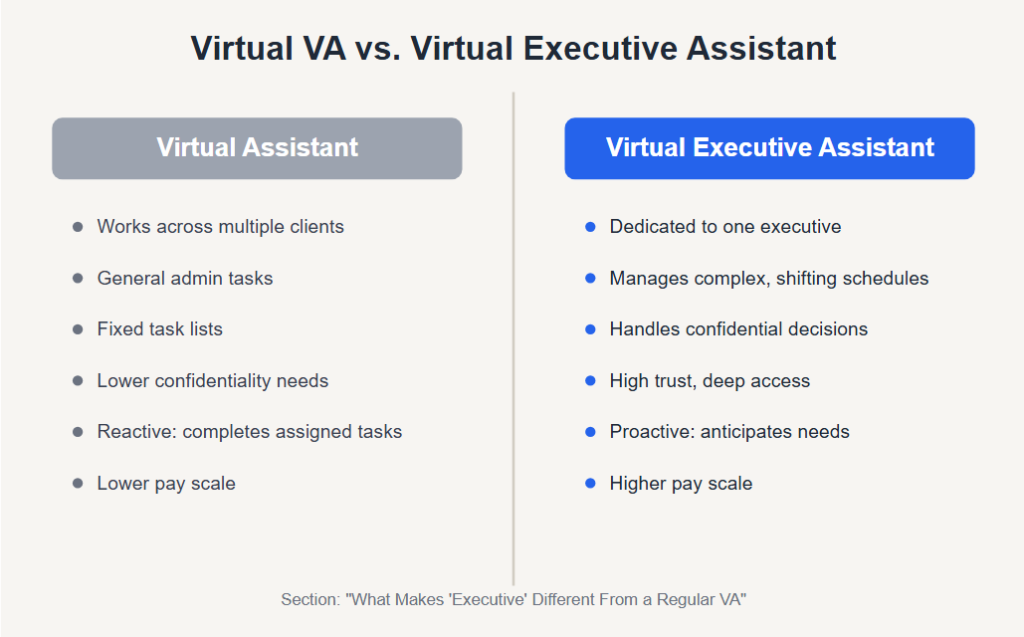
In contrast, a virtual assistant may work for more than one client to complete tasks. In most cases, a virtual executive assistant usually:
- Has specific working hours devoted to one executive or founder
- Is responsible for handling an intricate schedule with frequent changes
- Has to manage highly confidential information and provide decision-making assistance
- Anticipates needs, not necessarily complete tasks from a list
For all this, a virtual executive assistant is paid much higher than a regular virtual assistant.
Core Responsibilities
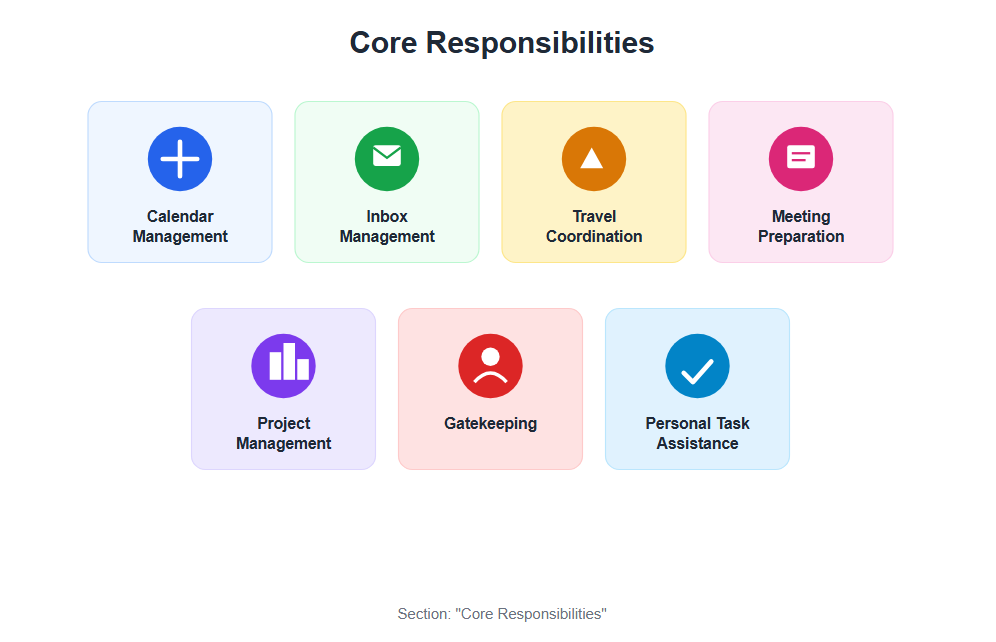
- Calendar management
- Inbox management (prioritizing emails that need action by the executive)
- Travel coordination (often complicated international travel)
- Meeting preparation (agendas, briefings, summaries)
- Small-scale project management (related to the executive’s various projects)
- Gatekeeping (screening communications directed at the executive)
- Personal task assistance (this role overlaps with personal assistant)
What to Look for When Hiring One
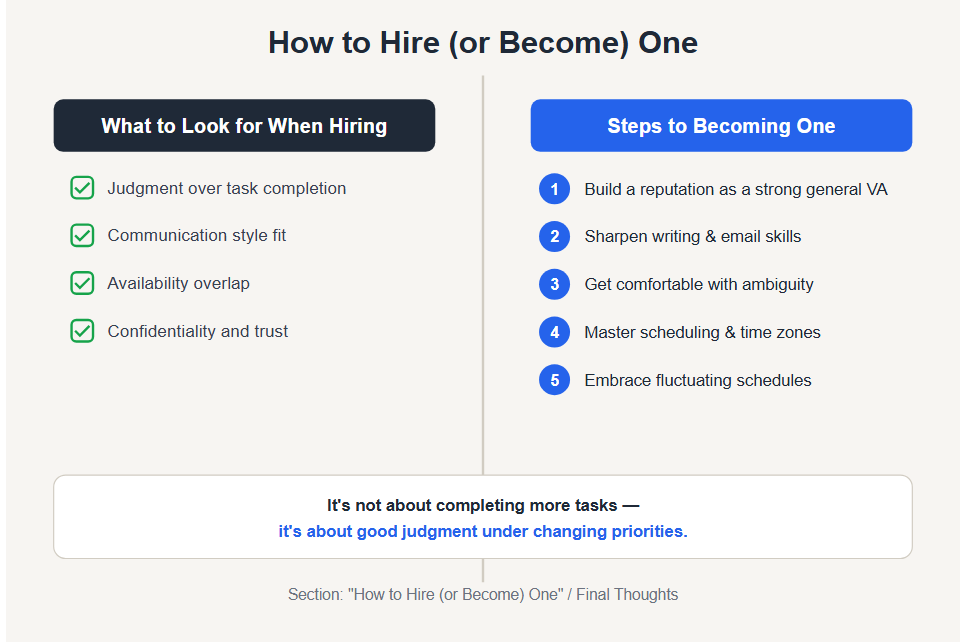
Judgment Over Task Completion
The good virtual EA not only gets things done; they know when something needs attention right now, when something needs attention later, and when something isn’t worth bringing to your desk at all. That’s the toughest one to screen for, but it’s also the most valuable one.
Communication Style Fit
Since this position entails representing you in the communication, they should sound like they represent you well. See examples of writing or have them write a sample email in the interview process.
Availability Overlap
Working even remotely, one requires overlapping working schedules in order to coordinate on a real-time basis, particularly during important weeks like launches, travel weeks, and board meetings.
Confidentiality and Trust
The responsibilities attached to this position include exposure to sensitive data including financials, communication details, and other business-related information. While an NDA is a must, there is still trust that needs to be built during a trial period.
How to Become a Virtual Executive Assistant
If you are taking this up as a career path:
- Establish a good reputation as a general VA, ideally with increasingly responsible roles
- Establish excellent writing skills, as most of your performance will be evaluated based on how well you write emails and documents
- Get used to working with ambiguous situations, because executives delegate problems, not specific instructions
- Get extremely familiar with scheduling and travel software (working with time zones often becomes a stumbling block for new EAs)
- Expect to have fluctuating schedules, because executives’ schedules tend to change constantly
Final Thoughts
Being an executive VA is not about completing many tasks; it’s about making good decisions and being able to adapt under changing priorities. To companies, it is better to pay more to a person who is able to anticipate rather than complete a checklist. For VAs, transitioning from one level to another requires not so much learning new software as earning the trust to make decisions.