Virtual Assistant Cover Letter: How to Write One That Actually Gets Read

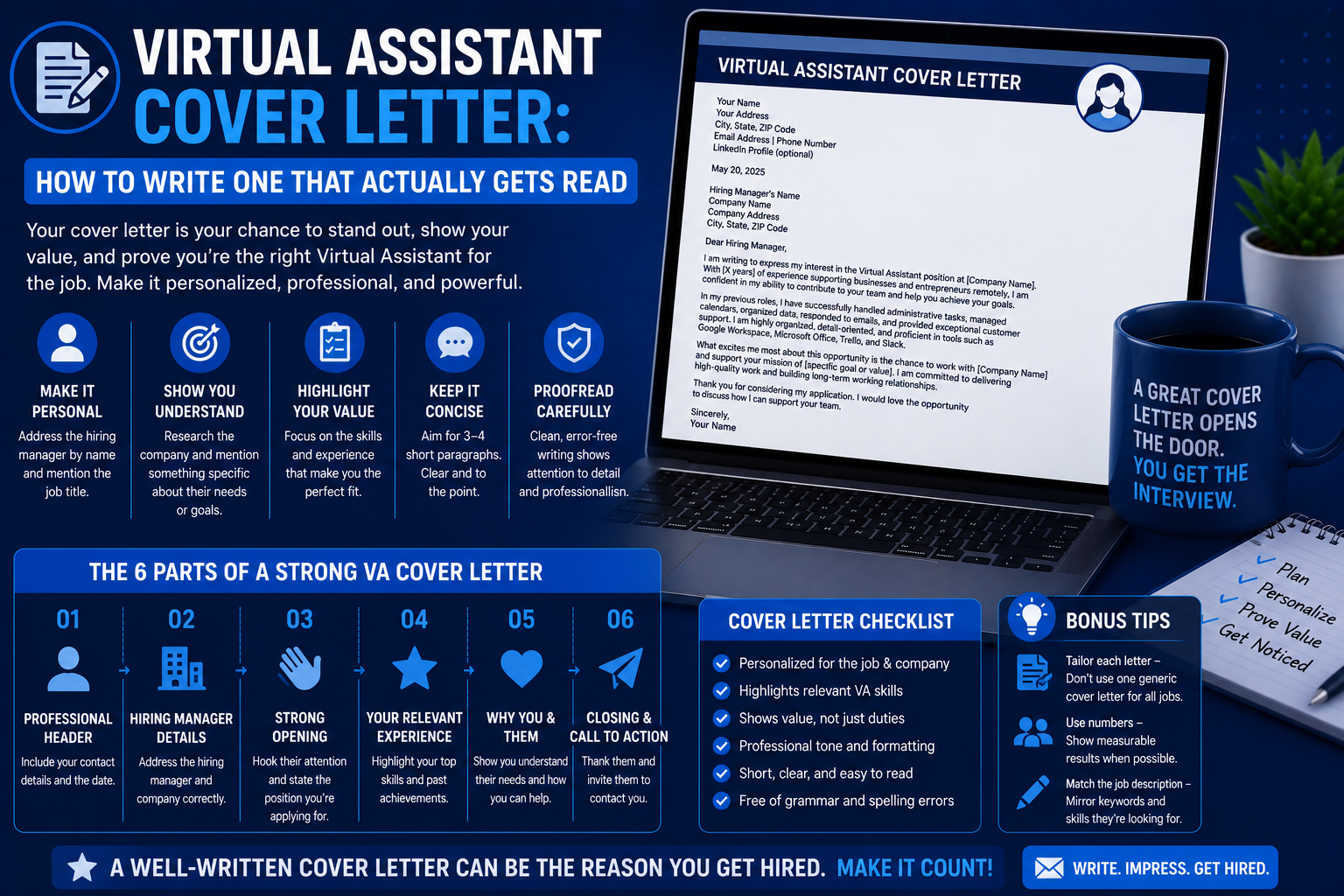
Virtual assistant cover letters are typically not looked at for more than 15 seconds as the client is probably looking through 10 to 12 cover letters which are almost identical to each other. The cover letters which will actually be considered by the employer would be those that are concise, relevant and prove their competencies rather than stating them.
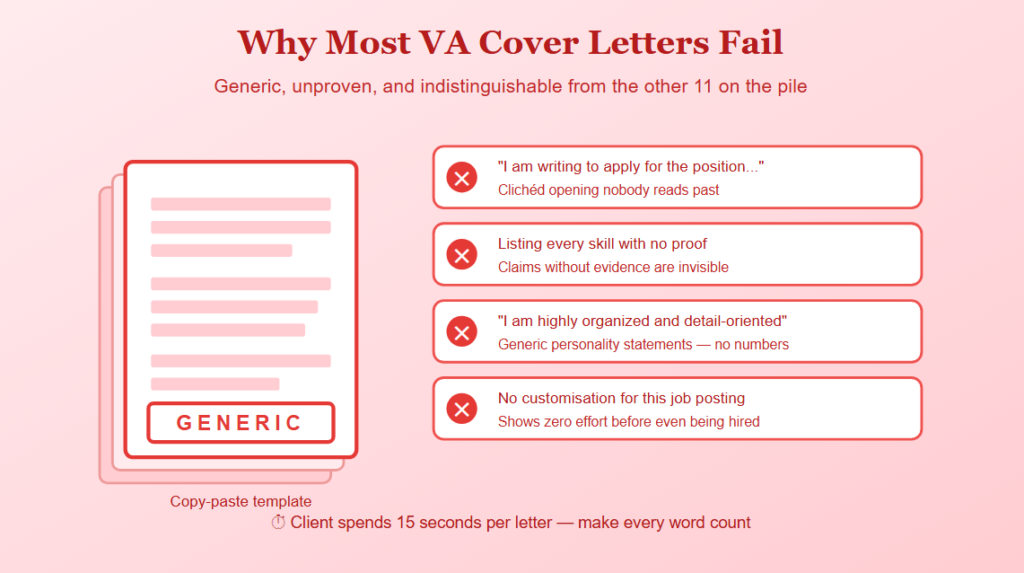
Why Most VA Cover Letters Fail
The common errors:
- Use of clichéd opening statements (“I am writing this cover letter in regard to the application for the virtual assistant position…”)
- Stating all your skills rather than 2 to 3 which are important for that particular client.
- No proof only claims (“I am highly organized and detail-oriented person”)
- Pre-written templates which were not written keeping in view the particular job posting
Clients hire VAs with a lot of trust as they give access to their inbox, calendar etc. A generic cover letter shows lack of effort in the area which really matters.
The Structure That Works
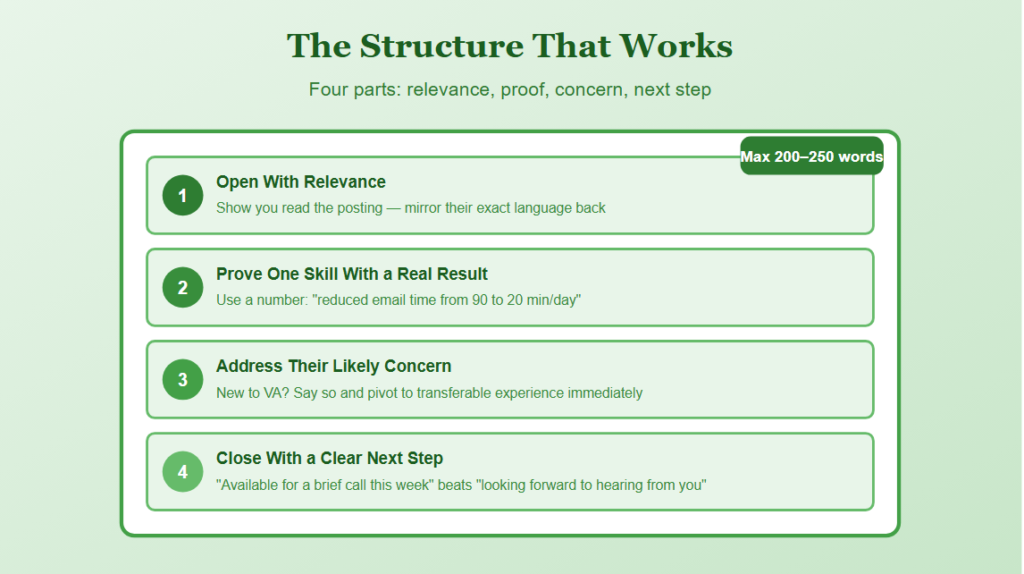
1. Open With Relevance, Not Introduction
Don’t bother with “I’m writing to apply for…” It can be something that demonstrates that you actually read the position listing:
“You asked for someone who could assist with handling a high volume inbox and scheduling podcast guests, that’s what I’ve been doing with my past two clients.”
2. Prove One Specific Skill With a Real Example
Choose one of the skills from the job description and write an actual outcome for it:
“I have managed to decrease the time which my last client spends sorting out his e-mails through reducing the time spent on reading his e-mails per day from 90 minutes to 20 minutes.”
The use of statistics will make your claims about efficiency and organization more reliable.
3. Address Their Likely Concern Directly
Even if you are not familiar with this, try it out instead of waiting for them to notice:
“I don’t know about VA work officially but I did have two years of experience in [context] managing scheduling and communications.”
4. Close With a Clear, Low-Friction Next Step
Finish with an actionable point:
“I’m available for a brief call this week if that’s useful, more than happy to discuss my strategy for handling your inbox during weeks one and two.”
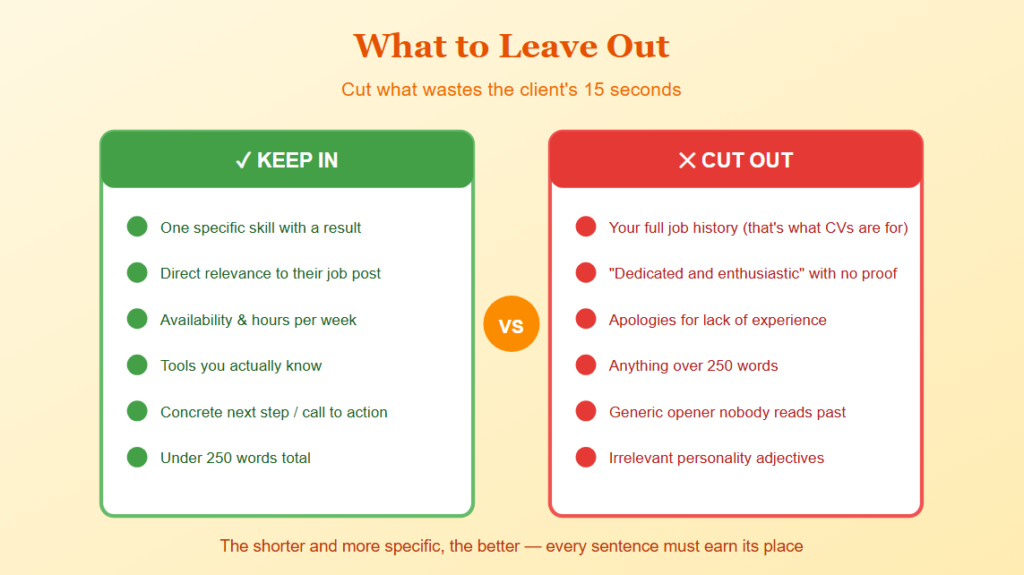
What to Leave Out
- Complete job history (resume is supposed to be used for this purpose)
- Generic personality statements without any proof (“dedicated,” “enthusiastic”)
- Sorry for having no experience but without mentioning transferable skills
- Anything more than 200-250 words in length means you did not edit your resume
A Short Example
“Hello [Name],
As you indicated the need for assistance in scheduling for clients and invoicing, this is quite similar to my experience over the last year with two clients who were small businesses. In my capacity in the role, I reduced the average invoice turnaround time from 12 days to 4.
I am conversant with Google Workspace, Calendly, and QuickBooks, and I am free for 15-20 hours per week.
Looking forward to connecting with you soon.
[Your Name]”
Final Thoughts
Your VA cover letter should not be full of impressives. It is meant to demonstrate to this potential client that you are familiar with their problem and have successfully dealt with a situation like this one before. Eliminate generalities and make your next steps specific and concrete.