UK Data Protection News: What It Actually Covers and Why It’s Easy to Get Wrong

Introduction
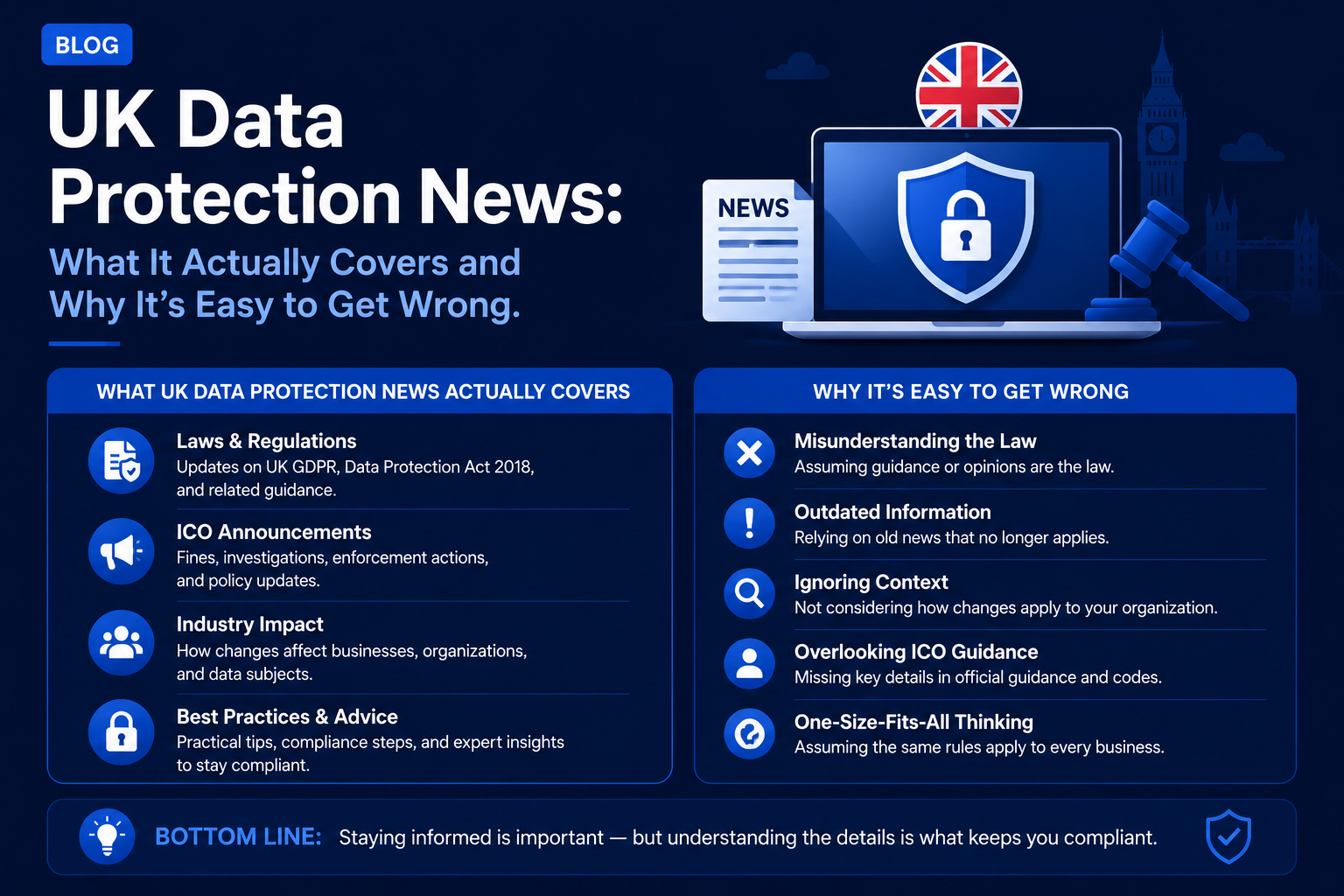
Data protection news for the UK concerns the ongoing process of enforcing, interpreting, and amending the data protection regime of the UK, especially the UK GDPR and Data Protection Act, and not an unchanging set of rules that do not get amended post-Brexit.
On the face of it, this may seem quite straightforward; but because of the ever-evolving sources of information related to UK data protection developments, it is an area that businesses have trouble keeping up with.
Why UK Data Protection News Is More Complex Than It Appears
The development of data protection in the UK is not one unified stream but is composed of the following:
- Regulatory guidance from the Information Commissioner’s Office
- Legislative developments in the UK after Brexit
- Enforcement against particular companies
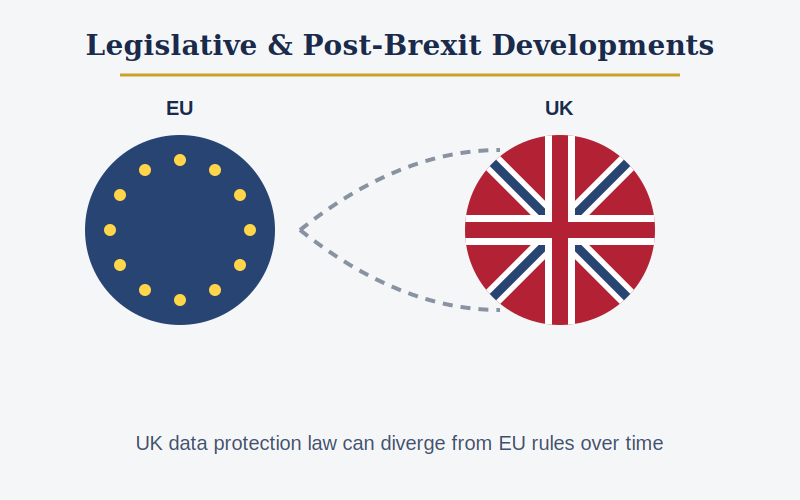
Several companies believe that the UK data protection laws will continue to be the same as those in the EU forever. However, this idea ignores the fact that the UK has the right to deviate from EU legislation at any time.
If a company follows the trends in its compliance obligations, then separate tracking must be performed for each one of them.
Major Areas Covered in UK Data Protection News
Information Commissioner’s Office Guidance
Rules Governing
- Guidance regarding specific processing activities
- Sector-specific or technology-specific codes of practice
- Consultations relating to changes to regulations
Failure to keep up-to-date with ICO guidance is perhaps one of the most common and expensive omissions as it could lead to:
- A failure to remain compliant with the current regulations
- An omission to take part in consultations that affect an organization’s industry
- Unexpected issues with previously acceptable practices being scrutinized
Legislative and Post-Brexit Developments
The news regarding data protection in the UK usually involves legislation, where companies must comply with the framework in place in the UK, which has changed independently of the EU.
Legislative Coverage Often Includes
- Proposed changes to data protection legislation
- Changes to international data transfer agreements
- Adequacy decisions related to UK-EU data transfers
Enforcement Actions and Penalties
Handling includes not only the establishment of new rules but also the heightened awareness regarding the enforcement of the existing rules on real businesses.
Those Enforcement Developments Usually Vary in Many Respects Including
- Penalties and the violations that warrant them
- Industries under increased regulatory oversight
- High-profile case precedents
Emerging Technology and Data Protection
UK data protection news regularly covers:
- Relationship between AI and automation and data protection regulations
- New technologies guidance such as the processing of biometric data
- Responses to changes in data processing methods
The importance of all of the above will differ based on the degree to which a company operates in these new technology realms.
International Coordination and Data Transfers
Some of the issues that businesses have to be aware of include:
- Adequacy for transfers from the UK to other nations
- Updates to the Standard Contractual Clauses and transfer instruments
- Collaboration between the UK and foreign regulators
This awareness has to be maintained since international data transfer regulations directly impact businesses that operate on an international level.
Why Staying Current on UK Data Protection News Is Easy to Neglect
A lack of knowledge concerning new UK data protection developments is hardly a problem caused by a lack of interest from companies in complying.
Indeed, such an issue may arise due to:
- Monitoring of EU GDPR sources without monitoring differences regarding the UK separately.
- Publication of new regulatory guidance without having an internal process for reviewing it.
- Not analyzing enforcement trends in order to learn from them.
How Organizations Stay Current on UK Data Protection Developments
Establishing Dedicated Monitoring Processes
Larger organizations may designate an individual who will monitor UK data protection information, particularly when the organization is doing substantial business in the UK market.
Practices Supporting Ongoing Awareness
Organizations that keep themselves up-to-date with these include:
- Directly subscribing to ICO guidelines and consultations
- Summarizing any actions taken by the ICO regarding relevant lessons learned
- Legislative initiatives that may impact compliance requirements
Regular Compliance Reassessment
An organization periodically assesses the following:
- Whether current policies are compliant with ICO guidelines
- Validity of international transfer mechanisms in light of changes in regulations
- New technology usage scenarios in light of current regulations
Periodic assessment allows an organization to ensure that its practices change with changing regulatory landscape.
Common Mistakes When Following UK Data Protection News
Assuming UK Rules Mirror EU GDPR Indefinitely
Lack of separate monitoring of the divergence of UK laws and regulations from those of the EU.
Ignoring ICO Guidance Updates
Failure to have guidance on specific sectors or technologies.
Reactive Rather Than Proactive Monitoring
Only examining the developments once an enforcement action impacts a similar firm.
Poor Internal Communication of Updates
Insufficient procedures for:
- Informing relevant regulatory developments to compliance counterparts
- Implementing practice change based on updated guidance
- Demonstrating how the organization reacted to the particular development
Communication failure within the organization may result in knowledge about regulatory developments that is not put into practice.
Bottom Line
The information related to data protection news in the UK is fairly varied and covers different areas like ICO guidance, legislative changes, enforcement issues, technology advancements, and data transfer to other nations.
Given the extent to which the UK system can become different from that of the GDPR regulations of the EU, it might actually be better for companies to monitor the changes actively.