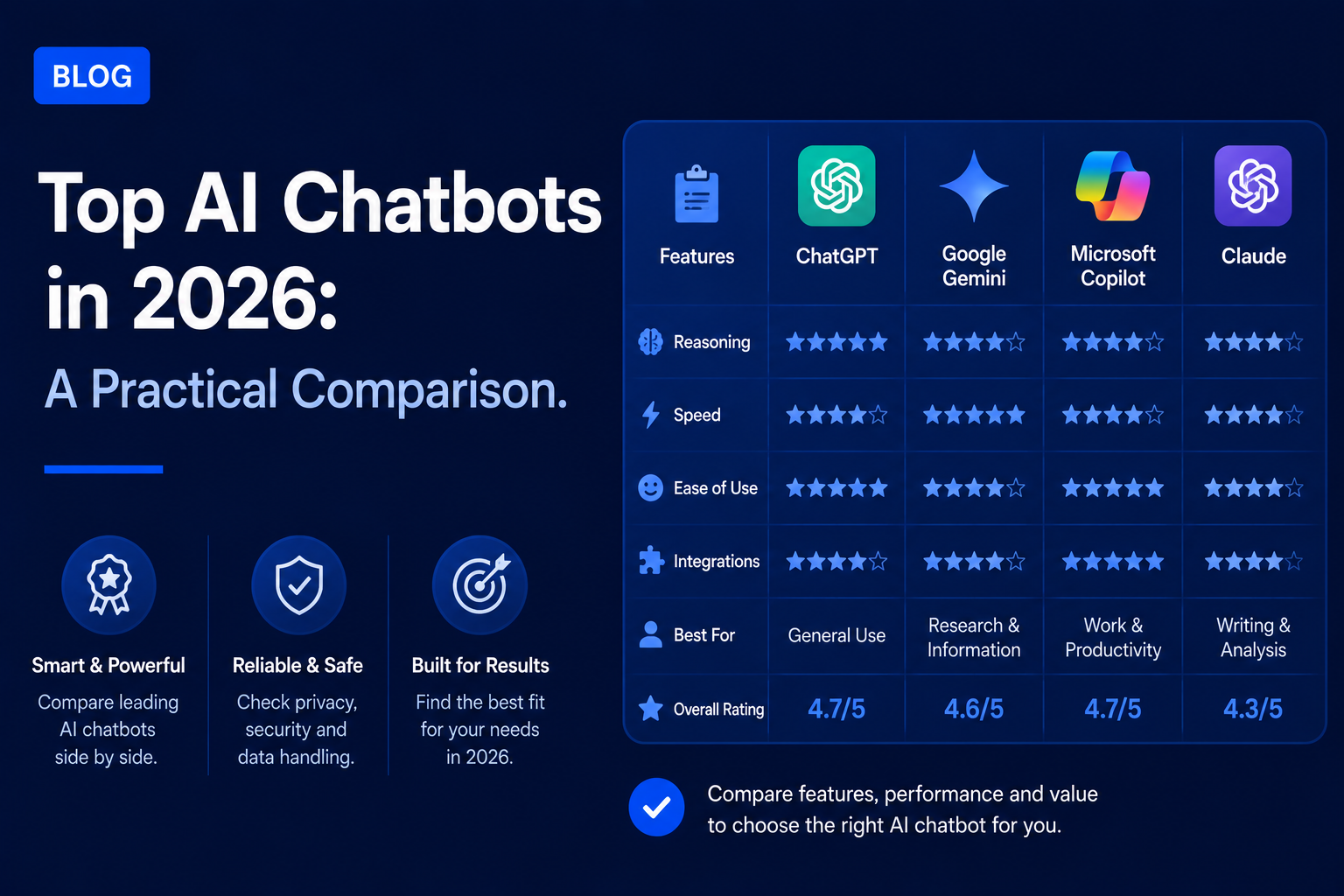
Top AI Chatbots in 2026: A Practical Comparison

The AI Chatbot Market in 2026
Chatbot AI technology has improved a lot. A simple fact about answering the question “What is the best AI chatbot?” by 2026 this largely depends on the use cases. Here is the pragmatic perspective on how the top players perform against each other.
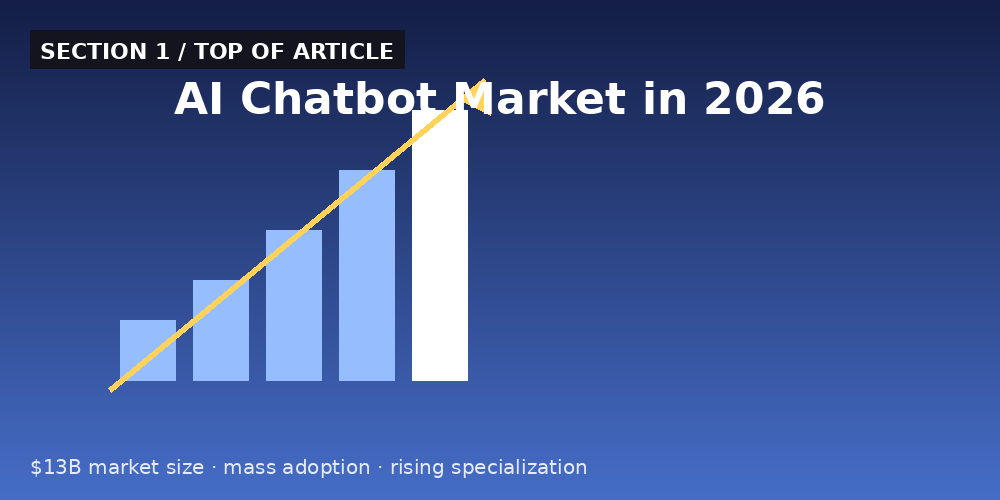
The Market Context
AI chatbots are no longer a novelty. The forecasted value of the global chatbot market has been pegged at almost $13 billion by 2026, and their usage has reached mass level across both consumer and corporate sectors, almost all companies now make use of AI technology in one way or another, while popular consumer chatbots boast millions of active users.
The biggest change is that of specialization, instead of one chatbot doing everything, some have become better suited to certain tasks.
Leading AI Chatbots in 2026
ChatGPT (OpenAI)
One of the most popular general chatbots till date, especially good at versatile, broad applications, small talk, content creation, code help, and increasingly multimodal applications involving text, images, and speech.
It is powered by OpenAI’s GPT-5 family of models, optimized for various trade-offs between speed and cost, and also offers voice capabilities in addition to text.
There is also a separate coding-specific chatbot offered by OpenAI.
Claude (Anthropic)
In combination with ChatGPT, one of the most popular models known for its excellent reasoning and performance quality with exceptional writing quality and coding capabilities due to the wide context window.
There are currently several generations that vary in their performance depending on the purpose for which they will be used, from an everyday version to a specialized version for coding purposes.
Gemini (Google)
An excellent choice for those users who are deeply embedded in the Google Workspace environment due to its deep integration with Gmail, Docs, and other Google applications, as well as good general reasoning skills and multimodal capabilities.
Copilot (Microsoft)
A natural choice for businesses that run on Microsoft 365 since it integrates seamlessly with Word, Excel, Outlook, and Teams, making it especially convenient for productivity purposes as opposed to being an independent chatbot.
Perplexity
Noted for its research capabilities rather than for general conversational capabilities since it was built specifically to provide users with sourced, verifiable answers.
Grok (xAI)
Differentiated from other competitors through its more straightforward conversational style, as well as integration with the X platform.
Open-Source and Budget-Friendly Options
AI tools developed using open architectures such as DeepSeek and LLaMA-based applications have gained prominence in areas where there is a need for cost-effective implementations and greater control over data and hosting, particularly useful to businesses that have stringent data governance needs or are cost-conscious.
Customer Service-Focused Chatbots
In addition to these general-purpose virtual assistants, there is a separate class of virtual bots, such as Intercom, Tidio, and ProProfs, which specialize in customer service and sales purposes and emphasize their integration with customer support software, CRM, and live chat applications rather than general-purpose functionality.
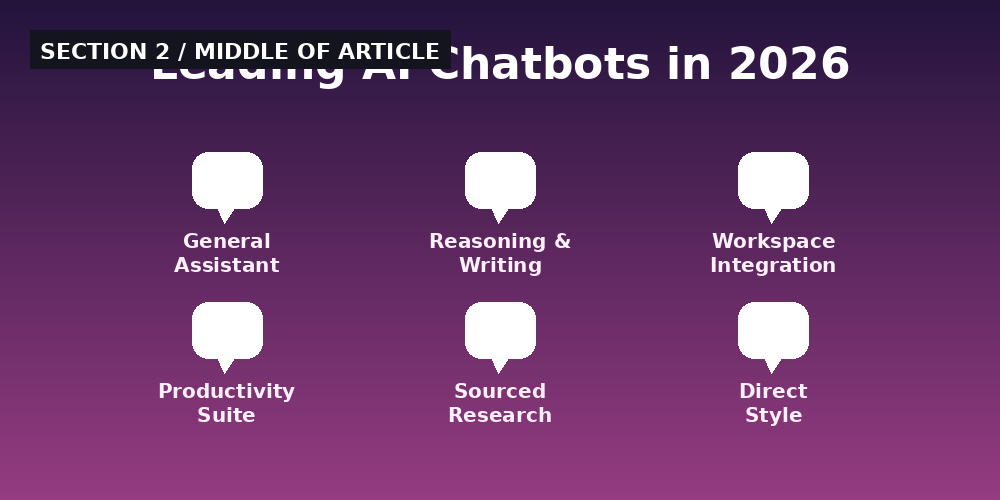
How to Actually Choose Among Them
Instead of searching for one “perfect” chatbot, the most effective method is fitting the bot to the task at hand.
For General Reasoning, Writing, and Versatile Use
- ChatGPT
- Claude
For Research Requiring Sourced, Verifiable Answers
For Deep Integration Inside Existing Productivity Software
- Copilot (Microsoft)
- Gemini (Google)
For Budget-Conscious or Data-Sovereignty-Sensitive Deployments
- Open source products such as DeepSeek or LLaMA-based systems
For Customer Support and Sales-Specific Deployment
- Specialized products such as Intercom or Tidio and not a general assistant
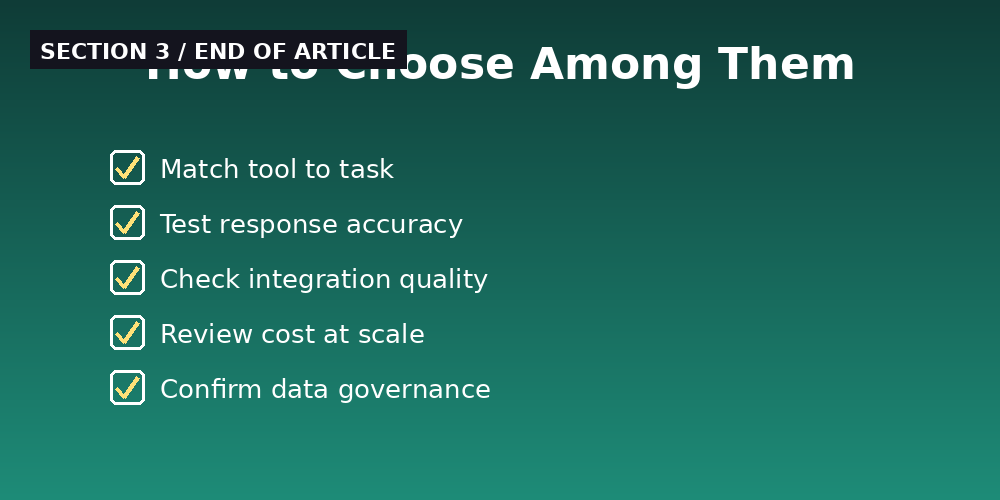
What to Actually Test Before Choosing
Performance metrics and marketing speak only reveal the partial truth.
Response Accuracy
Should be tested directly for your particular application:
- Accuracy of response in your particular area of interest
Integration Quality
Evaluate:
- Quality of integration with your current software
Cost at Expected Usage
Review:
- Cost at your projected usage level
Data Privacy and Governance
In the case of business implementation, consider:
- The platform’s capability to handle data privacy and governance concerns pertinent to your industry.
Bottom Line
By 2026, choosing from the best AI chatbots will not be about finding one winner but about selecting an application that fits your purpose based on its strengths, logic, research capabilities, ecosystem compatibility, pricing, or customer support features.
Testing against your specific application will give you better insights than a ranking.