Spam Score Checker: What It Is and How to Use It to Protect Your SEO

Have you ever been surprised by the poor ranking of a website with good content, or maybe even concerned about the possible negative impact of your backlink profile on your SEO results? If you are unsure about these issues, then your spam score may give you some clues.
The spam score is one of the critical metrics used by SEO experts to evaluate potential threats from websites and backlinks. In order to understand its role, you should learn about the way this score works and what SEO advantages and disadvantages it provides.
In this article, we will explore such questions as: what is spam score; how do spam score checkers work, why does spam score matter for SEO, and how can you utilize this tool?
What Is Spam Score?
Spam score is a metric created by Moz that evaluates the probability of getting punished or banned from Google due to manipulations. This score depends on the features common to low-quality and spammy websites.
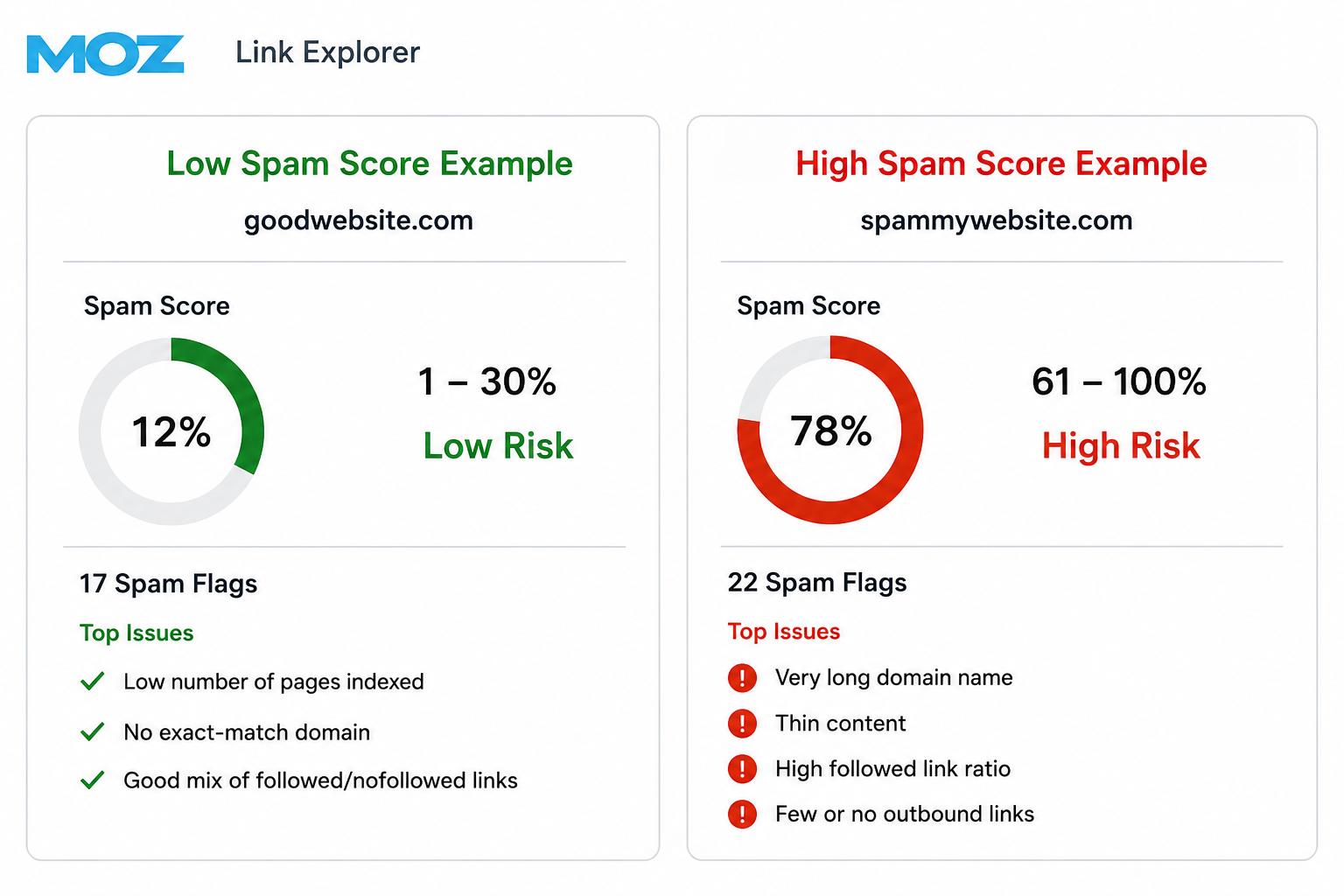
It is necessary to point out that having a high spam score does not mean that a website has already been penalized by Google. This score simply means that the website possesses characteristics typical of websites that get penalized.
Moz Spam Score Ranges
- 1–30%: Low Risk
- 31–60%: Medium Risk
- 61–100%: High Risk
While all SEO tools may use different terminology for the same metrics, they have the same aim, finding out which sites can threaten your SEO campaign.
What Does a Spam Score Checker Do?
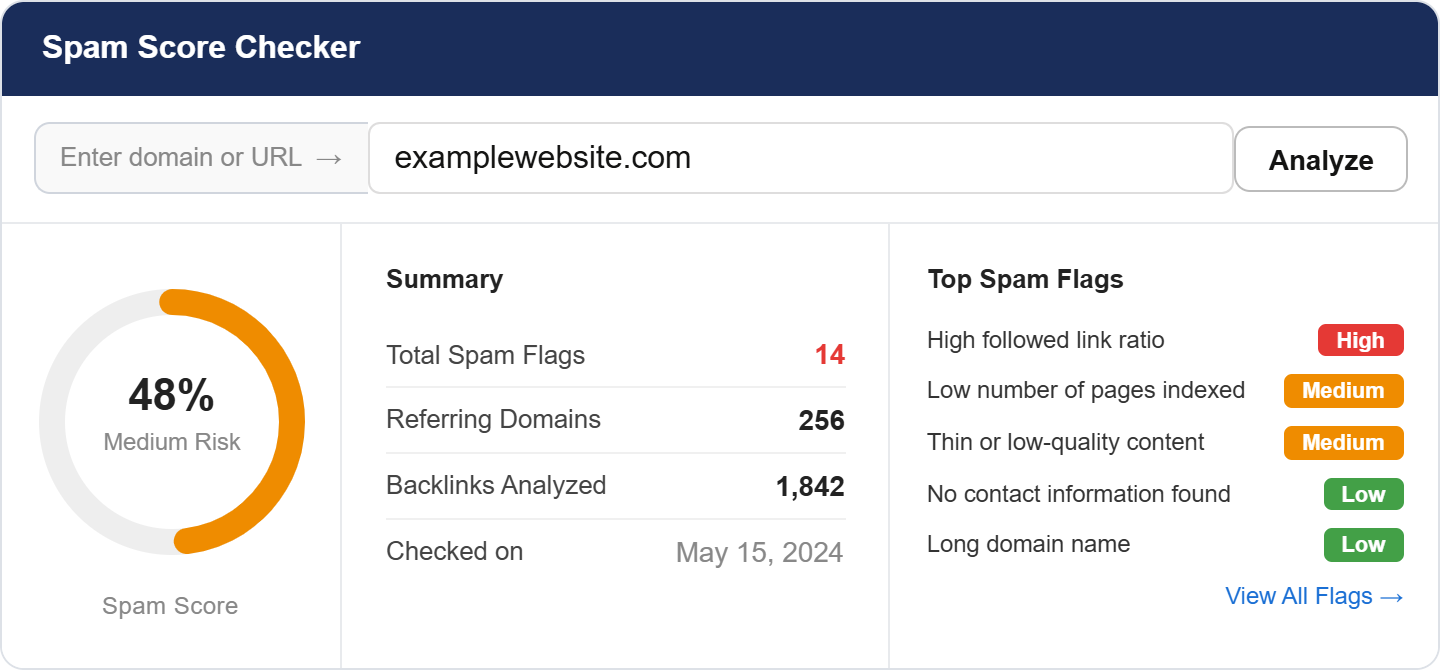
Spam score checker is an SEO tool that assesses a site and determines whether it might be labeled as spam according to on-site and off-site metrics.
Common Uses of a Spam Score Checker
- Checking your backlink profile for dangerous links
- Assessing your prospects in building links
- Checking guest blogging sites prior to reaching out
- Finding sites which should be disavowed
- Checking the condition of your site’s backlink profile
The aforementioned tools can be very useful in avoiding any negative effects on your ranking from bad backlinks.
How Is Spam Score Calculated?
Various factors are checked by spam score tools to determine whether a website is low quality. There are, for instance, 27 separate spam flags considered when evaluating a website according to Moz.
Common Spam Signals
- Very few indexed pages
- Low quality of content
- Domain name is too long
- Exact match of domain names
- High percentage of followed versus no-follow links
- Little linkage to authoritative sites
- Other high-spam-score websites as sources of backlinks
- Lack of information about company/About Us section
- User-unfriendly site structure
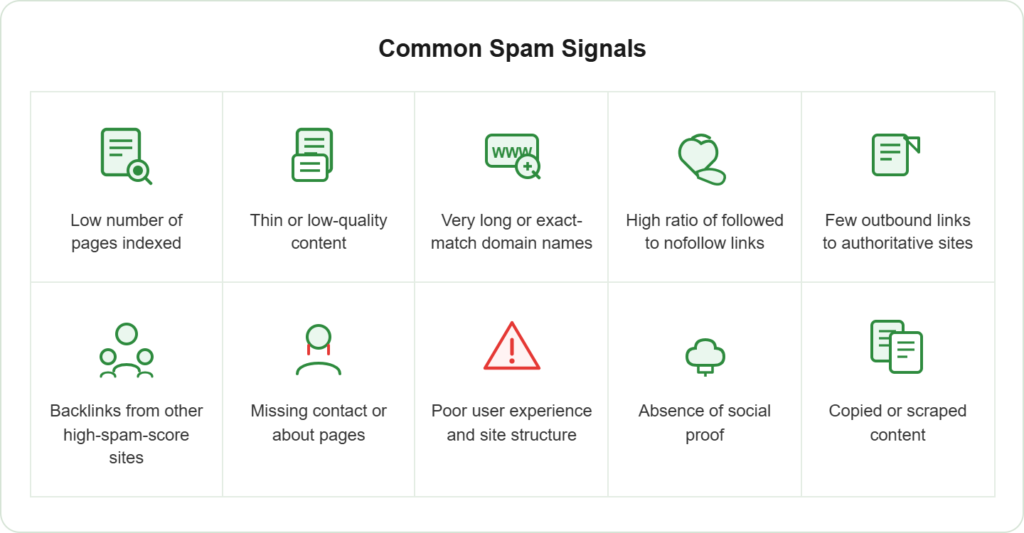
No single signal determines a website’s spam score. Instead, the overall score is influenced by the combination of multiple risk factors.
Why Spam Score Matters for SEO
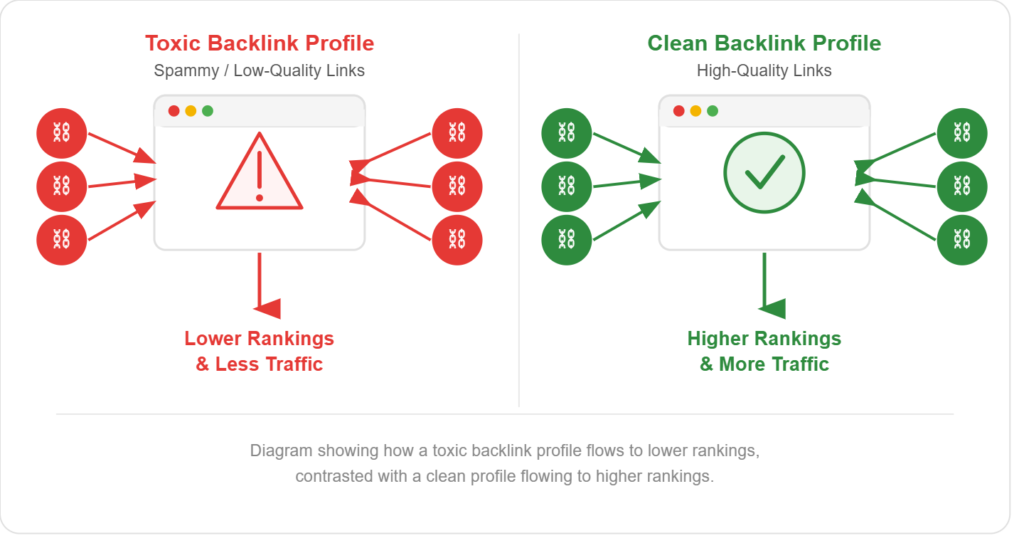
Backlinks continue to be one of the top ranking factors in Google. Nonetheless, there are instances where backlinks do not add value but may cause harm to your website’s SEO optimization.
Risks of Having Too Many Spammy Backlinks
- Manual penalties by Google
- Automatic algorithmic penalization of backlinks
- Decreased trust and authority indicators
- Poor search engine rankings
- Decrease in organic traffic
- A spam checker allows you to spot harmful backlinks in time.
It can be helpful when analyzing web sites for link building purposes, like guest blogging or other similar opportunities.
How to Use a Spam Score Checker
Step 1: Export Your Backlink Profile
Utilize various SEO tools such as Ahrefs, Semrush, or Google Search Console to download a list of websites pointing to your domain.
Step 2: Analyze the Domains
Import or copy-paste your list into the spam check tool. All premium versions allow you to check all backlinking websites at once.
Step 3: Identify High-Risk Domains
Sort backlinks based on the obtained spam scores and pick up websites scoring higher than 50-60%.
Note: The high score does not indicate the negative nature of the website; it only alerts you that more attention is needed.
Step 4: Review Each Domain Manually
Here are some questions to help you during the manual assessment process:
- Is the website legitimate?
- Is it a legitimate content producer?
- Does the backlink match the topic of your website?
- Are the links added naturally?
- Do the websites look like link farms or PBN?
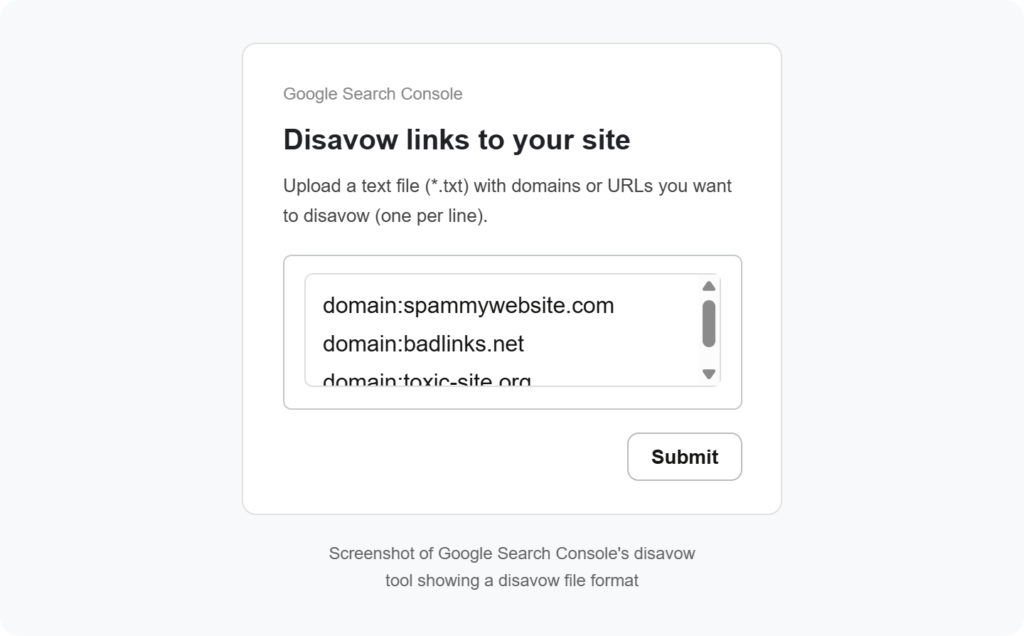
Step 5: Disavow Truly Toxic Links
If any of the sites have been identified as toxic for your website, create a disavow file and submit it via Google Search Console.
Warning! Be cautious when disavowing links, otherwise, you will damage your website’s authority.
Top Spam Score Checker Tools
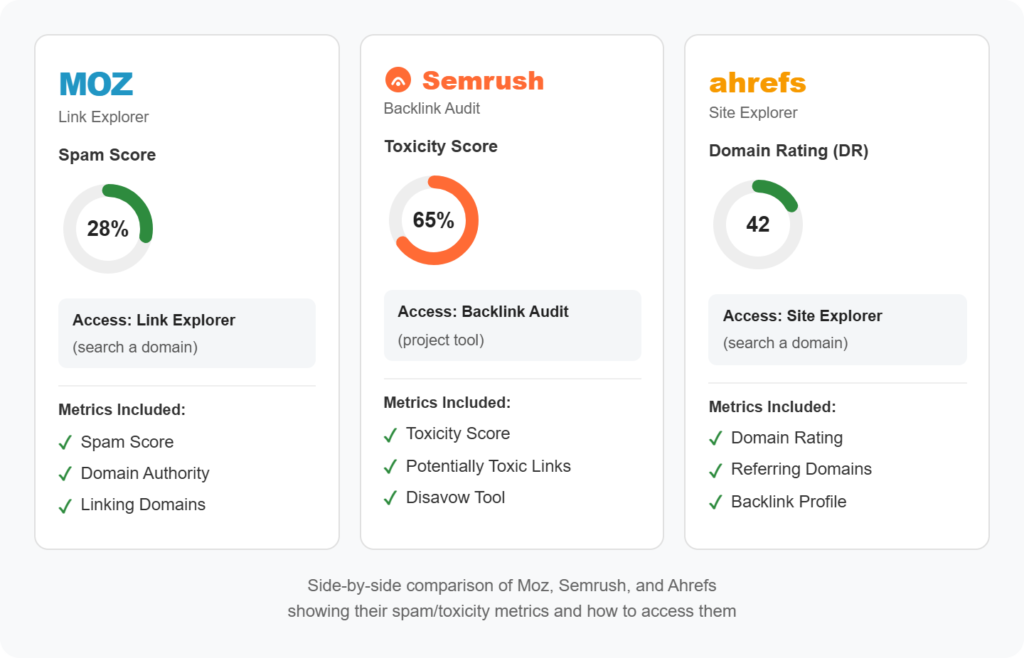
1. Moz Link Explorer
Moz is the creator of the Spam Score metric and remains one of the most popular tools for evaluating domain quality.
Key Features:
- Spam Score analysis
- Domain Authority (DA)
- Backlink analysis
- Limited free access
2. Semrush Backlink Audit
Semrush uses a metric called Toxicity Score to identify potentially harmful backlinks.
Key Features:
- Toxic backlink detection
- Automated backlink audits
- Built-in disavow workflow
- Detailed reporting
3. Ahrefs
Although Ahrefs does not provide a dedicated spam score metric, its backlink database and quality metrics help identify suspicious domains.
Key Features:
- Domain Rating (DR)
- Referring domain analysis
- Anchor text reports
- Historical backlink tracking
4. Majestic
Majestic offers Trust Flow and Citation Flow metrics that can help distinguish authoritative websites from spammy ones.
Key Features:
- Trust Flow analysis
- Citation Flow metrics
- Link profile visualization
- Historical backlink data
5. Free Spam Score Tools
Several free tools offer basic spam score checking capabilities, including:
- Small SEO Tools
- Prepostseo
- SEO Review Tools
These tools are useful for quick checks but may lack the depth and accuracy of premium platforms.
Common Misunderstandings About Spam Score
A High Spam Score Means Google Penalized the Website
This is one of the most common misconceptions.
Spam score is a third-party metric, not a Google metric. A high score simply indicates elevated risk, not a confirmed penalty.
Every High Spam Score Link Should Be Disavowed
Not true.
Many legitimate websites may receive high spam scores because they share certain characteristics with spammy sites. Always review backlinks manually before taking action.
Spam Score and Domain Authority Are the Same Thing
These metrics measure different aspects of a website.
- Domain Authority (DA): Predicts ranking potential based on backlinks.
- Spam Score: Estimates the likelihood of a website being considered spammy.
A website can have a high Domain Authority and a high Spam Score simultaneously.
Frequently Asked Questions
Is Moz Spam Score Accurate?
The Moz Spam Score is a good tool for assessing the risk, but this should not be the only metric considered while evaluating the site. It needs to be combined with other signals like traffic, relevancy, authority, and content quality
How Can I Lower My Website’s Spam Score?
You can increase the credibility of your site through:
- Publishing high-quality content
- Creating natural backlinks
- Cleaning up your spammy outbound links
- Good technical SEO practices
- Disavowing clearly toxic backlinks if necessary
Can Competitors Harm My Website with Spammy Backlinks?
Yes. They can affect your website by using spammy backlinks against you.
Competitors might be targeting your site with low-quality backlinks in order to damage your rankings. A regular backlink audit will allow you to identify potential dangers.
How Often Should I Check My Spam Score?
In general, once per quarter is enough for conducting a backlink audit. But if you are actively building backlinks or experiencing some issues with rankings, once a month would be good.
Final Thoughts
Spam score is not a perfect metric by any means, but it is still one of the best ways to find out whether the website is a threat to your link profile and ranking.
Using regular audits of your backlink profile and information about spam scores on your high-risk sites, combined with other SEO metrics, you can ensure that your link profile is safe.
Whether you want to consider guest posting offers, check backlink proposals, clean your backlink profile, or anything else related to SEO, using a spam score checker will come in handy.
Spam score is not a perfect metric by any means, but it is still one of the best ways to find out whether the website is a threat to your link profile and ranking.
Using regular audits of your backlink profile and information about spam scores on your high-risk sites, combined with other SEO metrics, you can ensure that your link profile is safe.
Whether you want to consider guest posting offers, check backlink proposals, clean your backlink profile, or anything else related to SEO, using a spam score checker will come in handy.