SEO for Nonprofits: How to Drive Donations and Awareness Through Search

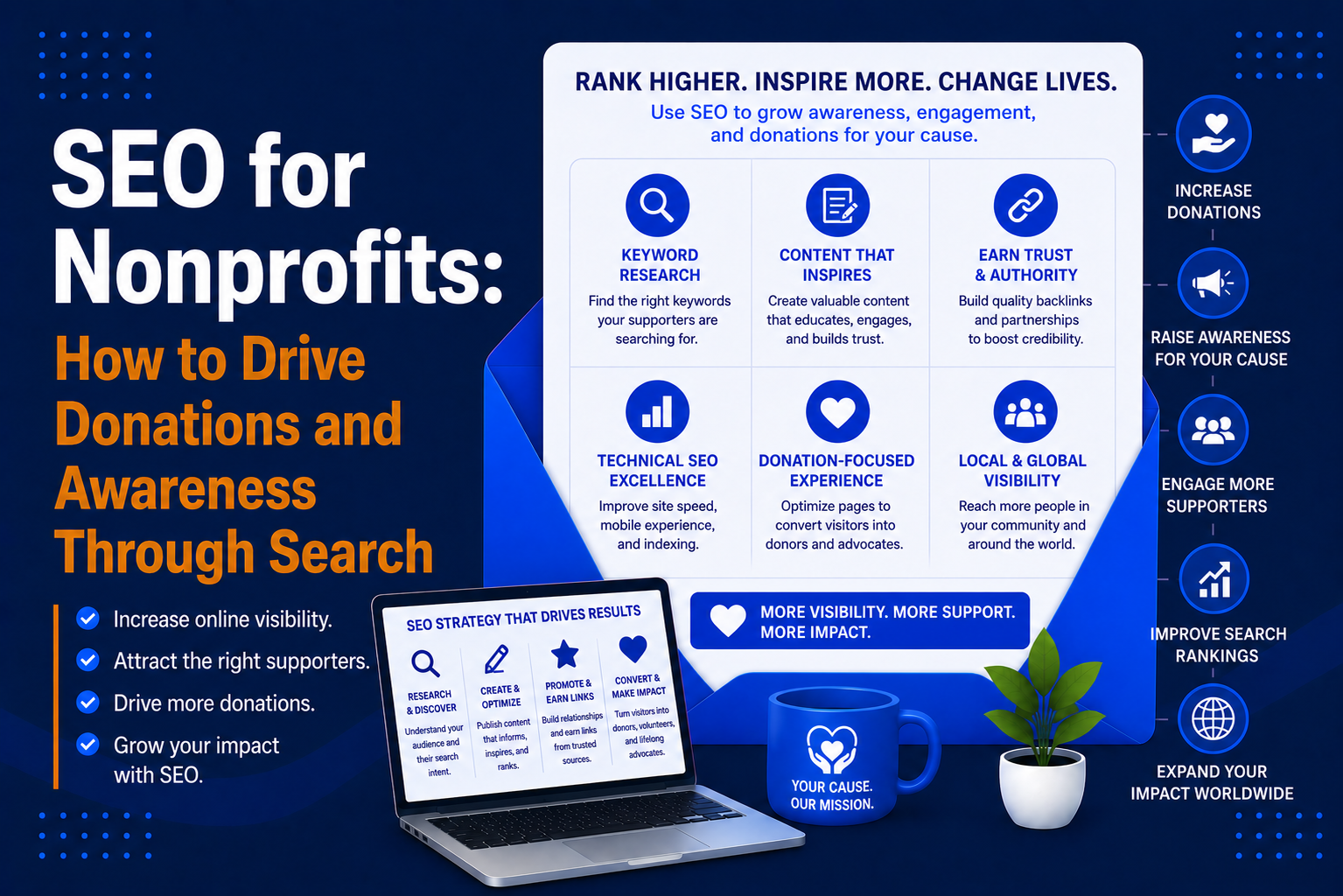
Nonprofits face a basic problem in that every dollar spent on marketing is a dollar wasted on their mission. And because SEO is one of the few forms of marketing where the results compound even without ongoing spending, this makes it a good match for nonprofits.
When done effectively, SEO can result in donations, volunteer recruitment, program exposure, and community engagement without having to constantly spend money on advertising.
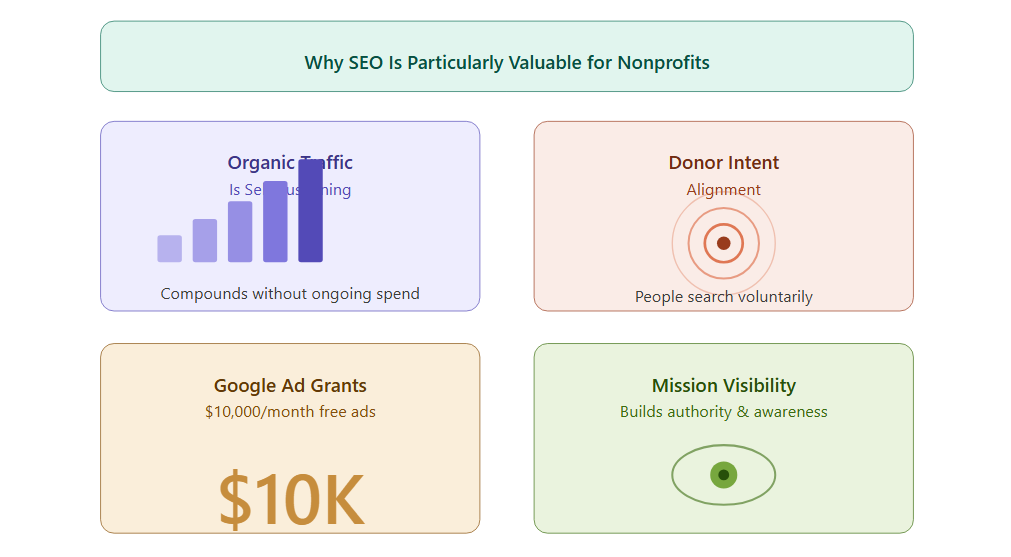
Why SEO Is Particularly Valuable for Nonprofits
Organic Search Traffic Is Self-Sustaining
Unlike paid advertising, which necessitates a consistent flow of money in order to sustain the success, SEO authority earned through time continuously delivers traffic even after the initial investment was done. For nonprofit organizations with limited budgets for marketing purposes, that efficiency is priceless.
Donor Intent Alignment
Individuals who are looking for causes, local organizations or particular programs are pre-intentional about their searches. Unlike cold audience advertising, where people are interrupted during regular activity, these individuals search voluntarily, making them more inclined to become donors or volunteers.
Google Ad Grants
Google offers nonprofits up to $10,000 in free Google Search Ads per month using the program called Ad Grants. However, the traffic obtained using Ad Grants depends on the Google Quality Score which in turn improves with SEO.
Mission Visibility
In addition to raising funds, achieving high ranking for topics relevant to your cause helps increase awareness and establishes your organization as the expert for these issues.
Nonprofit SEO Keyword Strategy
There are different types of nonprofit keyword categories.
Donation-Intent Keywords
- “[cause] donations [city]”
- “[cause] donations to nonprofits”
- “How can I donate to [organization name]”
- “[specific cause] charity”
- “Tax-deductible donations [cause]”
Volunteer Keywords
- “[city] volunteer work”
- “[cause] volunteer [city]”
- “How can I volunteer at [org type]”
Service-Seeker Keywords
For nonprofits providing services:
- “Food bank nearby”
- “Homeless shelter [city]”
- “Mental health help for free [city]”
- “Housing help [city]”
Informational/Cause Keywords
- “statistics for [cause]”
- “ways to assist [cause]”
- “influence of [problem] on [city]”
- “Why should we care about [problem]”
Organizational Keywords
- “[Non-profit name]”
- “[Non-profit name] review”
- “[Non-profit name] impact”
Google Business Profile for Nonprofits
If your non-profit organization has a physical address (office/shelter/food pantry/thrift shop/community center), a Google Business Profile will allow your organization to be found locally.
GBP Category Options for Nonprofits
- Non-Profit Organization
- Charitable Organization
- Social Service Organization
- Food Bank
- Animal Shelter
- And more
Include
- Your organization’s goal in the description
- Your organization’s programs/services in the “services” section
- Pictures of your facility, programs/services, and impact
- Hours of operation of any publicly accessible programs/services
- Web address for donation and volunteer sign up
Nonprofit Website SEO Essentials
Donation Pages
Your donation page will be your most valuable landing page on your website.
Optimize It for SEO
- “Donate to [Cause] in [City]” for the title tag.
- It should be visible and not require logging in.
- Trust indicators include:
- Charity ratings (e.g., Charity Navigator, GuideStar/Candid).
- Financial data and transparency.
- Impact stats.
Optimize It for Conversion
- Well-articulated ask
- Impact equivalency (“Your $50 can provide food for a family for one week”)
- Sense of urgency/ matching appeals
- Several giving levels
- Convenience in making payments (credit cards, PayPal, Apple Pay)
Program Pages
Create individual webpages for each key program that your nonprofit offers.
Each page should:
- Optimize for keywords relevant to the specific program (“after school tutoring [city],” “emergency food assistance [city]”)
- Demonstrate how the program makes an impact using numbers and statistics
- Highlight the individuals that are served (proper permissions required)
About and Leadership Pages
Nonprofits conduct thorough research prior to donation. About Us and Leadership pages ensure that those who do the research become donors.
Include
- Mission and History
- Financial transparency (usage of donation, program-to-overhead ratio)
- Leadership bios
- Board of Directors
- Impact reports and annual reports (downloadable PDF)
- Third-party accreditation
Impact Report SEO
Impact reports each year is a useful piece of content to create. Develop impact reports for your organization, optimized for:
- “[Organization name] impact”
- “[Cause] impact [year]”
keywords.
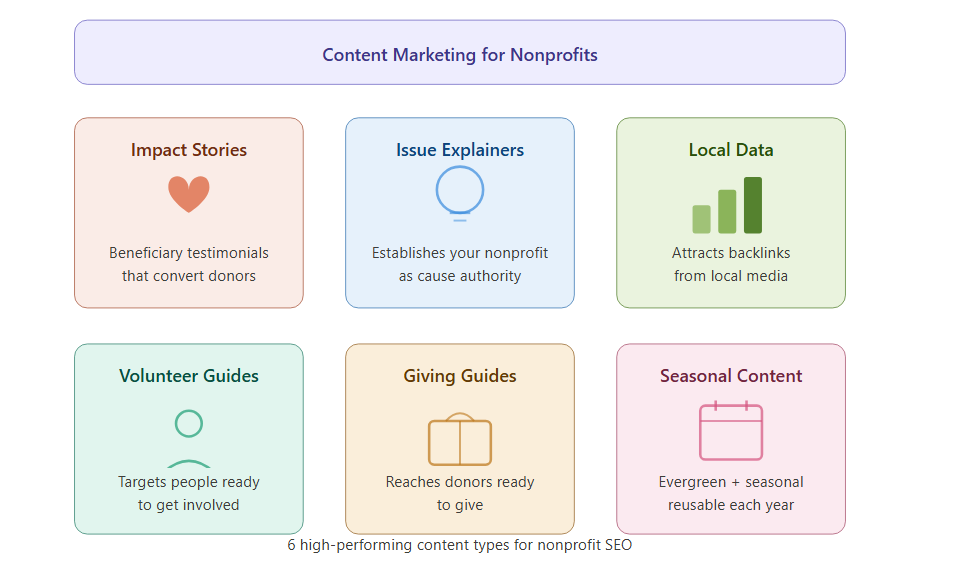
Content Marketing for Nonprofits
Nonprofit organizations can leverage their position to develop quality content. You have stories to tell, impacts to share, and expert knowledge of causes that matter to many people.
High-Performing Nonprofit Content Types
Impact Stories
Beneficiary testimonials (with consent), highlighting your cause, that demonstrate the difference your nonprofit makes. They will rank high for your keywords and convert donors by putting an emotional face to your organization’s impact.
Issue Explainers
“What Is [Issue] and How Does It Impact [Community]?”Informative content positioning your nonprofit as the authority in your cause area.
Local Statistics and Data
“[City]’s [Issue] Problem: The Numbers Don’t Lie”, Data-driven content that attracts backlinks from local media organizations and government resources.
Volunteer Guides
“How to Volunteer at a Food Bank: What You Should Know”, Content targeting people seeking to volunteer and introduce them to your nonprofit.
Giving Guides
“How to Donate to a [Cause] Charity: Important Considerations”, Content targeting donors looking to donate and featuring your nonprofit (and other nonprofits).
Seasonal Content
“How to Give Back This Holiday Season,” “Volunteer Tax Deduction Guide,” evergreen content with seasonality that can be used each year.
Technical SEO for Nonprofits
It is common for nonprofits to have a website that has been created through volunteer work or on a budget. Problems associated with this.
Page Speed
Website speed impacts both SEO and the process of converting visitors into donors. Make use of Google PageSpeed Insights to solve speed problems. Image optimization and caching tend to be quick fixes.
Mobile Optimization
Mobile donation has increased. Your donation process must be optimized for mobile devices.
HTTPS Security
Donations will never be made on an unsecured page. HTTPS is mandatory for all non-profits accepting online donations.
Indexation
Make sure your donations page, program pages, and other important content are indexed. Sometimes donation platforms use iframes or JavaScript code that is hard to crawl.
Google Ad Grants and SEO Integration
Google Ad Grants provide qualifying 501(c)(3) organizations with up to $10,000/month in free Google Search ads.
To Maximize Ad Grants Performance
The content of your site is required for ads to meet the Quality Score criteria.
SEO and Ad Grants work hand in hand – good content in an organic sense for a certain keyword will give better landing page quality to your Ad Grants ads on the same keyword.
Use Ad Grants For
- Keywords that lack organic ranking (fill gaps)
- Seasonal ad campaigns
- Specific donation campaigns
- Volunteer campaigns
Use Organic SEO For
- Long-term authority building
- Ranking on valuable cause keywords
- Establishing yourself as the expert source
Building Backlinks for Nonprofits
Nonprofit organizations typically have a number of inherent strengths when it comes to natural link building.
Government and University Partnerships
This includes the use of links from websites for the local government, research programs at universities, and health authorities.
Media Coverage
Nonprofit organizations that achieve great results will be featured in the media on a local or national level. This will also involve links.
Charity Rating Sites
Charity Navigator, GuideStar/Candid, and BBB Wise Giving Alliance feature nonprofits that have high ratings. High ratings will provide you with authoritative backlinks.
Event and Community Listings
Local event calendars and community programs where non-profit organizations participate can be found on local calendar pages, community directories, and city government websites, which can be great sources for obtaining backlinks.
Donor Company CSR Pages
Corporate sponsors usually feature their nonprofit partners on their corporate responsibility pages. Approach your corporate sponsors and ask them to post a link to your website.
Measuring Nonprofit SEO
Metrics of SEO success for nonprofits will not be the same as SEO success metrics used by commercial enterprises.
Primary Metrics
- Organic donation income (measured in Google Analytics 4 using e-commerce goal tracking)
- Organic volunteer form leads
- Organic program inquiry form leads
- Organic email subscription leads
Secondary Metrics
- Growth in organic traffic to important pages (donation page, program pages, impact stories)
- Rankings for search terms related to the cause and service seekers
- Visibility of local pack results for service seeker search terms
Impact Visibility Metrics
- Impressions from cause-related keywords (despite not resulting in immediate donations)
- Backlink notifications from media coverage (Ahrefs backlinks)
Conclusion
SEO can help build a marketing strategy that will have a lasting impact for nonprofits far beyond the cost incurred in setting it up. By using great content, technical SEO, and Google Ad Grants, nonprofits can punch far above their weight in terms of marketing impact despite not having the budget for this kind of impact like other for-profit businesses.
Begin with basic building blocks such as building an easy-to-navigate, mobile-friendly site with optimized donation and program pages and producing content on a consistent basis about your issue. Organizations doing this are connecting with more donors, volunteers, and needy persons than those who simply spend money.