Search Engine Positioning: What It Is and How to Improve It

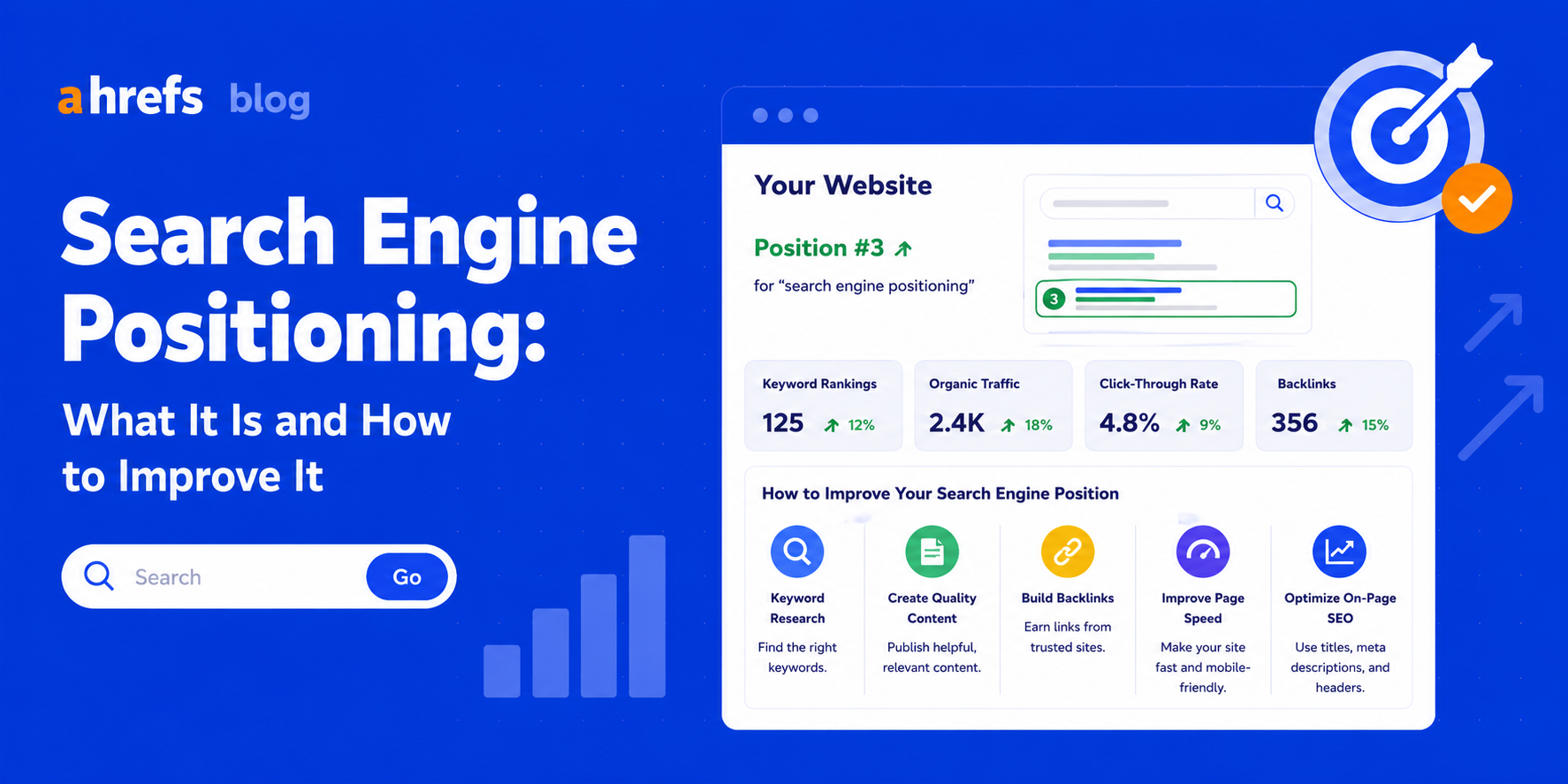
Search engine positioning is an action plan for tracking, controlling, and improving the position of your web pages in the search engine results by keywords. Although SEO is the field that deals with all optimization activities, search engine positioning is the final result of SEO work – position for particular queries on particular days.
What Is Search Engine Positioning?
A search engine position of a web page means the rank where the web page ranks in the results list of the search engine under particular keywords. Thus, if your page ranks third in the results list when searched by “SEO audit checklist” keywords, then your position is 3. If you’re still getting familiar with how search engines evaluate and rank pages, it’s worth reviewing the search engine basics before tackling positioning strategy.
In contrast to the general SEO which is related to all optimization practices, positioning is only concerned with ranking positions and actions aimed at boosting it.
Why is your particular position so important? As statistics shows, Position 1 receives about 27% of all clicks under particular keywords, while Position 2 receives only 15%. Positions 5 and further receive about 7% clicks each. All those positions above Position 10 receive about 1% combined clicks.
Thus, moving your page from Position 5 to Position 1 increases click-through rate more than three times!
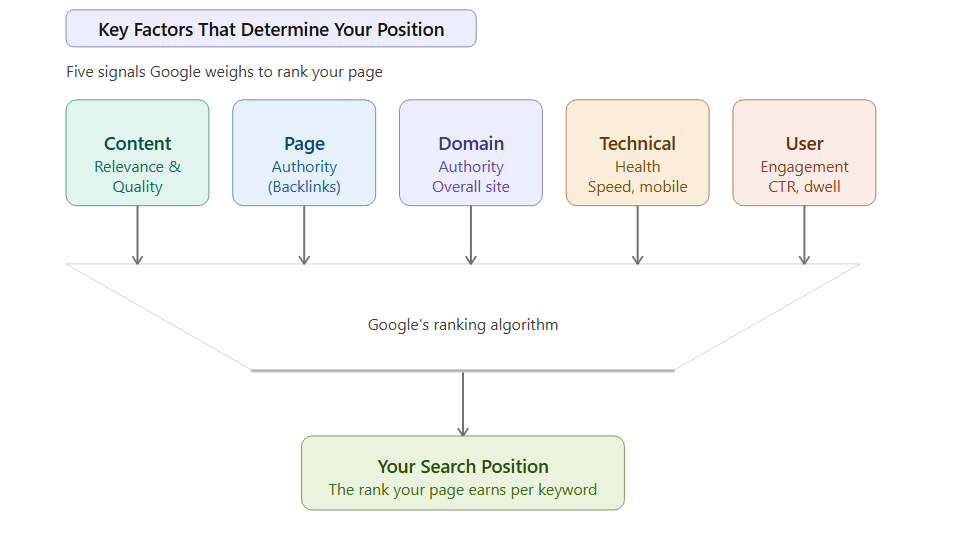
Key Factors That Determine Your Position
Having an understanding of what Google looks for will give you insights into how to act upon the situation.
Content Relevance and Quality
The main purpose of Google is to find the most useful and relevant content for each search query. Your webpage should fit not only the keywords but the intent behind the query, which is what the person wants to achieve.
A webpage that targets the phrase “how to perform an SEO audit” is supposed to be a practical guide on this topic and not any sales page. The same goes for the webpage targeting “SEO audit software”.
Page Authority
The page authority is mainly influenced by the number of backlinks that lead to a particular web page. When you have good backlinks coming from authoritative websites, it means that your website is considered reliable. Therefore, if a certain website has got backlinks from reputable sources like articles on “technical SEO,” then its authority will be more than that of other useful pages without backlinks.
Domain Authority
The overall authority of the website will lift all the pages since they will share the same level of authority due to the backlinks. Some new pages will be ranked better because Google already recognizes their domain authority.
Technical Health
The pages that have crawl errors, are not mobile-friendly, and take too long to load may be penalized in terms of rankings.
User Engagement Signals
Although Google has not yet admitted that all the engagement signals are directly used to influence ranking, CTR and User Satisfaction signals probably do impact page ranking. If the page receives more clicks than it should have based on its position, then the ranking will move up; otherwise, it will move down.
How to Track Search Engine Positions
Without measurement, improvement is impossible. Position monitoring needs special tools since Google personalizes its results based on location, language, and previous searches; therefore, your Google results cannot be trusted.
Ahrefs Rank Tracker
To monitor your position, create a project, add the targeted keywords, and Ahrefs will monitor your daily ranking for every keyword. With the help of Share of Voice report, you will see how many available clicks are captured by all keywords you monitor together.
Google Search Console
Performance Report shows an average position for each of the keywords you rank for. It is absolutely free, complete, and comes straight from Google. Disadvantage: it only shows averages and cannot be tracked daily.
Setting Up a Positioning Dashboard
Here is how to effectively manage your positions:
- Create a list of your top 50-100 target keywords
- Categorize them into funnels (Awareness, Consideration, Decision)
- Enter them in Ahrefs Rank Tracker
- Determine a baseline position for each one and a goal for 3 months
- Monitor weekly, address major drops right away
How to Improve Your Search Engine Positioning
The highest leverage positions come about through particular measures tailored to your current state.
For Pages Ranking 4–10 (Page 1, Below the Fold)
They will serve you the most effectively because you are relevant already, Google just hasn’t made your result appear on the top three.
Actions That Move Positions 4–10 Upward
- Enhance your content: Go over the top 3 results, see what topics they are discussing and what your page is missing and incorporate them.
- Attract backlinks for that particular page: Just one or two of good quality can move a sixth place result into the top 3.
- Increase click-through rate: Change the title tag and meta description so as to improve click-through rate.
- Use schema markup: FAQ or how-to schema can bring about rich snippets.
For Pages Ranking 11–20 (Page 2)
Page 2 gets very little organic traffic. Pages like this require a content refresh, not just an update.
Actions That Move Pages from Page 2 to Page 1
- Compared to the top 10 in Ahrefs Content Gap tool. What topics are they writing about that you aren’t?
- How do the word count and depth compare to the ranking pages?
- Look into internal linking. Is this page getting any inbound links from related pages on your site?
- Does more recent content from your competitors outshine yours? If so, update both the content and its publication date.
For Pages Ranking 21+
The deeper positions mean serious problems with the keyword: either an intent mismatch, lack of substance, or very weak linking authority relative to the competition.
Actions
- Make sure there is no gap between search intent and your content. Go ahead and type the keyword into the search engine.
- If what you see there has nothing in common with your page, then redesign it!
- Perform a gap analysis based on the top 5 competing page
Common Positioning Mistakes
Targeting Too Many Keywords at Once
To achieve good position improvement, a targeted approach should be adopted. Choose 10 to 20 relevant keywords to concentrate on during a quarter. Wasting efforts on many other keywords will yield little or no improvement at all.
Optimizing for Keywords You Don’t Rank for at All
Improvement of positions from Position 7 to Position 2 is easier than that from Position 0 to Page 1. Start with the pages ranking within the top 20 on target keywords.
Ignoring Click-Through Rate
An under-performing web page on Page 1 should improve CTR as a priority because it is easy and quick. Improvements in CTR can be as effective as position improvements.
Making Changes and Not Waiting
Improvement of positions on Google takes weeks until Google re-crawls your web pages. Avoid making several modifications simultaneously, otherwise you won’t know which worked.
Measuring Positioning Success
Track your progress at various levels:
Individual Keywords
Is your landing page ranking for its target keyword?
Page Level
Is the overall traffic on the page increasing (it could be ranking for several relevant keywords)?
Site Level
Is the organic traffic on the page increasing? Is Share of Voice Increasing?
With the help of Ahrefs Rank Tracker’s progress charts, you can track the upward trend in rankings over a period of 90 days.
Conclusion
Search engine ranking is by far the most tangible indicator of successful SEO. Being aware of exactly where your pages are ranked and knowing what will bring you rankings, followed by strategic actions, is the driving force behind organic traffic increases.
Concentrate your SEO efforts on your strong positions, that is, pages ranking between 4–20, rather than working on the keyword pages for which you do not currently have a position. The return on investment will almost always favor the first approach.