Life Sciences CRM: What It Actually Covers and Why It’s Easy to Get Wrong

Introduction
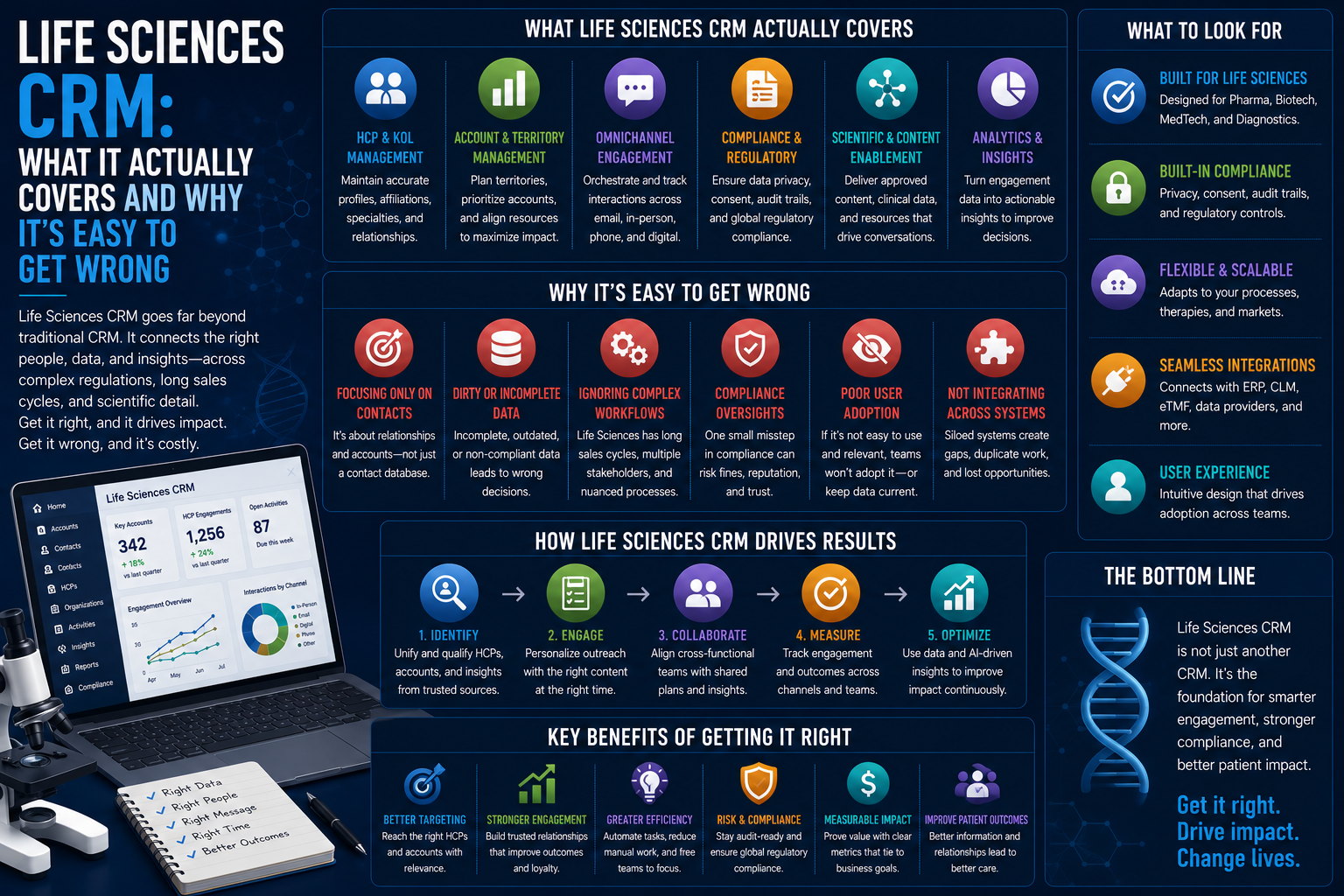
Life science CRM refers to a customer relationship management system which is purposely designed for pharmaceuticals, biotechnology firms, and medical devices, as opposed to a sales CRM that can be adapted to cater for the highly-regulated life sciences industry.
This may sound relatively easy, but because of the many demands that pertain to life science CRM systems, there is usually underestimation of this business aspect during the choice of a platform.
Why Life Sciences CRMs Are More Complex Than They Appear
Customer Relationship Management in the Life Sciences Industry is not a homogeneous system, but rather a composite one consisting of the following:
- Healthcare Professionals (HCPs) as prescribers
- Healthcare Organizations and Hospital Systems
- Payers and Formularies
- Patients, in cases where there is direct engagement program
The several generic CRMs do not have the proper data model to record HCP engagement, sampling, and disclosure, thus, leaving companies no choice but to go for manual solutions.
For the case where a company is operating in several countries, compliance recording must be done separately in each country because of the difference in pharmaceutical marketing rules.
Major Areas of Life Sciences CRM Functionality
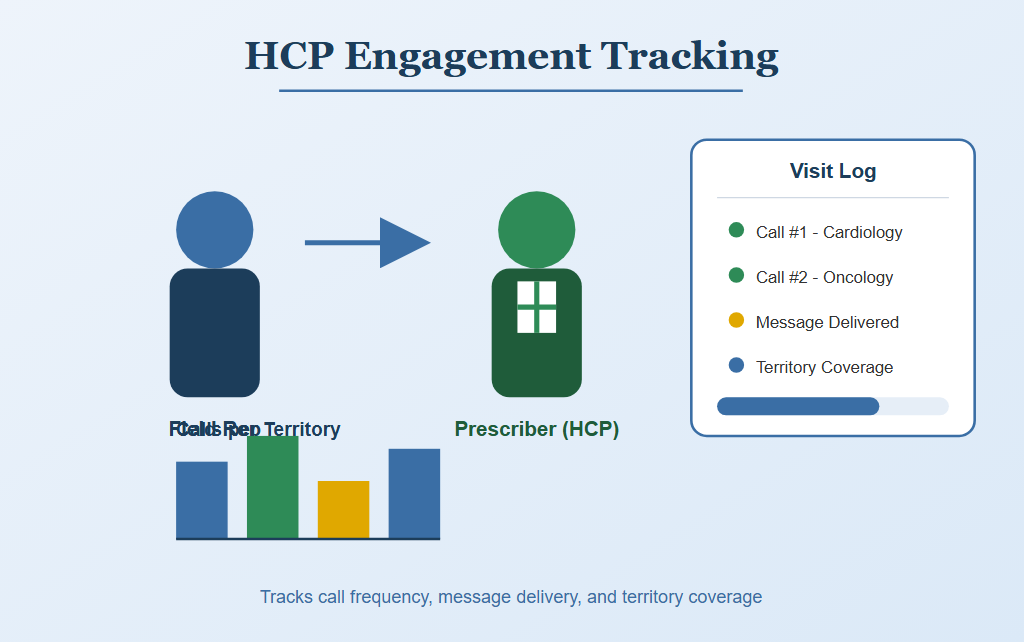
HCP Engagement Tracking
Rules Governing
- Calling and visiting with prescribers
- Communication messages delivered during these calls/visits
- Number of calls and their coverage in a territory
Poor tracking of this is one of the commonest and most expensive gaps since it leads to:
- Inappropriate calling pattern not identified
- Failure to communicate with high-priority prescribers
- Failure to identify field force performance indicators
Sample and Compliance Management
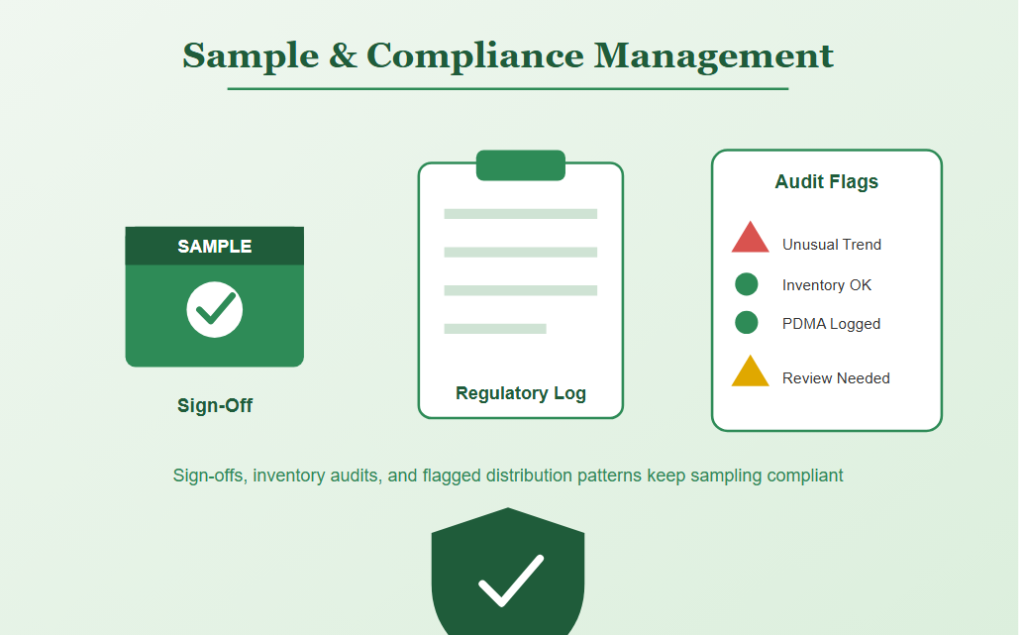
CRM systems in life sciences usually come with built-in sample tracking capabilities that necessitate sales representatives to comply with strict log reporting guidelines as prescribed by regulatory bodies such as PDMA.
Sample Management Often Includes
- Sample sign-offs during the time of delivery
- Inventory auditing and tracking
- Flagging of unusual distribution trends
Consent and Data Privacy Handling
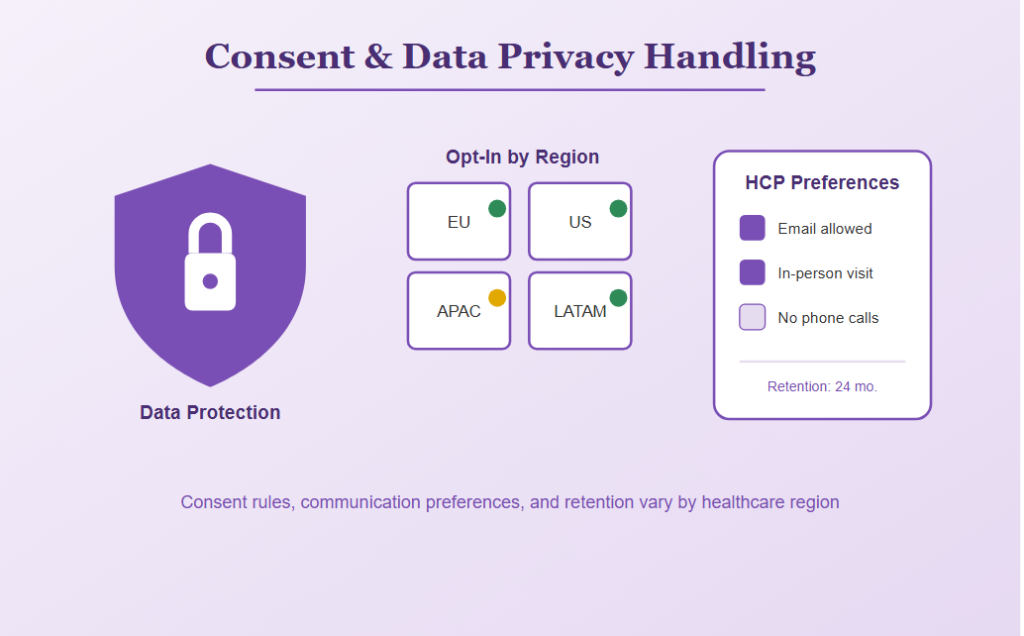
Management involves not only basic contact information but also the growing need to manage permission for communication based on regional healthcare data regulation.
Consent Tracking Usually Varies in Many Respects Including
- Opt-in mandates by region
- Approved communication methods according to HCP preferences
- Retention requirements for healthcare data records
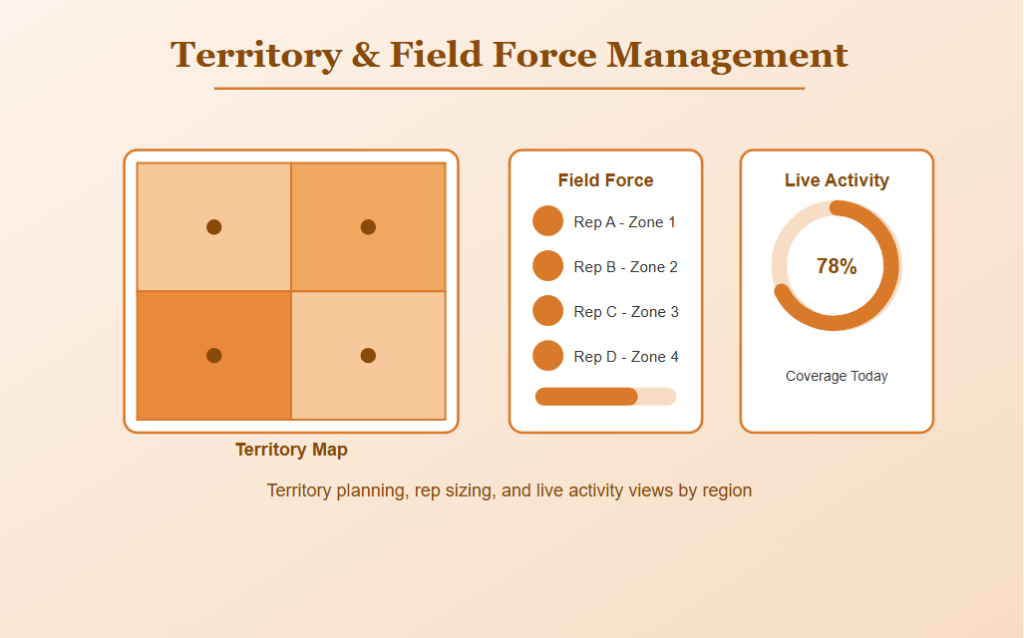
Territory and Field Force Management
Features provided by Life Sciences CRMs include:
- Territory management and planning
- Field Force Sizing and Structure integration
- Live access to reps’ activities by region
These features are not always as well developed when using a generic CRM solution for Life Sciences, compared to those specifically designed for Life Sciences.
Regulatory Reporting
A number of life sciences CRMs require companies to keep some types of documentation, which include:
- Value transfer reporting
- Reporting of adverse events
- Documentation of approved promotional materials
It is essential that such documentation be kept accurately due to the scrutiny faced by this industry.
Why Compliance Gaps Happen Even at Well-Intentioned Life Sciences Companies
Lack of use of specific features that CRM systems offer for the life science industry is rarely a deliberate shortcut.
This is because:
- The organization uses a standard CRM system and performs compliance monitoring manually.
- Changes in regulations occur, but those in the compliance rules of the CRM system are not made accordingly.
- Field personnel avoid cumbersome logging processes, resulting in inaccurate data.
How Life Sciences Organizations Choose the Right CRM
Purpose-Built Platform Evaluation
Larger organizations might prefer platforms specialized for selling pharmaceuticals or medical devices in scenarios where there is a need for multi-country compliance.
CRM Features Supporting Regulated Workflows
Life sciences CRMs available today come with features that allow companies to:
- Automatically calculate transfer of value
- Comply with sample logging requirements in real-time
- Customize consent rules based on regions
Ongoing Compliance Configuration
The following aspects are reviewed by organizations on a regular basis:
- Changes in regulatory laws that affect HCP interactions
- CRM laws that are up-to-date
- Loggings performed by the field force
Regular reviews help organizations ensure their CRM setup is still in compliance with new regulations.
Common Life Sciences CRM Mistakes
Using a Generic Sales CRM
Implementation of standard CRM that was not designed to work for HCP engagement and the addition of compliance monitoring through manual means outside the system.
Inconsistent Sample Documentation
Permitting field reps to track sample tracking inconsistently.
Ignoring Regional Regulatory Differences
Applying one universal approach to compliance with varying regulations concerning pharmaceutical marketing in different countries.
Poor Data Governance
Lack of control over:
- Access to confidential information on HCP interaction
- Updating of consents and storing of the same
- Data retention period
Poor data governance may expose you to substantial risks.
Bottom Line
The usage of a CRM in the life science industry is very diverse, including many different factors such as engagement of healthcare professionals, sample management, consent management, territory planning, and regulatory reporting.
Taking into account the level of regulation within the industry and the differences between regulations in regions, it would be better to implement a platform that is specially designed for the life sciences industry.