Lead Generation Marketing: How Marketing Teams Build the Pipeline

Introduction
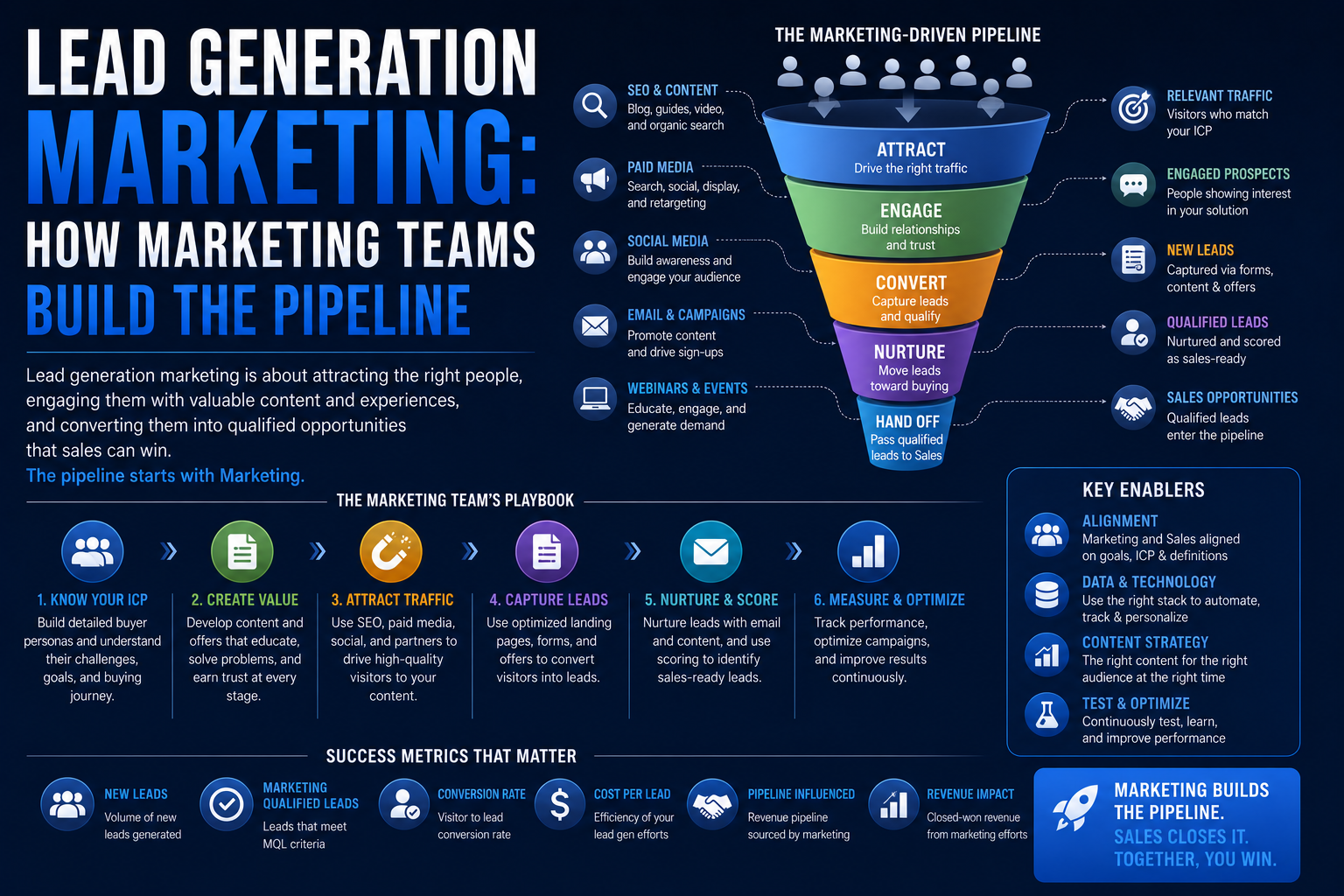
Lead generation marketing encompasses all the marketing efforts that are aimed at capturing leads who are not yet in a position to make the purchase decision. It is an area that connects brand marketing (raising awareness) and sales (converting), bridging the gap between the two.
How Lead Generation Marketing Differs from Brand Marketing
Brand marketing is all about making people aware of the brand and creating perceptions over the passage of time, without demanding anything back in return. Lead generation marketing revolves around a particular activity, i.e., encouraging prospects to give their personal details in return for something worthwhile, such as a guide, demo, quotation, etc.
Both these types of marketing are important in their own right, but have different ways of being quantified, with brand marketing based on reach and perception and lead generation marketing on leads generated and costs incurred per lead.
Core Components of Lead Generation Marketing
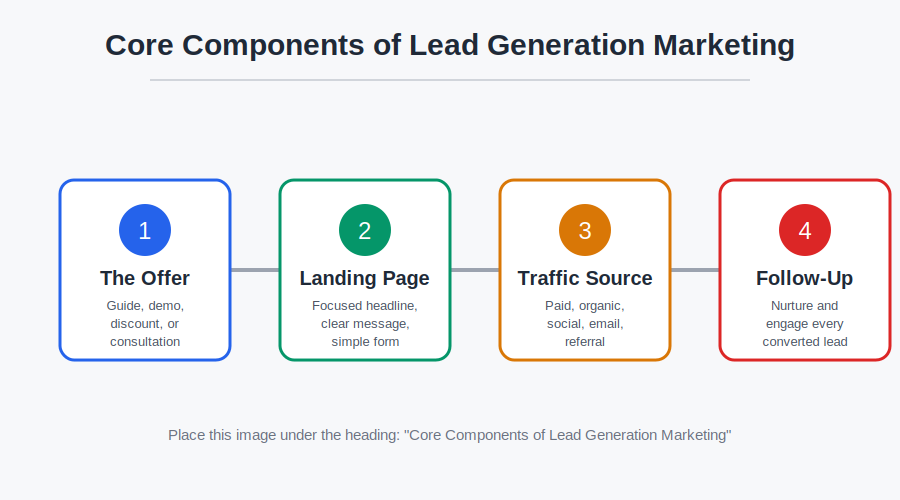
The Offer
The starting point is always the value you bring in exchange for your prospect’s contact information, free guide, consultation, discount, or product demonstration. The quality of your offer determines the conversion rate, as it is easier to convert someone with an attractive offer like “sign up for our newsletter” than with just any generic one.
Why It Matters
- Generates leads
- Increases conversion rates
- Creates value for prospects
- Gets the right people
The Landing Page
The location of your offer and the place where conversion takes place. Good lead generation landing pages are concentrated, with one headline, one benefit, no distractions, and a form asking only for what is required.
Best Practices
- Headline that grabs attention
- Clear messaging
- No distractions
- Lead capture form
The Traffic Source
The traffic that brings people to the offer, advertising, search, social media, email, referral. The type of traffic will have different intentions which will affect the conversion rate.
Common Traffic Sources
- Paid advertising
- Organic search
- Social media
- Email marketing
- Referral traffic
The Follow-Up Process
Conversion success and what follows thereafter. When you fail to follow through with someone who is converted into a lead is a wasted marketing dollar on your part. Follow-through is even more important for the successful conversion process than how you originally acquired the lead.
Why Follow-Up Matters
- Engages prospective leads
- Increases conversion rates
- Optimizes marketing budgets
- Assists in the sales process
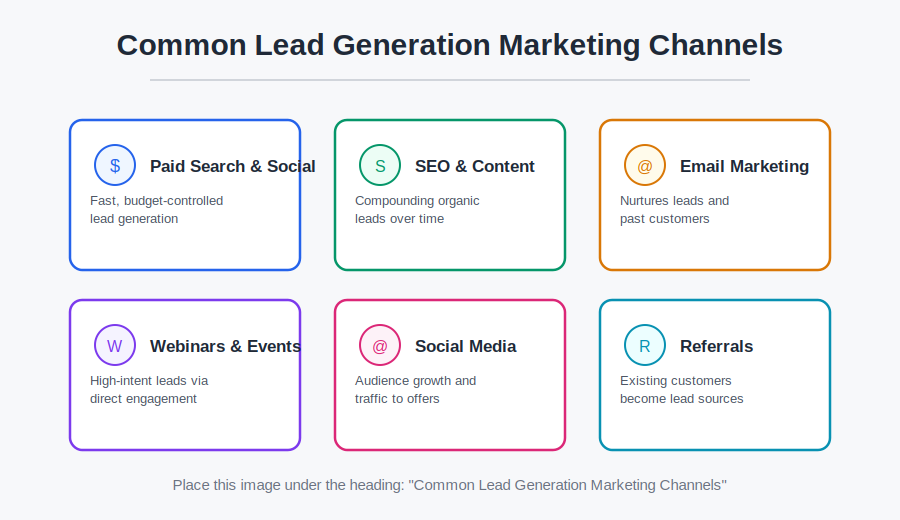
Common Lead Generation Marketing Channels
- Paid Search and Paid Social, quick and budget-constrained lead generation
- SEO & Content Marketing, compounding organic lead generation over time
- Email Marketing, nurturing existing leads and past customers
- Webinars & Events, high-intent lead generation via engagement
- Social Media, audience development and traffic generation to offers
- Referrals, turning existing customers into a source of leads
Lead Magnets: The Heart of Most Lead Gen Marketing
Lead magnet is what you give your prospects in return for their contact details: template, free tool, eBook, discount code, free consultation. Good lead magnets provide a solution to a particular problem, which has something to do with the paid product you will offer eventually because this way you will get leads who will be closer to being ready to buy.
Nurturing Leads After Capture
Every lead doesn’t always convert instantly. Generally, lead generation marketing has some sort of nurturing phase, which can be in the form of email campaigns, retargeted advertisements, or continuous content production, aimed at ensuring that the lead stays interested before converting into a buyer.
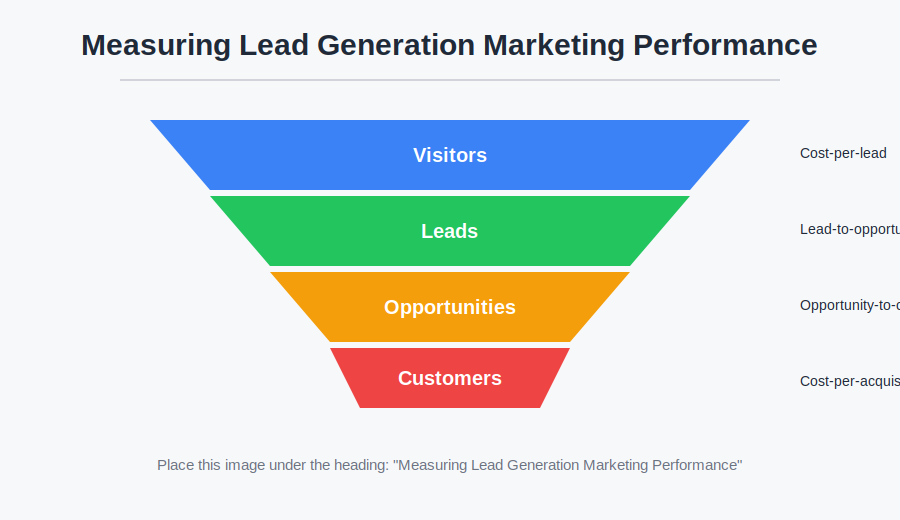
Measuring Lead Generation Marketing Performance
Key Metrics
- Cost-per-lead by channel and campaign
- Conversion rates at each stage of the funnel process (visitors into leads, leads into opportunities, opportunities into customers)
- The lead-to-customer conversion rate since some channels and promotions may not generate equally qualified leads
- Cost-per-acquired customer, the one that will determine the ultimate fate of the channel
Aligning Marketing and Sales
The most common area of conflict is when marketing’s definition of “a good lead” does not match up with what sales would actually like to work on. This can be avoided by having clear definitions that are agreed upon in advance, which can be done in the form of lead scoring criteria.
Common Mistakes in Lead Generation Marketing
- Ineffective offers which don’t interest potential customers
- Too complex and lengthy application forms
- No proper follow-up strategy resulting in lost prospects
- Focusing on the number of leads rather than on their quality and revenue generation
Bottom Line
Lead generation marketing will be most effective if it focuses on the offer, landing page, traffic source, and follow-up process targeting a particular audience’s particular problem, instead of looking at lead generation as a one-size-fits-all type of funnel. The best lead generation campaigns monitor performance up until revenue is achieved.