Lead Generation for Real Estate Agents: A Practical Playbook

A realtor’s career depends heavily on networking, but networking starts somewhere. The problem with most agents is not that they cannot close, but that they exhaust their list of potential contacts. This is how the most successful agents find leads through each channel.
Why Real Estate Lead Generation Is Different
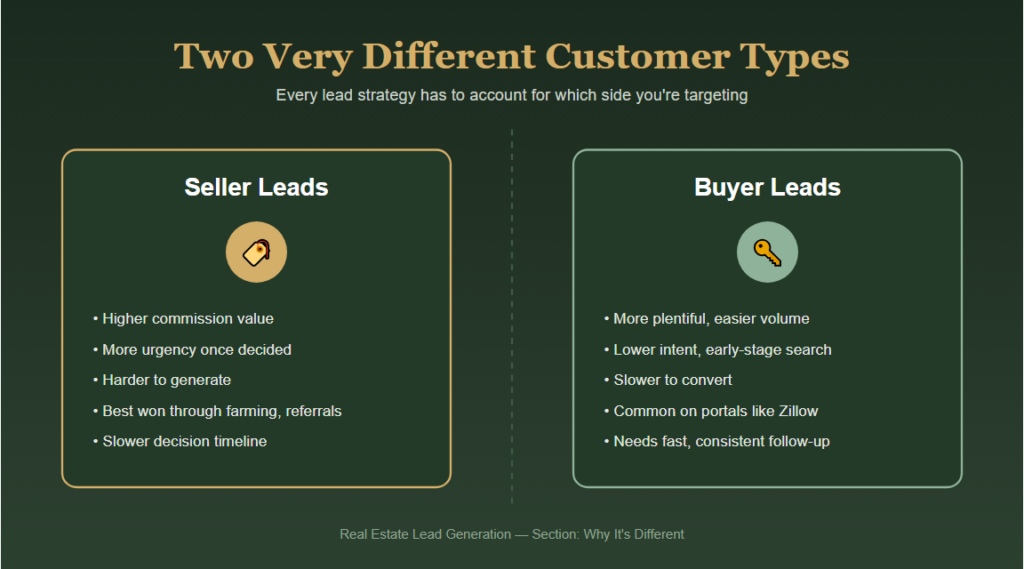
Not like other industries, the real estate business has a dichotomy of customers, buyers and sellers. Both have different approaches to searching for information, different times to make decisions, and different values of leads.
- Seller leads are usually more valuable (they pay bigger commissions and are more eager to sell their property once they make a decision).
- Buyer leads are more numerous but less committed and slower to buy.
Any lead generation method should take into consideration whether you are dealing with one type of client or another.
Portal Leads (Zillow, Realtor.com, Redfin)
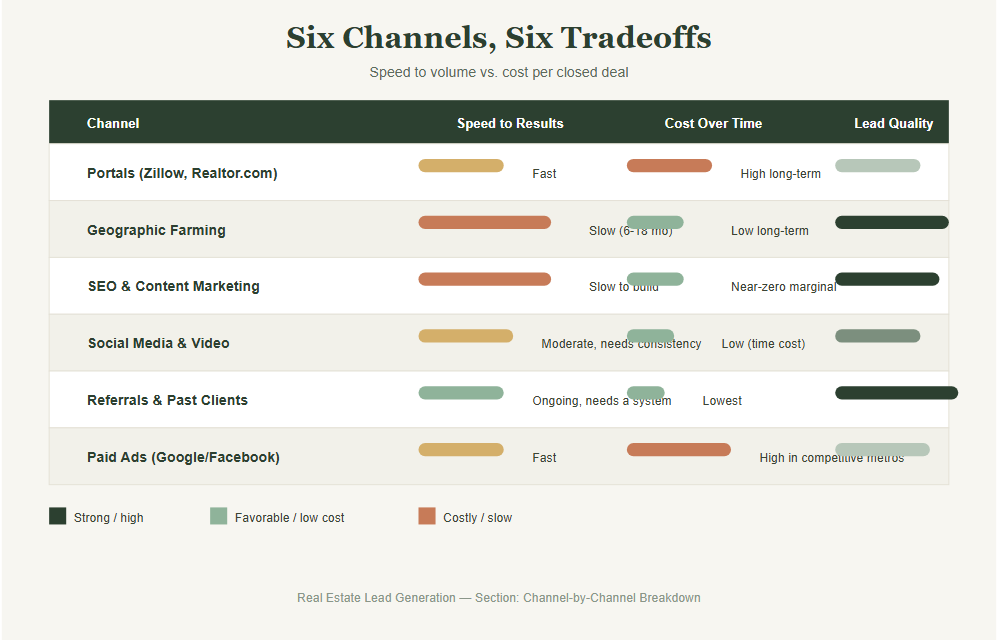
New agents begin with this option because it is the quickest way to get volume. This option involves paying for visibility (advertising by zip code or referral fees), and you will receive buyer leads through the portals.
Pros and Cons: These leads are typically distributed among many agents; the conversion rate tends to be very low; and the cost per closed deal is relatively high. Portals are most effective when used for volume and when an agent is still at the beginning of his/her career.
Farming a Geographic Area
“Farming” involves selling in the same neighborhoods or zip code over and over again, direct mail, canvassing, local Facebook groups, sponsorships of local community events until you become the “recognized agent” of that neighborhood.
It’s the long play (takes 6-18 months before it bears fruit), but it provides some of the best-quality buyer leads, since it’s all about trust and not clicks.
SEO and Content Marketing
Local content writers who produce local content, neighborhood guides, “what’s my house worth” pages, school district guides, market reports can appear in Google results from searches with true buying or selling intent.
This medium takes time to develop (SEO takes months), but once developed, provides leads at zero marginal cost and often better qualified and ready to make decisions.
Social Media and Video
Short videos (property tours, market overviews, “day in the life” videos) have become one of the fastest growing channels for generating leads, especially on Instagram and TikTok.
Successful agents in this channel post regularly and not just occasionally, since regular posting is needed to create an audience that will generate leads.
Referrals and Past-Client Systems
Referrals have the best conversion rate, but most agents just let this happen by accident.
Agents that produce referrals on a regular basis operate a system:
- Schedule follow-ups with previous customers
- “Just Sold” letter to their sphere
- Gifts when the home was purchased each anniversary
- Directly asking for referrals at key times (closing day, one year after moving in)
Paid Ads (Google and Facebook)
“Direct-response advertising such as ‘Free Home Valuation’, ‘See Homes before They Hit the Market'” may provide quick leads; however, cost-per-lead can be higher for those metropolitan areas that are very competitive.
This type of advertising is effective when accompanied by a quick follow-up process because real estate leads become stale in minutes, not days.
Putting It Together
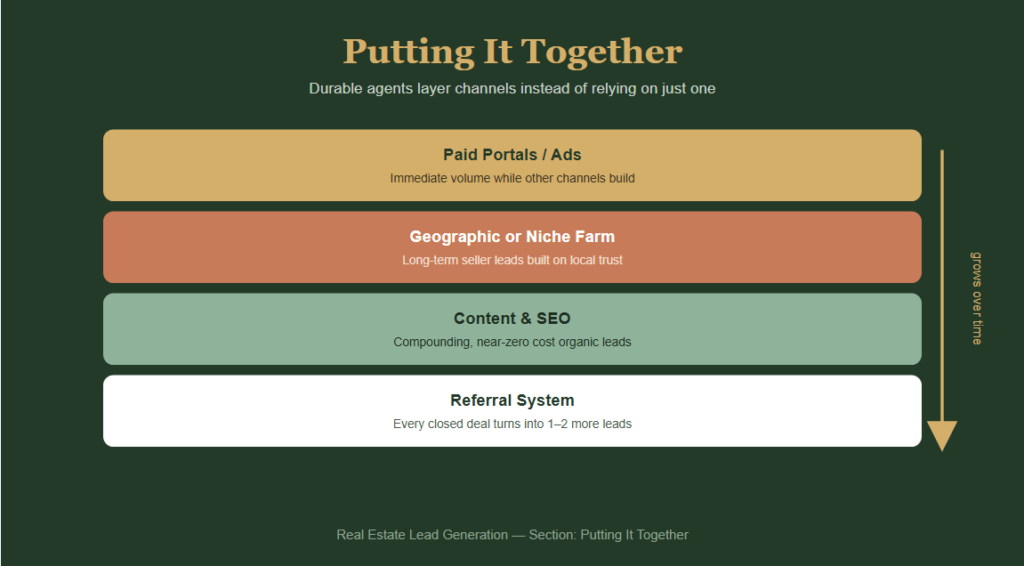
The players who create resilient businesses that are not as volatile generally employ channel stacking over using a single channel:
- Paid portal traffic or ads for quick sales while building other channels.
- Geographic/niche farming for ongoing seller leads.
- SEO/content creation for compounding, inexpensive organic leads.
- Referral program which converts each sale into 1-2 additional leads.
Lead Source Is Only Half the Equation
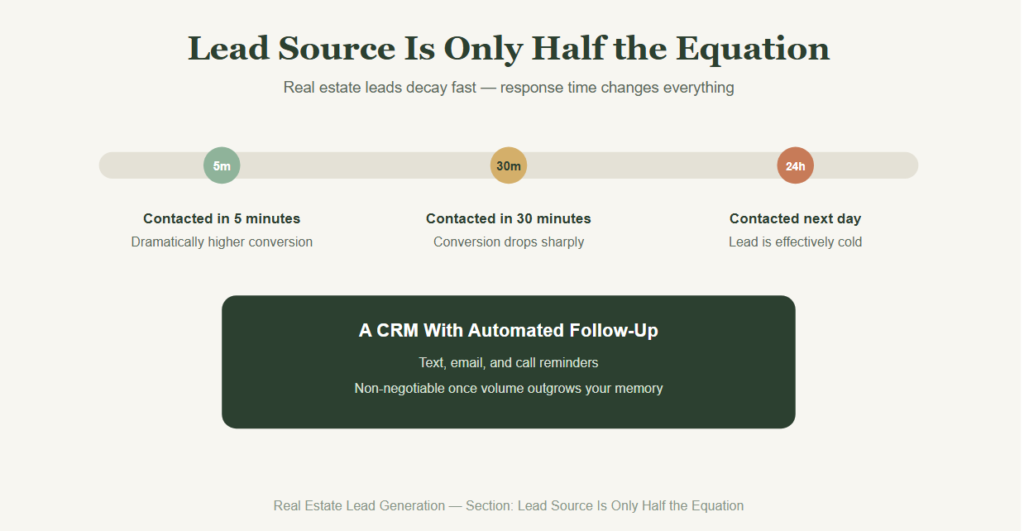
Without follow-up, lead generation does not mean much.
The real estate leads degrade fast, research proves that contacting a lead in five minutes instead of even thirty minutes raises chances of conversion dramatically.
An automated follow-up via a CRM system becomes mandatory at the point when you have too many leads to manage them manually.
Bottom Line
There isn’t one magic bullet for generating leads in real estate, and it all depends on your budget, market, and time frame until you want income.
Beginner agents need paid leads to survive, but experienced agents allocate their budgets differently and use farming, content marketing, and referrals. These take more time initially but cost far less money in the long term per transaction.