HR Outsourcing: When and How Businesses Hand Off HR Functions

Introduction
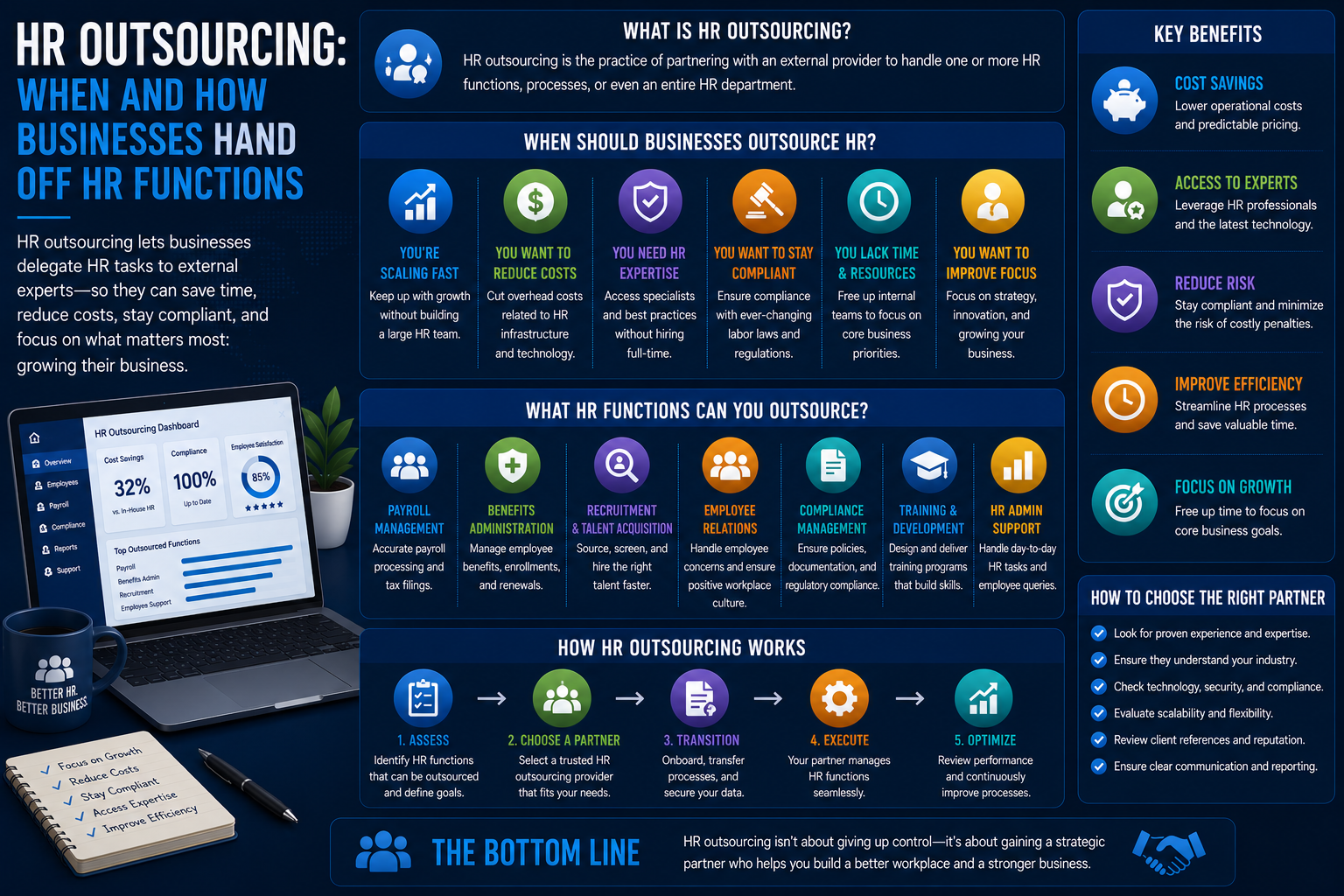
The concept of HR outsourcing is one whereby one outsources some or all the HR related activities including payroll, benefits, compliance, recruitment, among others, to an external party as opposed to undertaking them in-house.
This is a popular practice by smaller firms that require HR skills but do not have the capacity to employ an HR department.
Why Businesses Outsource HR
Creating an internal HR department with a person responsible for compliance of payroll, benefits, recruitment, relations with employees, and policy making requires either great specialization or hiring several people.
In small organizations, it is usually too expensive for their real HR needs.
Outsourcing helps obtain expertise and the necessary structure (especially in compliance which can be very expensive to implement wrongly).
Common HR Outsourcing Models
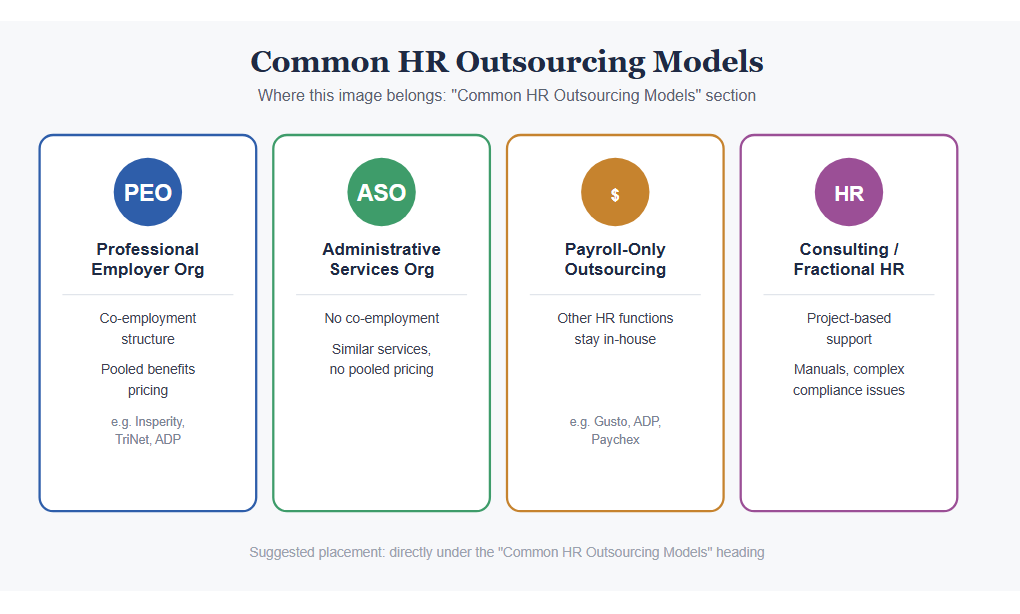
Professional Employer Organization (PEO)
The PEO is part of the co-employment structure, where it is considered to be the official employer in terms of taxes and insurance coverage, while the business owner manages the employees.
PEOs such as Insperity, TriNet, and ADP TotalSource generally provide all these functions, which allows small firms to get better benefits at reduced costs.
Administrative Services Organization (ASO)
Unlike a PEO, in which there is an element of co-employment, there is no such co-employment in this arrangement. Although the services offered may be similar, it does not have the benefit of pooled pricing available with a PEO.
Outsourced Payroll Only
There are some companies that choose to outsource payroll only (via Gusto, ADP, or Paychex), while retaining all other HR functions, which is suitable for those companies that primarily face problems related to payroll.
HR Consulting and Fractional HR
While some organizations outsource the ongoing administration of HR functions, others prefer to employ a human resources consultant or a fractional human resources professional on particular projects (creating an employee manual, dealing with an intricate compliance problem).
What HR Outsourcing Typically Covers
- Payroll Processing and Tax Reporting
- Employee Benefit Management and Group Benefit Plans in PEOs
- Wage and Hour Compliance Assistance
- Leave Compliance Assistance and Workplace Safety Compliance Assistance
- Labor Relations Advice, especially in difficult labor relations situations
- Recruitment Assistance, in some arrangements
- Human Resources Policy Development, including Employee Manuals
Advantages of HR Outsourcing
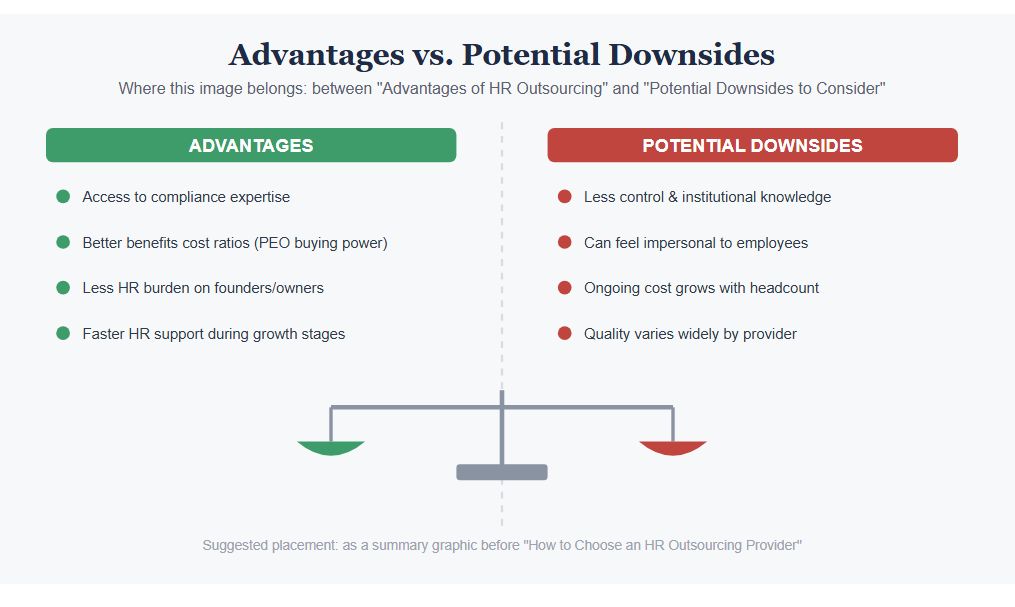
- Access to compliance expertise that is highly difficult and costly to develop on a small scale in-house
- More favorable benefits cost ratios through the PEO’s buying power
- Less burden on the founder/owners or team who would have to manage HR along with other tasks
- Quicker access to HR help during the growth stages, without delays for hiring HR internally
Potential Downsides to Consider
- Lack of control over HR activities, as well as the lack of institutional knowledge regarding your company’s unique culture when compared with internal staff
- The relationship is impersonal and at times confusing for employees as far as where to turn if there are any complaints
- Continuous cost that will increase with your headcount and could at some point surpass the cost of setting up an internal team as your company grows
- Varies widely from one provider to another
How to Choose an HR Outsourcing Provider
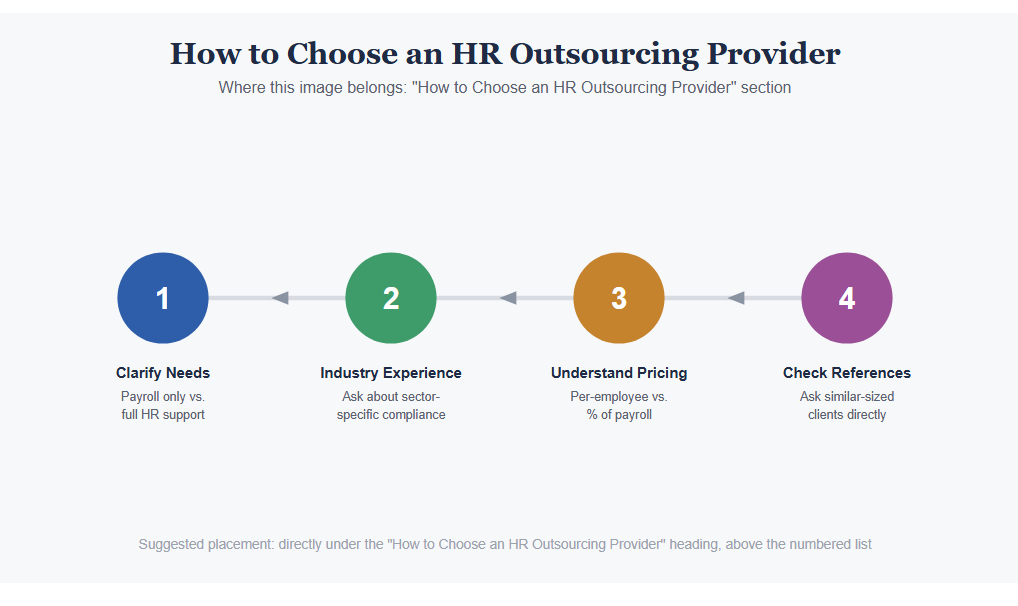
1. Clarify Which Functions You Actually Need Help With
A company that requires help in payrolls and compliance needs something very different from a company that wants help in HR management and employee relations
2. Ask About Industry Experience
A PEO that has been working in the same industry as you for a long time knows more about the nuances of compliance in your industry than a general PEO.
3. Understand Pricing Structure Clearly
Generally speaking, PEOs charge according to either number of employees per month or per percentage of payrolls.
Get an understanding of exactly what is included or billed separately.
4. Check References from Similar-Sized Clients
Ask about responsiveness and the actual handling of compliance issues, rather than just listening to the sales pitch.
Bottom Line
By outsourcing the human resources function to an external party, small firms can tap into services relating to compliance, benefits management, and administrative assistance at an affordable cost, but there are certain downsides as well.
It all boils down to choosing the correct type of outsourcing, whether it is full service PEO, ASO, payroll only or even fractional consulting, depending on what exact HR function is lacking for you.