GRC Software: A Practical Guide to the Category

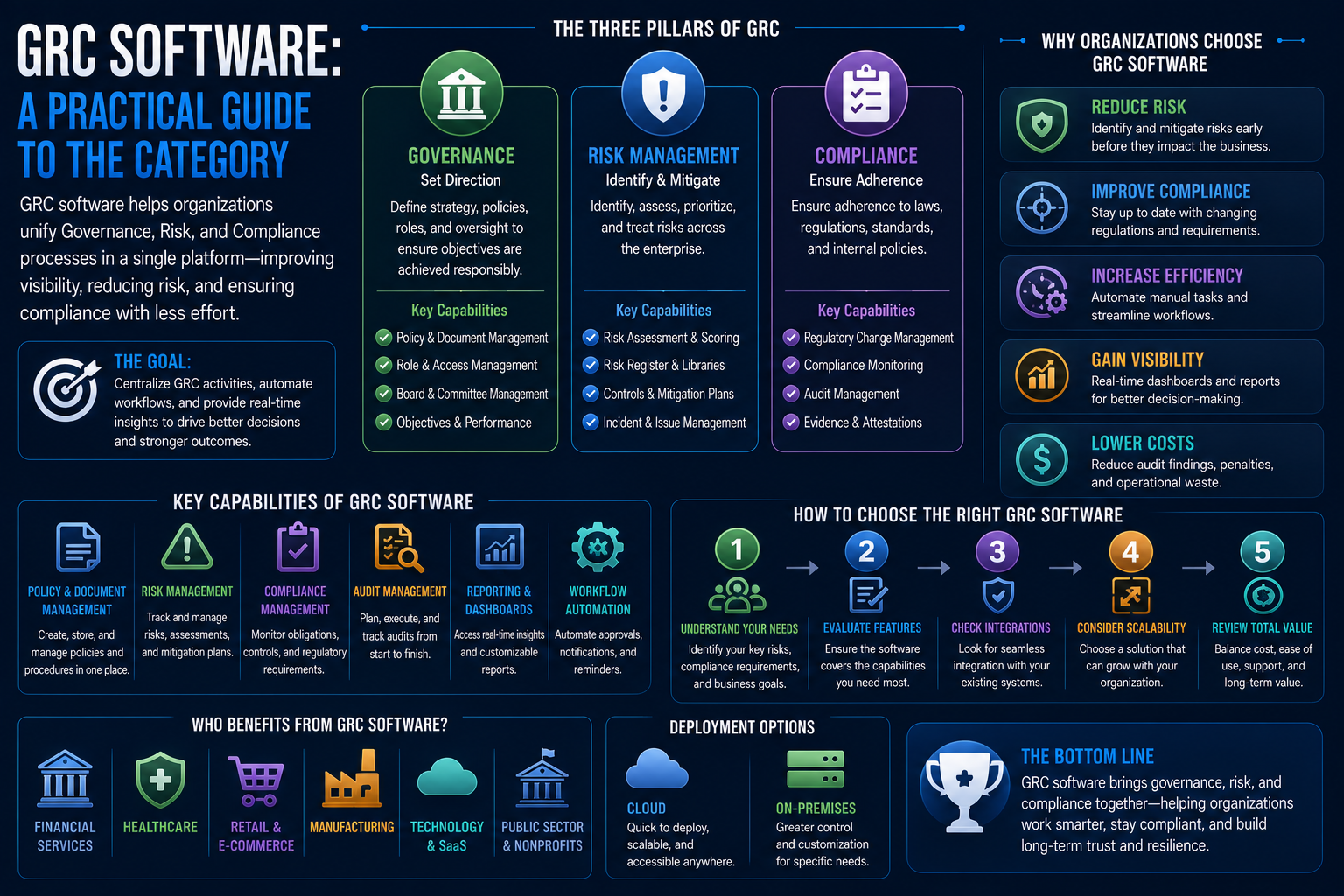
GRC Software is designed to consolidate all processes related to governance, risk management, and compliance which could have been dispersed across spreadsheets and other unconnected programs. This particular classification has been expanding due to rising regulatory demands, data privacy policies, security architectures, and so on. It is quite difficult to choose an appropriate tool without knowing about its features.
What GRC Software Actually Does
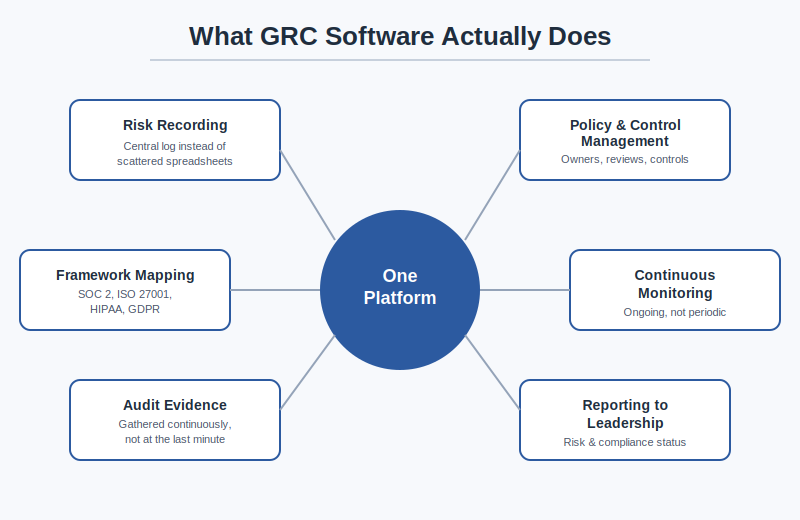
The fundamental reason that organizations utilize GRC software is that it allows the enterprise to have one solution for:
- Recording risks and their current state, as opposed to assessments being stored separately on spreadsheets
- Managing policies and controls within the system, along with assigned owners and scheduled reviews
- Mapping the controls to those regulations or frameworks that they apply to (SOC 2, ISO 27001, HIPAA, GDPR, etc.)
- Monitoring the state of compliance on an ongoing basis, and sometimes even automatically, as opposed to checking once periodically
- Gathering evidence for audits without having to rush around at the last minute
- Providing management, and even outside parties when necessary, with information regarding current risk and compliance statuses
Main Categories of GRC Software
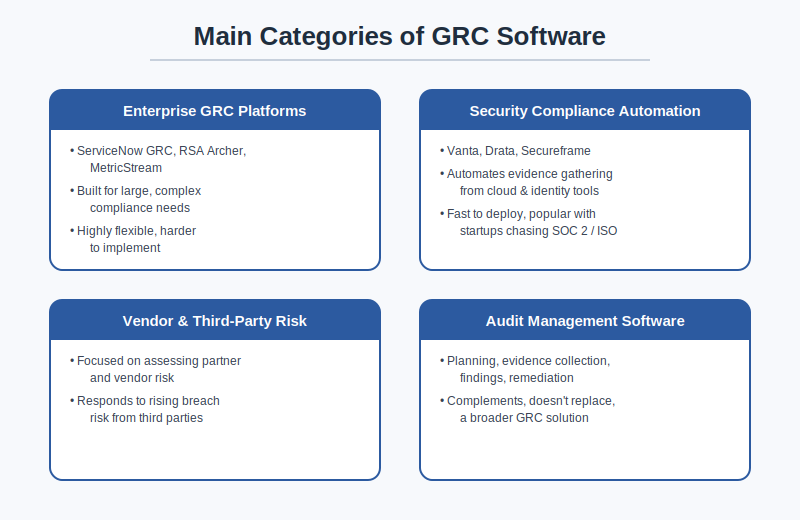
Enterprise GRC Platforms
The tools such as ServiceNow GRC, RSA Archer, and MetricStream are designed for large companies that have to deal with compliance issues that are complicated and involve multiple frameworks. These tools are very flexible, thus making them both extremely useful and hard to implement.
Security Compliance Automation Platforms
Vanta, Drata, and Secureframe have gained traction, especially among rising tech startups, by specializing in the area of security compliance frameworks and automating most of the evidence gathering process straight from cloud infrastructure, identity providers, and other connected applications. These products are quicker to deploy than enterprise-wide solutions and may even be selected explicitly to enable a stalled sales transaction requiring either SOC 2 or ISO 27001 accreditation.
Vendor and Third-Party Risk Management Tools
Certain GRC solutions are tailored to assess and manage the risk associated with vendors and partners because of the increase in the number of data breaches caused by such parties.
Audit Management Software
These tools were specifically designed for use in audit management, planning, collecting evidence, finding results, and performing remediations, often complementing but not substituting the more general GRC solution.
Key Features to Evaluate
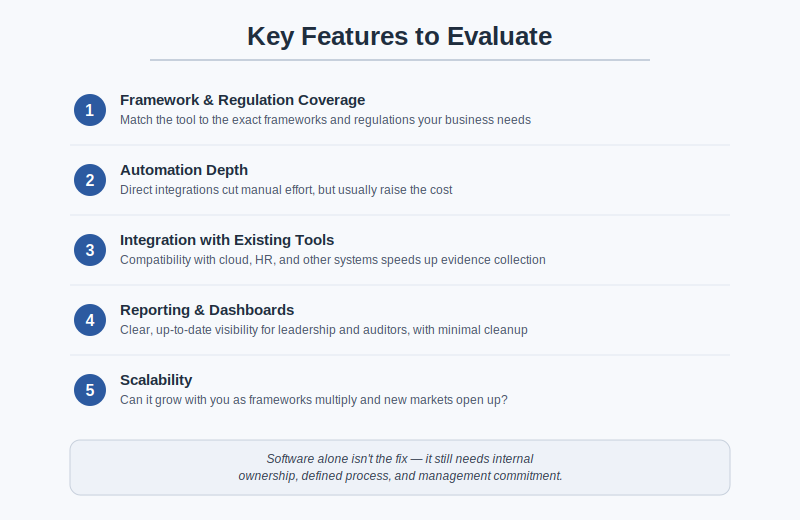
Framework and Regulation Coverage
Check that the software can work with the exact frameworks and regulations your business needs because if the software is good in security frameworks but bad in others, then it may not be sufficient for your company.
Automation Depth
Some platforms integrate directly into the cloud infrastructure, identity services, and other tools in order to get automatic information about violations of controls; others require more manual effort in uploading documentation. Automation decreases manual effort significantly, although it increases the cost of the product.
Integration with Existing Tools
Software which is compatible with your cloud service, HR management system, and all other essential systems will take less time to collect necessary evidence than the manual process.
Reporting and Dashboards
Seek information that is truly valuable for leadership and auditors, relevant, up-to-date visibility on compliance, not something that needs a lot of work before becoming comprehensible.
Scalability
Consider whether the platform is able to grow alongside you as your regulatory requirements grow, especially if you will be adding new frameworks and entering new regulated markets down the road.
Implementation Considerations
Implementation of enterprise GRC solutions may take many months due to their configurability and process-related work related to assessing the risks and controls of a particular company. The implementation of security compliance automation tools may be quicker since these solutions are usually aimed at fast deployment, even within several weeks.
In either case, software is not a solution to GRC issues by itself and requires internal ownership, process definition, and commitment from the organization’s management. A good GRC platform filled with outdated information provides only a false sense of security.
Common Mistakes When Selecting GRC Software
- Opting for a robust system when the organization is not yet sufficiently complex to warrant such a move
- Undervaluing the internal effort necessary to ensure the software remains up-to-date
- Neglecting to consider the integration issues, thus creating manual processes that negate the benefits of the software itself
- Not correlating the software with the relevant frameworks and regulations
Bottom Line
The software used for GRC must be in line with the level of regulation and growth rate in your business, where an automated solution works great for high-growth tech firms, but larger firms will have to choose a more configurable enterprise GRC solution. However, regardless of the option you choose, the software can only work as well as its process and ownership.