Enterprise AI Agents: What Changes at Scale

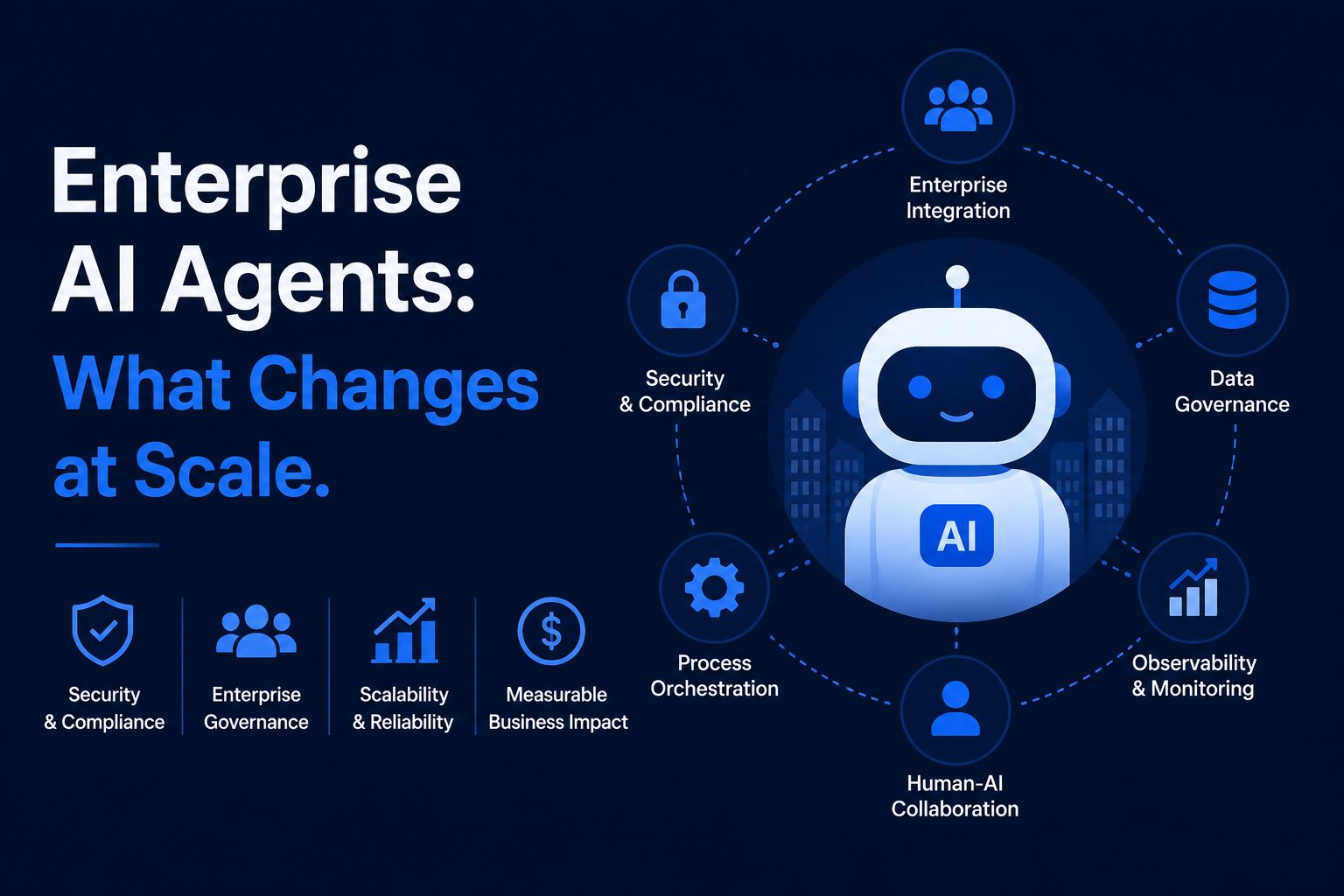
The deployment of AI agents in a larger enterprise environment would be significantly different from the deployment of an agent by a smaller group for the purposes of accomplishing a particular task.
Why Enterprise AI Agents Require a Different Approach
An individual agent performing a specialized function for a small group of people poses much less risk should something go wrong. An enterprise environment, where AI agents will need to be deployed across various departments and perhaps thousands of users, must consider a whole range of factors such as security risks associated with scaling and monitoring of numerous agents as opposed to one.
Core Requirements for Enterprise AI Agent Deployment
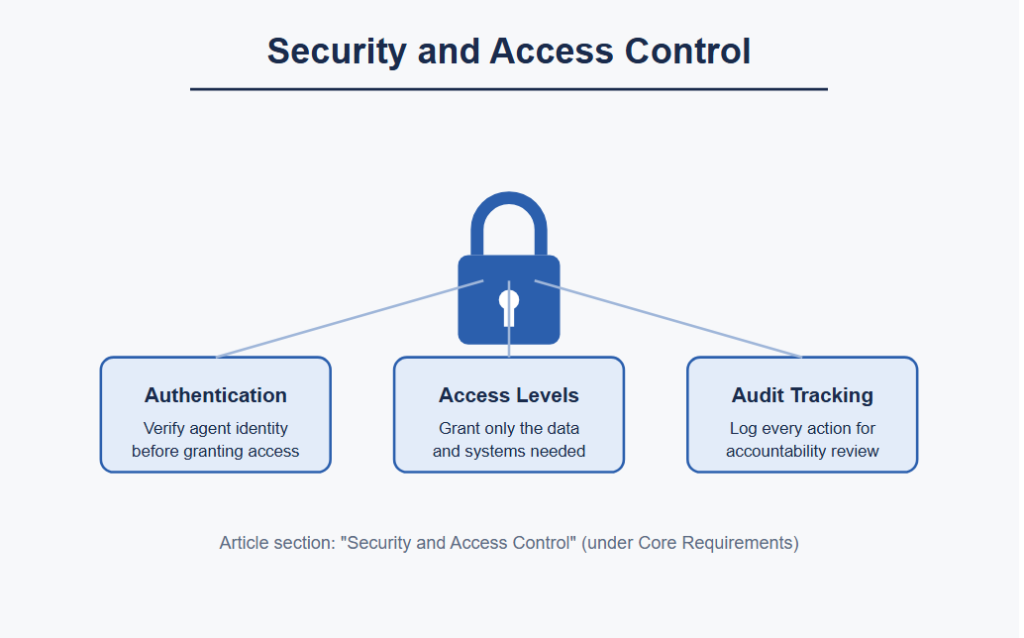
Security and Access Control
Enterprise agents must also have access to sensitive data, so access control becomes an important issue. Access control must provide the right access level to the system as well as the information. It is important to have proper authentication and tracking of the actions taken by an agent as part of auditing purposes.
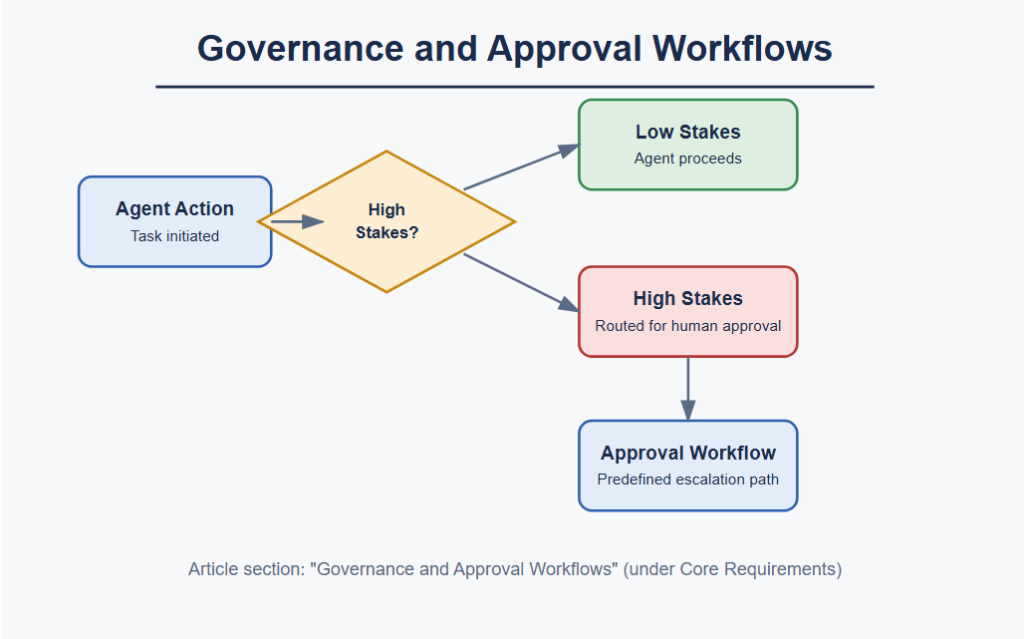
Governance and Approval Workflows
The higher the stakes of an action taken, the more the need for predefined approval workflows, because some actions will be beyond the capability of the agent and it should be known how the agent dealt with such situations.
Integration with Existing Enterprise Systems
Enterprise agents should fit into an enterprise’s IT infrastructure and be capable of being integrated with various other technologies including ERPs, CRMs, Identity Management Systems, Data Warehouses and so forth.
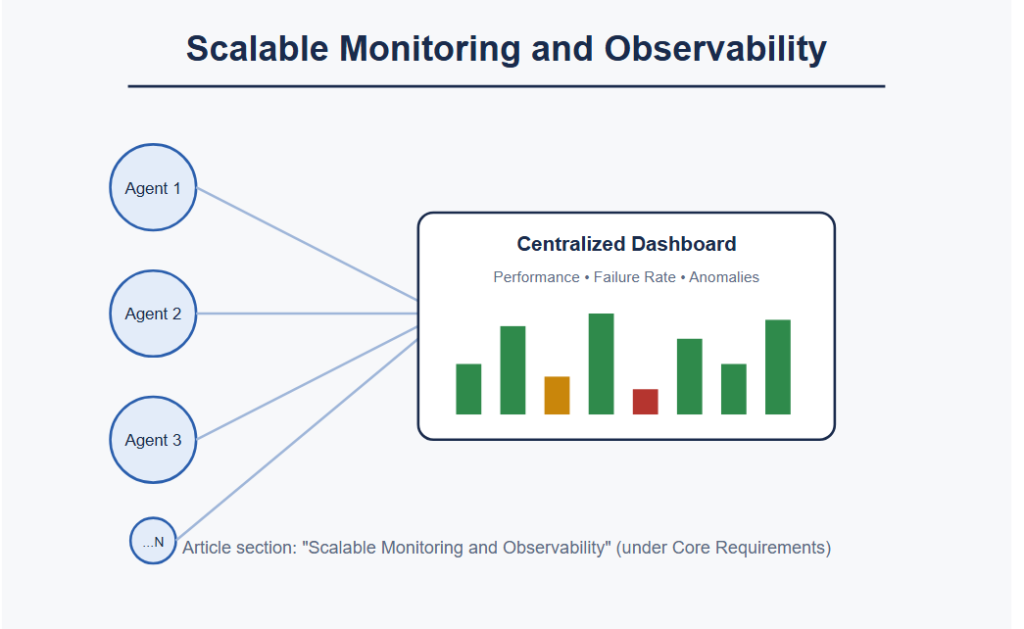
Scalable Monitoring and Observability
Enterprises will require that there be visibility of how the various agents perform, their rate of failure, and any peculiarities in their behavior rather than monitoring each of the agents individually and through informal means.
Compliance and Audit Readiness
In certain industries, such as finance and health care, there is usually a need for compliance of the agent deployments with certain regulatory standards, which show that agent activities are logged and monitored.
Common Enterprise Use Cases for AI Agents
Customer Service at Scale
Managing a large number of customer queries through various channels and in multiple languages, with established escalation paths for handling them by human agents when necessary.
Internal Process Automation
Automating multi-stage processes such as approval for purchases, onboarding of new hires, IT service requests that were previously managed manually through various systems and people.
Data Analysis and Reporting
Agents that can gather information from different internal systems, analyze them, and produce reports or highlight any anomalies, thus minimizing the manual effort of business intelligence professionals.
Software Development Support
Programming agents that support engineers in code reviews, code testing, and general maintenance, especially useful for saving time in engineering tasks.
Sales and Marketing Operations
Aids for conducting lead research, one-to-one outreach in bulk, and lead pipeline management, integrated with current CRM and marketing automation systems.
Organizational Challenges Beyond the Technology
Change Management
It is important for the employees to know how the use of agents alters their role, and there should be no misunderstandings about which processes are being automated and for what reasons.
Skills and Ownership
The enterprise should understand that agent performance and maintenance can be owned either by the enterprise itself, an AI/automation department, each business unit separately, or IT; otherwise, there is a high chance that the agent will deteriorate in performance because of the lack of supervision.
Realistic Scoping
Some enterprises launch a full-scale deployment of their agents before they prove themselves reliable enough in completing defined tasks, which usually ends up poorly.
How to Approach Enterprise AI Agent Adoption
Typically, most of the enterprise deployments begin with the development of a narrowly scoped pilot, a workflow with measurable metrics of success, before progressing on to wider deployment scenarios. This approach helps develop both the technical confidence in the capabilities of the agent and organizational buy-in, as the organization demonstrates its real value before it asks for changes to how people operate within the business.
Bottom Line
There needs to be significantly more attention paid to security, governance, integration, and change management in an enterprise deployment compared to a small-scale deployment. The deployment that progresses from narrow scope pilots, establishes a good monitoring and auditing infrastructure, and maintains accountability regarding agent performance often succeeds where others fail.