Email Marketing for Real Estate: How Agents and Brokers Can Win More Clients

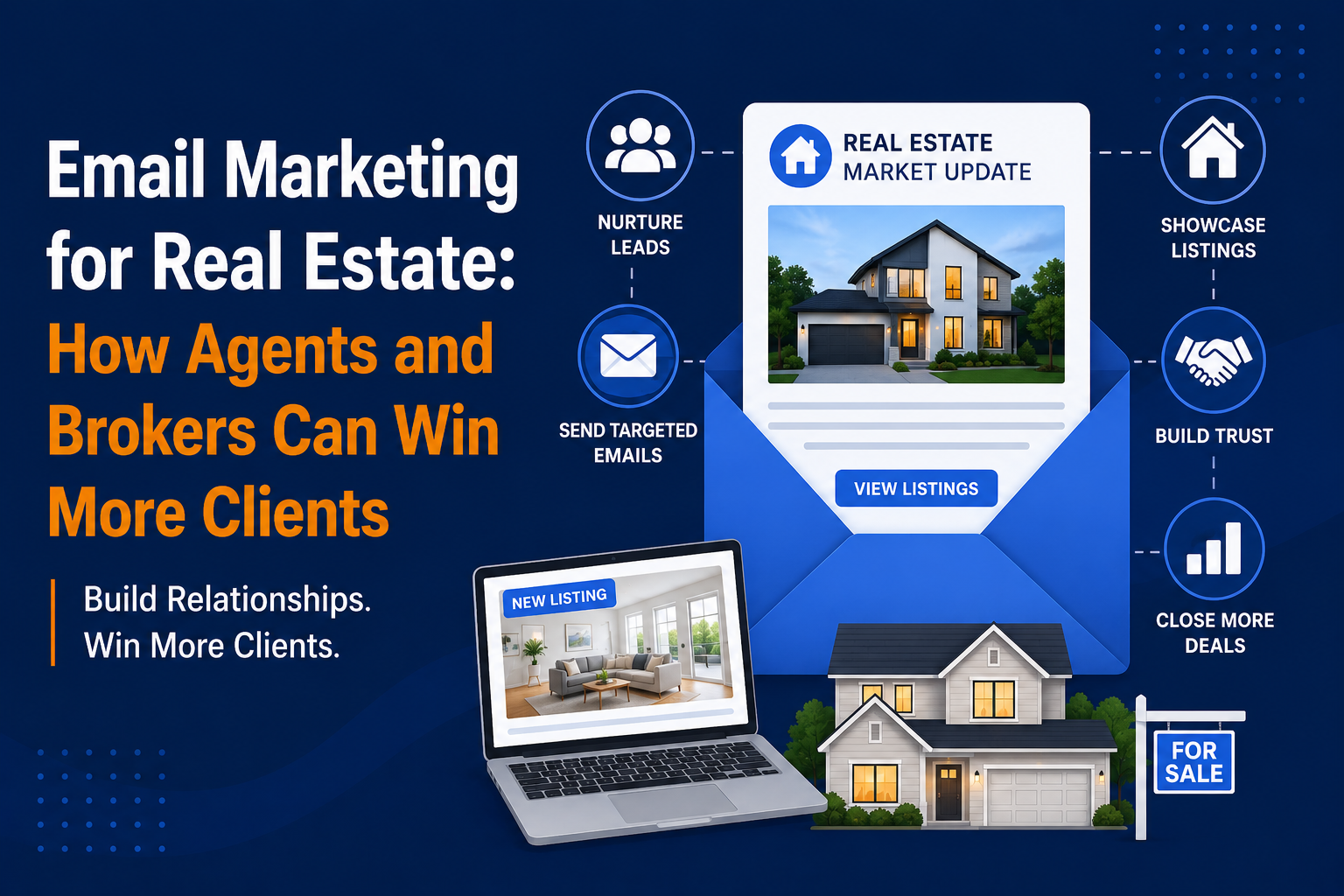
Real estate is all about building relationships. Most people select an agent who they can trust, and trust is earned by regular, valuable communication. Email marketing is the most efficient way to earn trust on a large scale.
If you’re an individual agent building your first email list, or a company wanting to systemize your communication with clients, this guide will help you with that.
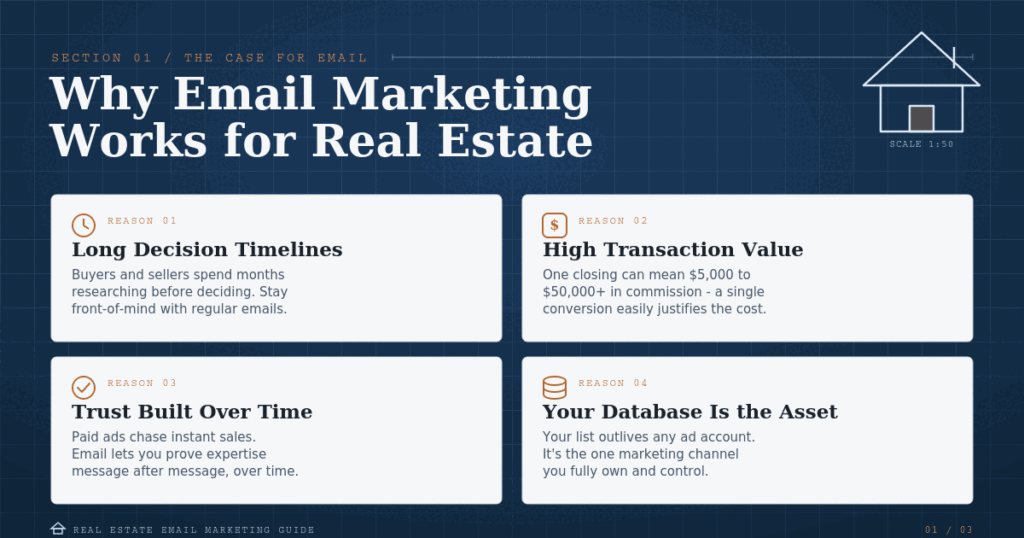
Why Email Marketing Works for Real Estate
There are specific strengths of real estate email marketing that aren’t found in any other industry.
Long Decision Timelines Work in Your Favor
Buyers and sellers take a few months to look around before deciding anything. Your email campaign can keep you front-of-mind during their research period.
High Transaction Value Justifies Investment
One transaction alone may give you up to $5,000 – $50,000 or more commission. The return on investment in email marketing for real estate will be huge if you convert even one prospect a year out of your list.
Trust and Expertise Can Be Communicated Over Time
Whereas paid marketing is all about instant sale, email marketing helps establish expertise in your niche through credibility building.
Your Database Is Your Most Valuable Business Asset
“Without exception, every agent who has enjoyed success using this system will tell you that their email list is worth more to them than any account on any ad platform out there.”
Building Your Real Estate Email List
A real estate email list is different compared to a retail or business-to-business list. It’s relationship-based from the get-go.
Online Tactics
- Embed a lead magnet in your website along with the email sign up form.
- Create a valuation tool that requires an email address to get the output.
- Generate a monthly report about the market prices in your neighborhood.
- Offer free home buying guide download through social media.
- Add a sign up option in the contact form as well as property inquiries form.
Offline and In-Person Tactics
- Tell all you know about your list when you speak to anyone – buyers, sellers, referrals, neighbors
- Gather email addresses through your open houses (most convenient is digital sign-in sheet)
- Include QR code on your marketing materials, yard signs, business cards
- Put a mention about your list in your voicemail message and email signature
Past Client and Sphere Tactics
- Upload your existing contact list (with permission) and send them a “stay connected” welcome email.
- Have past clients refer their friends that may be interested in local market news.
- Work with mortgage brokers, home inspectors, and title companies to build a cross-referral list.
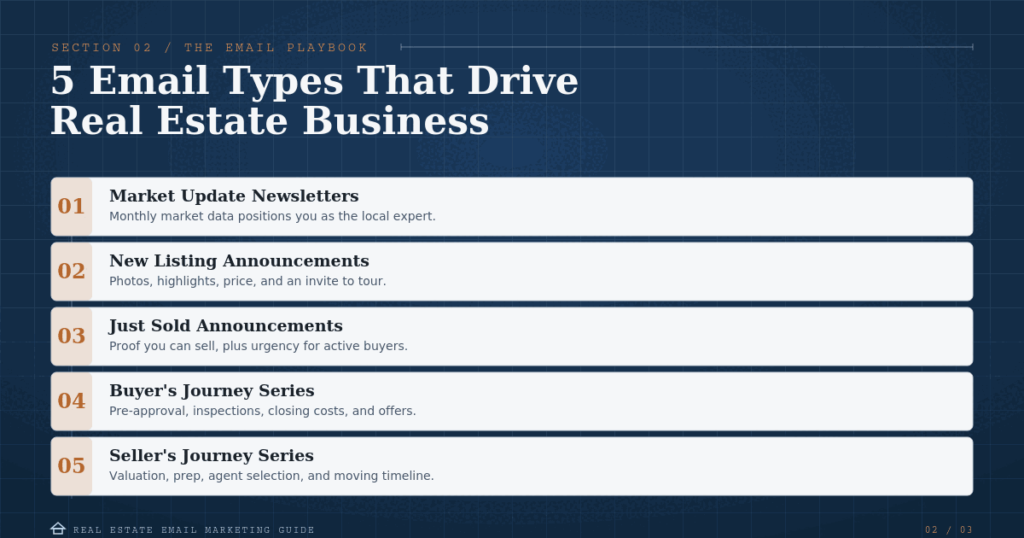
The 5 Email Types That Drive Real Estate Business
1. Market Update Newsletters
Your most important ongoing email campaign. Market reports monthly or bi-monthly set you up as an expert.
What to Include
- Median Sales Price vs. last year during the same period
- Listing stats (comparing inventory to last month)
- Average number of days on the market
- Notable sales that have occurred recently in your neighborhood
- Your interpretation of what all this means for buyers and sellers right now
This is one of the most forwarded types of emails because people share their neighborhood market statistics with their friends who are thinking of buying or selling a home.
2. New Listing Announcements
Use when you have new listings. Include photos, highlights, price, and an invitation for a tour appointment.
3. Just Sold Announcements
“Sold” emails accomplish two things: They demonstrate to sellers that you can sell properties, and that you remind buyers that properties are being sold (urgency trigger).
Include
List price, sales price, days on the market, and story behind the transaction.
4. Buyer’s Journey Emails
For people just starting the purchasing process.
A Series Covering
- How to get pre-approved for a mortgage
- Factors to consider when inspecting your dream home
- Understanding your closing costs
- Buyer programs that help first-time home buyers in your area
- How to make a good offer in this market
5. Seller’s Journey Emails
For homeowners considering selling their property.
A Series Covering
- Ways of valuing the property
- Things to do before putting up for sale (repairing, staging)
- How to select the appropriate listing agent
- Things expected when selling the property
- Timeline and checklist for moving
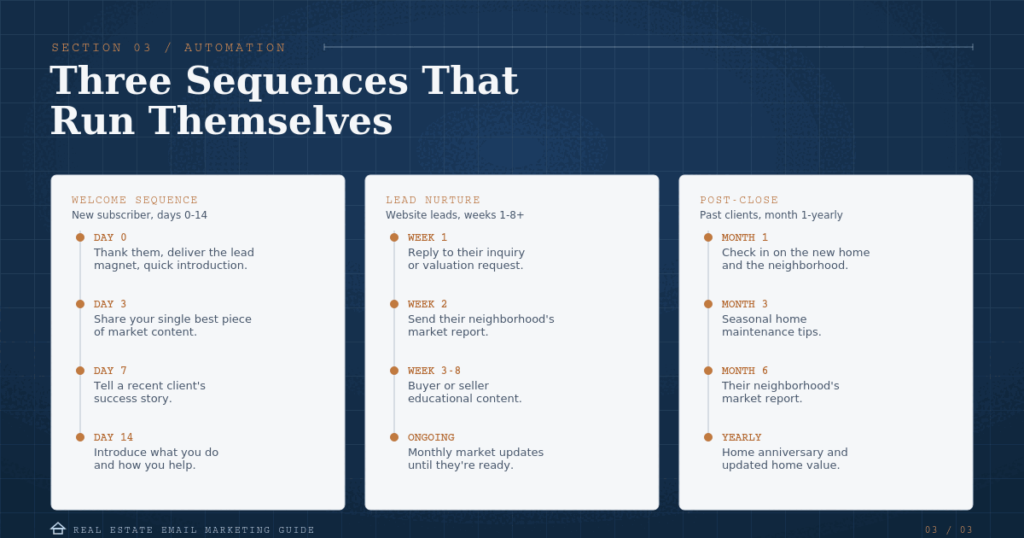
Real Estate Email Automation: What to Set Up First
One thing that makes automation extremely useful in the real estate industry is the fact that the sales cycle is rather long and it’s simply impossible to follow up with each and every lead.
New Subscriber Welcome Sequence
- Day 0: Thank them for signing up, deliver your lead magnet, give a brief introduction
- Day 3: Post your best market content ever
- Day 7: Provide a brief account of your last client
- Day 14: First introduction to what you do
Lead Nurture Sequence (For Website Leads)
Activated whenever they submit an inquiry via a contact form or seek a property valuation.
- Week 1: Response to the request for the valuation or info provided in brief + introduction
- Week 2: Market report from their community
- Week 3-8: Provide relevant buyer/seller educational content
- Continuously: Monthly market update until they are prepared to make a deal
Post-Close Sequence (For Past Clients)
- Month 1 after closing: What do you think about your new house? Any queries regarding your new community?
- Month 3: Tips on home maintenance seasonally
- Month 6: Market report for their community
- Yearly: Home anniversary email (“Happy one year in your house! This is the value of your home today.”)
The previous customers who were valued will make referrals. The annual valuation of a property is perhaps the single best trigger for making a referral in the real estate industry.
Writing Real Estate Emails That Get Opened
Subject Lines
The real estate email subject line should be specific, local, and beneficial.
High-Performing Real Estate Subject Lines
- “Home Values: What Happened This April”
- “Could Your Home Value Be 12% Higher Than You Realize?”
- “Three Recently Sold Properties: What We Learned From Them”
- “Selling Your Home Soon? What Buyers Are Looking For”
- “New Listing!: Open House This Weekend”
Email Copy
- Be conversational in your tone, as if writing to a friend
- Add your photo and contact details in every email
- Give an insight into market situations, rather than just giving facts
- Always use a minimum of one CTA (schedule a call, view listing, respond to this email)
Tools for Real Estate Email Marketing
CRM + Email Platforms
Follow Up Boss
Tailored for real estate. Lead nurture automation done right.
BoomTown
CRM software that’s made for the real estate market.
KVCore
Popular with teams and realtors.
HubSpot
General but powerful tools for segmentation and automation.
Standalone Email Platforms (For Agents Without a Real Estate-Specific CRM)
Mailchimp
Unlimited contacts for up to 500 prospects, user-friendly platform.
ActiveCampaign
Robust automation without an excessive price tag.
ConvertKit
Works great for individual branding-oriented realtors.
Compliance and Legal Considerations
There are some particularities of real estate email marketing that should be followed.
CAN-SPAM Compliance
Include your physical address and unsubscribe link in every commercial email. Honor any unsubscribe request right away.
Fair Housing
Make sure that none of your email content will be seen as discriminatory against someone on the basis of race, color, national origin, religion, sex, familial status, or handicap.
State Licensing Rules
States have specific laws for how real estate agents may market themselves. See the regulations of your state licensing board.
GDPR
In case you have connections within the EU, opt-in consent becomes necessary.
Common Real Estate Email Marketing Mistakes
1. Making Every Email a Listing Announcement
Your subscribers are people and not the search engines for property. Include market education, stories, and local community content as well.
2. Not Having a Consistent Sending Schedule
Irregular emails make your subscribers forget you. Once in a month is better than none at all.
3. Ignoring Past Clients
Past customers are your biggest leads. Keep in contact because most agents don’t, which makes it easy for you to distinguish yourself from others.
4. Using a Generic Template That Doesn’t Reflect Your Personal Brand
This is a very personal industry. Your email should have your personality and not that of a corporation.
5. Sending to an Unclean List
Contacts from the old days who never signed up will label you as spam. You should import only those who know who you are and will remember your name.
Final Thoughts
Email marketing for real estate is a marathon, not a sprint, which is precisely why most agents give up. The agents who continue to pursue it receive a constant flow of referrals, repeat customers, and new leads from those who have been following their market intelligence for months or even years.
The recipe is straightforward: grow your email list, provide value by sharing your market knowledge regularly, set up an automated system to reach out to old clients, and keep in touch with them. By doing it correctly, you’ll have the best business development tool in your arsenal.