Data Protection Solutions: What They Actually Cover and Why Choosing One Is Easy to Get Wrong

Introduction
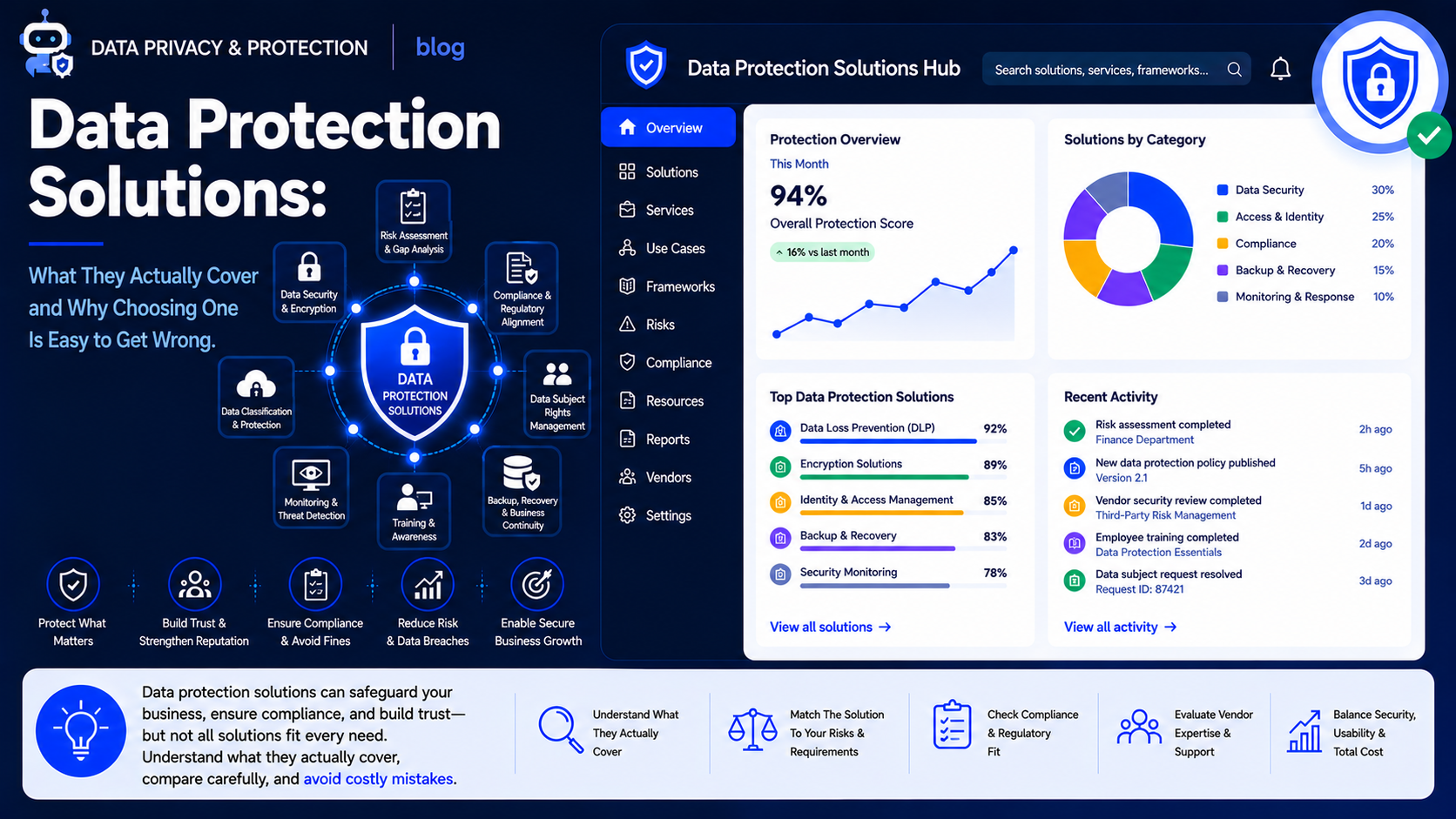
Data security solutions come in many different types of software and technology tools that serve the purpose of protecting against data loss, access, and compliance problems, not some set of products that work in the same way for everyone.
At first glance, that may not sound too complicated; but there are actually many different features that fall into this category, which can make it hard for businesses to compare their options.
Why Data Protection Solutions Are More Complex Than They Appear
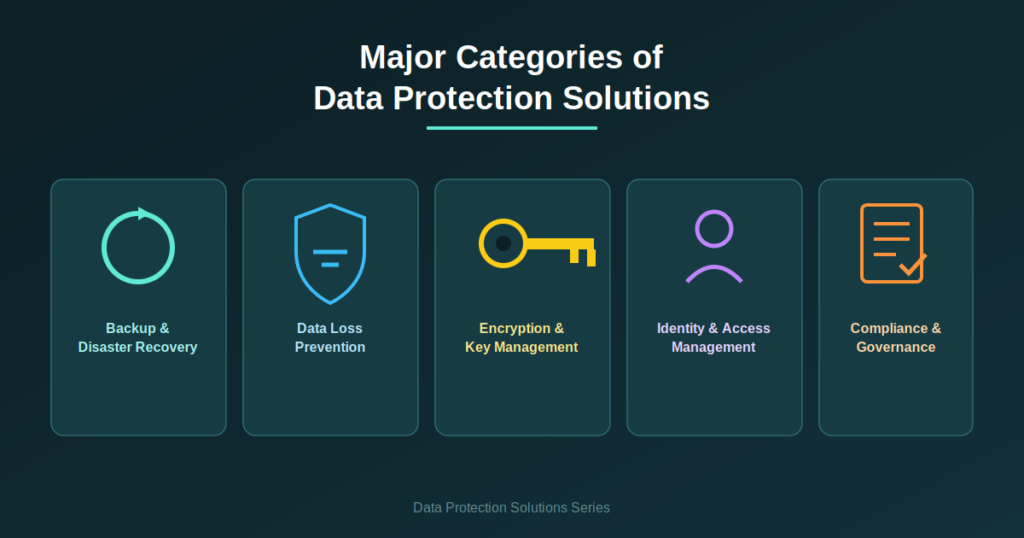
The data protection solutions market does not constitute a homogeneous segment but comprises the following components:
- Backups and disaster recovery software
- Data loss prevention solutions
- Encryption and key management solutions
Some customers base their comparison of various solutions solely on price and brand name, and they fail to recognize that a particular solution’s capability meets their risk profile requirements.
In the case of an enterprise considering several solutions, capability must be considered separately for each risk domain since there is a fundamental difference between a solution designed for backup and disaster recovery and a solution designed to prevent leaks of sensitive information outside the organization.
Major Categories of Data Protection Solutions
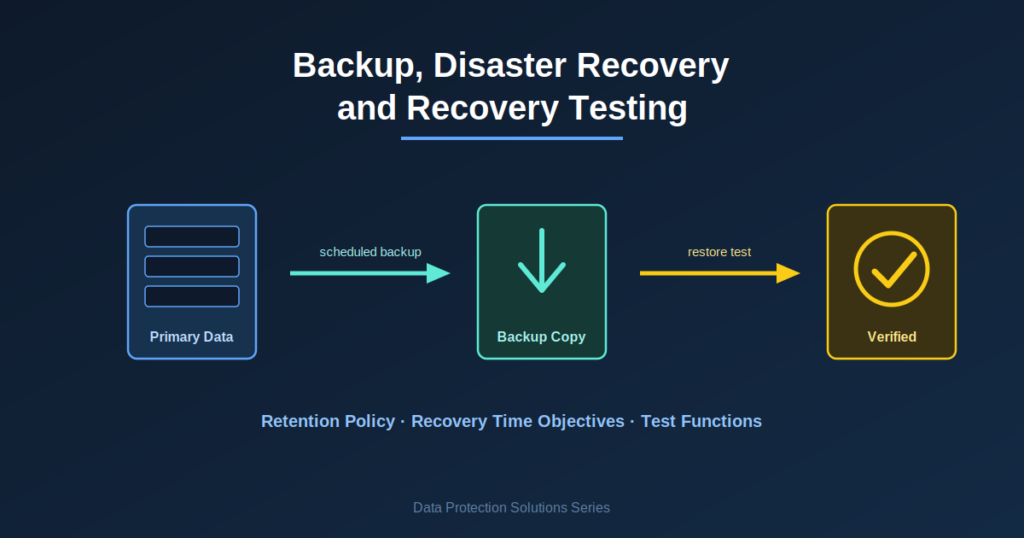
Backup and Disaster Recovery Software
Rules Governing
- Backup schedules and policies for retention
- Time and objectives for recovery
- Test functions to ensure real recoverability
Selecting backup software without test recovery ability is among the most common gaps because it can lead to the following problems:
- Confidence in protection of data which is not true
- Extended time when recovering the data in reality
- Learning about backup failure only when it happens
Data Loss Prevention Tools
Data loss prevention technologies normally provide content monitoring, which forces businesses to follow policies that dictate how sensitive information flows internally and externally through the business.
DLP Features Often Include
- Identifying patterns of sensitive information through content scanning
- Enforcing policies through blocking any illegal information transfer
- Generating alerts in case of policy breaches for investigations
Encryption and Key Management Solutions
Managing not only involves encryption, but also the growing challenge of securing encryption keys.
Those Solutions Usually Vary in Many Respects Including
- Key management may be handled either by the vendor or the customer
- Span of coverage in regard to various data repositories
- Integration with the current setup and other applications
Identity and Access Management Platforms
Typically, the following elements are present in the offerings of data protection platforms:
- Authentication and authorization processes
- Single sign-on
- Privileged access management
It depends on how complicated the user environment is for each particular company.
Compliance and Governance Tools
A number of data protection techniques demand that organizations consider some factors which include:
- Automatic compliance reporting functionality
- Data classification and inventory management
- Audit trail creation
These need to be considered cautiously since compliance obligations differ greatly from one industry or geographical location to another.
Why Choosing the Wrong Data Protection Solution Happens Even at Careful Companies
Choosing a mismatched data protection technology rarely results from a failure to conduct any research at all.
On the contrary, mismatches can be caused by:
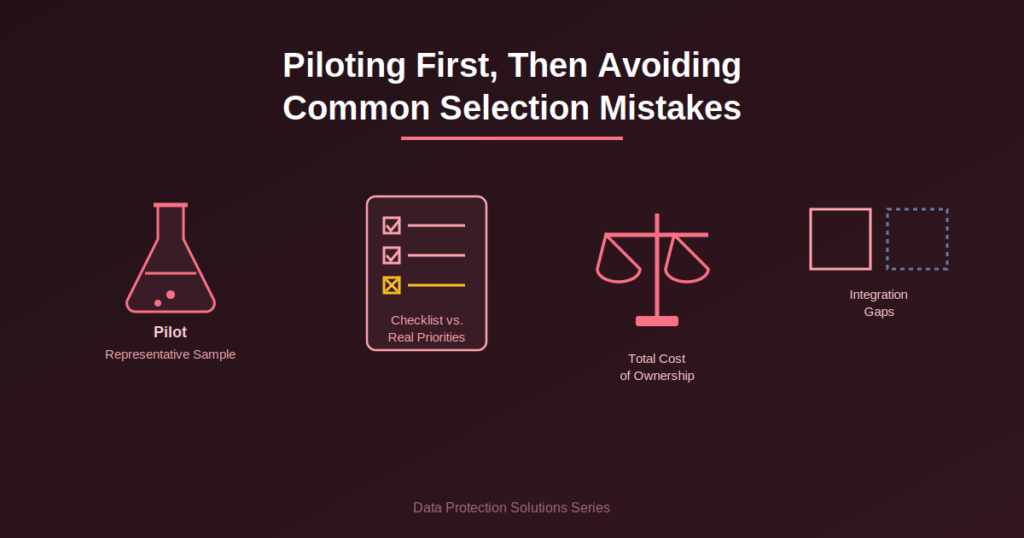
- Prospects evaluate capabilities in comparison checklists but do not relate them to their own priorities.
- The marketing of a solution focuses on capability and hides complexity.
- An underestimation of post-deployment management.
How Organizations Evaluate Data Protection Solutions
Assessing Risk Priorities First
Larger organizations can prioritize their highest risks even before comparing different options, particularly when budget constraints compel them to focus on the highest risks first.
Evaluation Approaches Supporting Genuine Fit
Some of the methods of evaluation include those that:
- Assess solutions with respect to real data and real disaster recovery scenarios
- Involve both security and IT operations staffs in the evaluation process
- Compare total cost of ownership including efforts required for management
Piloting Before Full Deployment
Organizations conduct pilots based on:
- Representative sample of real data and systems
- Evaluation period during which success is achieved
- Input from people managing the solution
Piloting helps organizations to ensure that solutions work consistently before rolling out organization-wide solutions.
Common Mistakes When Choosing Data Protection Solutions
Prioritizing Backup Over a Layered Approach
Spend a lot of money on backup software and neglect access control and monitoring.
Ignoring Ongoing Management Requirements
Buy a powerful solution but fail to consider the human resources required to implement it.
Skipping Recovery Testing
Take the proper functioning of the backup software for granted without performing regular tests.
Poor Integration Planning
Failure to consider properly:
- The level of integration with existing systems infrastructure
- Format compatibility for data across systems
- Vendor lock-in
Fragmented protection may be the result of poor integration.
Bottom Line
These data protection services belong to various categories such as data backup and recovery, data loss prevention, encryption, identity management, and compliance services, all of which cover different areas of risks.
Given the amount of difference among these categories regarding the risks that they actually protect, it is better for companies to prioritize their risks first before making any comparisons based solely on features.