CRM for Business Brokers: What It Actually Covers and Why It’s Easy to Get Wrong

Introduction
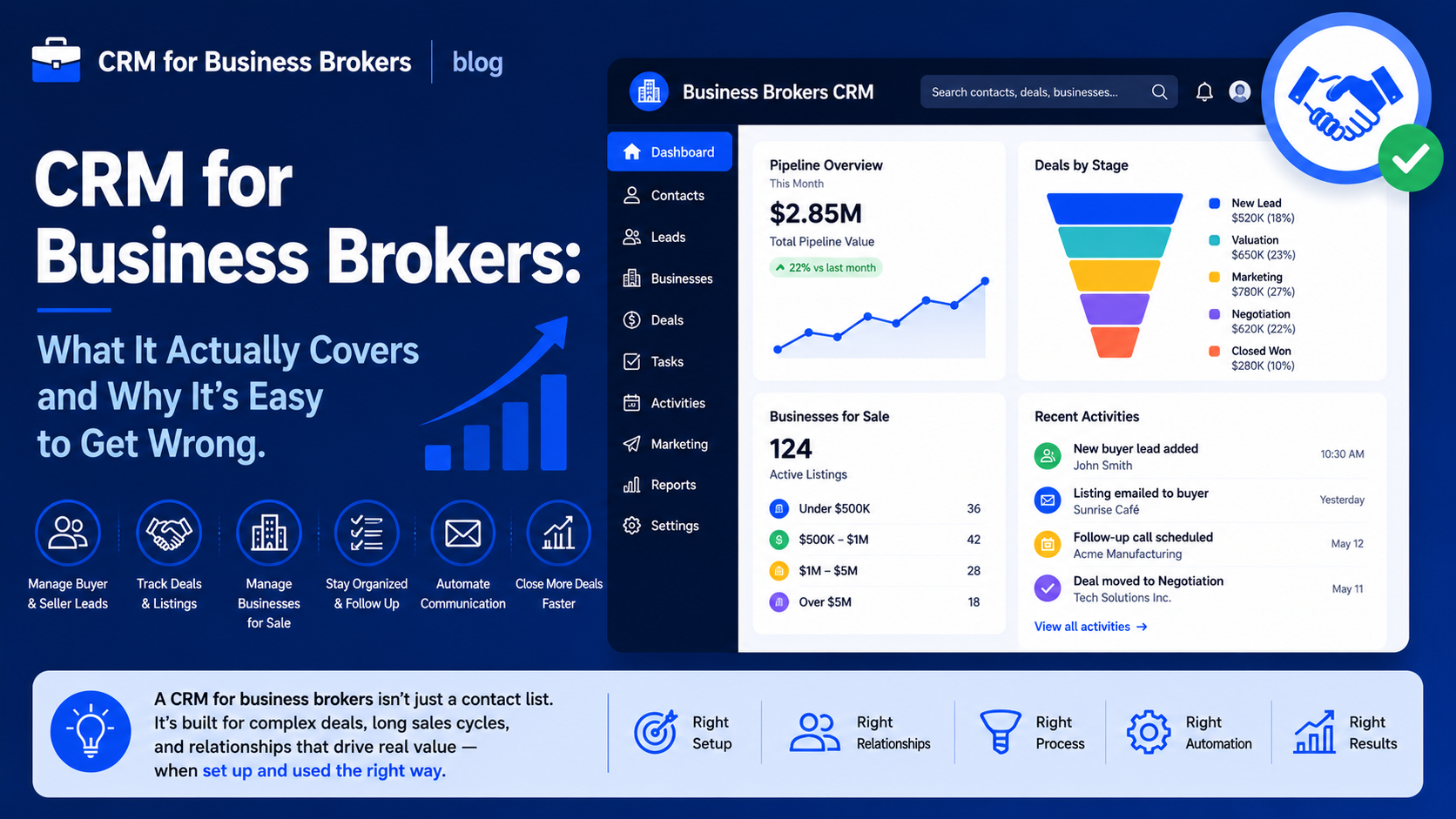
CRM software designed for business brokers is a system developed specifically for managing relationships, listings information, and confidentiality issues relevant to the process of selling businesses, as opposed to a general purpose real estate or sales CRM software modified to fit a completely different set of transactions.
The concept may appear quite straightforward; nonetheless, the amount of particular workflows inherent in the business selling process makes it one of those areas that many brokers tend to underestimate.
Why Business Broker CRMs Are More Complex Than They Appear
Relationships in business brokerage are not one kind of structure but are a combination structure that includes the following:
- Confidential listing of business by sellers
- Qualification of buyers before disclosing any sensitive information
- Deal negotiations between multiple parties and disclosures
A number of generic CRMs do not have inherent confidentiality mechanisms in place, and the need is for brokers to adopt manual processes to maintain secrecy regarding the information of sellers.
It becomes necessary for the broker to configure the needs of each individual listing since a leakage of sensitive information may destroy an entire transaction.
Major Areas of Business Broker CRM Functionality
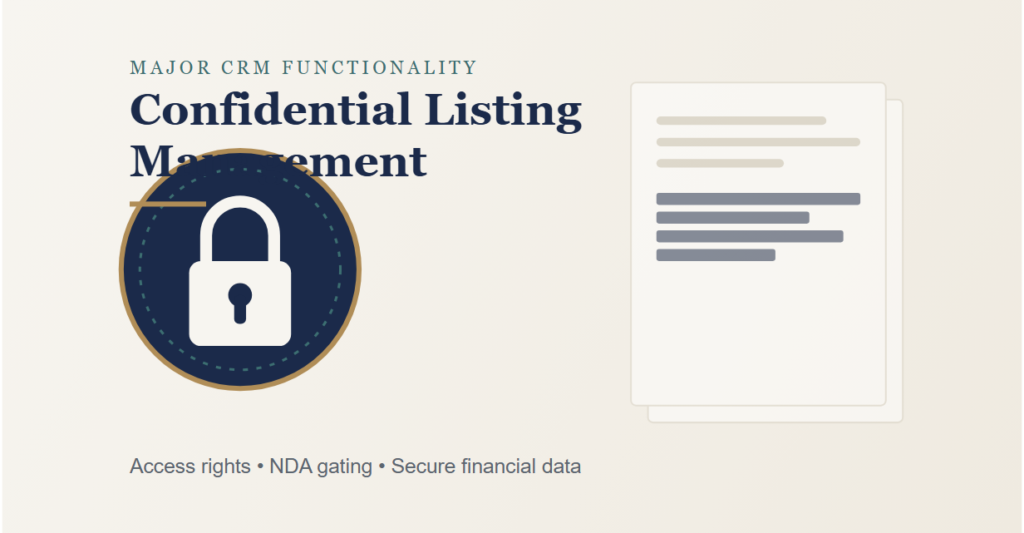
Confidential Listing Management
Rules related to:
- Storage of secure financial and business information
- Access rights for certain buyers to specific listing information
- Non-disclosure agreement fulfillment prior to release of information
Risks of Inadequate Confidentiality Controls
Insufficient confidentiality procedures are one of the most common and expensive weaknesses since it might lead to:
- Confidential seller information being disclosed to undeserving parties
- Compromised trust of the sellers regarding competition getting to know about them
- Legal implications due to mismanagement of disclosures
Buyer Qualification Tracking
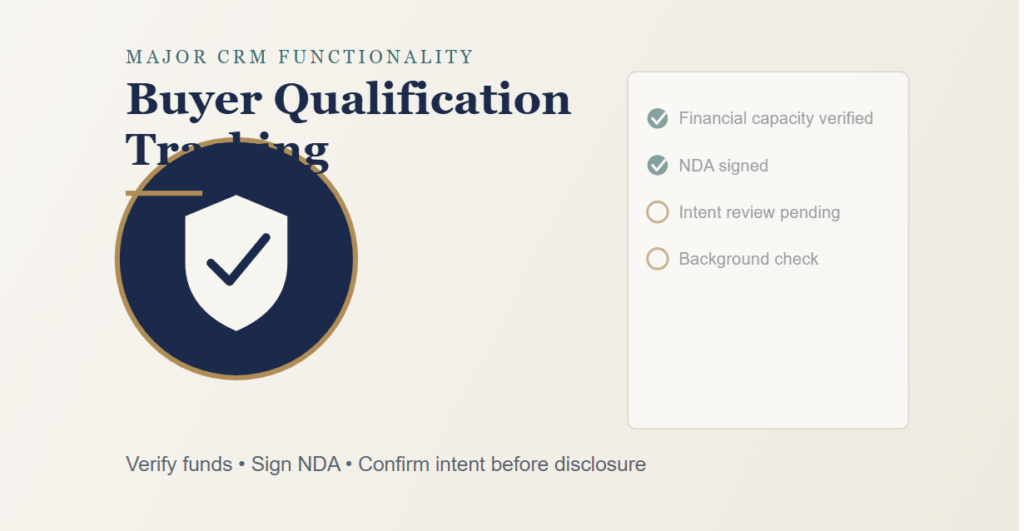
Most business brokers CRMs will have qualification processes whereby the buyer has to follow certain processes before viewing the complete list details.
Qualification Workflows Often Include
- Verification of financial capacity
- Signature on NDA before information is provided
- Background check of buyer intentions
Deal Pipeline and Milestone Tracking
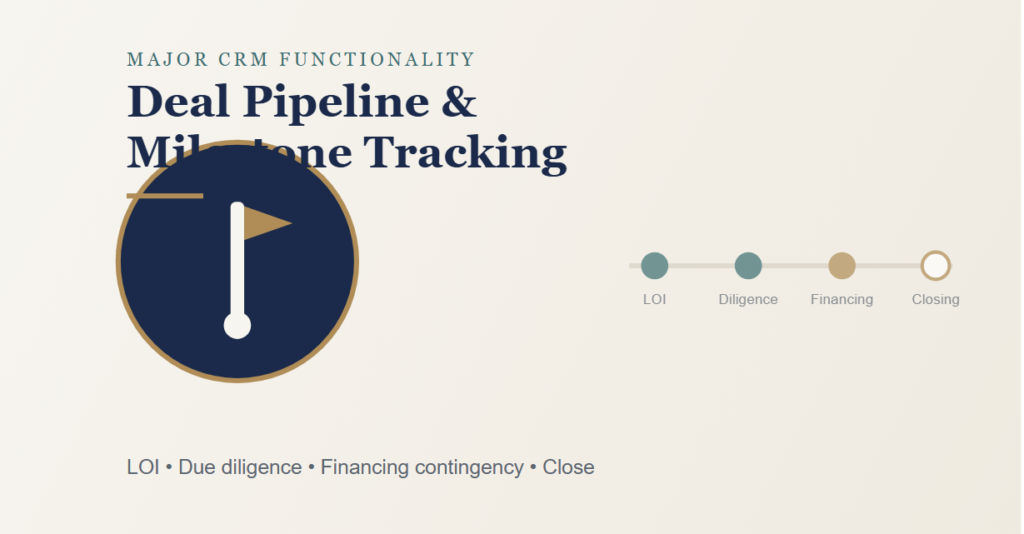
Handling goes beyond the basic match of buyers and sellers to become more complicated as the transaction is followed through in terms of due diligence, financing, and closing.
Deal Milestones Usually Include
- Letter of intent status
- Due diligence documents exchanged
- Financing contingency tracked
Document Management and E-Signatures
Some features that are common with CRMs for business brokers are:
- Safe storage of financial information and disclosures
- Capability of signing NDAs and offer letters electronically
- Keeping track of different versions of the documents used during negotiations.
The extent of these tools depends on whether the CRM is developed specifically for business brokering or not.
Marketing and Buyer Matching
Among the various capabilities that some CRMs demand from business brokers include the following:
- Automatic matching of buyer’s profile with the listings currently available
- Monitoring of buyer’s preferences and search terms
- Marketing of listings without compromising the anonymity of the seller.
Why Confidentiality and Process Failures Happen Even at Established Brokerages
The failure of complete protection of sensitive deal information usually does not occur since the broker simply disregards the danger. This is because:
- A generalized CRM is employed without setting proper access rights.
- The NDA management process is manual and non-standardized for each deal.
- Buyer qualification procedures are bypassed due to the pressure of moving the deal forward.
How Business Brokers Choose the Right CRM
Prioritizing Confidentiality Features
Large brokerages might prefer those with NDA and access control capabilities, particularly when dealing with multiple, highly sensitive listings at once.
CRM Features Supporting Brokerage Workflows
There are business broker CRMs out there that provide capabilities that allow brokers to do the following:
- Require signing of NDA for any sensitive information about listings
- Automate matching of listings with appropriate buyers
- Track deal milestones from start to finish
Regular Process Audits
Organizations carry out periodic evaluations of:
- If there is adherence to confidentiality policies
- Completion rate of buyer qualification process
- Deal pipeline challenges that delay closing
Periodic audits help brokerages ensure that confidential information remains secure despite an increasing number of deals.
Common Business Broker CRM Mistakes
Using a Generic Real Estate CRM
The software was modified from one used for property listings, not business transactions requiring confidentiality.
Inconsistent NDA Enforcement
Some potential buyers were able to qualify without meeting the qualifications and signing an NDA.
Poor Buyer-Listing Matching
Failing to systematically match buyer criteria to appropriate listings, wasting time on unqualified inquiries.
Inadequate Document Version Control
Lack of proper record keeping for:
- Which versions of financial paperwork were provided to which buyer
- The latest updates made in course of negotiations
- Signed paperwork in closing
Proper version control is important for avoiding misunderstandings in the closing process.
Bottom Line
There is quite a lot of diversity in the use of CRM by business brokers and includes issues like confidentiality of listings, buyer qualification, managing pipeline deals, documentation, and buyer matching.
Given that a lot of success in the brokerage industry depends on the protection of sensitive information and buyer qualification, it would be wise for brokers to select a specialized system rather than an all-purpose real estate sales CRM.