Cloud Data Protection: What It Actually Covers and Why It’s Easy to Get Wrong

Introduction
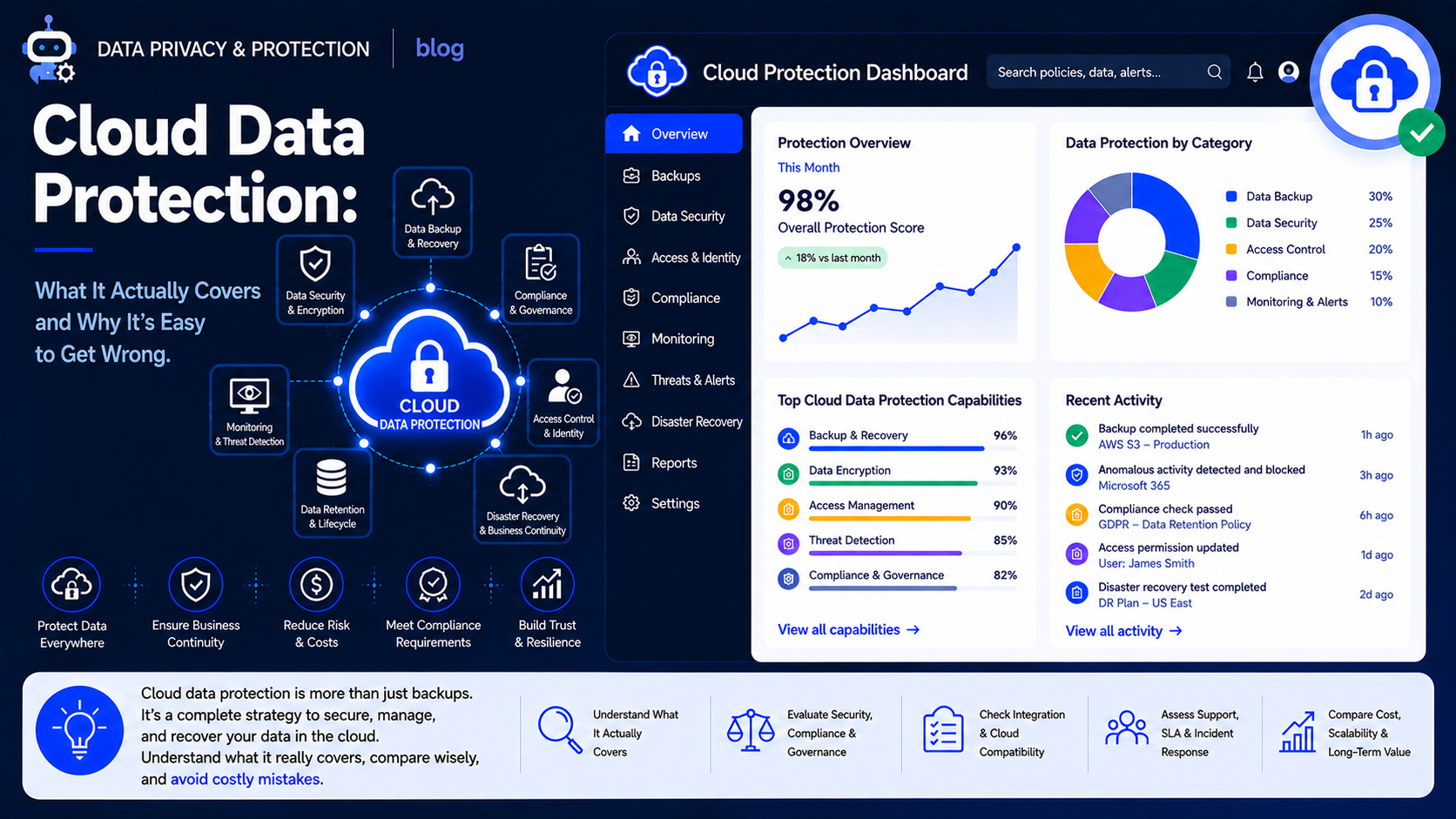
Cloud data protection is the protection of data that is saved, processed or transferred via cloud infrastructure, and not just the adaptation of on-site data protection measures to the cloud computing environment.
It may seem quite straightforward; however, the high number of shared responsibilities of cloud service provider and consumer makes it a tricky topic for companies.
Why Cloud Data Protection Is More Complex Than It Appears
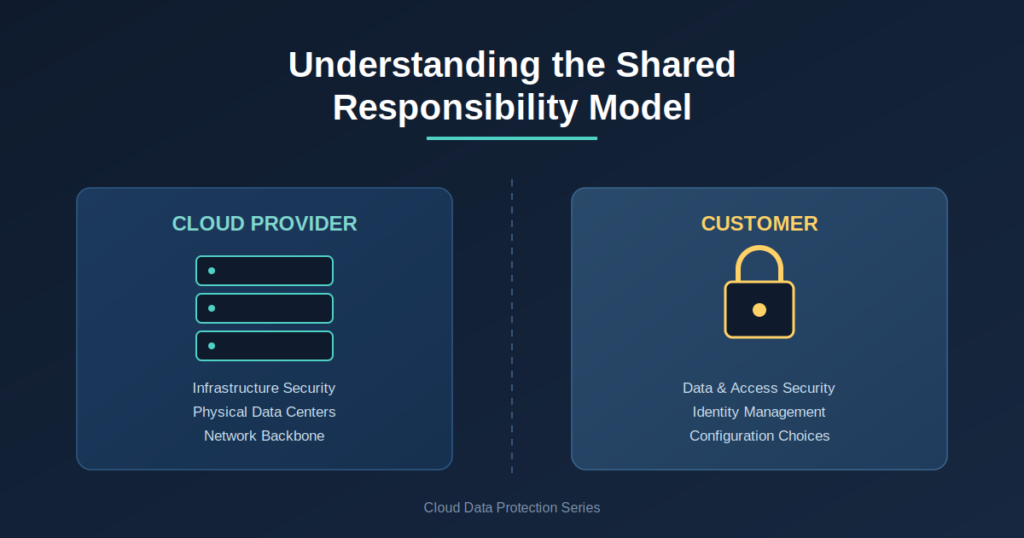
It must be noted that cloud security is not a uniform process and it consists of the following elements:
- Infrastructure Security, handled by the cloud provider
- Data and Access Security, handled by the customer
- Application Level Protection, determined by the service model
Some companies believe that the cloud provider takes care of all security aspects and that is why they do not consider their side of the process.
For organizations that use different cloud services, it is necessary to define responsibilities separately for each service model as they are different.
Major Areas of Cloud Data Protection
Understanding the Shared Responsibility Model
Rules Governing
- Secured by the Cloud Provider by Default
- Left as the Client’s Configuration Responsibility
- How Responsibilities Shift Depending on the Service Model Used
The failure to comprehend the concept of shared responsibility is the most common and costly mistake since it leads to:
- Insecure Storage That Is Publicly Accessible
- Thinking Encryption Happens Automatically Without Configuration
- Access Control Gaps Never Intended to Be Managed By the Provider
Identity and Access Management
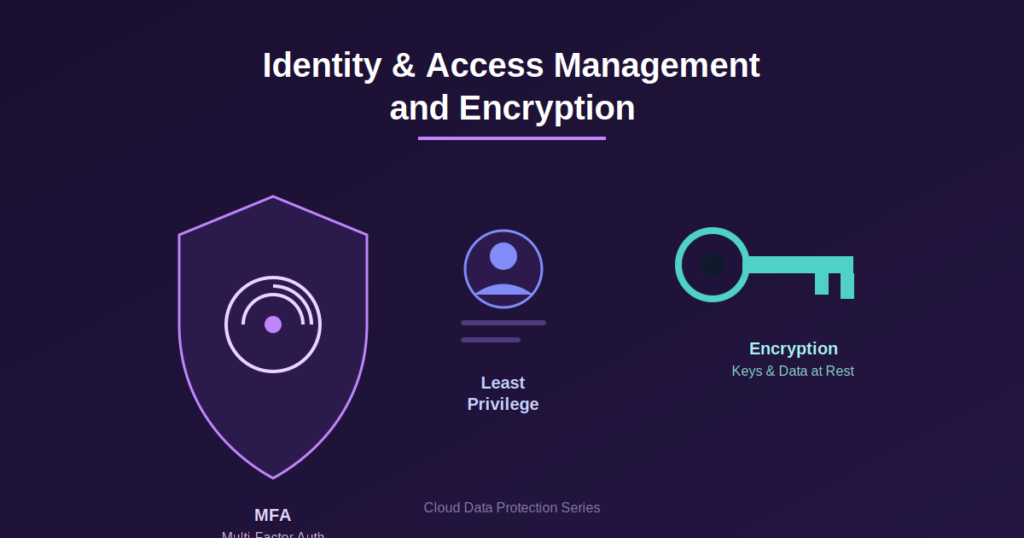
Security measures used for cloud data protection normally demand strict access controls that compel organizations to comply with the least privilege principle when dealing with cloud accounts and services.
Access Management Often Includes
- Multi-factor authentication for accessing cloud accounts
- Role-based permission limited to particular resources
- Routine checks on access to sensitive cloud data
Encryption and Key Management
This refers not only to the default encryption provided by the service provider but also to customer-managed encryption key usage for sensitive data.
Those Encryption Practices Usually Vary in Many Respects Including
- Whether default encryption is provided by the provider or is configurable
- Encryption key management – by the provider or by the customer
- Encryption for data at rest and data in transit
Configuration and Vulnerability Management
Cloud data protection may involve:
- Periodic scanning of misconfigured cloud storage and services
- Patch management of cloud hosted applications
- Constant monitoring to detect any configuration drift
All these steps vary in their significance based on the dynamics of the cloud infrastructure.
Multi-Cloud and Hybrid Considerations
There are several entities that need to be concerned about some specific complexities, such as:
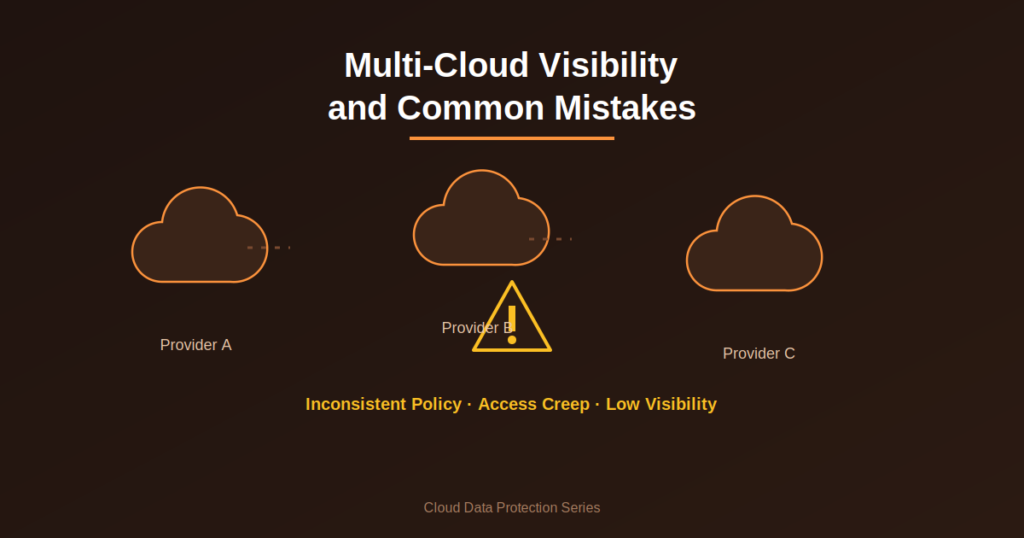
- Uniform security policy in multiple cloud providers
- Data protection during transition from cloud to on-premise infrastructure
- Visibility issues with multi-environment data
These complexities have to be handled as they lead to gaps between environments due to inconsistent policies.
Why Cloud Data Protection Failures Happen Even at Security-Conscious Companies
Under-protection of cloud-based information is rarely caused by the fact that a company simply ignores cloud security.
In contrast, under-protection could be caused by the following reasons:
- Default cloud settings are used without being adjusted as it is assumed that they are safe as is.
- Access rights keep growing as new teams/projects join.
- Visibility problems occur with multi-cloud environments.
How Organizations Build Effective Cloud Data Protection
Clarifying Responsibility Boundaries First
Larger enterprises can be more specific about what the cloud provider protects and what needs to be configured by the customer, particularly when several service models are used.
Cloud Security Practices Supporting Strong Protection
Several cloud data security methods allow an enterprise to:
- Manage encryption by the customer on sensitive workloads
- Perform automated configuration scans to detect any misconfiguration promptly
- Maintain centralized visibility in multi-cloud settings
Ongoing Configuration Reviews
The following items are subject to periodic review in an organization:
- Permissions for accessing cloud accounts
- Drift in configuration from security baselines
- Newly created cloud resource encryption
The process of conducting periodic reviews ensures that cloud data protection remains effective despite increasing cloud deployment.
Common Cloud Data Protection Mistakes
Assuming the Provider Handles Everything
Failing to grasp the concept of the shared responsibility model and not correcting any customer configuration loopholes.
Leaving Default Configurations Unchanged
Not checking and securing default settings of the cloud, which are usually not secure by default.
Ignoring Access Creep in Cloud Accounts
Accumulating cloud permissions without ever reviewing or cleaning them up.
Poor Multi-Cloud Visibility
Lack of:
- Consistency of policies in various cloud providers
- Centralized monitoring in all cloud environments
- Data security in transfers from one environment to another
Low visibility in multi-cloud environments might leave unnoticed gaps until there is a problem.
Bottom Line
There is quite a lot of variety in cloud security as it takes into account such things as shared responsibility, access and identity management, encryption, configuration management, and many other things related to the complexity of multi-cloud.
As misinterpretations of the concept of shared responsibility are quite common and cause many problems, it would be much better for organizations to understand their responsibilities and configure the environment accordingly.