Best CRM for Facebook Leads: What It Actually Covers and Why It’s Easy to Get Wrong

Introduction
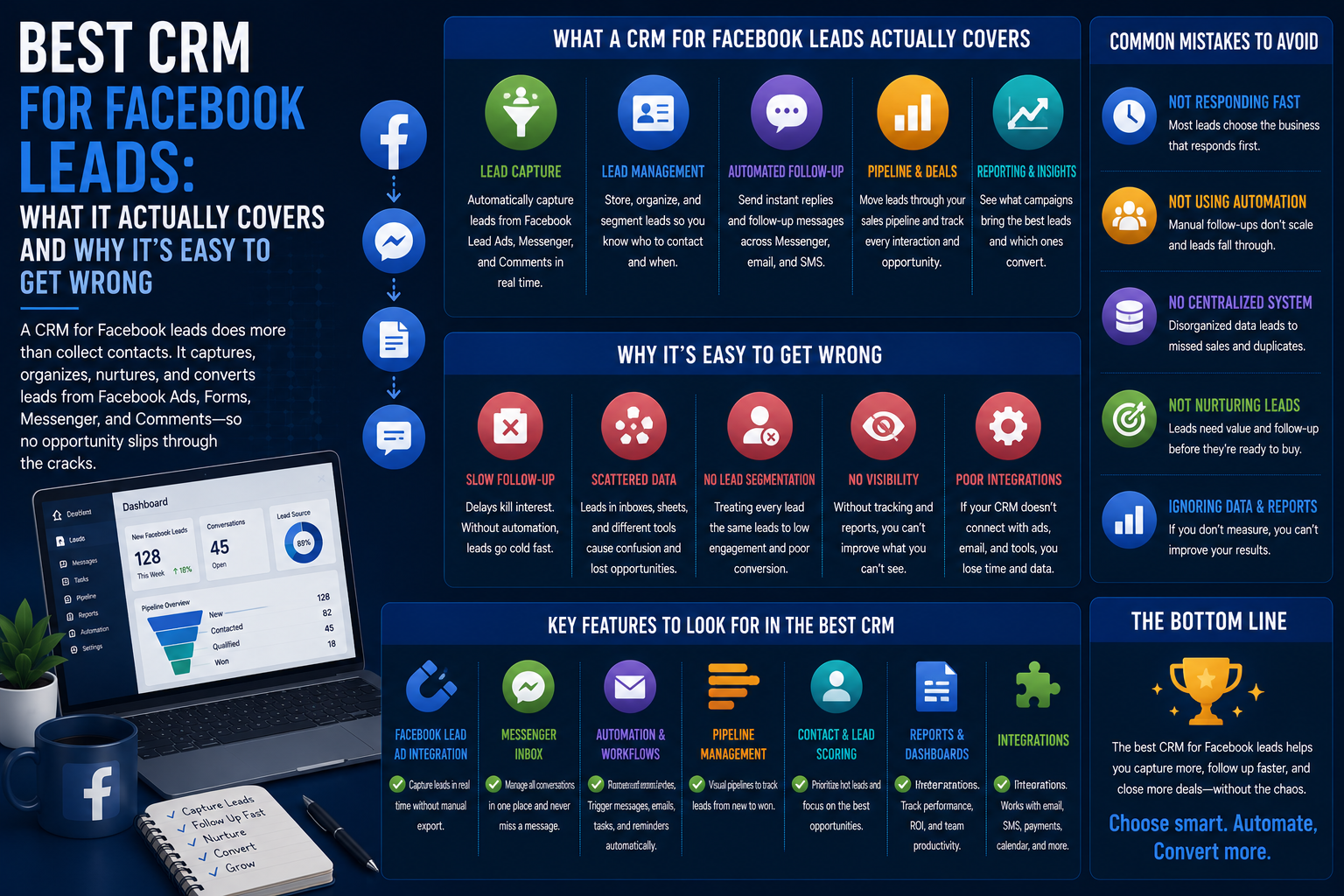
An effective CRM system for Facebook leads collects, sorts, and qualifies leads from Facebook Lead Ads rather than having them sit idle in Meta’s Ads Manager and be easily forgotten.
On the surface, this process can seem quite straightforward. But the reality is that due to the many pieces required to work together seamlessly, companies often get into very costly trouble here.
Why Facebook Lead CRM Integration Is More Complex Than It Appears
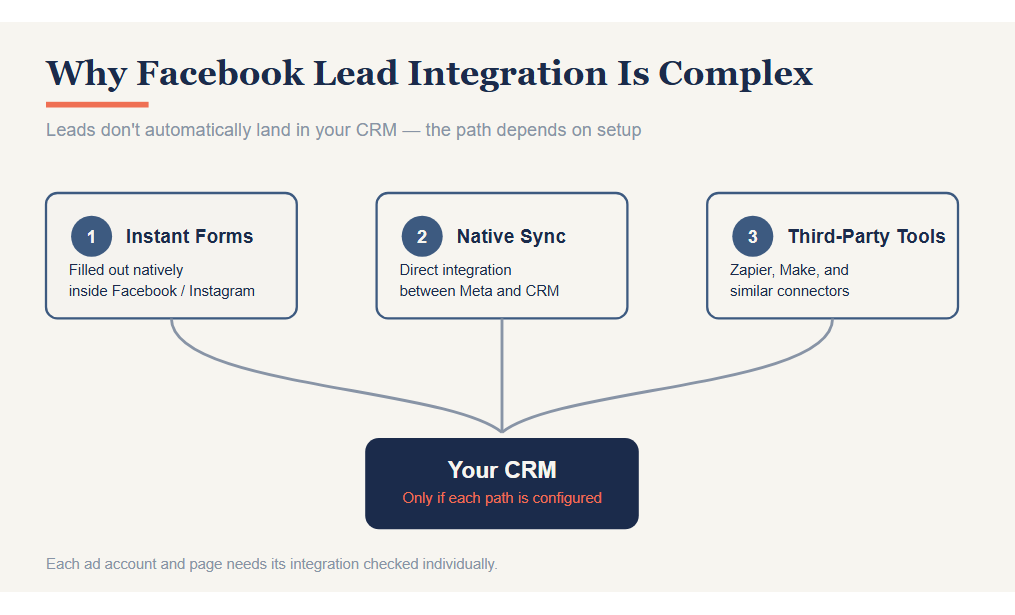
The Facebook Lead Ads are not a monolithical data source but, rather, consist of several components:
- Instant Forms that were filled out right within the Facebook or Instagram environment;
- Synced data using native integrations;
- Synced data using third-party tools such as Zapier and Make.
It is often believed by various companies that, once they receive a lead, it immediately goes into their CRM, which is completely wrong, it all depends on the way the integration was set up.
In case of a company using lead ads from several different pages or ad accounts, integration should be checked for every account individually due to the variety of permissions.
Major Areas to Evaluate in a Facebook Leads CRM
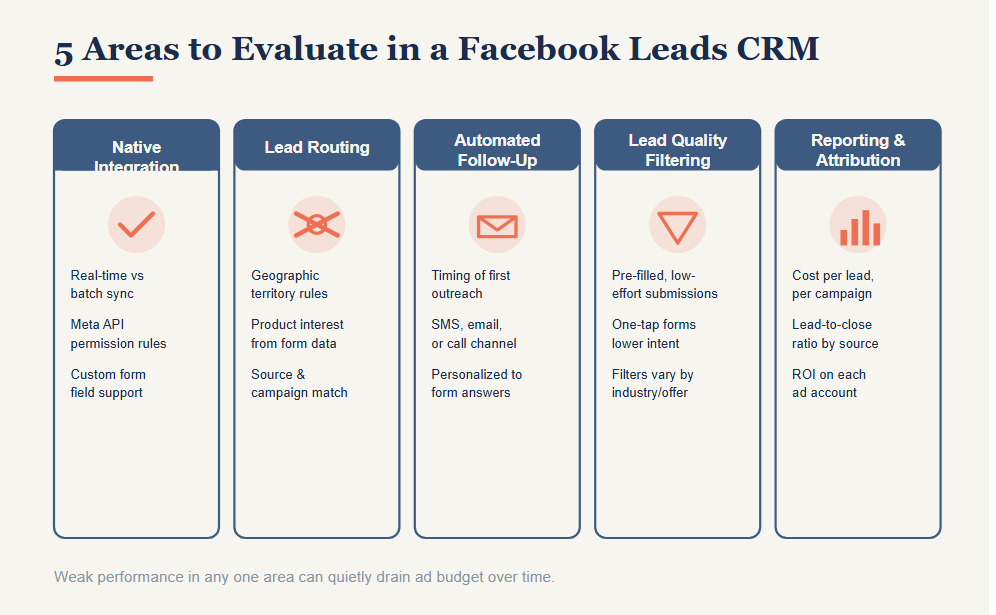
Native Integration Support
Rules Governing:
- API integrations with Meta
- Lead acquisition in real time vs. batches
- Compatibility with custom Instant Form fields
Delayed synchronization is one of the most common and expensive problems since it can cause:
- Going stale leads before following up on them
- High-intent leads being overlooked
- Waste of ad budget
Lead Routing and Assignment
In general, CRMs appropriate for Facebook leads have automated rules for assigning leads based on certain criteria and therefore require sales teams to follow certain response time standards.
Routing Criteria Often Includes:
- Geographic territory
- Product interest chosen from the form
- Source of lead or campaign
Automation and Follow-Up Sequences
Handling includes not only the prompt notification to the salesperson but also the growing reliance on automated text and email messages that start right from the point at which a lead is generated.
Those Sequences Usually Vary in Many Respects Including:
- Timing of the initial communication
- Type of channel (SMS, email, phone call)
- Personalization according to form responses
Lead Quality Filtering
Facebook lead generation forms typically result in leads that show lower intent because:
- Information is automatically pre-filled
- They can be submitted in one tap
The requirements for filtering vary from industry to industry and from offer to offer.
Reporting and Attribution
The CRMs used in some cases demand that businesses keep track of certain metrics, such as:
- Cost per lead per campaign
- Lead to close ratio per lead source
- ROI on Ad accounts
These metrics must be kept up regularly to ensure continued ad spending.
Why Integration Failures Happen Even at Well-Intentioned Companies
The CRM rarely fails to connect to Facebook because of negligence in the entire process of connection.
Actually, problems may occur because of:
- Meta has updated its API permission settings, but nothing is done in terms of integration.
- An organization creates a new advertising account without synchronizing it.
- Form field changes by marketing without informing the person in charge of CRM mapping.
How Businesses Choose a CRM for Facebook Leads
Native Meta Integration
The bigger firms might go for the CRMs that have a direct and legitimate Meta partnership in situations where they generate large numbers of lead ads on multiple pages.
CRMs Built for Fast Response
Some of the CRM tools have functionalities that help organizations to:
- Get instant phone or text alerts
- Instantly assign the leads
- Monitor first response time as an essential KPI
Simple Setup for Small Teams
Evaluation criteria for companies include:
- Ease of linking ads with accounts
- Automation templates provided beforehand
- Cost in relation to number of leads
A simple process allows small companies to ensure that their leads are followed up without requiring technical support.
Common Facebook Lead CRM Mistakes
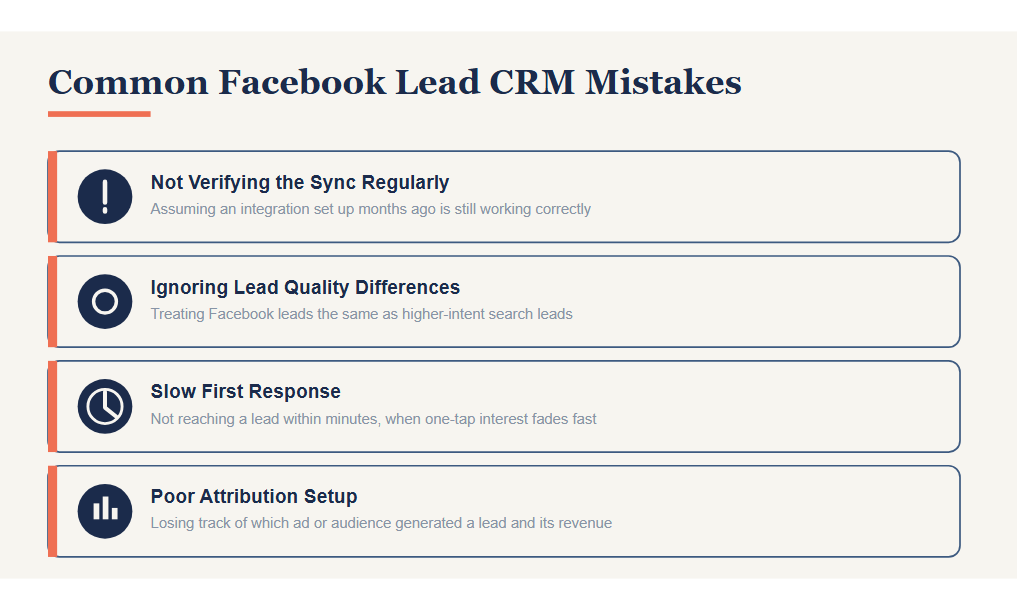
Not Verifying the Sync Regularly
Taking for granted that an integration system established several months back is still running properly without being checked periodically.
Ignoring Lead Quality Differences
Handling the leads from Facebook the same way as the more interested search engine leads without making any changes to the follow-up script and qualification process.
Slow First Response
Not getting in touch with a lead within minutes of lead submission, considering how fast their interest disappears after submitting a one-tap form.
Poor Attribution Setup
Insufficient tracking of:
- The particular ad or audience that generated the lead
- Downstream revenue per campaign
Improper attribution could result in more money being spent on poor performing campaigns.
Bottom Line
Selecting the right CRM for Facebook leads involves a wide array of factors that can include things like reliable native integration, quick lead routing, automated follow-ups, lead filtration, and proper attribution reporting.
With how rapidly lead intention can disappear and how frequently ad accounts have settings changes, it would definitely benefit companies to focus more on the speed of the process than on additional features.