Best AI Workflow Automation Tool: What “Best” Actually Depends On and Why It’s Easy to Get Wrong

Introduction
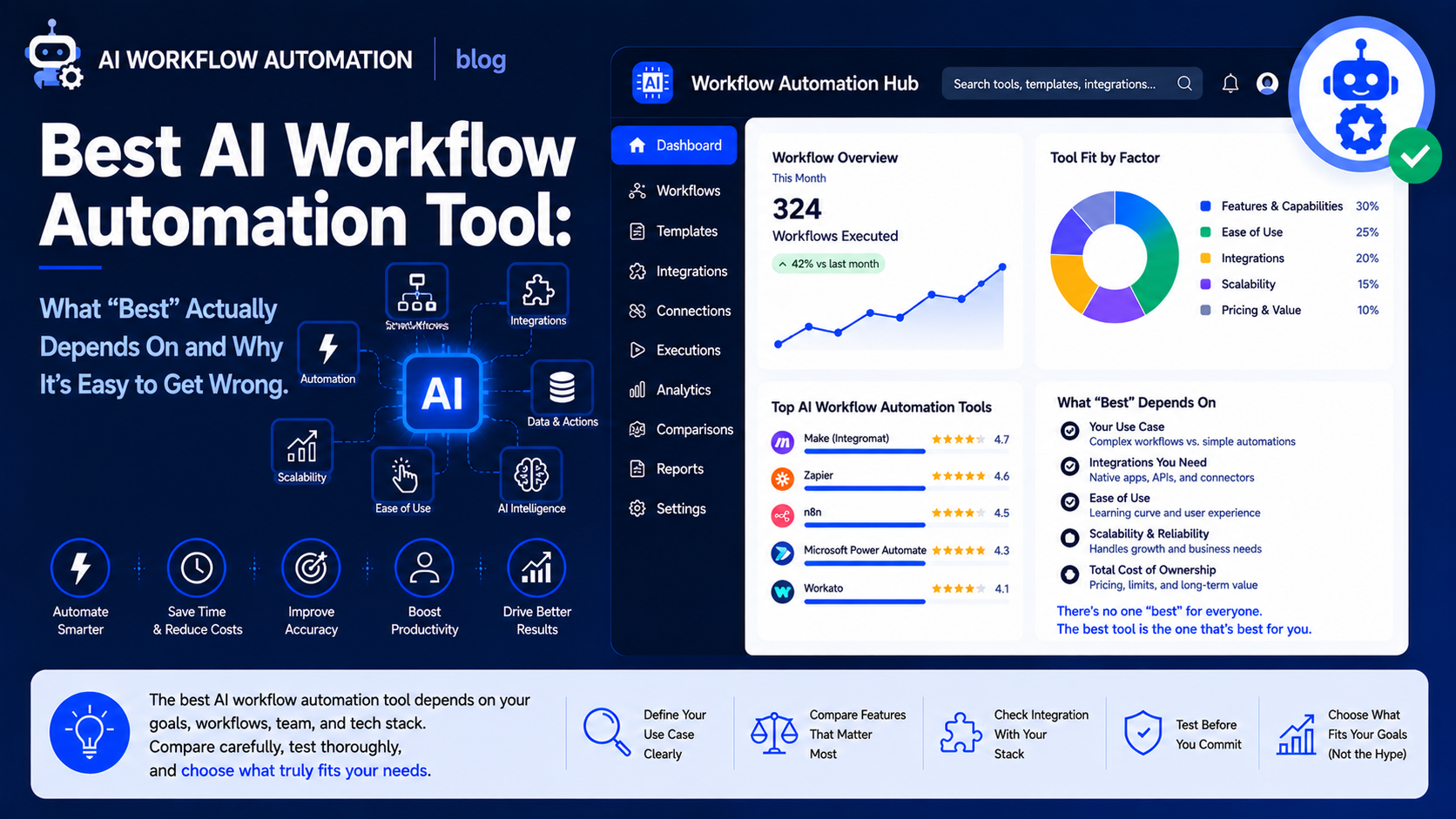
The most effective workflow automation tool for artificial intelligence is the one that is right for a certain company based on the complexity of their processes, technology stack, and requirements for integration, and not the one tool that surpasses all other tools for every use case scenario.
This may appear quite obvious; however, there are so many different aspects that need to be considered that this becomes an area where companies often make mistakes.
Why Identifying the Best Tool Is More Complex Than It Appears
Tool selection process is a multi-faceted process, comprising the following:
- Complexity of the workflows which require automation
- Technical expertise of the people who will be working with the tool
- Software eco-system which the tool must work within
A number of people base their selection purely on the ranking of the tool on various internet websites without thinking of what actually suits them, thus ending up selecting a tool that is good in general but not suitable for them specifically.
A fit has to be found for an organization based on its workflow and not just based on popularity of the tool.
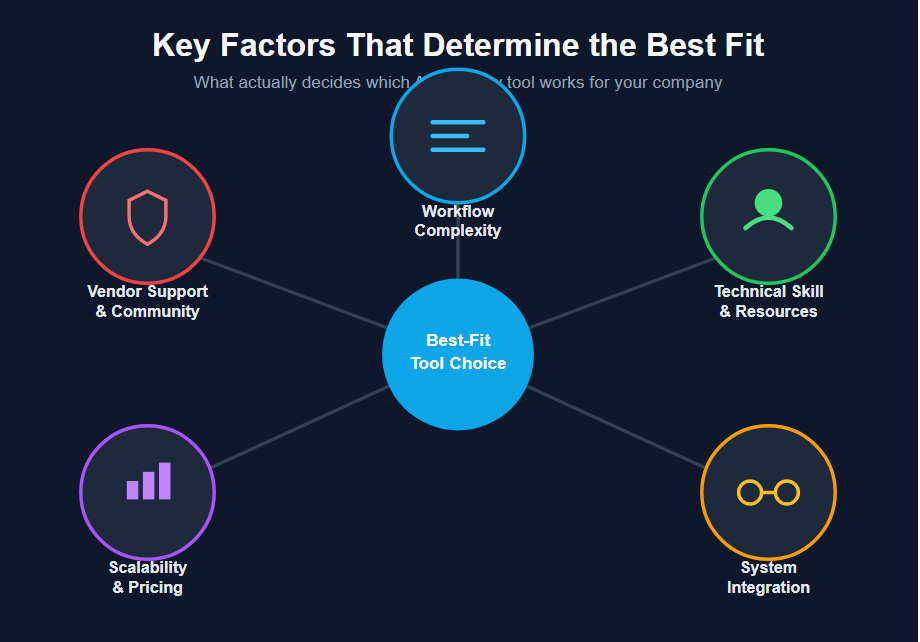
Major Factors That Determine the Best Fit
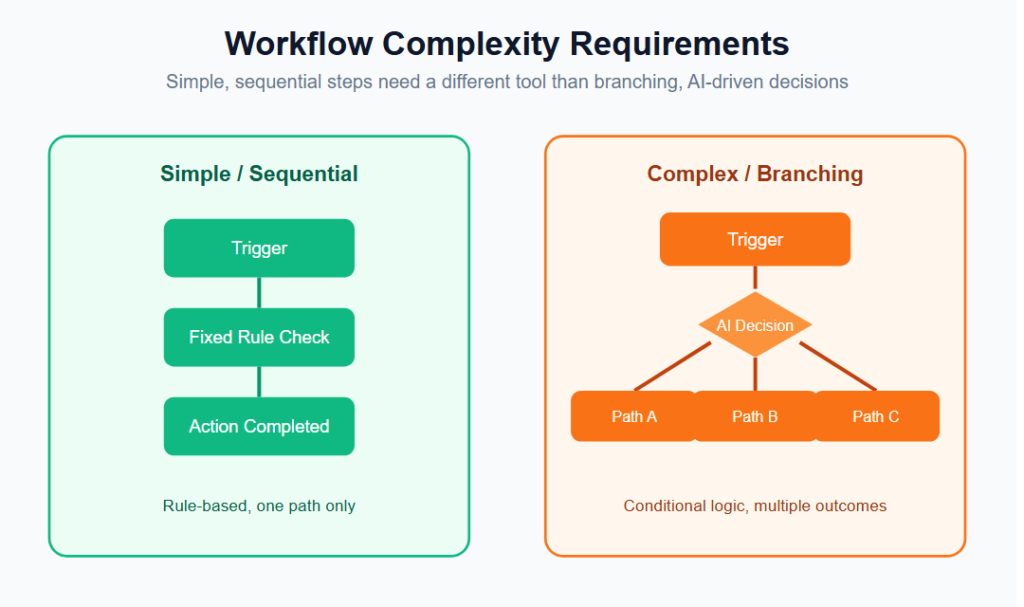
Workflow Complexity Requirements
Rules Governing:
- Depending on whether the workflow is based on sequential processes or complicated branching decisions
- The extent of conditional processing required
- Whether the decision making by AI is necessary or rule-based processing only
Underestimating the complexity of a workflow is one of the most common and dangerous oversights since it will lead to:
- Selection of tools not appropriate for the actual process
- Exposure to the limitations of features right after deployment
- Requirement to move to a better suited platform
Technical Skill and Resource Availability
The right tool depends on the skills that are already in place within a team and, thus, necessitates realistic evaluation in order to align with the capabilities of a team.
Skill Considerations Often Include
- Whether a no-code interface will be enough or custom coding will be necessary
- Availability of internal development skills to facilitate complex integration
- Maintenance skills post implementation
Integration With Existing Systems
Integration requires not only an automation tool, but also the growing importance of its ability to integrate with the existing software stack of a business.
Integration Needs Usually Involve
- Native integration with popular business applications
- Ability to use API of less popular or custom applications
- Compatibility of data format with integrated systems
Scalability and Pricing Structure
The most appropriate tool for a developing firm is usually determined by:
- Whether pricing scales up with an increase in usage or workflow volume
- Whether the platform can meet increasingly more complicated needs over time
The correct choice can vary widely based on whether the business is experiencing or expects to experience fast growth.
Vendor Support and Community Resources
There are some aspects that need to be considered during the tool evaluation process, which include:
- Quality of the customer support services
- Availability of documentation and community support
- Release frequency of updates and new features
All these need to be considered because quality support is very important in solving automation problems.
Why “Best Tool” Rankings Often Mislead Buyers
It is unlikely to occur due to lack of fit due to generic rankings since the rankings are usually misleading.
Mismatches can occur because:
- The ranking is based on popularity in general, not fit for use case.
- Ease of use is emphasized in the marketing of the tool, although its limitations are not mentioned.
- The reviews are usually written based on simple use cases.
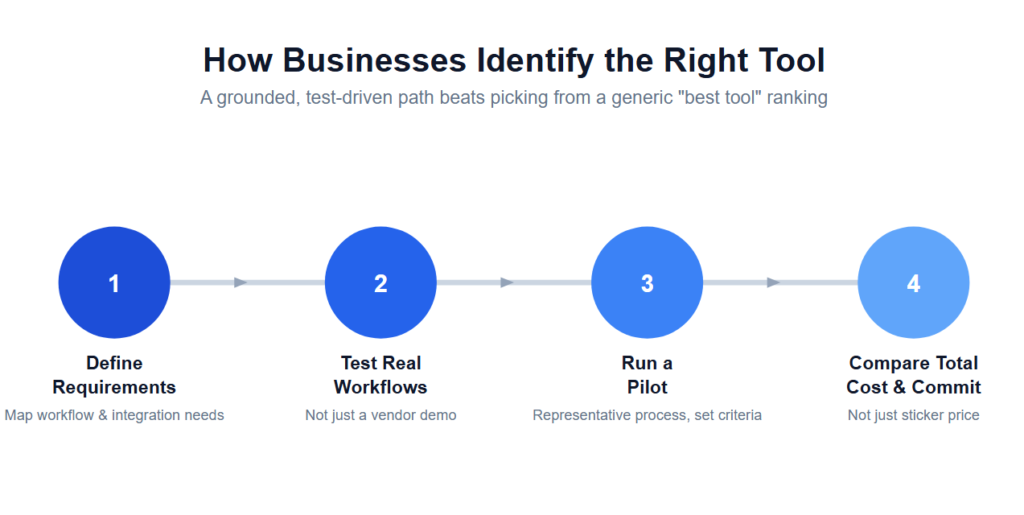
How Businesses Identify the Right Tool for Their Needs
Defining Requirements Before Comparing Options
Large organizations might want to capture information on their workflow complexities and integration requirements prior, in situations when their processes are unique.
Evaluation Approaches Supporting Genuine Fit
Some of the evaluation process includes companies which:
- Test the workflows themselves and not demo only.
- Involves the technical people who will be handling the tool.
- Compare the total cost of ownership and not the price only.
Piloting Before Full Commitment
Organizations run pilot tests that include:
- An actual, representative process rather than an ideal test situation
- An evaluation time frame with criteria for success
- End user feedback on usability and reliability
Pilot testing allows organizations to ensure the selected technology works well in reality before making a full commitment.
Common Mistakes When Searching for the Best Tool
Relying Solely on Generic Rankings
Selection of the tool based on general popularity scores without validating it for internal requirements.
Underestimating Future Complexity
Selection of the tool based on current simple requirements without evaluating its ability to manage future complex requirements.
Ignoring Integration Gaps
Choosing a feature-rich tool without confirming it connects properly with existing business systems.
Poor Total Cost Assessment
Negligence in the following aspects could prove costly:
- Costing based on usage that escalates erratically
- The time taken to deploy and internal expenses
- User training requirements
Mismanagement of costs might result in unforeseen budget issues beyond the initial quoted price.
Bottom Line
Choosing the optimal AI process automation software is a multifaceted activity that includes many factors, such as the complexity of the workflow, resources available, need for integration, scalability, and even vendor support.
Given the fact that every actual fit depends so much on the company, it will be better for businesses to determine their own needs and test workflows rather than just go by some generalized “best tool” guides.