Applicant Tracking System: How ATS Software Actually Works

Introduction
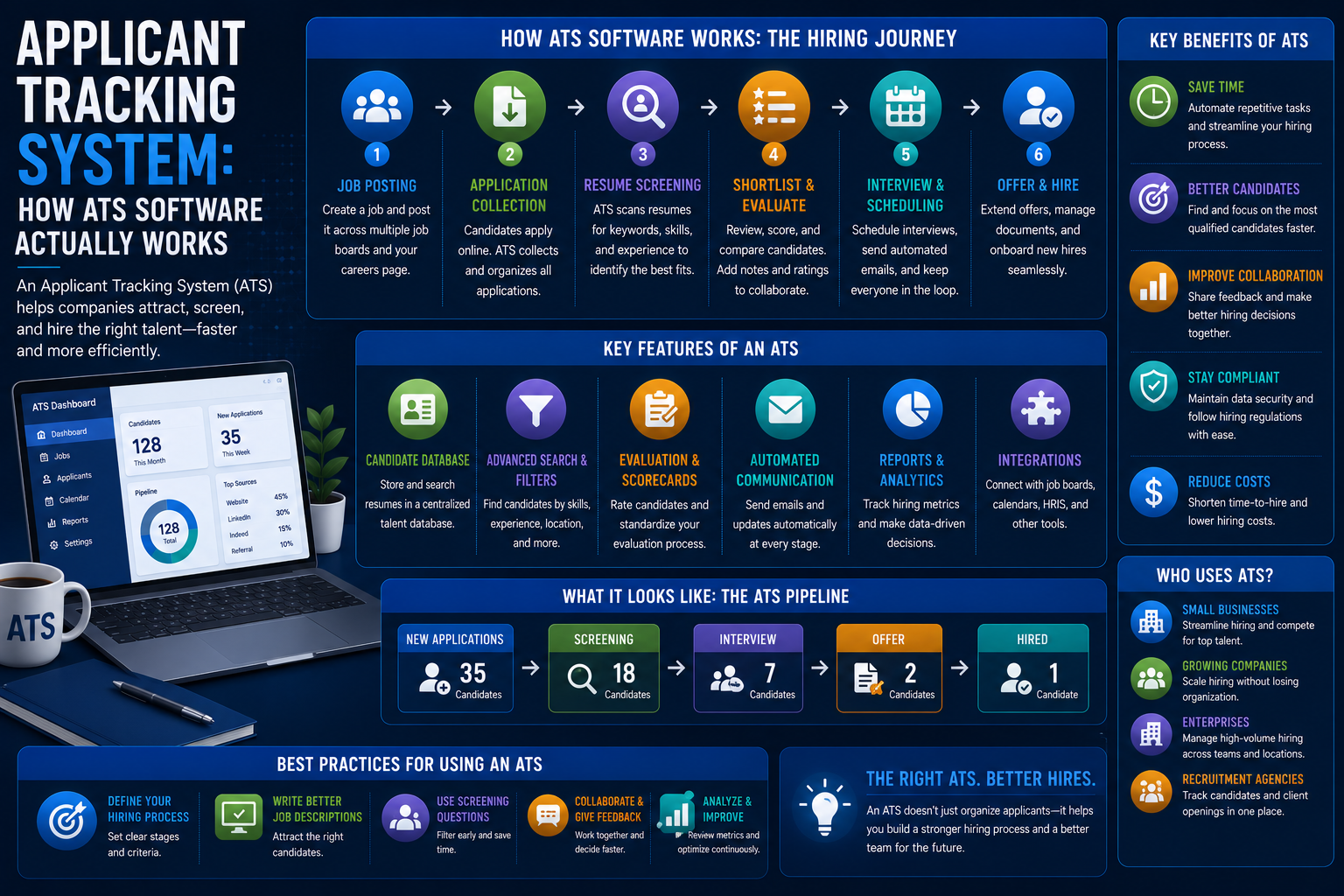
An applicant tracking system handles the recruitment process beginning with the posting of a vacancy until the time an offer is made. The system keeps track of the job application, identifies at what stage the applicant is at in the hiring process, and coordinates the efforts of those who make the hiring decision. This is how such systems function and here’s how to select one.
Why Applicant Tracking Systems Became Standard
Candidate applications manually managed via email and spreadsheets will fall apart very quickly when a firm is looking to fill multiple positions.
CVs become buried in emails, feedback from various interviewers remains disparate, and it becomes impossible to keep track of where all candidates are up to.
An ATS takes care of that problem, providing everyone involved in recruitment a common picture of the process.
Core Functionality of an ATS
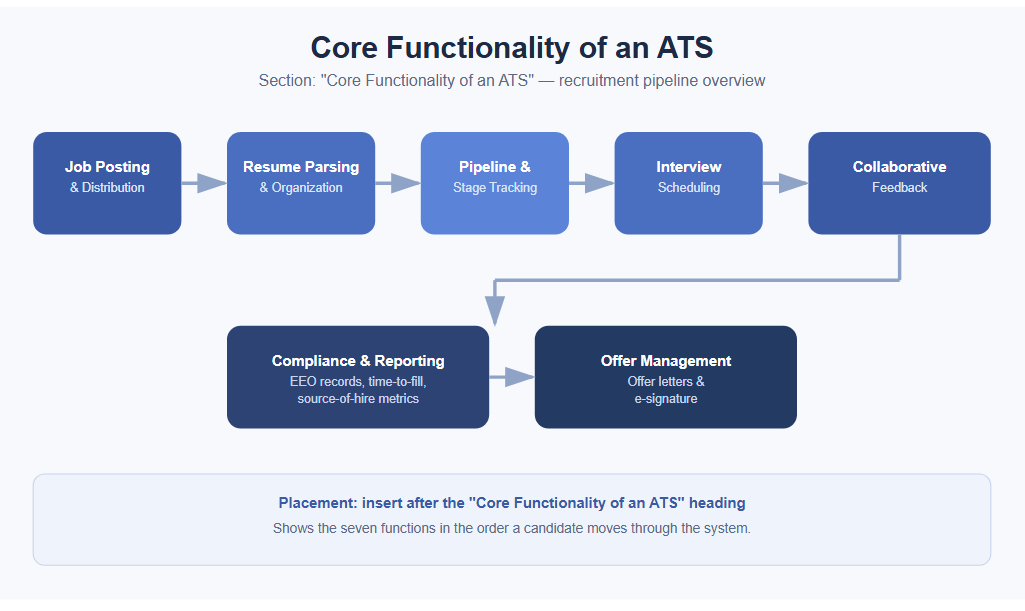
Job Posting and Distribution
Posting of openings on the company’s careers website along with automatic dissemination of those postings to large-scale job sites such as Indeed, LinkedIn, and more, by creating just one posting.
Resume Parsing and Organization
Automated extraction of important data from resumes sent by applicants and placing candidates in an easy-to-search database system without having to go through each resume manually.
Pipeline and Stage Tracking
Going through each stage of the recruitment process (application, telephone screening, interview, offer) where all the people who participate in the decision-making about the hiring process can track progress and minimize efforts required for that purpose via emails.
Interview Scheduling
Scheduling interviews among different interviewers and the interviewee itself; sometimes integrated directly into calendar applications.
Collaborative Feedback
The consolidation of feedback and scorecards by interviewers in one location, ensuring that recruitment decisions are made based on a complete and structured picture rather than fragmented notes and spoken summaries.
Compliance and Reporting
Record-keeping for regulatory reasons (especially important in the context of equal employment opportunity reporting) and insight into the metrics behind the hiring process, such as time-to-fill and source-of-hire.
Offer Management
The generation and management of offer letters, possibly with electronic signature capabilities, to automate the last stage of the recruitment process.
Standalone ATS vs. Built Into a Broader HR Platform
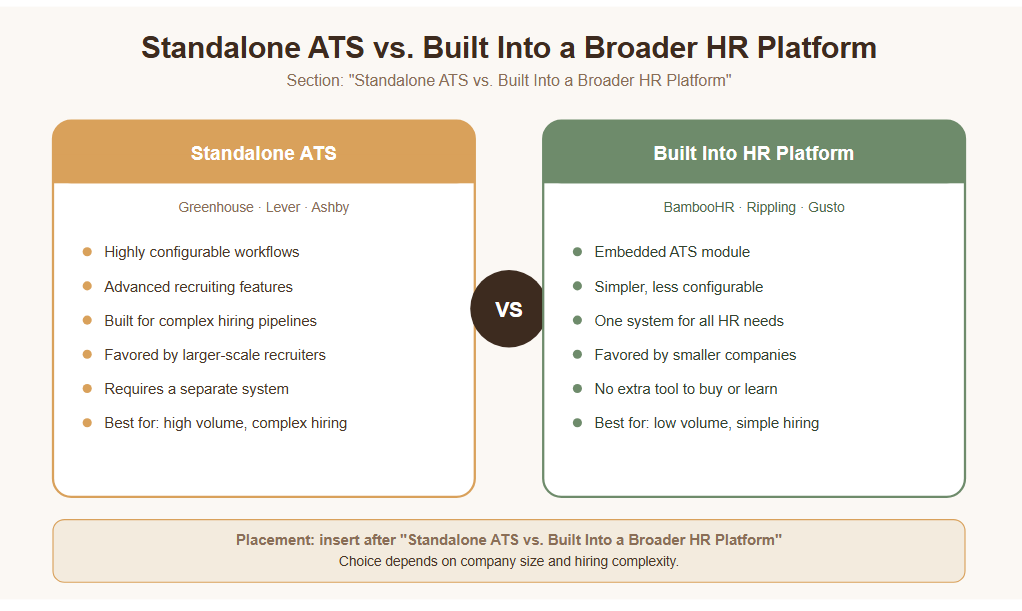
The dedicated platforms for ATS (Greenhouse, Lever, Ashby) provide more configurable and advanced recruiting-related features and are usually more favored by those enterprises that recruit on a larger scale or have complicated hiring processes.
On the other hand, many general HR platforms (BambooHR, Rippling, Gusto) come with the embedded ATS solution, which is enough for small companies that don’t have particularly complicated hiring requirements and don’t want to invest in another additional system.
Again, the proper solution depends on the company size and extent of customization required for the onboarding process, and for small firms, an embedded solution is more than enough.
How to Choose an ATS
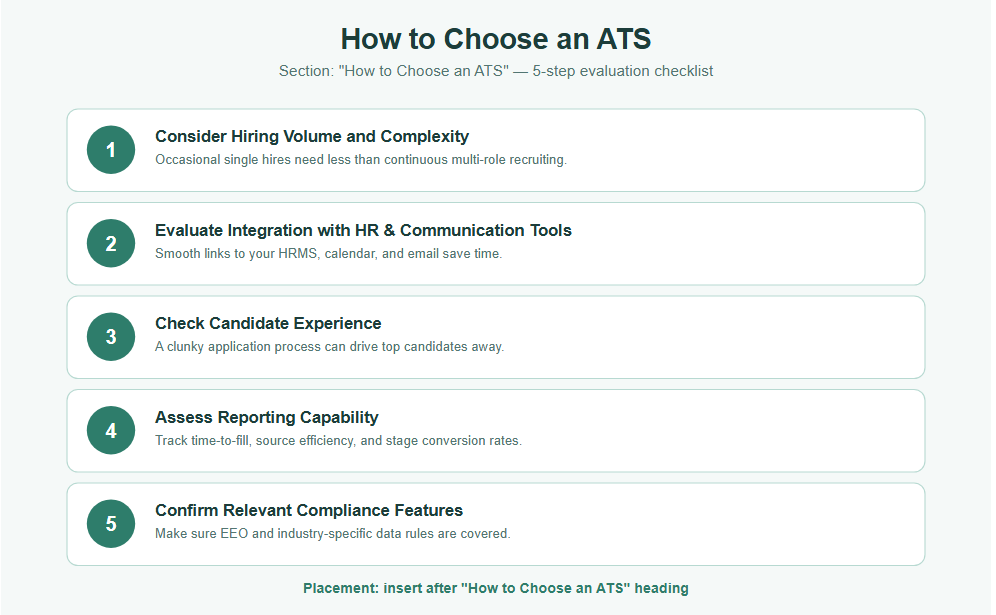
1. Consider Hiring Volume and Complexity
A business that hires occasionally for just a few positions has very different requirements compared to the one conducting numerous searches at the same time using multiple hiring managers.
2. Evaluate Integration with Your Broader HR and Communication Tools
A recruitment management system that integrates smoothly with your HRMS (in order to send new hire information automatically) and communication tools (calendar and e-mail) makes life much easier.
3. Check Candidate Experience
A poorly structured application process or inefficient communication might drive away your top candidates or even lead them to make a decision in favor of another position – hence the importance of the candidate side of an ATS.
4. Assess Reporting Capability
The ability to track the time-to-fill, the efficiency of your sources, and conversion rates per stage is crucial to finding the actual problem within the hiring process.
5. Confirm Compliance Features Relevant to Your Situation
There might be industry-specific rules regarding the collection of information for EEO that the software must comply with.
Common Mistakes When Implementing an ATS
- Selecting enterprise-level software prematurely before there is sufficient recruitment activity to warrant its use.
- Underinvestment in tailoring the user interface of the software that makes potential hires drop off.
- Training gaps when it comes to using the software, and not using the software as intended in favor of manual processes.
- Overlooking the reporting capabilities of the software, where it could have helped pinpoint and resolve particular bottlenecks within the process of hiring.
Bottom Line
The applicant tracking system acts as the repository for all the information concerning the recruitment process and eliminates all those disparate spreadsheets and emails that fall apart once you hire people on a larger scale.
The decision is based on how large-scale your recruiting needs are and how complicated they are; smaller organizations would be able to manage with the inbuilt system of a comprehensive human resources software suite.