AI-Native CRM: What It Actually Covers and Why It’s Easy to Get Wrong

Introduction
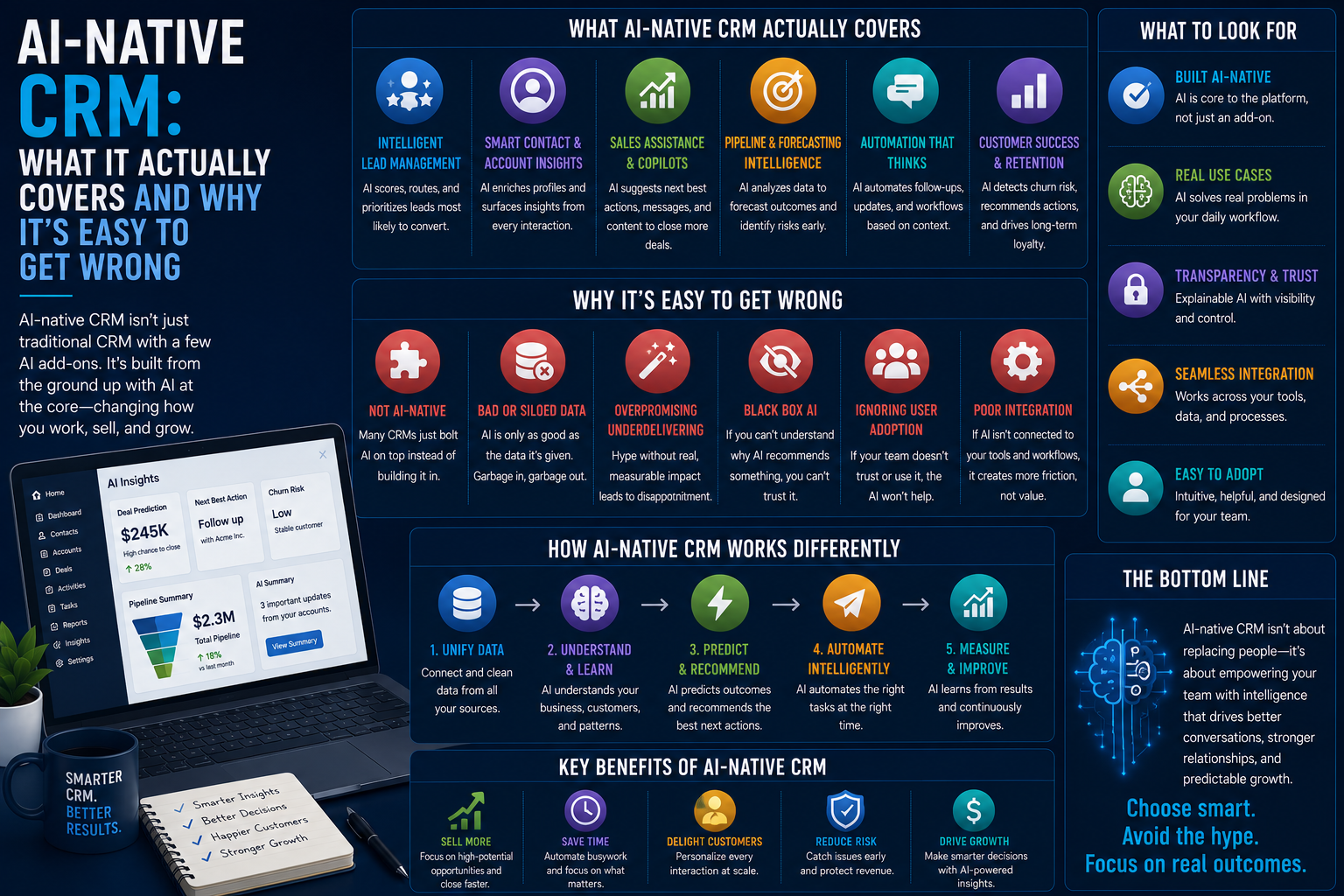
An AI-native CRM refers to a CRM platform that was designed with AI at the very core of its operations, in contrast to one that has been developed traditionally but enhanced with AI functionality at a later stage.
While this may sound fairly straightforward, the reality is that the number of functionalities that can be referred to as “AI” is vast.
Why AI-Native CRMs Are More Complex Than They Appear
The AI capabilities of a CRM solution are not a homogeneous capability but rather a composite construct comprising:
- Lead and deal scoring
- Automatic data input and enhancement
- Generation AI to generate an email or summary
- Chatbots in the form of conversational AI assistants
A number of vendors sell bolt-on AI capabilities using the same terminology that vendors whose solutions were built on the foundations of AI have always used. This muddies the water somewhat when it comes to distinguishing between what is unique about the AI capability of one platform versus another.
A business reviewing multiple CRM platforms will need to look at each of these capabilities separately based on their underlying architecture.
Major Areas of AI-Native CRM Functionality
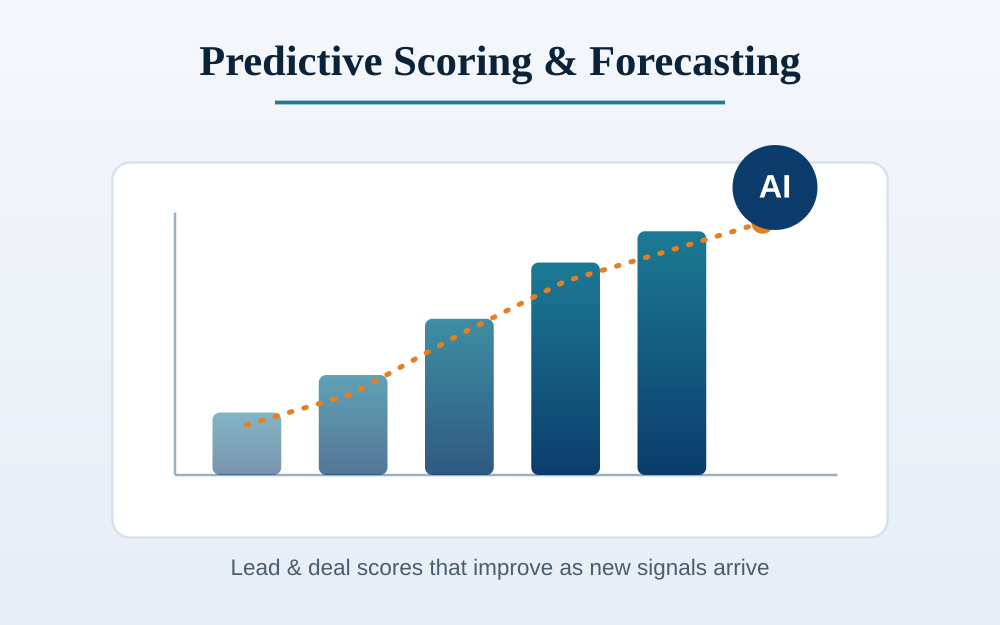
Predictive Scoring and Forecasting
Rules Governing:
- Calculation of lead scores
- Source of information for prediction model
- Updating forecasts as new information comes in
Fixed, rules-based scoring is among the most common deficiencies in non-native platforms as it might lead to:
- Scores not getting better with time
- Overlooked signals within unstructured data
- Forecasting lagging behind changes in the pipeline
Automated Data Capture
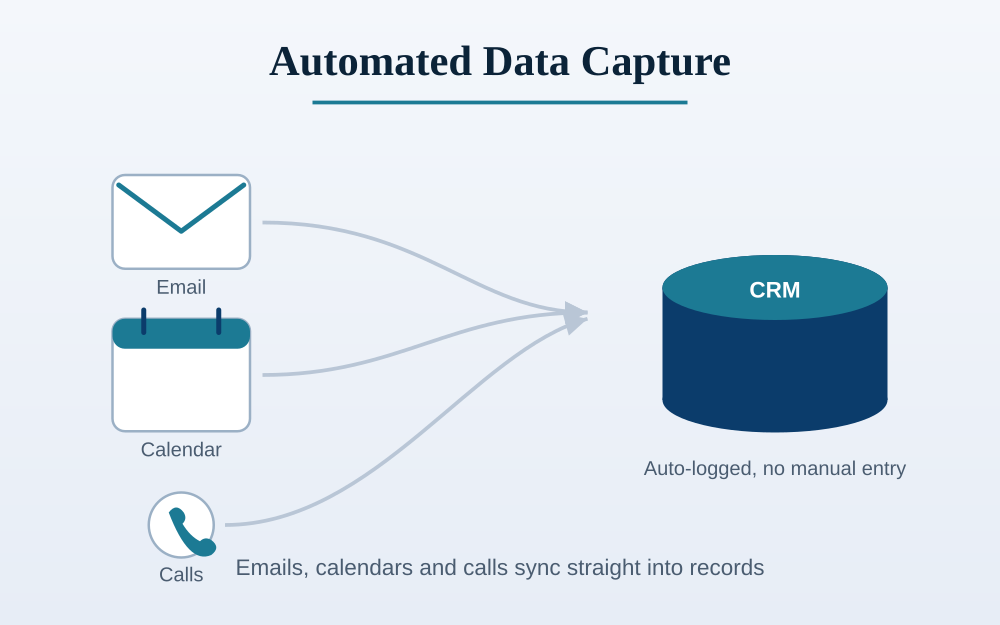
The native CRM for AI will always feature automatic logging of emails, calls, and meeting minutes without having to manually enter anything to maintain updated records.
Automated Capture Often Includes:
- Automatic email and calendar sync
- Automatic call transcription and summary
- Automatic population of contacts and companies information fields
Generative Content Assistance
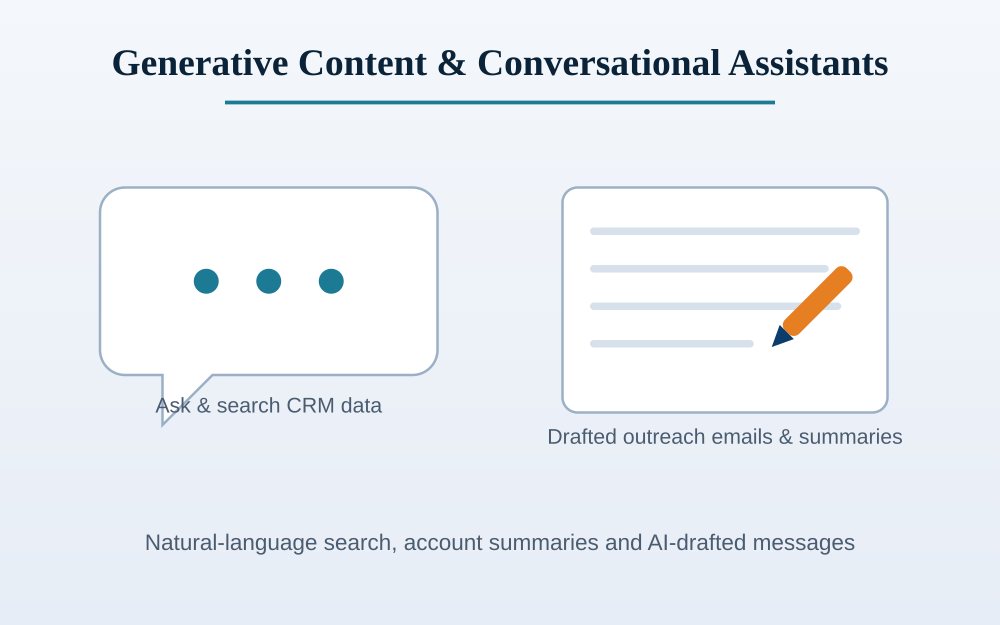
Handling includes both email templates but also an increasingly common use of generative AI to generate personal outreach based on the account.
Those Capabilities Usually Vary in Many Respects Including:
- How much historical data about the account is used to generate the draft.
- Whether the tone is customizable.
- How easily the output is editable before sending.
Conversational Assistants
AI-powered platforms usually include the following:
- Natural language searches through CRM data
- Summary chatbot for account history
- Voice input for data collection
The level of sophistication of such assistants varies based on the degree of AI integration in the platform itself.
Data Quality and Model Training
Some AI-based CRMs need to take care of several elements that include:
- Amount of past data available for training
- Data cleanliness and duplicates
- Feedback mechanisms that refine predictions
These elements need to be taken care of due to the fact that AI results depend on data input.
Why AI-Native Claims Are Easy to Get Wrong
Such confusion rarely occurs between AI-native and CRM systems that integrate AI functionalities because consumers simply disregard the issue altogether.
Actually, such confusion could occur for the following reasons:
- The marketing terminology mixes up “AI-powered” and “AI-native.”
- Generative capabilities are added to legacy CRMs without re-designing their existing data structure.
- Consumers test out the AI functionality during a demonstration but do not apply it to their actual, messy data.
How Organizations Evaluate AI-Native CRMs
Testing With Real Data
Large firms can conduct a pilot project based on their past data, particularly when there is a need for accurate predictions in forecasting.
Reviewing Architecture, Not Just Features
There are several methods of evaluation, which include questioning vendors in order to find out:
- If AI is involved in the creation of the data model
- How the models are trained and improved
- How the AI accuracy changes with an increase in the data size
Piloting Before Full Rollout
Limited pilots conducted by organizations include:
- One team or usage scenario
- Specific testing period
- Success criteria known prior to full-scale implementation
By piloting, organizations get an opportunity to ensure that the AI capabilities are actually valuable.
Common AI-Native CRM Mistakes
Judging Based on Demo Data Alone
Judging AI’s functionality through the vendor’s pristine demonstration data set and not using our own messy data.
Ignoring Data Hygiene
Expecting that the AI system will fix all the mess we created in previous years.
Over-Trusting Automated Scores
Treating AI-generated lead scores as infallible without periodically validating them against actual outcomes.
Underestimating Change Management
Lack of proper preparation for:
- Change that the workflow of salespeople will go through
- Training required to believe and act on AI recommendations
- Modification of existing procedures designed for a different type of workflow.
This may result in poor adoption despite having a good AI algorithm.
Bottom Line
The process of evaluating an AI-based CRM is extremely varied and includes many different things like prediction scores, automation of data collection, generative support, conversational tools, and the quality of data underneath.
Given the large overlap of marketing language in AI native platforms vs. traditional CRMs with AI, it would probably make sense for buyers to run their own tests on the data.