AI Marketing Automation: What It Actually Covers and Why It’s Easy to Get Wrong

Introduction
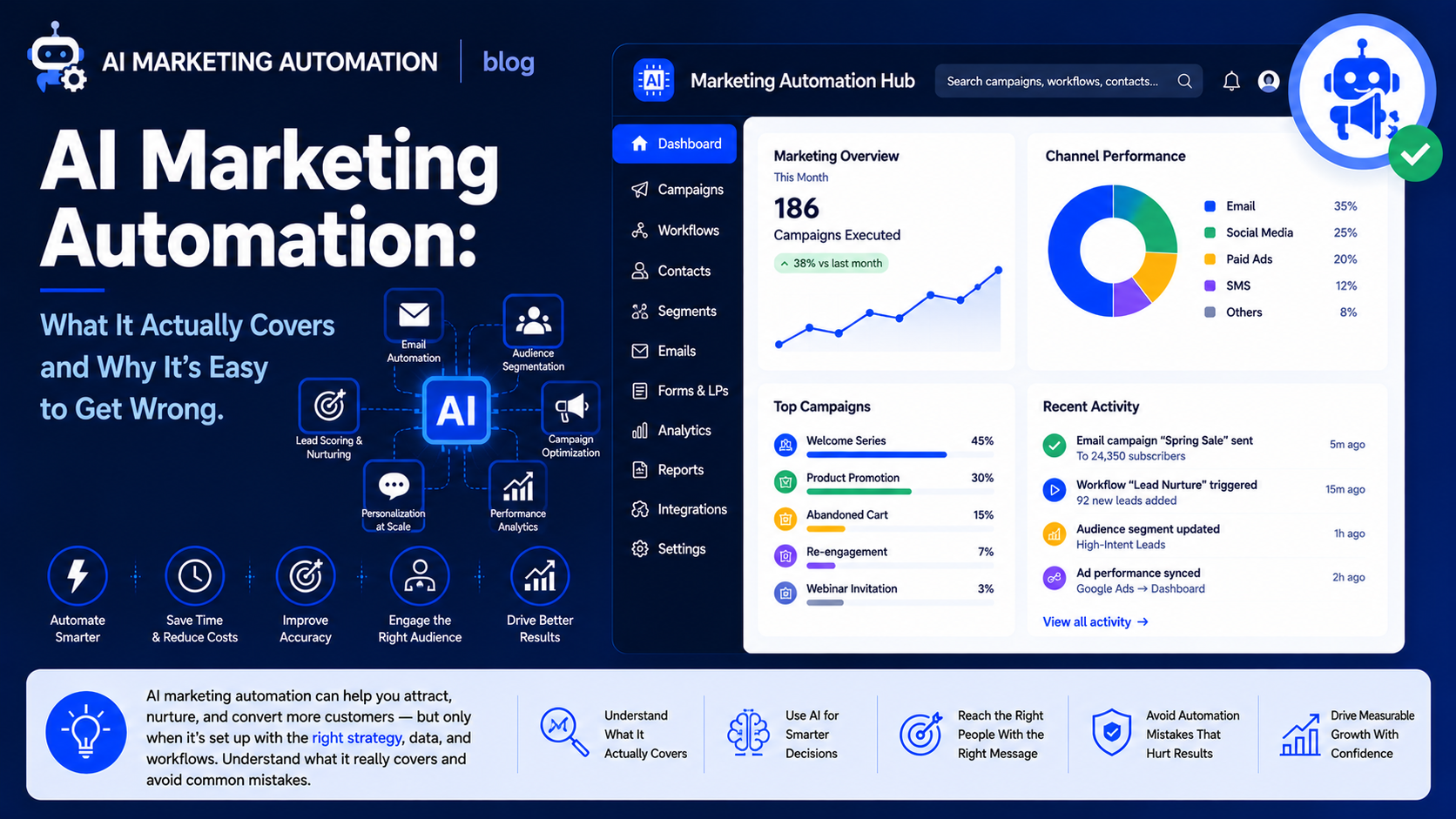
AI marketing automation is the use of artificial intelligence in personalizing and executing marketing campaigns through optimization, unlike traditional automation, which simply adheres to rigid rules without taking into account the actions of individual customers.
While this sounds like it could be straightforward, there are so many channels and data sources in marketing that this is often something that is poorly implemented in business.
Why AI Marketing Automation Is More Complex Than It Appears
Marketing automation via artificial intelligence is not one homogenous technology but a composite system which includes:
- Predictive audience segmentation
- Personalized content creation
- Optimization of the campaigns across all channels
Some companies use AI only to perform certain activities such as writing email subject lines without implementing AI to create campaigns overall. This partial implementation greatly reduces the effect of AI integration.
For companies that conduct campaigns in several channels at once, personalization should be performed separately for each channel, since otherwise the inconsistency in the message will negatively affect the customer experience.
Major Areas of AI Marketing Automation
Predictive Audience Segmentation
Rules Governing
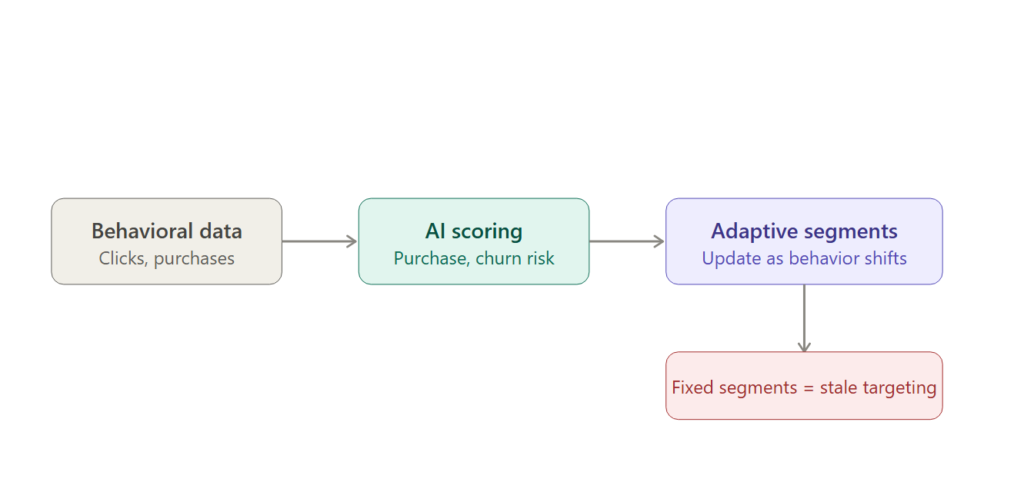
- Behavioral information employed to create customer segments
- Scoring on the probability of purchasing or churning
- Segments that can adapt to changing behaviors
Fixed and manual segments are among the most common shortcomings since this approach may lead to:
- Customer segments that no longer reflect their behaviors
- Failure to capitalize on customer intent
- Generic messaging sent to more and more diverse audiences
Content Personalization and Generation
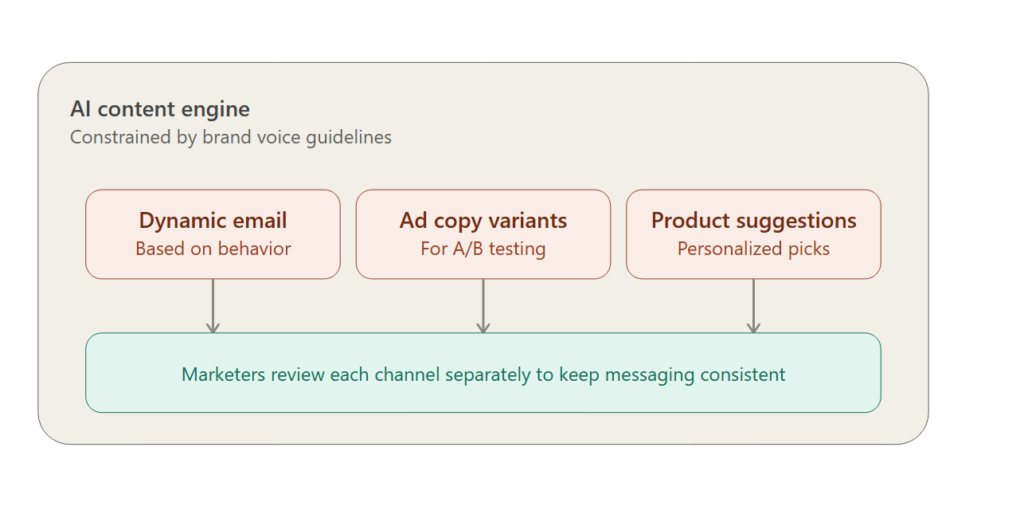
AI marketing automation typically offers content tools, requiring marketers to adhere to brand voice guidelines while scaling personalized messaging.
Content Personalization Often Includes
- Email content with dynamic elements depending on personal behavior
- AI-produced variations in ad copy for testing purposes
- Personalized product suggestions
Campaign Optimization
Dealing with the issue involves both manual A/B testing and growing adoption of AI for automating targeting, bidding, and creative processes on-the-go.
Those Optimization Tools Usually Vary in Many Respects Including
- The degree of marketer control over automatic decision-making
- The speed at which the system shifts budget allocation to better-performing campaigns
- Why the AI chose a particular way to optimize
Cross-Channel Orchestration
Some of the capabilities that AI marketing automation typically provides include:
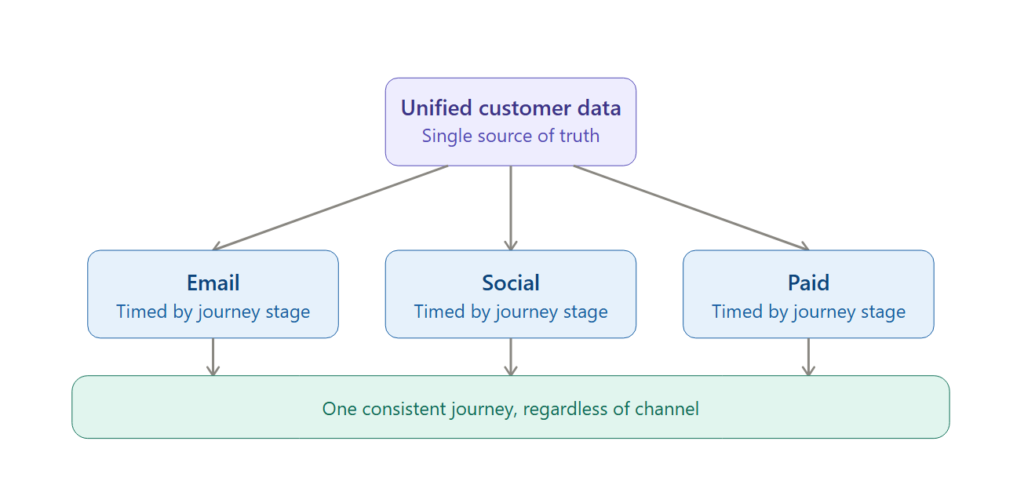
- Timing for messaging through email, social, and paid channels
- Customer journey mapping irrespective of the channel
- Unified data for personalized experiences at all touchpoints
Orchestration is effective based on how well the customer data is unified.
Performance Measurement and Attribution
Several marketing automation technologies powered by AI need to keep certain skills by the marketers, which include:
- Models of multi-touch attribution
- Dashboards for real-time performance reporting
- Separation between the AI outputs and base performance
The need to maintain such skills is because of the confusion regarding the attribution of the AI-powered outputs.
Why AI Marketing Automation Underdelivers Even With Strong Tools in Place
Unexpected marketing results are rare since the AI tools themselves do not have any problems.
In reality, under-performance might occur due to the following reasons:
- Customer data is isolated and trapped within marketing systems.
- Artificial intelligence is used only for individual marketing processes rather than an entire marketing process lifecycle.
- Marketers do not challenge AI suggestions without any knowledge about the reasoning behind them.
How Marketing Teams Implement AI Automation Effectively
Unifying Customer Data First
For bigger companies, it may be more important to integrate their channel data before adding AI-driven personalization, particularly when their customer data is not integrated at all.
AI Marketing Features Supporting Real Impact
There are some AI-powered marketing automation tools which allow users to:
- Create dynamic segmentation with automated updates
- Compare AI-created content versions with human-made baseline versions
- Gain visibility into the optimizations made
Regular Performance Reviews
Organizations undertake regular reviews for the following reasons:
- AI-powered marketing campaigns performing better than manual campaigns
- Problems with data quality that affect the accuracy of personalized messages
- Regular reviews allow organizations to ensure that AI marketing automation is truly contributing to performance improvements.
Common AI Marketing Automation Mistakes
Applying AI to Isolated Tasks Only
Utilizing AI on smaller tasks such as subject lines while keeping everything else manual.
Ignoring Data Silos
Making attempts at personalization prior to consolidating all the customer data within marketing tools.
Over-Trusting Automated Optimization
Allowing AI to make decisions regarding budget and targeting without a review from humans.
Poor Testing Discipline
Lack of comparison between:
- AI content vs human-produced options
- Automated marketing efforts vs manual benchmarking
- Various AI platforms prior to deciding on a particular platform
Lack of rigorous testing could mean that more money would be spent on AI technology without any improvement results.
Bottom Line
Marketing automation using artificial intelligence (AI) technology is very varied and includes multiple aspects like predictive segmentation, personalizing the content, campaign optimization, cross-channel integration, and performance tracking.
As a result of the high fragmentation of the available data and the limited scope of AI application, it would be beneficial for marketing professionals to integrate their data first and then use AI for the entire campaign cycle.