AI for Business Automation: What It Actually Covers and Why It’s Easy to Get Wrong

Introduction
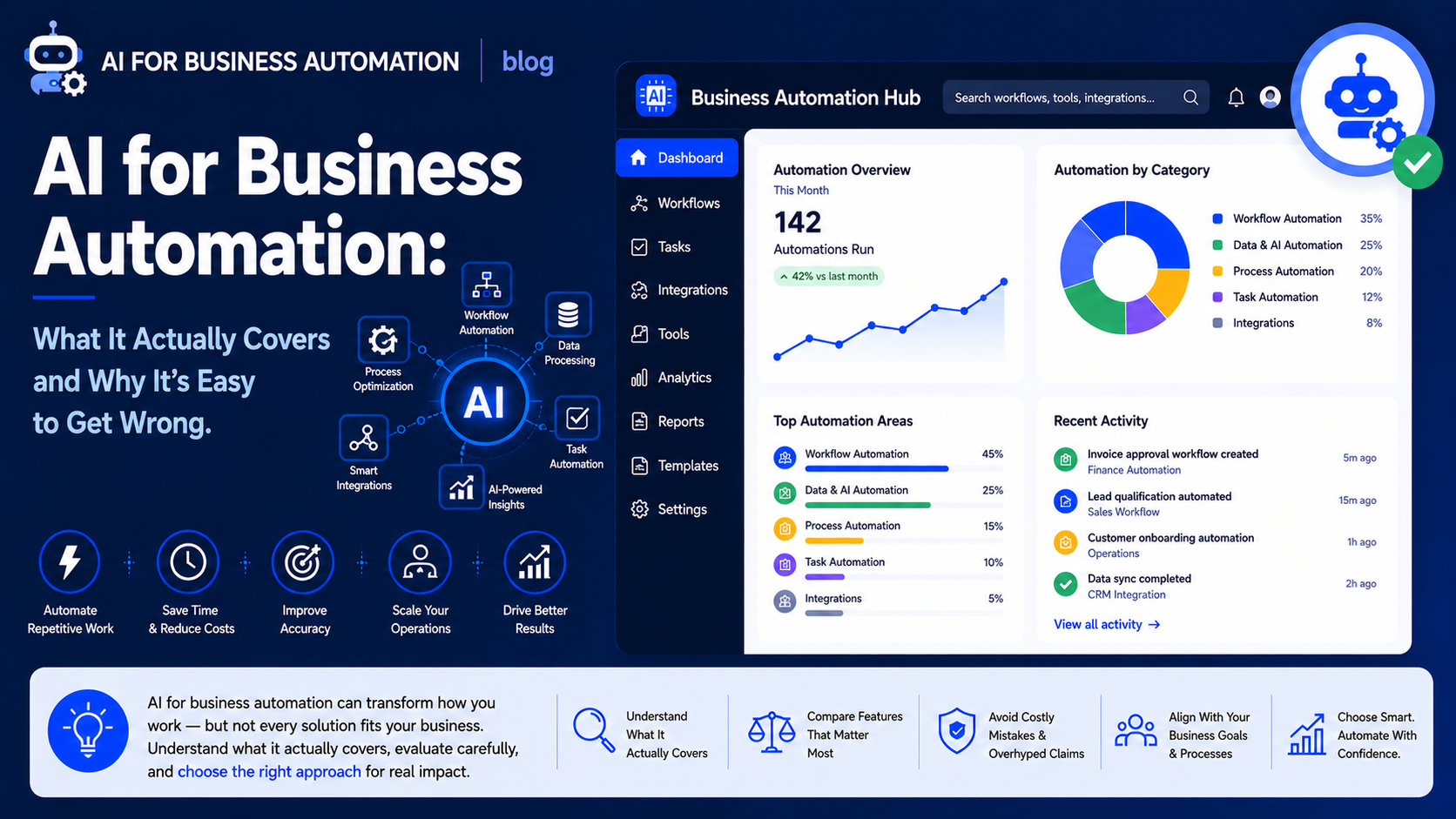
Artificial intelligence for business automation implies the use of artificial intelligence in all business operations in order to reduce manual work and improve the process of decision-making, but not only at the departmental level.
Even though it may seem quite simple, the number of departments and processes that can be automated with the help of artificial intelligence poses some difficulties.
Why AI for Business Automation Is More Complex Than It Appears
The opportunities presented by automation in the business setting are neither confined to a uniform group nor do they fall into a single category. These include:
- Back office activities involving finance and human resources
- Front office activities involving sales and customer service
- Activities relating to operations such as supply chain management
Many companies automate AI-enabled technology on a departmental basis which results in fragmentation of data and disconnect between systems.
In the case of a company that wishes to automate its functions, it is important to prioritize them based on their individual departments as automation is highly dependent upon the function involved.
Major Areas of AI for Business Automation
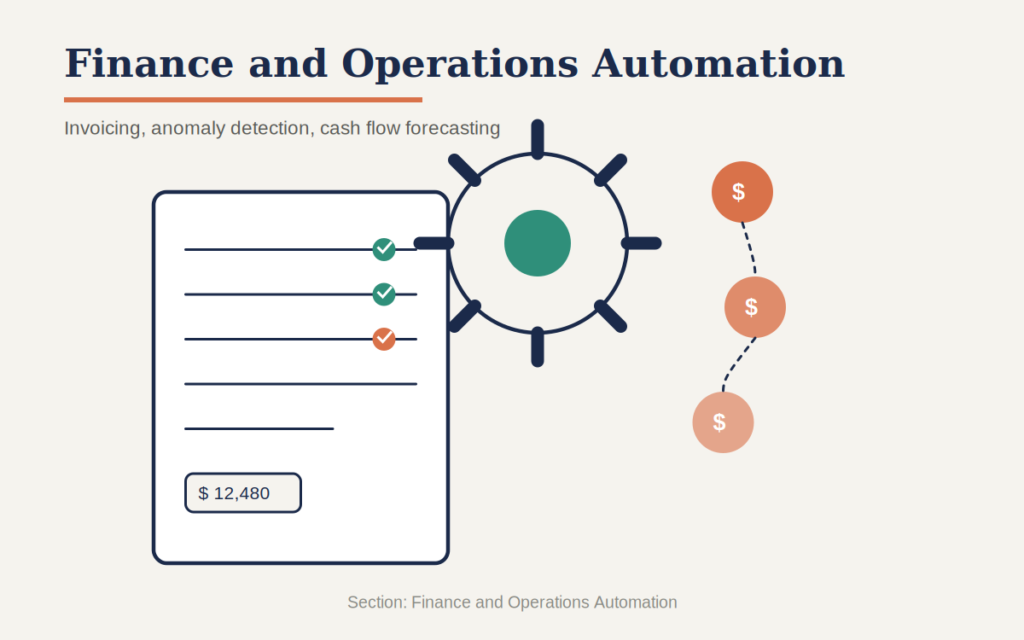
Finance and Operations Automation
Rules Governing
- Automated invoicing and approval processes
- Detection of any anomaly in financial transactions
- Analysis of cash flow and budget forecasting
Automation of financial processes manually performed is perhaps one of the most common and costly means of automation because it results in:
- Time savings in performing repetitive administrative tasks
- Less errors in comparison with manual data entry
- Faster financial closure and reporting process
Customer-Facing Automation
Automation software for businesses powered by AI technology usually comprises customer service and sales software that should be created in a way that allows them to become part of the positive customer experience process.
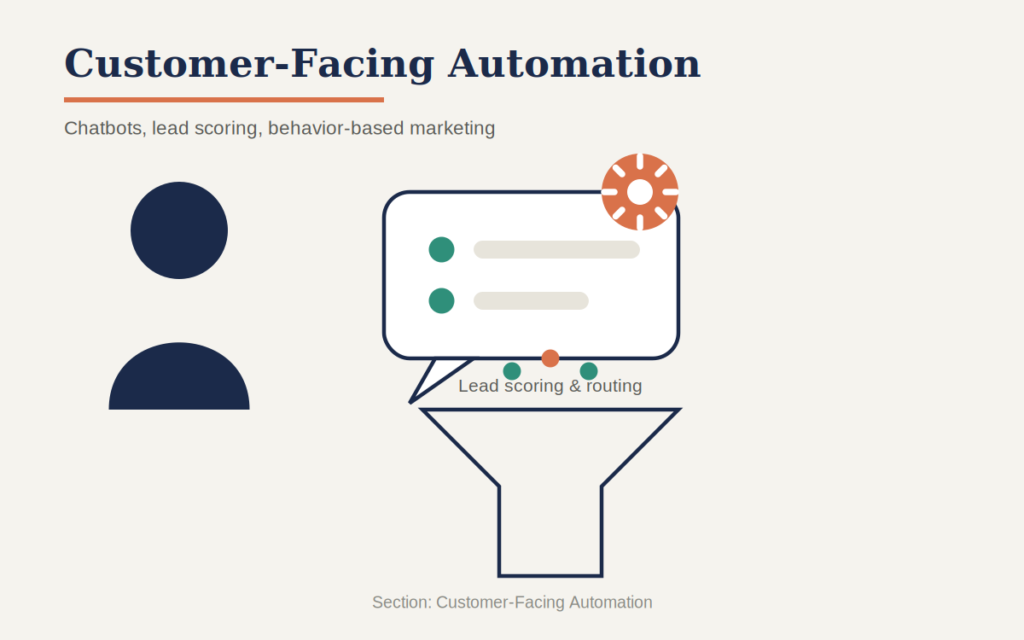
Customer-Facing Automation Often Includes
- Frequently Asked Question AI chatbots
- Lead scoring and lead routing automation
- Behavior-based marketing automation
HR and People Operations Automation
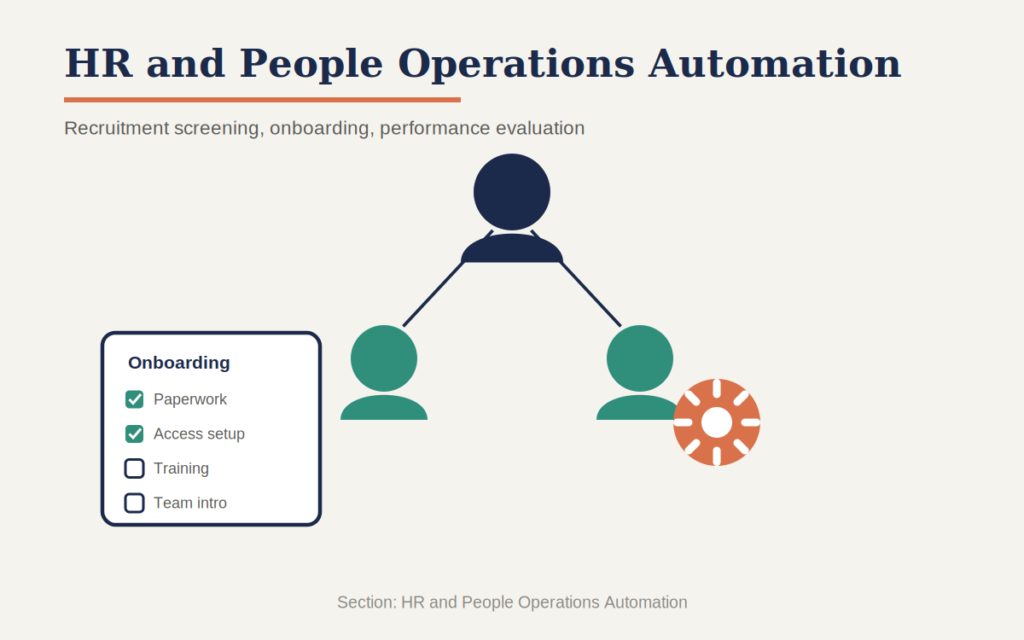
Recruitment screening forms an integral part of the process along with the increasing popularity of AI in onboarding, performance evaluation, and even internal administration jobs.
Those HR Applications Usually Vary in Many Respects Including
- How extensive is the use of AI in the evaluation process?
- Scheduling and management of tasks using automated tools for onboarding
- Self-service features provided through the assistance
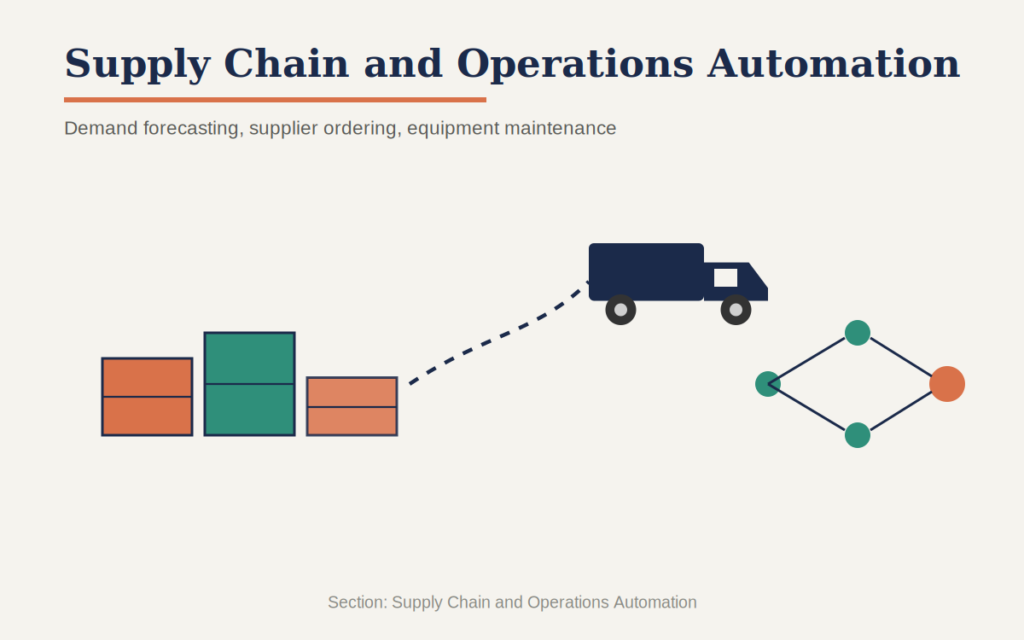
Supply Chain and Operations Automation
AI-based business process automation is mostly used for:
- Demand forecasting for managing inventory
- Automation of communication with suppliers and ordering
- Maintenance of equipment and logistics
Depending on the data-drivenness and repetitiveness of the operations within the business process in question.
Cross-Departmental Data Integration
There are certain prerequisites for the AI automation process of businesses that should be met by companies, and these include:
- Consistent data structures within departmental systems
- Consistent data governance to avoid conflicting data
- Consistent reporting standards to measure the process of automation
All these prerequisites should be met since fragmented data inhibits the effectiveness of AI automation.
Why Business-Wide Automation Efforts Struggle Even With Strong Leadership Support
The failures of breadth of automation are seldom a result of lack of commitment from the leadership of the company.
Instead, it could be caused by:
- Departments deploying automation solutions in their respective departments without standardizing their data.
- Treating automation as a project, rather than as a capability to be built.
- Lack of employee training on automation.
How Organizations Approach AI for Business Automation Strategically
Prioritizing High-Impact, Low-Complexity Processes First
It is highly probable that large organizations will have standard processes, especially when the data is clean and available in a central repository.
Automation Approaches Supporting Organization-Wide Success
Some of the successful automation solutions involve organizations that:
- Establish data governance from the onset in various departments
- Have a central automation center of excellence
- Celebrate success stories internally
Regular Strategic Reviews
Reviews are regularly carried out by organizations so as to determine:
- Processes that have successfully been automated.
- Areas where there is fragmentation of departments leading to formation of information silos.
- How the staff reacts to business automation.
Through reviews, organizations are able to maintain coordination in their business automation processes.
Common AI for Business Automation Mistakes
Automating in Departmental Silos
Allowing each individual department to install their own automation program on an independent basis.
Treating Automation as a One-Time Project
Not implementing any mechanisms to track and enhance the first-time installation of the automation process.
Ignoring Employee Impact
Automation implementation without proper preparation and training of employees who will be impacted by the new technology.
Poor Measurement of Actual Impact
Inadequate measurement in terms of:
- Time savings/cost savings
- Decrease in errors compared to manual process
- Impact on customer satisfaction/employee satisfaction
Incorrect measurement can lead to an increased investment in automation that does not add value.
Bottom Line
Use of AI in the automation of processes in businesses is extremely broad and includes many factors such as finance, customer experience, human resources, logistics, and data integration among others.
Since department level automation is likely to be disjointed, it would be better for firms to do their AI automation in a systematic manner.