AI Chatbots: What They Are and How They’ve Evolved

Introduction
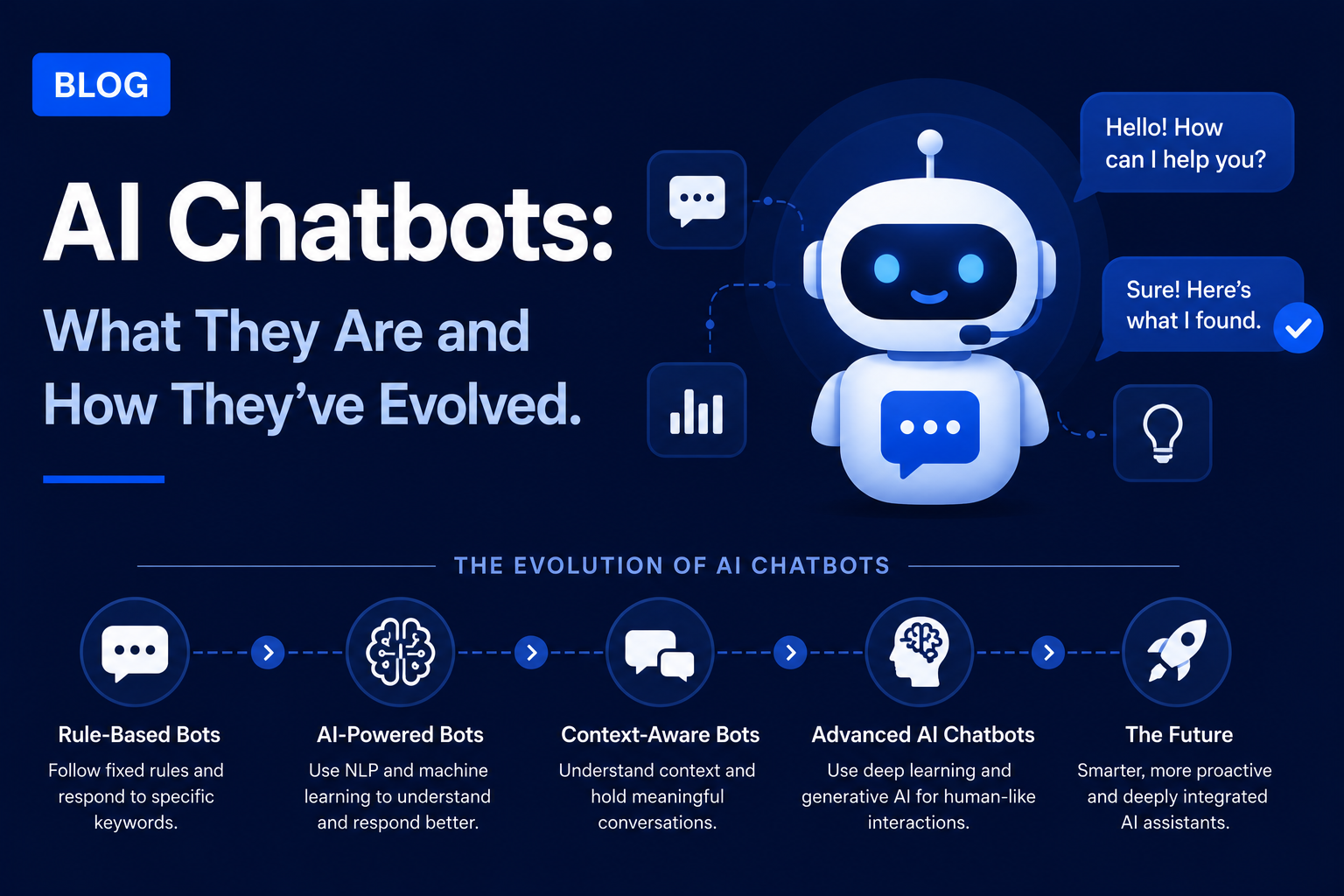
AI chatbots refer to computer programs that engage in conversations with humans. What constitutes an “AI chatbot” has changed significantly in the last few years, evolving from strictly rule-based programs into advanced, large language model-driven assistants.
An example is the chatbot created by the AI lab in China known as the Alibaba Cloud company.
How AI Chatbots Actually Work
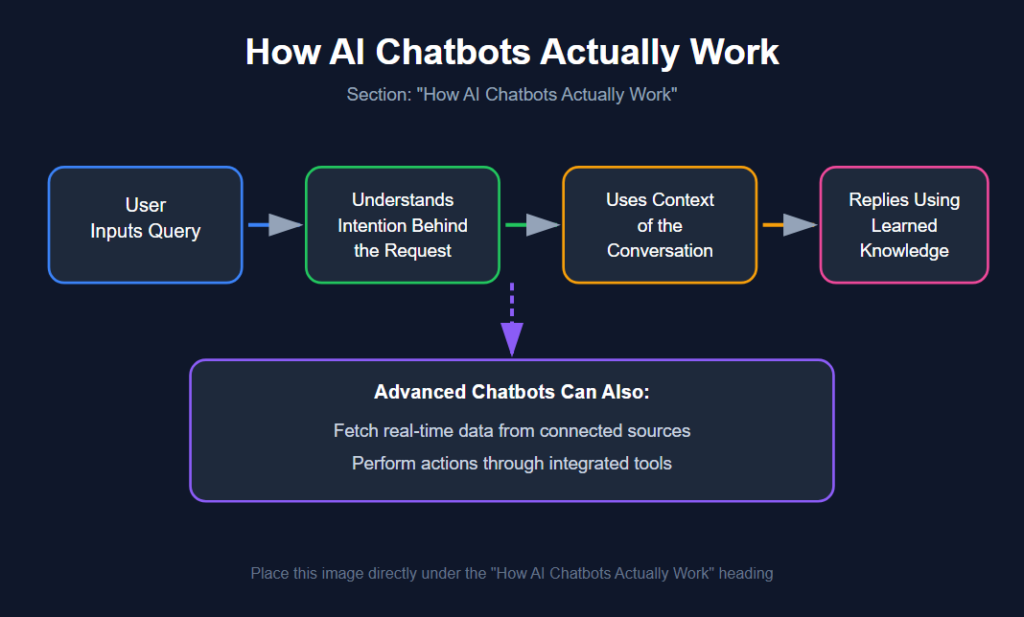
The current AI chatbots are generally created using large language models (LLMs), which are trained on extensive amounts of textual data.
As soon as the user inputs the query, the chatbot does the following:
- Understands the intention behind the request
- Replies to the request using its learned knowledge
- Uses the context available for that particular request
- Some advanced versions can even fetch real-time data from connected data sources or perform actions through integrated tools
Rule-Based vs. AI-Powered Chatbots
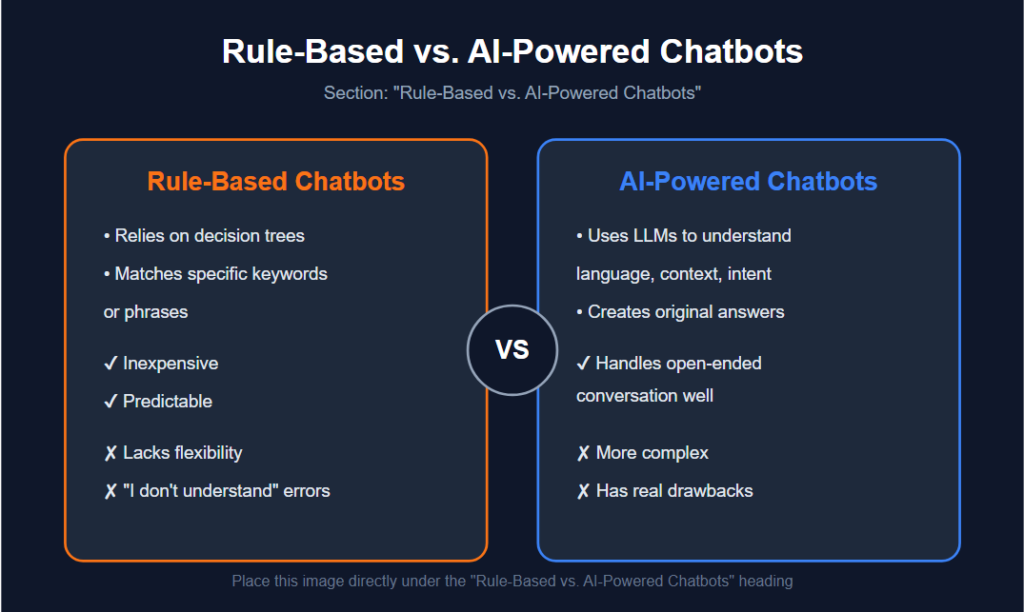
Rule-Based Chatbots
The earlier generation of keyword-based chatbots relied on decision trees for determining a reply based on the specific word or phrase used.
These are inexpensive and predictable, but lack any flexibility beyond their predefined boundaries, causing frustration to users when they encounter statements such as “I don’t understand.”
AI-Powered Chatbots
AI Chatbots using LLMs are able to comprehend varied language usage, context, and intent much better, and will create an original answer and not select one of several canned answers.
They are therefore much better at dealing with open-ended conversation and questions that they were not specifically designed to deal with, but they also have a number of drawbacks.
Common Use Cases for AI Chatbots
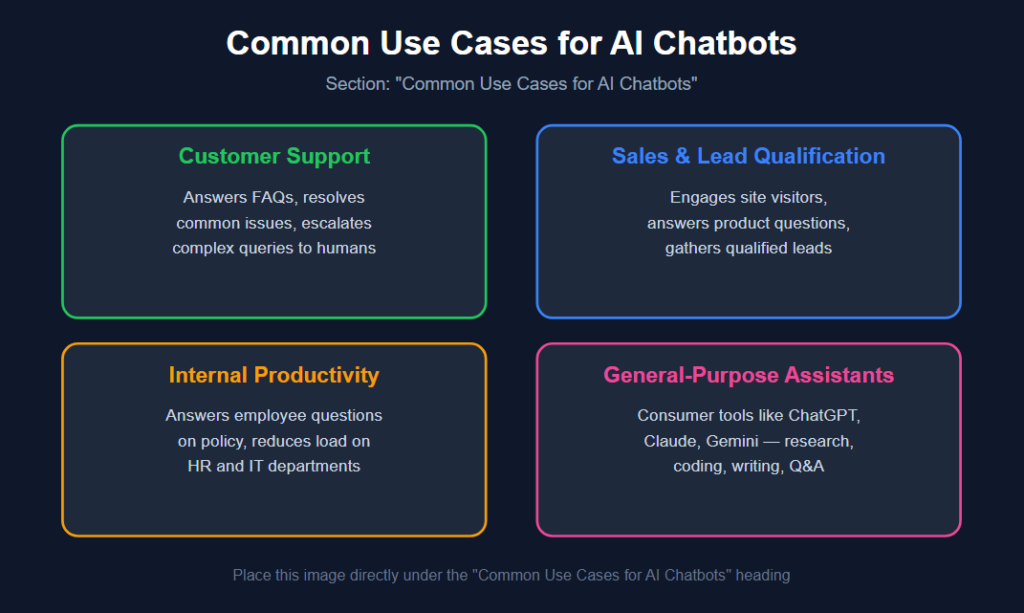
Customer Support
Responding to commonly asked questions, addressing frequently occurring problems, and diverting difficult queries to human beings, resulting in faster resolution of queries and reduced support load for simple queries.
Sales and Lead Qualification
Engaging the visitor on the website, answering product related queries and gathering leads, and sometimes even diverting interested users straight into a sales discussion.
Internal Productivity
Deploying chatbots internally within organizations to answer queries from employees on organizational policies and other such issues, thereby decreasing the burden on HR and IT departments through repetitive queries.
General-Purpose Assistants
Consumer-facing chatbots (like ChatGPT, Claude, Gemini, and others) which have an undefined scope of application ranging from research to coding, writing to answering questions.
Key Factors That Separate Strong AI Chatbots from Weak Ones
Accuracy and Grounding
If a chatbot can give accurate answers, especially to factual questions.
The most efficient systems link up the chatbot with credible and updated data sources (such as an organization’s knowledge base) instead of depending entirely on the training of the underlying model.
Context Retention
The degree to which a chatbot is able to maintain context during a conversation without subjecting the user to the inconvenience of repeating the same information he/she has already provided.
Tone and Personality
How well the communication style of a chatbot fits into the context that it is used in.
There are situations where a more formal communication style works best, and some where it does not.
Escalation Handling
Specifically for business use chatbots, the degree to which the conversation is able to seamlessly pass over to a human operator when the bot reaches its limits.
Where AI Chatbots Are Heading
There has been a lot of blurring of the line between a “chatbot” and an “AI agent,” since many chatbots can actually perform actions such as updating a record, processing returns, scheduling an appointment rather than just responding to questions.
The reason why many systems now label their services as having “agentic” capabilities is due to this trend.
Choosing an AI Chatbot for a Business Use Case
Your choice should be made based on how you will utilize the service in question.
Customer Support Chatbots Need
- Good integration with the knowledge base
- Integration with ticketing system
Sales Chatbots Need
- Good lead generation capability
- CRM integration
Internal Chatbots Need
- Secure access to company data that is needed
- Security from leaking sensitive data
When choosing any chatbot, one should consider how accurate it is in handling cases related to your use case, and not only evaluate its conversational capabilities.
Bottom Line
The AI chatbot has developed from being an inflexible scripted solution to becoming a complex LLM solution capable of flexible dialogue and, more recently, task accomplishment.
In deciding which one is the most appropriate, it’s important to ensure that there is a match between what the chatbot is able to do and its intended use.