AI Calling Agents: How Voice-Based AI Is Changing Phone-Based Work

Introduction
Automated calling agents, software that is capable of both making and answering phone calls, has gone from being an interesting technological demonstration to becoming actual technology in use for business purposes.
This is how it works.
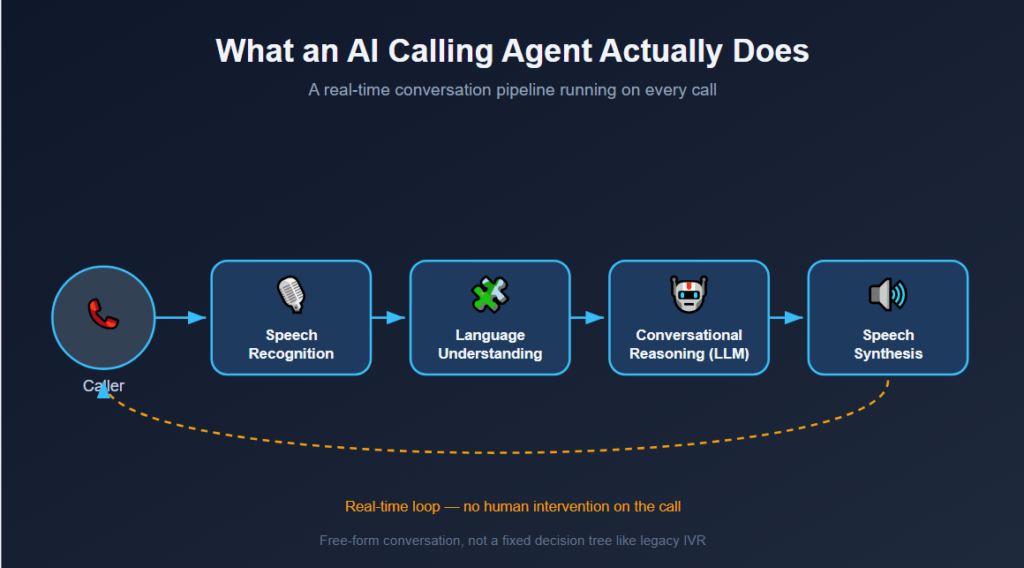
What an AI Calling Agent Actually Does
AI Calling Agents utilize speech recognition, natural language processing capabilities, conversational reasoning engines (which are usually large language models), and speech synthesis to engage in a phone conversation that is indistinguishable from human-to-human interaction, posing questions, understanding answers, and answering in real-time fashion without human intervention on the phone call.
In contrast to IVR (interactive voice response) systems which required people to press numbers to proceed through a decision tree, modern AI Calling Agents are capable of engaging in free-form conversations and adapting based on the input provided by the person on the other end of the line.
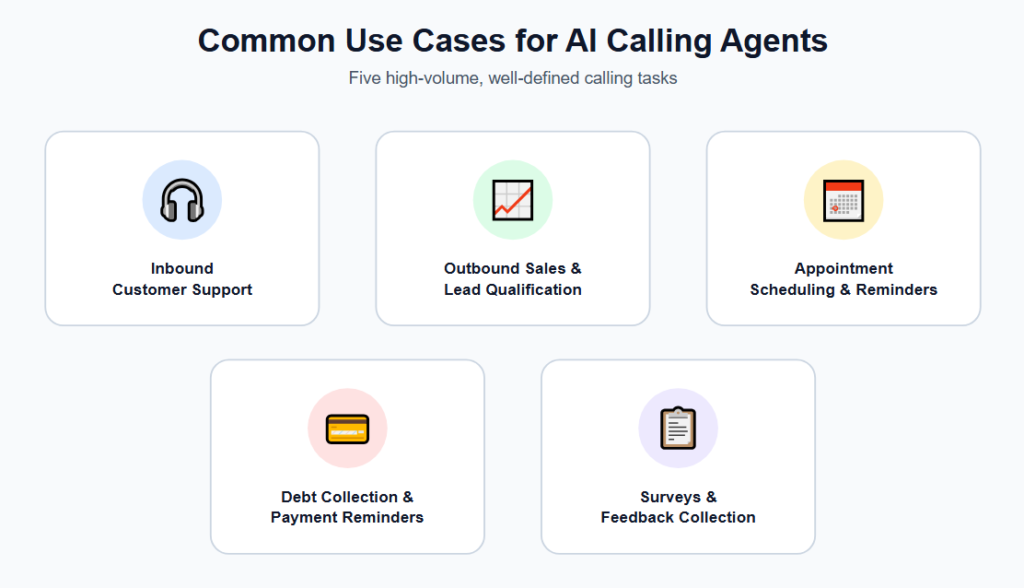
Common Use Cases for AI Calling Agents
Inbound Customer Support
Handling frequent inquiries about their account or order status, directing more complicated requests to a live agent, decreasing waiting times, and processing a significant number of calls autonomously.
Outbound Sales and Lead Qualification
Making the first contact with potential customers to screen them for a human sales representative, or responding to incoming inquiries quicker than a human staff can do.
Appointment Scheduling and Reminders
Popular in the healthcare industry and related fields, where calls are made to schedule appointments, make changes when necessary, and send reminders, lowering no-shows without having staff make these routine calls.
Debt Collection and Payment Reminders
Another, more niche application of call automation, but one that is becoming increasingly popular due to the nature of this type of call itself, which makes it suitable for an AI system to handle.
Surveys and Feedback Collection
Where automated calls are used to conduct surveys or gather feedback after an interaction in a structured fashion.
How AI Calling Agents Differ from Chat-Based Agents
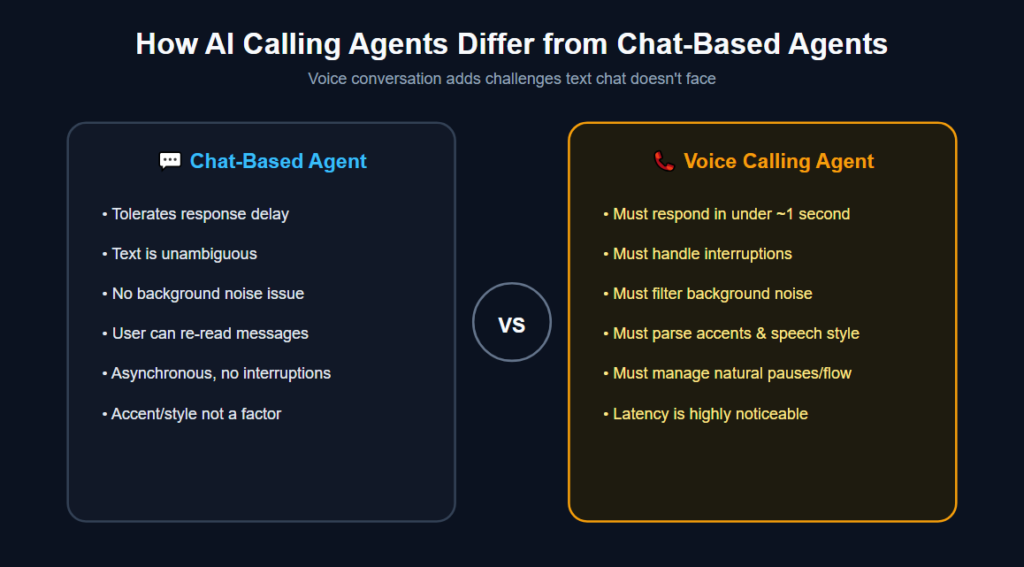
Voice conversation introduces more technical challenges other than text-based conversation.
The system should account for:
- Interrupts
- Noise in the background
- Differences in accents and speaking style
- Conversation flow, which includes pauses in speaking
Latency is also very important for voice conversations; what is an acceptable amount of latency in text conversation is unacceptable in a voice call.
Key Considerations When Evaluating AI Calling Agent Platforms
Voice Quality and Naturalness
The naturalness of the synthesized voice will have a huge impact on the perception of the service and level of trust, the presence of the robotic quality of a voice will be counterproductive even when the flow of conversation is built correctly.
Latency
When there are delays that exceed one second, there is a certain robotic quality that is not typical for live communication, which makes the assessment of the actual performance more important than the technical specifications of a vendor.
Integration with Existing Systems
The key point in creating an AI-based calling agent is that it should use the relevant information available in the system at the very moment of the call and not from the pre-prepared database of information.
Escalation and Handoff to Humans
The seamless transfer of the caller to a human agent in case of exceeding the capabilities of the AI calling agent is crucial for providing the most useful service possible to the customer.
Compliance Considerations
Calls, especially outgoing calls, must comply with certain guidelines (such as TCPA rules in the USA) regarding consent, time of call, and disclosure, which a calling application should consider properly as there could be legal and financial consequences of failing to do so.
Limitations to Keep in Mind
AI calling agents still have difficulties when faced with calls that involve high emotions, ambiguity, or are out of the ordinary, thus requiring human decision-making and problem-solving skills.
In the best implementations of today, AI calling agents are used only for those calls which are clearly defined, high in volume, but low in complexity.
Bottom Line
AI call center agents utilize speech recognition, conversation understanding, and voice generation to perform actual calls on the phone, and they are now fully operational in support, sales, scheduling, and other high-traffic calling applications.
A good assessment requires testing of voice quality and latency, verification of good integration with your current solutions, and the smooth escalation to human operators in cases when it is really required.