AI Agents for Customer Support: Beyond the Basic Chatbot

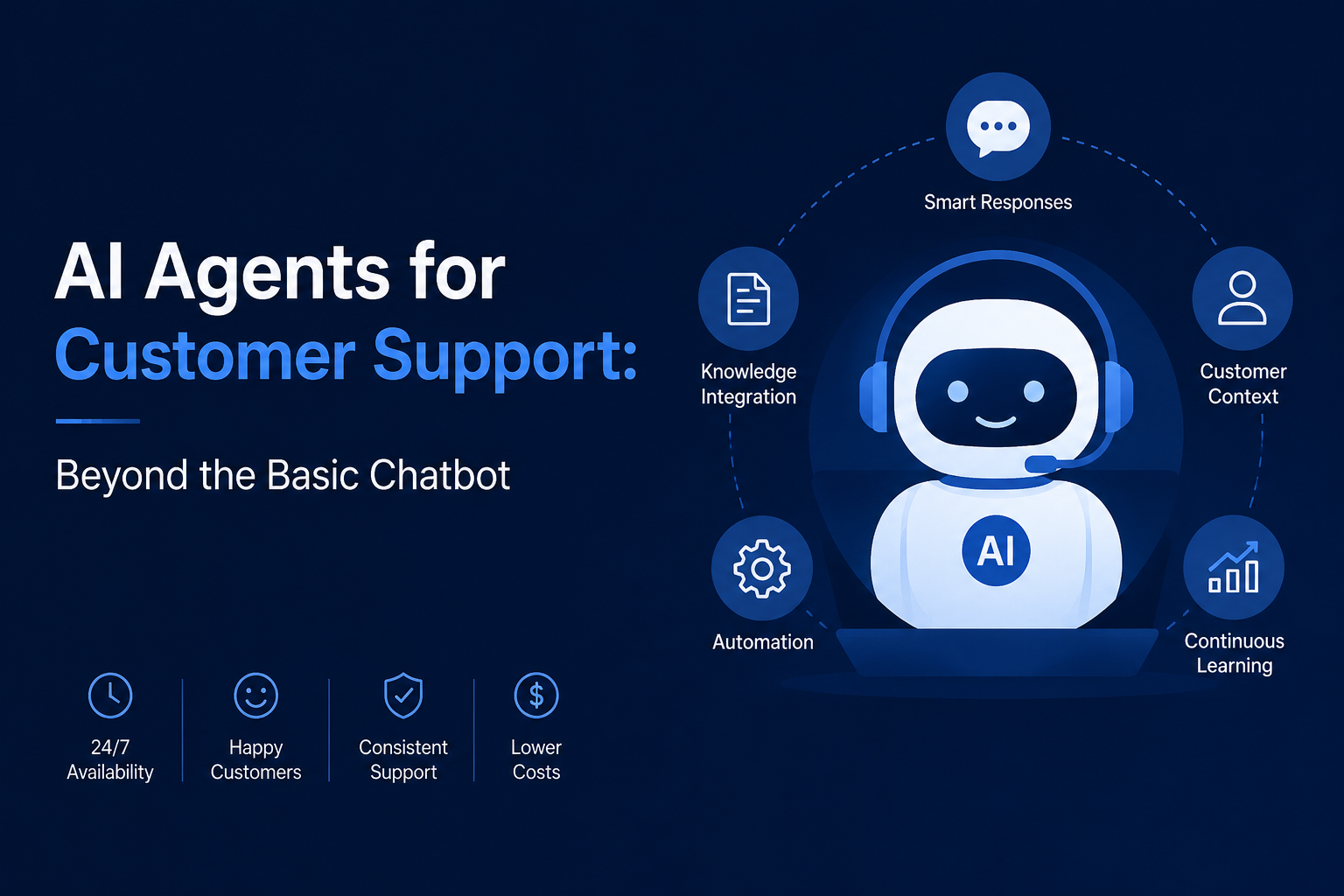
The application of AI agents in customer support is arguably the most common example of AI implementation, which is no coincidence as it offers all the key qualities necessary for such implementation, huge amounts of data, repetitive tasks, and clear success criteria (whether or not the customer was assisted). This is how AI agents for customer support function in reality.
What Makes This an “Agent” Rather Than a Chatbot
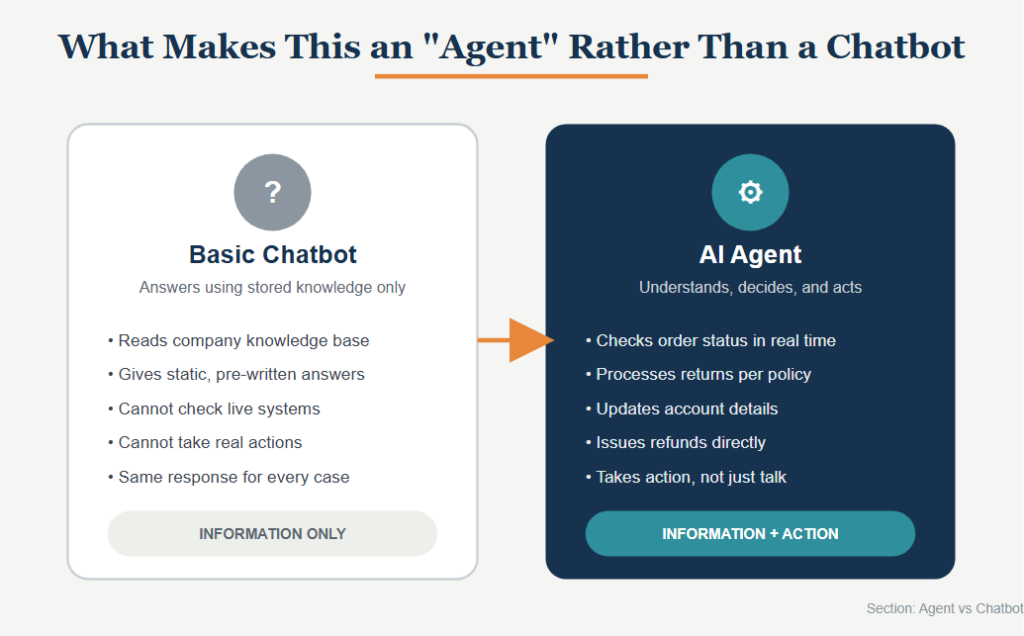
The simplest customer service chatbot uses data stored in the company’s knowledge base to answer customers’ queries. The advanced AI-based chatbot not only provides information but performs some actions, it checks the status of an order in real time, processes returns in accordance with company policies, updates account details and even makes refunds to customers.
Core Capabilities of a Strong Customer Support AI Agent
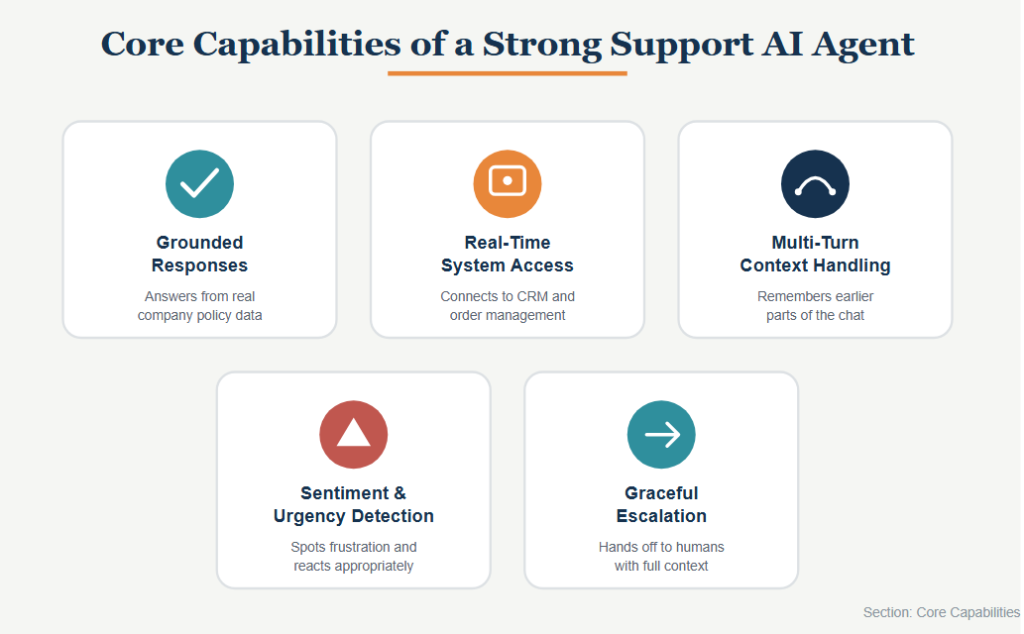
Grounded, Accurate Responses
Drawing solutions from an organization’s existing pool of knowledge, policies, and product documentation, rather than basing the answer solely on the general training of a model that can be old and non-specific.
Real-Time System Access
Being integrated directly with order management system, CRM, and account database to draw fresh data and take real actions instead of working with old and static data.
Multi-Turn Context Handling
Having the whole context throughout the conversation so that customers won’t have to repeat information that they gave before.
Sentiment and Urgency Detection
Being able to identify that the client needs more attention due to frustration or an emergency situation and handling them accordingly, without treating all clients the same way.
Graceful Escalation
Passing on calls to human agents seamlessly where the AI cannot answer the question being asked and passing on the conversation context to avoid having the client repeat themselves.
Common Use Cases Within Customer Support
- Order status, tracking, and handling of any delivery-related problems
- Returns and refunds processing based on company policies
- Tasks related to account management, like changing passwords and addresses
- Problem-solving with typical technical issues through a diagnosis process
- Scheduling appointments and making changes to existing appointments
- Frequently Asked Questions regarding company policies
Where Human Agents Remain Essential
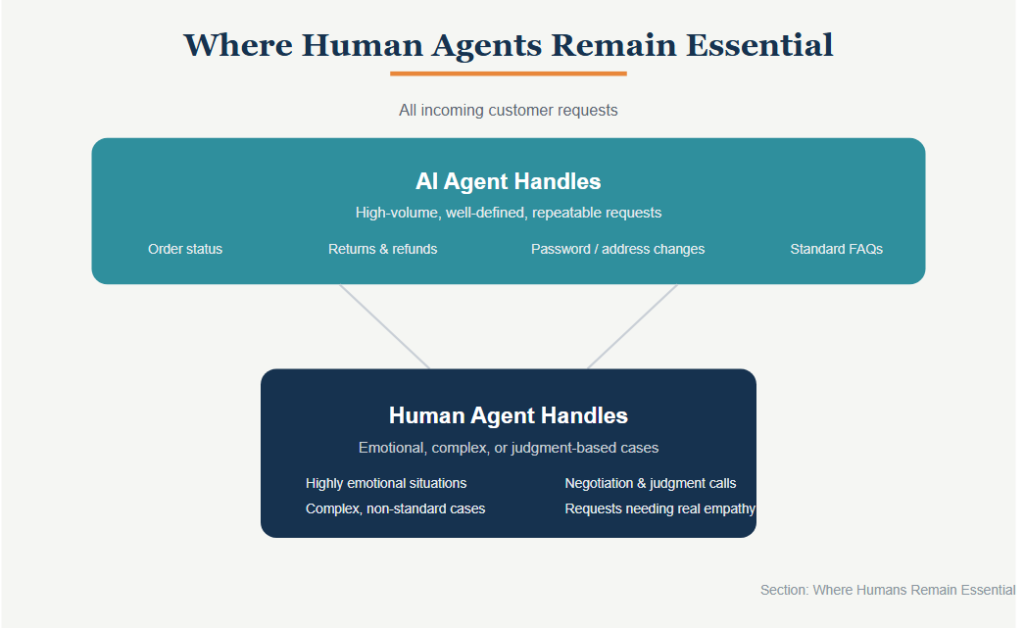
Highly emotional or delicate scenarios, complicated situations that don’t fall into patterns, negotiation scenarios that require judgment (such as uncommon requests for refunds outside of policy), or any scenario where true empathy and nuance are required are still greatly helped by humans handling them. The most effective use of AI agents is for situations where the majority of the requests are high volume and defined well enough for the robot to handle.
Setting Appropriate Autonomy Limits
Not all actions should become entirely autonomous at once. The usual trend has been to give the agent autonomy in the performance of low-risk and well-understood actions such as answering informational queries or checking status while asking for human permission in case of high-stakes actions such as refunding large sums or cancelling accounts.
Measuring AI Agent Performance in Customer Support
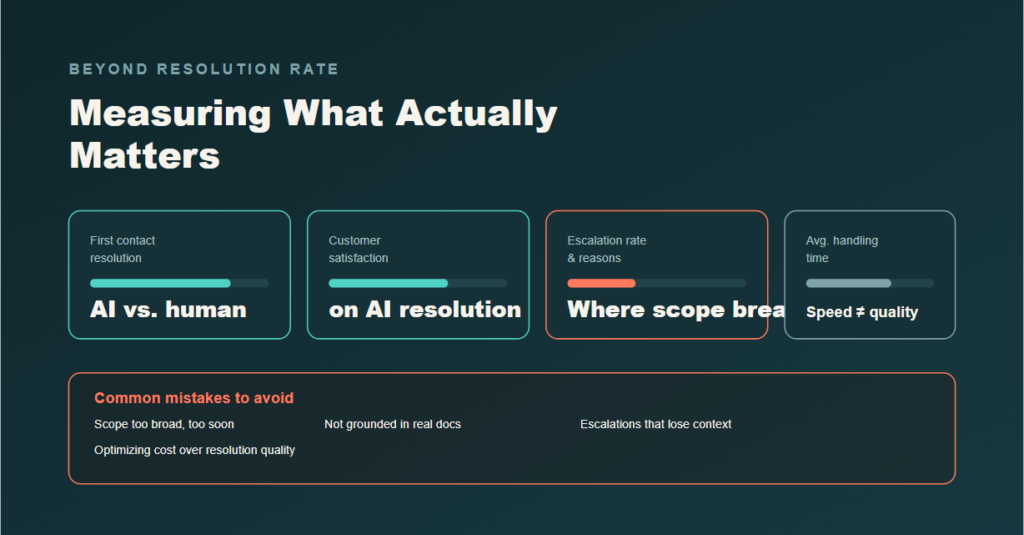
In addition to just the resolution rate, some useful measures include:
Performance Metrics
- The first contact resolution rate, AI vs human contact resolution
- The customer satisfaction rate with regard to AI contact resolution
- The escalation rate and reasons, which show how the agent’s scope of work should be adjusted
- The average handling time, faster is not necessarily better if it sacrifices accuracy and customer satisfaction
Common Implementation Mistakes
- Use of overly broad scope too soon, before building reliability on narrow and defined requests
- Lack of basis in the real-world knowledge base of the company, resulting in wrong answers given with confidence
- Bad escalations, resulting in loss of context for customers or repetition in the case of transfer to human
- Looking at cost reduction without customer satisfaction and resolution quality
Bottom Line
Customer support AI should be designed to have both accurate and rooted answers to queries, as well as the actual ability to solve problems through proper system access. The success of such an implementation is likely to hinge on the selection of well-defined requests, the incorporation of necessary approvals for more complex tasks, and the easy escalation to human operators.