AI Agent Use Cases: Where the Technology Is Actually Delivering Value

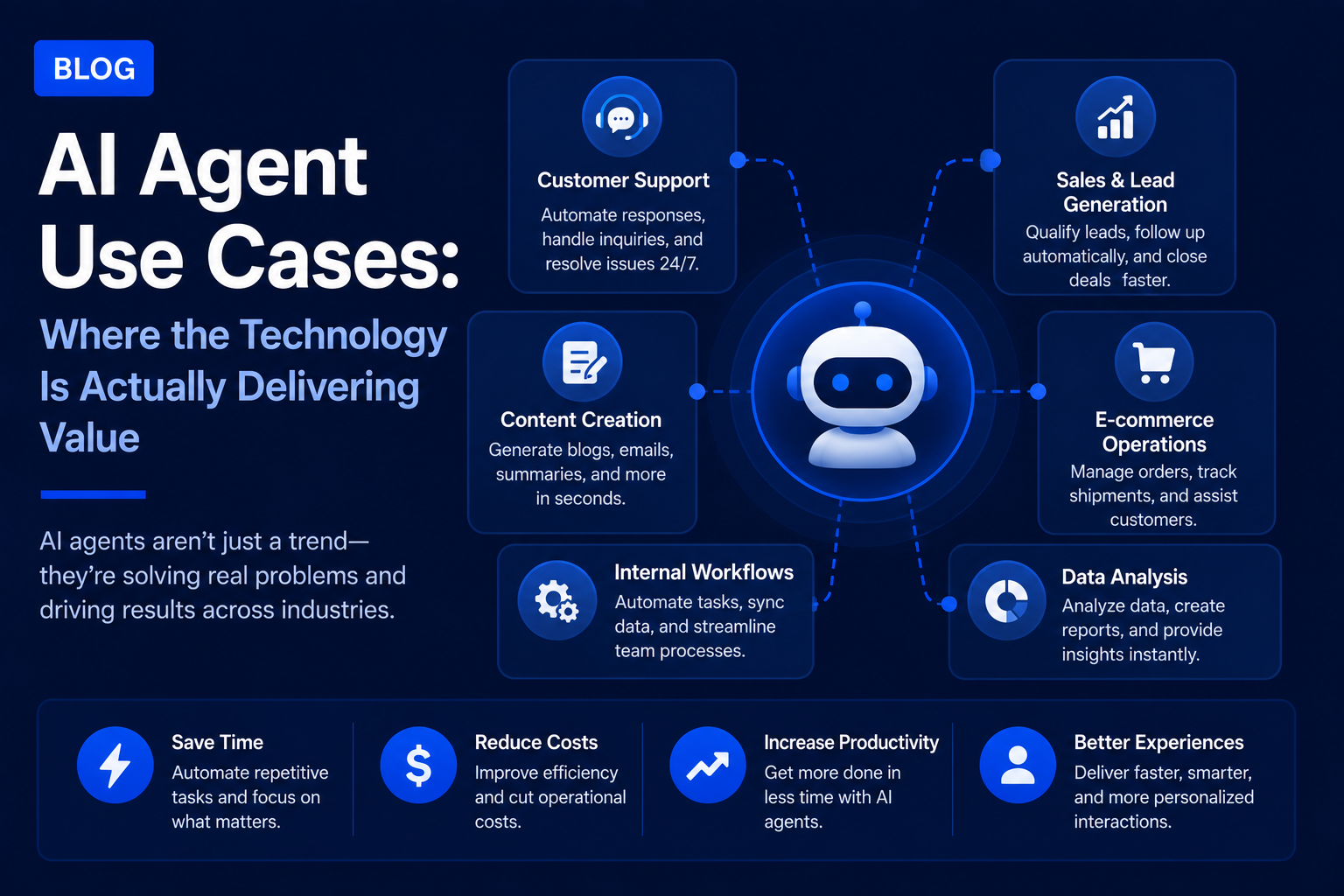
The topic of artificial intelligence agents tends to be quite theoretical, autonomy, reasoning, tool usage, but the more pertinent question for most companies is rather straightforward: how are agents being applied effectively in practice today? This is an examination of practical applications of AI agents in 2026.
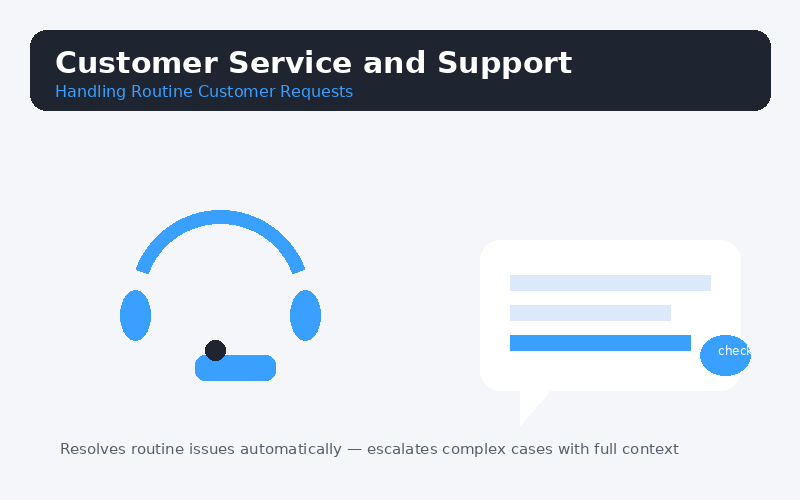
Customer Service and Support
Handling Routine Customer Requests
Among the most sophisticated applications, the agents can manage the status of orders, return processes, account maintenance, and even technical troubles related to known problems, solving most of the queries without any human intervention and elevating the more complicated or delicate cases to human agents with all the information intact.
Sales Development and Outreach
Automating Early-Stage Sales Activities
Agencies research the target prospects, write customized communications at a large volume, qualify the leads based on certain criteria, and also take care of the follow up sequences, thereby automating the first phases of the sales funnel that involve larger volumes.
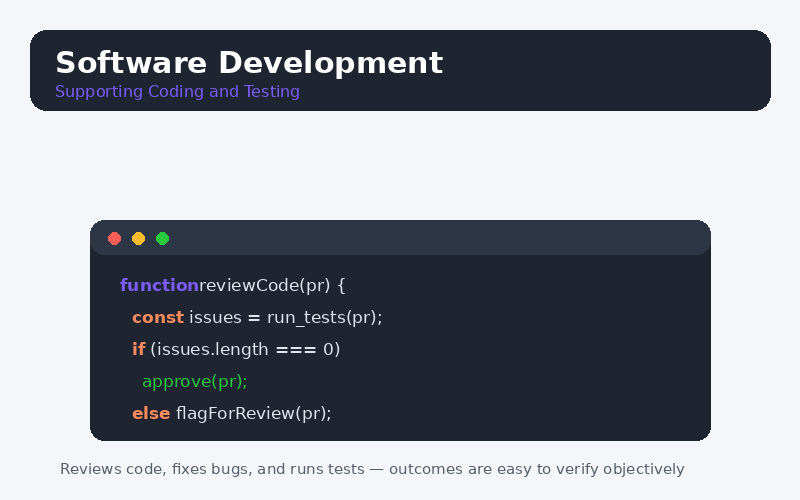
Software Development
Supporting Coding and Testing
Coding agents help with code reviews, bug fixes, test cases and even coding assignments that have been properly scoped, which are some of the most commercially developed agent types because code changes tend to be able to be verified more objectively than many other business processes.
Document Processing and Data Extraction
Converting Unstructured Data into Structured Information
The system captures structured data from unstructured content by identifying key fields, such as names, addresses, and contact details, without the constraints of inflexible templates and sending any ambiguous results to a person for manual processing.
Internal IT and Operations Support
Automating Internal Service Requests
These agents manage all routine IT service requests such as password resets and access provisioning, leaving more complicated tasks for the IT staff, and automate internal administrative tasks as well, like handling of expense approvals.
HR and Recruiting Support
Streamlining Human Resources Workflows
They help to screen the resumes based on certain criteria, arrange for interviews, answer general questions regarding policies of employment, and coordinate onboarding tasks.
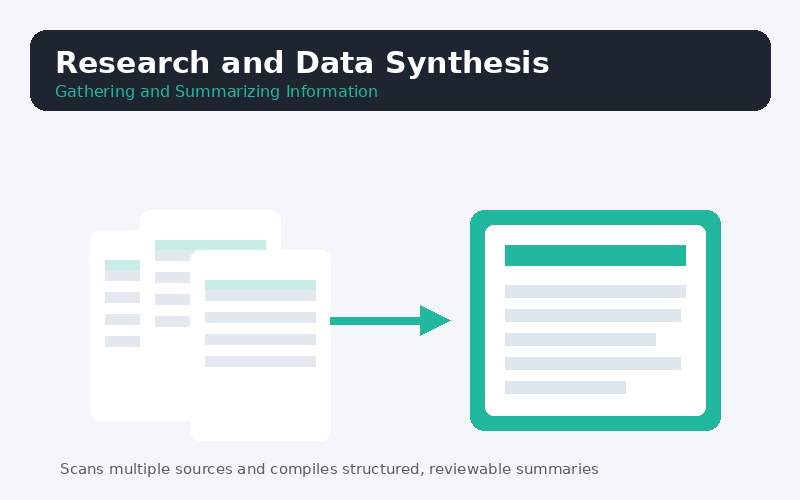
Research and Data Synthesis
Gathering and Summarizing Information
The agents have the capability to scan through various internal and external information sources, compile their findings and generate structured abstracts/reports that would be very useful for conducting market research, competitive analysis, and business intelligence which earlier had taken considerable human effort.
Marketing and Content Operations
Supporting Marketing Workflows
Agents write different versions of the content, coordinate campaigns on an ongoing basis, and use performance data to suggest optimizations, generally with human validation before publishing the changes in public.
Financial Operations
Improving Finance Processes
Agents help with invoice management, validate expenses against company policies, and identify any irregularities in financial information that may require human attention since most of the work done in finance is rule-driven yet detail-oriented.
Personal and Productivity Assistance
Acting as Personal AI Assistants
Personal agents assist in the management of emails, scheduling, and task coordination of knowledge workers by remembering information persistently across multiple interactions and thus becoming true personal assistants.
Multi-Agent Coordination for Complex Workflows
Coordinating Specialized AI Agents
Instead of a lone agent doing the whole complex process, some companies employ an array of agents specialized to do different parts of the process, with each agent responsible for researching, writing, and checking compliance, similar to how human employees would be allocated various tasks on a complex process that no single employee could undertake effectively alone.
What Separates Successful Use Cases from Unsuccessful Ones
Characteristics of Successful AI Agent Deployments
The use cases that have benefited most from actual value realization possess certain common characteristics. These include:
- Clearly defined boundaries
- High volumes (for which automation would be worthwhile)
- Well-defined performance criteria (for measurement of performance)
- Human supervision in making important decisions in the process flow
Why Some AI Agent Projects Struggle
Those use cases which face difficulties are usually those in which there is a high level of ambiguity in making judgments, serious consequences for any mistakes made, or where success measures are not clear at all.
How to Identify a Good AI Agent Use Case in Your Own Organization
Evaluating Candidate Processes
Search for processes that are:
- Repetitive and voluminous enough to warrant an investment in automation
- Fairly documented (playbooks, policies, precedents that form the basis of the agent’s decision)
- Quantifiable (metrics of success)
- Properly scoped considering the level of maturity of the technology
Starting Small and Expanding
By beginning with a smaller scope than seems realistic, and broadening out once the reliability of the approach is established.
Bottom Line
AI agents are already generating tangible benefits in applications such as customer service, sales, coding, document processing, internal operations, and many others, but almost all the successful examples follow the same model: clear scope, high volume, and human intervention when required for higher-stakes decisions, rather than full automation at the outset.