Personal Virtual Assistant: What They Actually Do (and How to Use One Well)

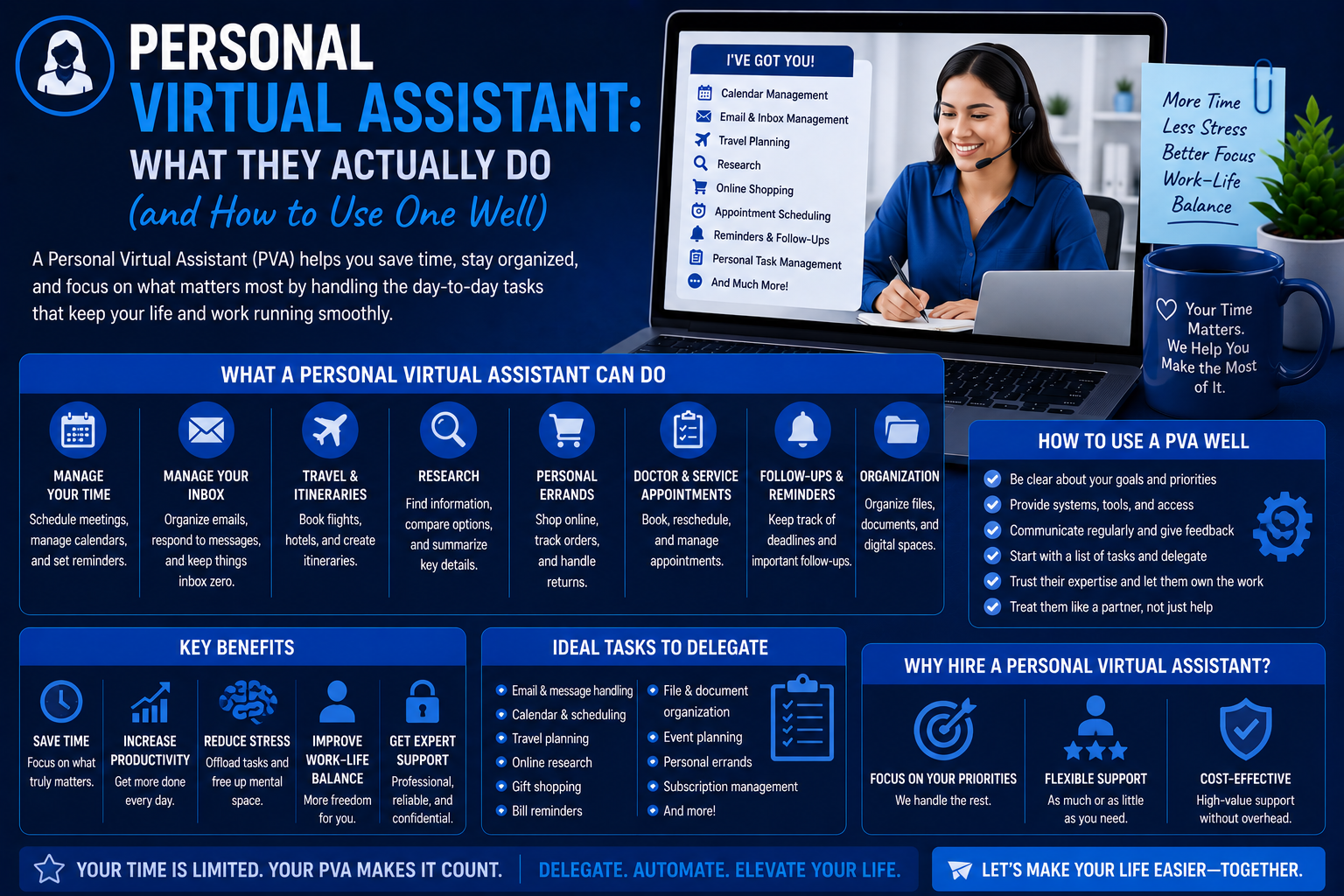
The Personal Virtual Assistant takes care of all administrative, errand, schedule, research, and logistics matters concerning your personal life and not your business. This type of VA is becoming increasingly popular with many realizing they do not need a business excuse to delegate their personal administration. Here are the duties of this VA position and how to ensure the relationship works out.
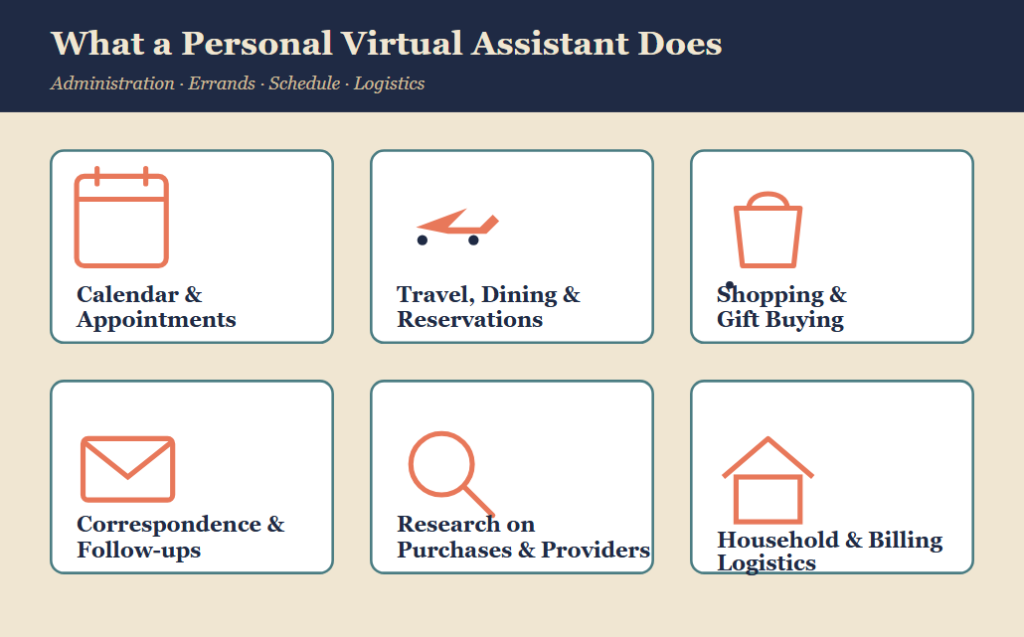
What a Personal Virtual Assistant Does
- Managing the personal calendar and appointments
- Making reservations for travel, dining, and other personal services
- Shopping online and purchasing gifts
- Managing personal correspondence and follow-ups
- Performing research on purchase, providers, or decisions (moving companies, construction workers, etc.)
- Managing subscription fees and billing information
- Coordination of some household logistics (scheduling maintenance, deliveries, and service providers)
It’s basically business virtual assistance taken to your personal life but without tasks that need you physically there.
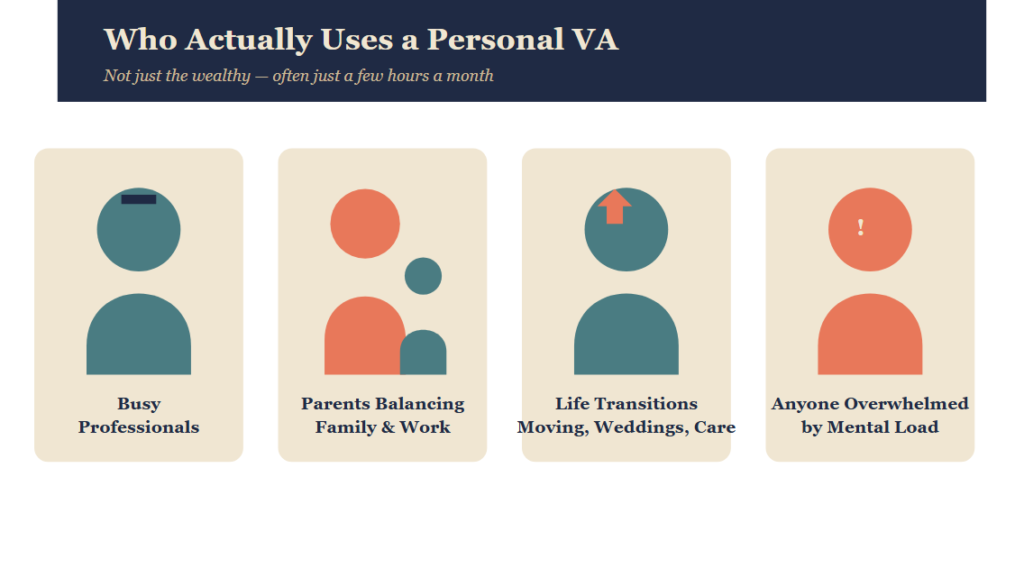
Who Actually Uses a Personal VA
- Busy professionals who do not have enough time for their personal logistics
- Parents trying to coordinate their family’s scheduling with their work
- People undergoing a life-changing event (moving, organizing a wedding, dealing with aging parents)
- Anyone who just finds all the mental effort involved in organizing their life too much to handle
And not just for wealthy people; many individual personal VAs will be just a few hours per month for a very limited number of repetitive tasks.
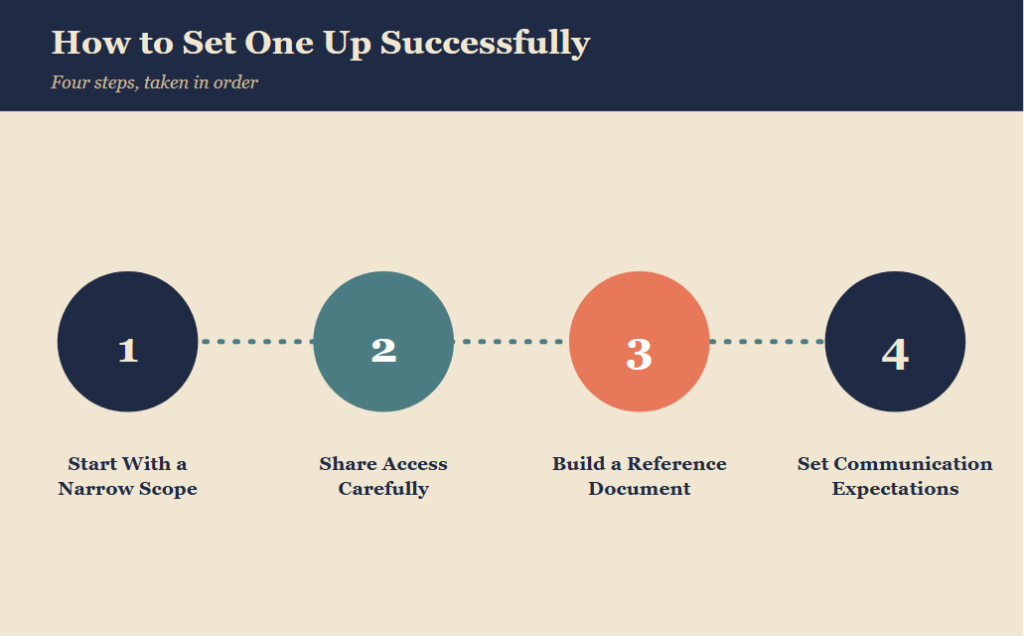
How to Set One Up Successfully
1. Start With a Narrow Scope
Don’t think “help me with my life” at first; start with 2-3 particular repetitive tasks (such as your scheduling and everything involved in your gift/holiday shopping).
Expand from there.
2. Share Access Carefully
Personal VA jobs will often require you to give access to your calendar, emails, or even payments for purchases. Shared calendars and a separate payment method (prepaid card or a joint account with a spending limit) is better than allowing full access to your accounts.
3. Build a Reference Document
Just a document that contains your preferences (your favorite places to eat, gifts for family members, airline preferences and seating) can save lots of time.
4. Set Communication Expectations
Set your methods of communication and response times in advance (text, task management application, email), especially regarding any urgent personal affairs.
What to Look for When Hiring
- Discretion, since personal assistants are privy to private financial and family information
- Judgment when it comes to making spending decisions within set parameters
- Timeliness in the hours that are important for you (morning, evening)
- Experience in managing tasks on a personal level (not only business)
Common Pitfalls
- Scope creep: personal projects are prone to expanding rapidly without a clear end
- Not considering enough trust needed, screen personal VAs equally as thoroughly as business staff
- Failing to document preferences, making errors that could have been avoided through a reference sheet
Final Thoughts
A personal virtual assistant is able to lessen mental load, but the key lies in the fact that the process must begin limited and build up slowly, while being supported by proper documentation of your needs. In contrast with VA work for businesses, the greatest discrepancy lies in the fact of the level of personal trust.