Virtual Assistant Answering Calls: How Remote Phone Support Actually Works

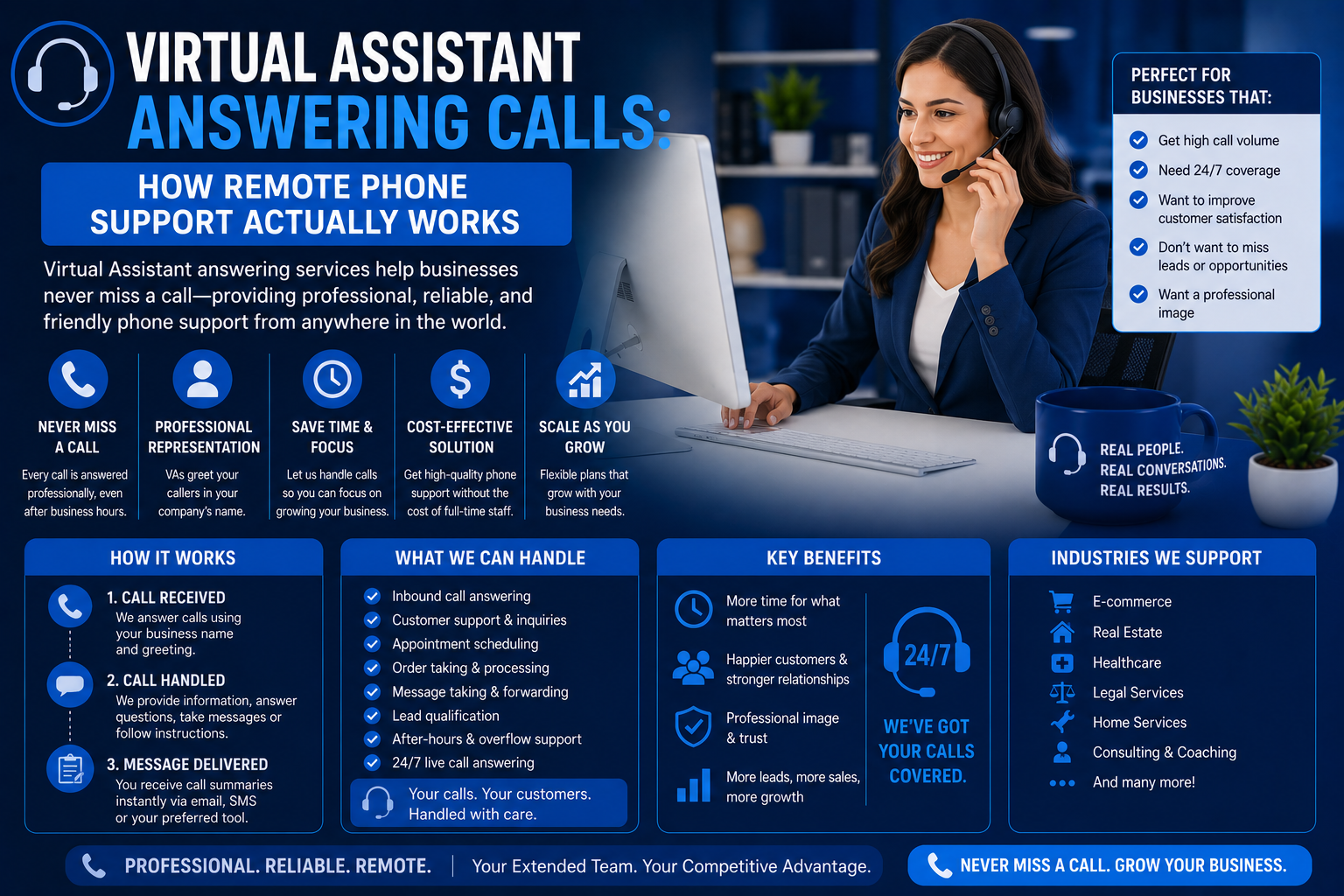
Though it may appear to be easy for you to receive your calls through your VA, it’s one of the most complex operations when it comes to VA services. It needs the right telephone system, proper script, and availability. The following shows how businesses can set up this service.
Why Businesses Use a VA for Call Answering
Lack of answering the business phone calls leads to loss of money as there is no doubt that the caller will go to your competitors once nobody answers him/her from your side. Hiring a virtual assistant to answer your phone calls will prevent you from spending money on hiring a secretary.
What’s Actually Involved
- Dealing with the phone calls that come in
- Routing the calls (priority versus those that can wait)
- Triage calls (sales versus support)
- Recording calls and passing them along via the method requested by the client (Slack, e-mail, text)
- Scheduling meetings right into the client’s calendar
- Providing information without having to escalate all calls
- Using a call script for each call (especially new clients)
How the Phone Setup Actually Works
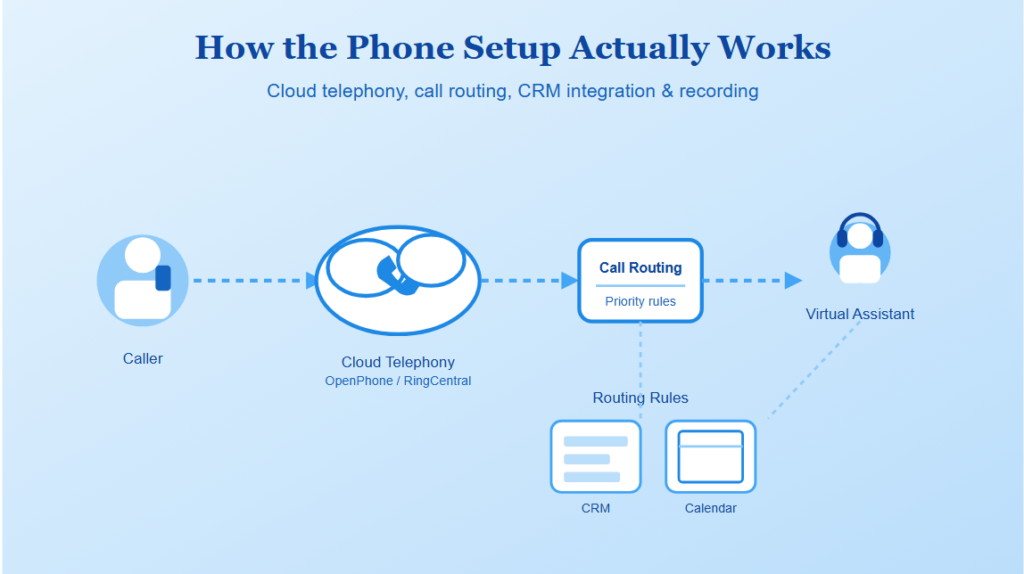
This is usually underestimated by many. Remote VAs handling the calls usually use:
- Online telephony systems (Google Voice, OpenPhone, RingCentral) where calls get routed without disclosing any personal phone number
- Call routing policies to ensure that the VA handles calls during agreed times
- CRM/Calendar integration to allow the VA to schedule calls while actually handling the call
- Call recording (properly disclosed) for quality improvement and training purposes
Proper setting of all this before employing the VA is absolutely necessary; otherwise, most of the time, poor call handling is due to poor telephone set-up and not VA skills.
Skills That Matter for This Role
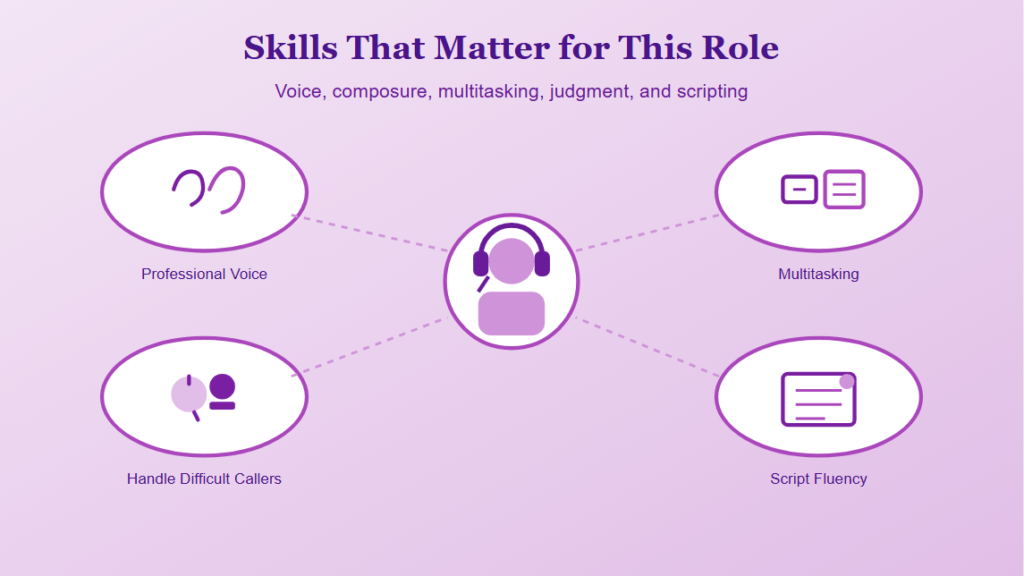
- Professional-sounding phone voice and pacing
- Comfortability working with unpredictably challenging/irritated callers
- Ability to make quick decisions about whether something must be escalated immediately or simply messaged
- Multitasking, taking notes or entering something into your calendar at the same time you are on the call
- Fluency in following scripts without coming off like a robot
Setting Expectations With Clients
If you are a VA providing this service, please make sure to include:
- Hours of availability when you are able to answer (the clients need someone to back them up during other times)
- Your turnaround time for voicemail responses if you miss the call
- Differences between what would be considered an emergency escalation or a regular message
- Time zone availability (particularly important for clients with customers in multiple time zones)
Common Challenges
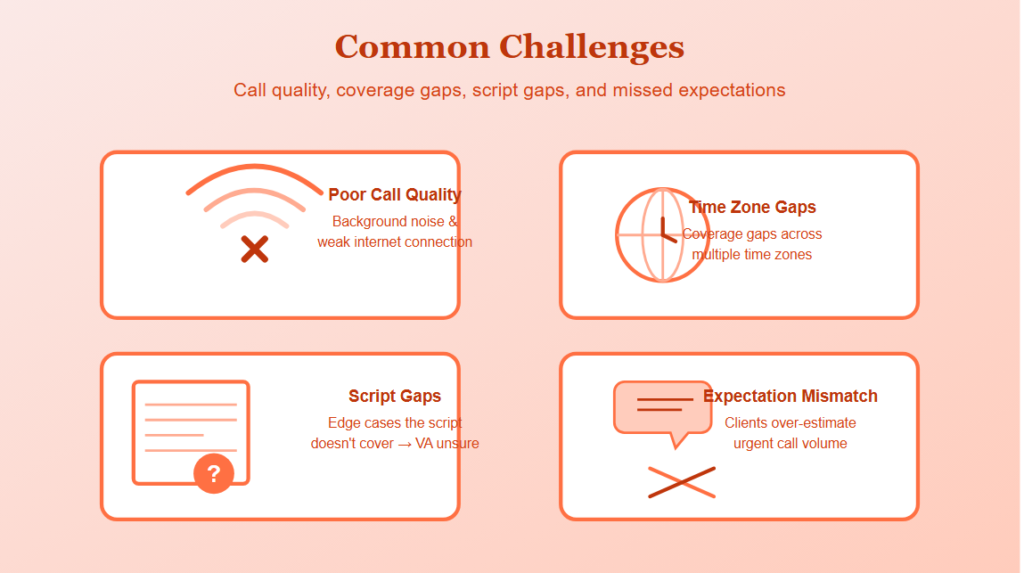
- Issues such as background noises and poor internet connectivity resulting in poor call quality
- Time zone differences leading to gaps in coverage
- Scripts that do not consider edge cases and make the VA uncertain of what to do with oddball calls
- Misunderstanding of clients about how many calls need immediate attendance and how many should be left to voicemail
Final Thoughts
Having a virtual assistant attend to your calls is a realistic option to replace a receptionist if done properly. For the VA, the niche is lucrative since the skillset needed to handle it is less common than asynchronous task handling, and requires more disciplined scheduling and faster decision-making skills.