Energy Software Development Company, What to Look For and Why It Matters

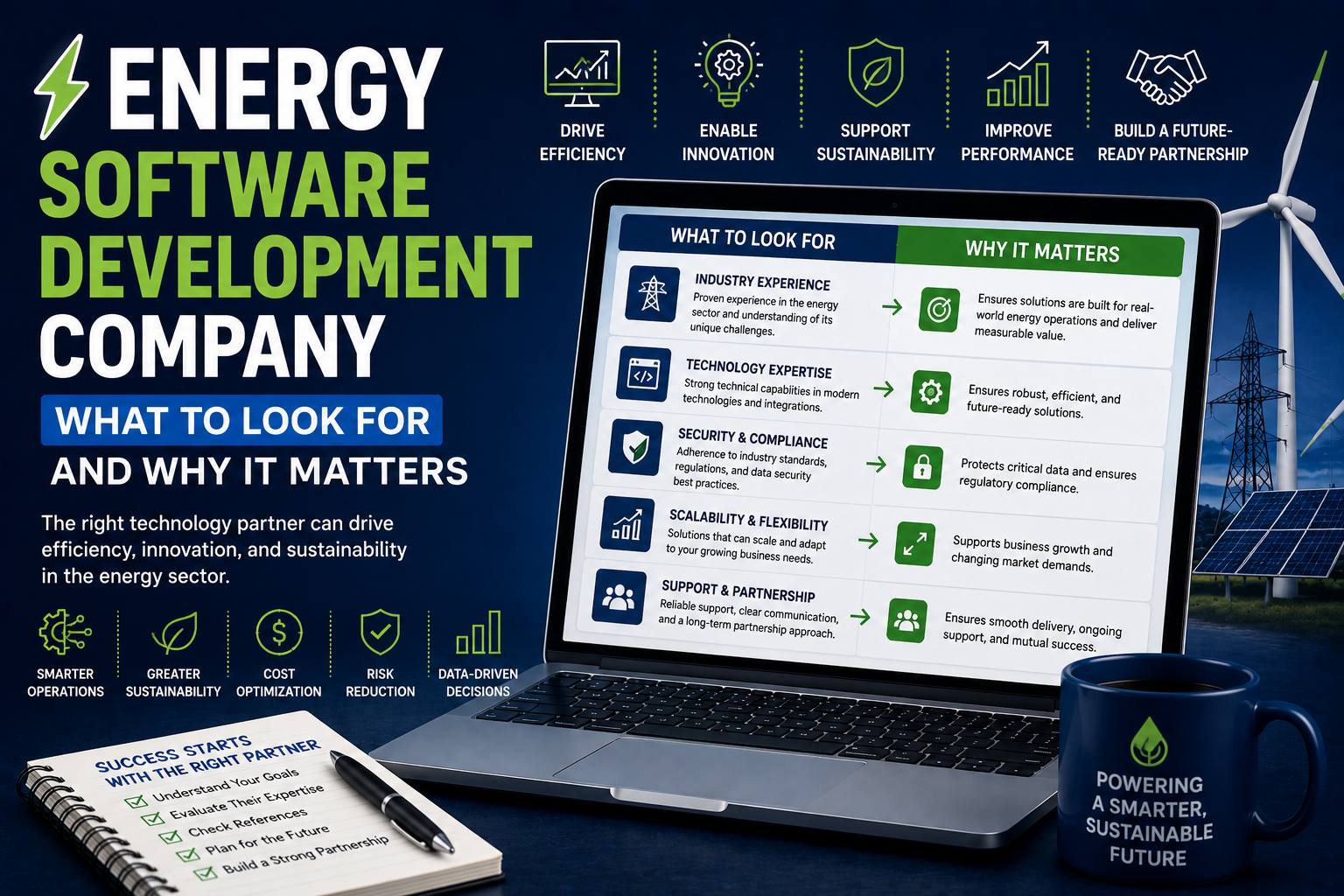
The energy industry is facing one of the largest transformations in its history. From renewable energy sources to smart grids and carbon counting, everything contributes to the tremendous increase in demand for special software solutions.
However, creating software for energy businesses is very different from developing any other typical SaaS product. Here, the risks are much higher, more compliance rules apply, and system reliability is key.
Here is everything you should know about energy software development companies: what they do and how to choose the right vendor.
What Does an Energy Software Development Company Do?
Energy software solution firms develop customized software solutions which cater to the requirements of energy producing organizations, energy distributors and utility firms and green energy firms.
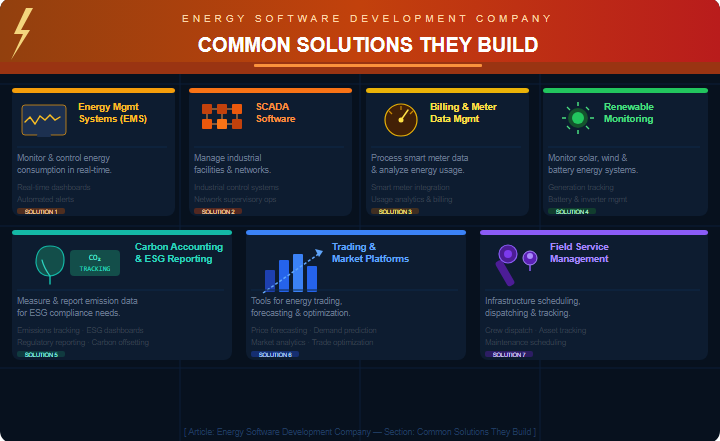
Common Solutions They Build Include
- Energy management systems (EMS): Monitor and control energy consumption in real-time.
- SCADA software: SCADA system for managing industrial facilities and networks.
- Billing and meter data management: Energy usage analysis via the processing of smart meter data.
- Renewable energy monitoring:Monitoring solutions for solar, wind, and battery energy.
- Carbon accounting and ESG reporting tools: Software solutions for measuring and reporting emission data.
- Trading and market platforms: Software tools for energy trading, forecasting, and optimization.
- Field service management: Infrastructure scheduling, dispatching, and tracking software.
Key Industries Served
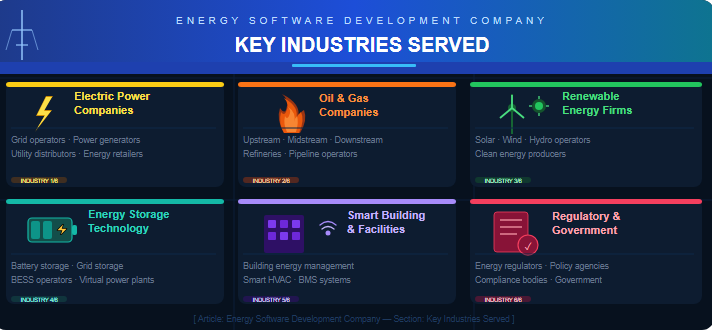
The energy software development firms usually cater to:
- Electric power companies
- Oil and gas companies
- Renewable energy companies (solar, wind, hydro)
- Firms in energy storage technology
- Smart building and facilities management companies
- Regulatory and government agencies
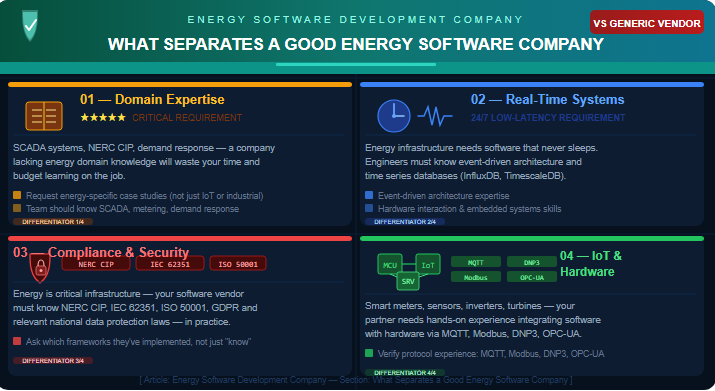
What Separates a Good Energy Software Company from a Generic One?
Not all software development agencies can deal with energy projects. This is what you need to pay attention to.
Domain Expertise
Energy software entails special expertise, e.g. the working principles of SCADA systems, NERC CIP requirements, or demand response programs.
A company lacking such experience will waste your money on learning those things that should be known to them from the very beginning.
Request case studies of energy-related projects, not industrial or IoT ones.
Experience with Real-Time and Embedded Systems
Low-latency, reliable software is required in many energy-based infrastructures on a 24/7 basis. Software engineers should have working knowledge of event-driven architecture, time series databases such as InfluxDB or TimescaleDB, and hardware interaction.
Compliance and Security Knowledge
Energy infrastructure is critical infrastructure. Based on your geographical location, you may be required to adhere to:
- NERC CIP (North America)
- IEC 62351 (cyber security of energy systems)
- GDPR or national data protection laws
- ISO 50001 (energy management)
Your software provider needs to be aware of these regulations in more than just theory.
IoT and Hardware Integration
The energy industry relies on hardware devices, smart meters, sensors, inverters, turbines. Your partner requires experience in integrating software with hardware using protocols such as MQTT, Modbus, DNP3, and OPC-UA.
Questions to Ask Before Hiring an Energy Software Development Company
- What kind of energy projects have you completed in the past, and could we contact these customers?
- What is your strategy for real-time data processing at scale?
- Which regulatory frameworks have you followed before?
- How do you integrate hardware and IoT?
- What is your approach to QA and testing in terms of critical applications?
- Do you provide any maintenance services after deployment?
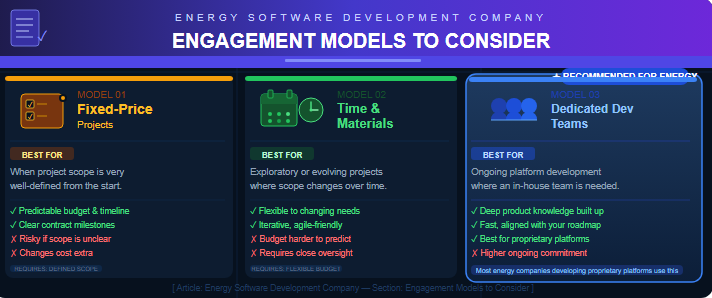
Engagement Models to Consider
The vast majority of energy companies developing their software will use any one of three different types of engagement models.
Fixed-Price Projects
Works best when project scope is very well defined.
Time and Materials
More suited for exploratory and/or evolving projects, where project scope changes along the way.
Dedicated Development Teams
Perfect for ongoing platform development, where an in-house team is required.
A team-based approach works best for most energy companies that develop proprietary platforms.
Bottom Line
Digital transformation in the energy industry provides massive opportunities, but it requires software vendors who really know the industry inside out. Off-the-shelf web development companies will simply not do.
When selecting an energy software development company, you should focus on three factors: domain knowledge, experience with real-time systems, and a history of regulatory compliance. The right vendor will deliver faster results and make far fewer costly mistakes.