Negative SEO: What It Is and How to Protect Your Site

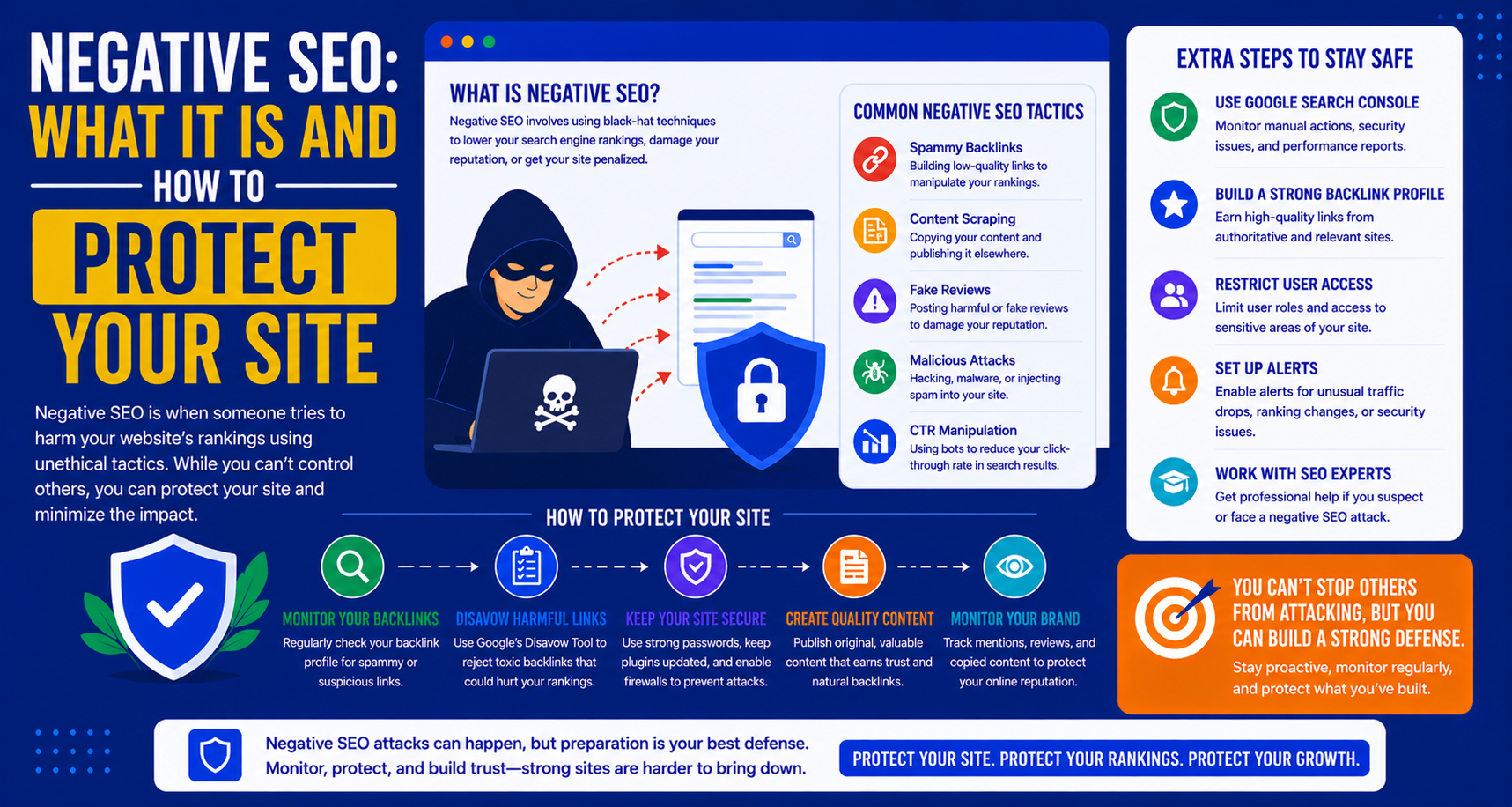
Negative SEO is what we call the evil version of link building. Instead of improving one’s own search ratings, negative SEO involves actively hurting one’s competition by using shady tactics.
It seems like something out of a conspiracy movie. However, it is a real threat, and knowing about it is essential for website protection.
What Is Negative SEO?
Negative SEO is any tactic employed for the purpose of hurting a competitor’s organic ranking.
This is different from traditional SEO techniques because while negative SEO aims to harm your competitor, the objective of conventional SEO is to help improve your own website.
Negative SEO is a strategy that intends to make your competitor’s ranking drop in order to improve yours..
Negative SEO Tactics
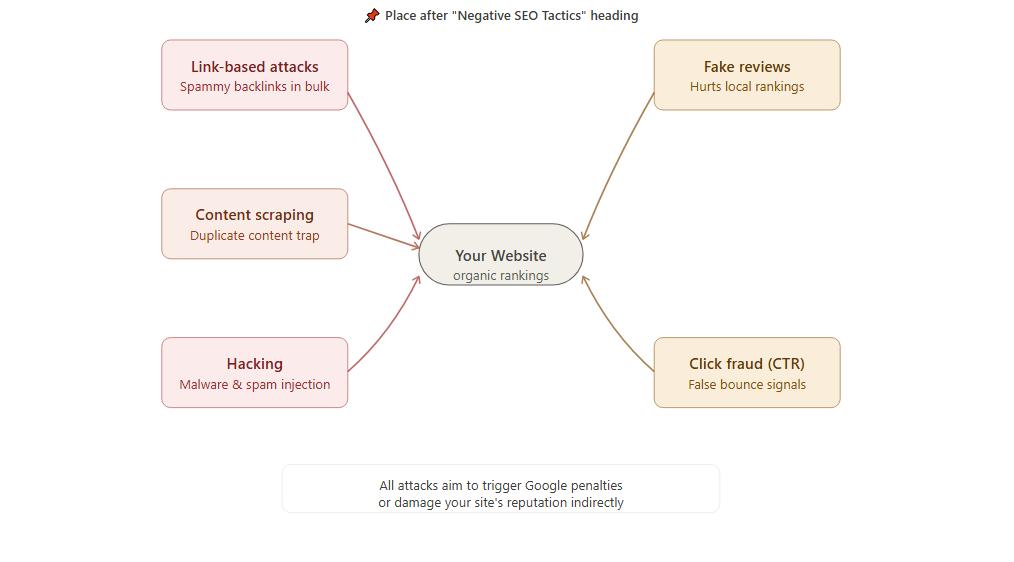
Link-Based Attacks
The most common form of negative SEO involves building large numbers of low-quality, spammy, or manipulative backlinks to a competitor’s site.
The theory: If Google penalizes sites for having unnatural backlinks, building enough bad links to a competitor might trigger a penalty.
Common Link-Based Attacks Include:
- Directory bulk spam links from known link farms
- Spam links from pornographic, gambling, or pharmaceutical websites
- Over-optimized anchor text links (keywords in exact match format within unrelated pages)
- High volume of links coming from foreign language websites
- PBN links from Private Blog Network websites
Content Scraping and Duplication
Scrapers replicate your content on hundreds of low-quality websites, trying to make it look like your content is the replicated version.
Google does a fairly decent job when it comes to distinguishing the original site, particularly those with high site authority.
However, there might be some cases where this process may confuse Google.
Hacking
Website hacking may involve the introduction of spammy content, backlinks, and malware into your website.
Google will either penalize or completely delist your website once it catches you in this activity.
Fake Negative Reviews
Strategically placing false negative reviews for your business on Google, Yelp, Trustpilot, or similar sites will hurt your reputation and local rankings.
Click Fraud (CTR Manipulation)
Others try to skew the CTR indicator by clicking on your pages from the SERP and immediately leaving, signaling Google that your page content is not useful to users.
This is not an easy task to accomplish and is highly unlikely to escape Google’s fraud-detection algorithm.
This is rare but possible.
How Common Is Negative SEO Actually?
Not as widespread as many SEOs think.
In most cases, especially for sites in uncompetitive niches, negative SEO attempts are very rare.
Launching an effective negative SEO campaign is quite challenging, expensive, and risky.
The competition will likely be more interested in improving their own sites than targeting yours.
Negative SEO Is More Plausible In:
- Competitive niches with valuable products (e.g., finance, insurance, law, gambling)
- Markets where the competition isn’t very savvy and doesn’t know about the potential threats
- When a competitor has already created weak and shady link profiles that could be tipped over
One potential cause if you begin to see an unexpected spike in backlinks with no explanation is negative SEO.
However, a change in algorithms, the discovery of previously hidden links, or even links generated by your old SEO team are much more probable causes.
How to Detect Negative SEO
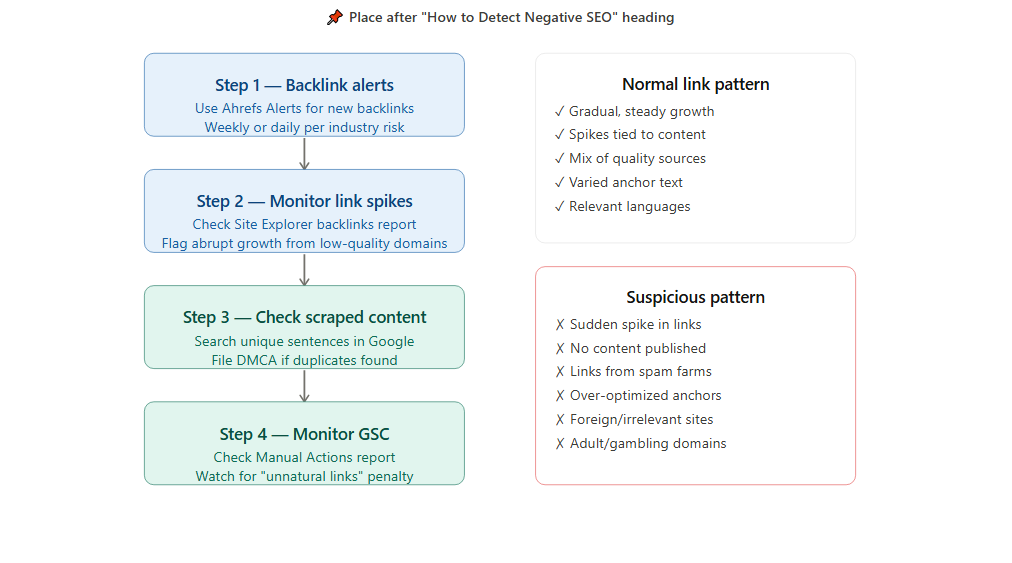
Set Up Ahrefs Backlink Alerts
The Ahrefs Alerts (from the Tools drop-down menu) feature enables users to create alerts whenever there are backlinks created for their domain.
Users will get notified by email whenever a backlink has been found for their website.
Set Alert Frequency To:
- Alerts once a week for most domains
- Alerts every day for those in a competitive industry or have issues currently
Apart from protecting against negative SEO, it is also a good practice in general.
Monitor for Unusual Link Spikes
In Ahrefs Site Explorer, the Backlinks report will display your link building trends.
An abrupt spike in referring domains from low-quality sites, without any content being published by you or any PR being conducted, needs to be examined.
Normal Pattern
Trends that show gradual and varied growth interspersed with spikes associated with content.
Suspicious Pattern
Abrupt increase in number of links from irrelevant, low-quality domains.
Check for Scraped Content
Search for distinctive sentences from your critical pages in Google, with quotation marks.
These sentences can be found elsewhere without any attribution, and then your site has been scraped.
If You Find Scraping, You Can:
- Filing DMCA take-down requests to Google
- DMCA notice to hosting provider of the scraping websites
Monitor Google Search Console
The GSC Manual Actions report determines whether Google has imposed a manual penalty on your website.
Being penalized because of “unnatural links to your site” happens due to negative SEO attacks.
How to Protect Your Site From Negative SEO
Build a Strong, Diverse Backlink Profile
Websites with good quality backlink histories are less susceptible to negative SEO because of their established reputation.
For instance, a website with 3,000 high-quality referring domains cannot be harmed by hundreds of spammy links, which represent only a small number compared to thousands of other backlinks.
Therefore, the most effective method to protect yourself from negative SEO tactics is to build quality links.
Use Google’s Disavow Tool (Carefully)
In the case that you notice a coordinated attack on your backlinks, where hundreds of new links that have been inserted and show evident manipulation without an organic explanation appear, then you should disavow these links by using the Google Disavow Links Tool.
The disavow file will tell Google to:
“Disregard these links when assessing my website.”
How to Disavow
- Export your backlink list from Ahrefs
- Find the manipulative domains
- Create a disavow file which includes these domains to be ignored
- Upload the file via Search Console > Links > Disavow Links
Important Caution
Disavowing genuine links will damage your ranking
Do not disavow links unless you are certain of their malicious intent and purposeful action against you.
Disavowing regular low-quality backlinks is not recommended because Google ignores them anyway.
Secure Your Website
Basic security measures guard against the use of hacking to perform negative SEO.
Security Best Practices
- Create strong passwords that you never use elsewhere
- Install two-factor authentication
- Maintain your CMS plugins and themes up-to-date
- Install a security plugin such as Wordfence or Sucuri for WordPress
- Monitor changes in unauthorized files
Maintain Consistent NAP for Local Businesses
Negative SEO includes sending incorrect data on your company to local directories (misrepresenting address/phone number) to ruin local search results.
Perform regular citation audits using BrightLocal or Moz Local.
What to Do If You’re Attacked
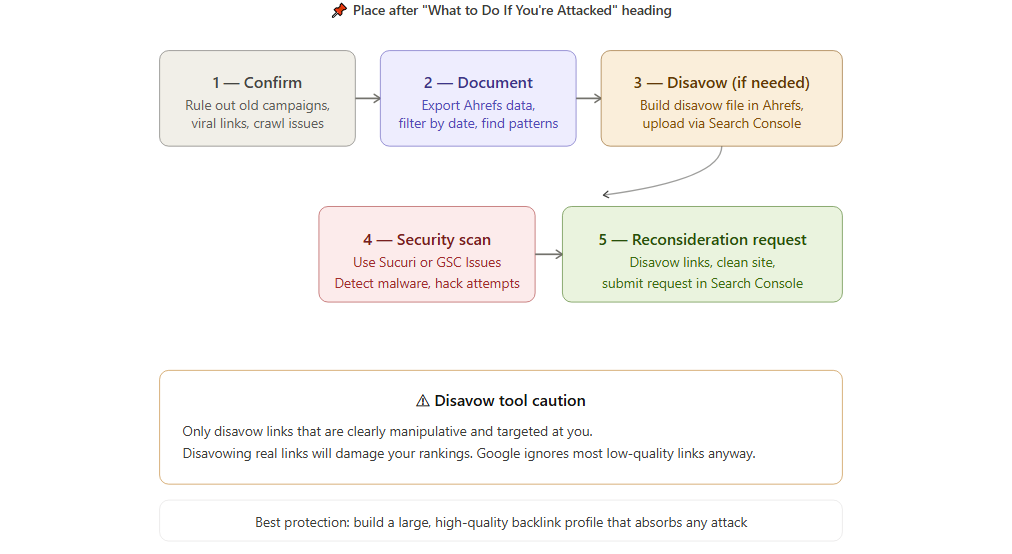
Step 1: Confirm It’s Actually Negative SEO, Not a Natural Pattern
Before determining that you are under attack, you should first eliminate any chance of it being:
- An older link building effort your organization carried out
- Organic link building because of a viral post
- A crawl that uncovered hidden links
Step 2: Document the Suspicious Links
Export data from Ahrefs, apply date filters, and pinpoint the irregular links.
Check for any commonality between the links like:
- Anchor text
- Source IP address range
- Host quality
Step 3: If Clearly Manipulative, Disavow the Domain
Generate the Disavow file.
Submit through Google Search Console.
Step 4: If You Suspect Hacking, Run a Security Scan
Use either Sucuri SiteCheck or the Security Issues report in Google Search Console to find any malware infection or hack attempts.
Step 5: If You Receive a Manual Action, File a Reconsideration Request
In case Google has penalized you manually for this reason, then do disavow the links and clean the website. Follow this with a reconsideration request.
Conclusion
It’s rare but legitimate. The proper approach for all other websites would be education and prevention, not panic. Create Ahrefs alerts for newly acquired backlinks. Check your backlink profile monthly. Protect your website. Have enough authority from quality links that a couple of hundred spammy links won’t hurt you at all. The best way to guard yourself from negative SEO is by going on the attack.