Small Business Email Marketing: A Practical Guide to Growing Without a Big Budget

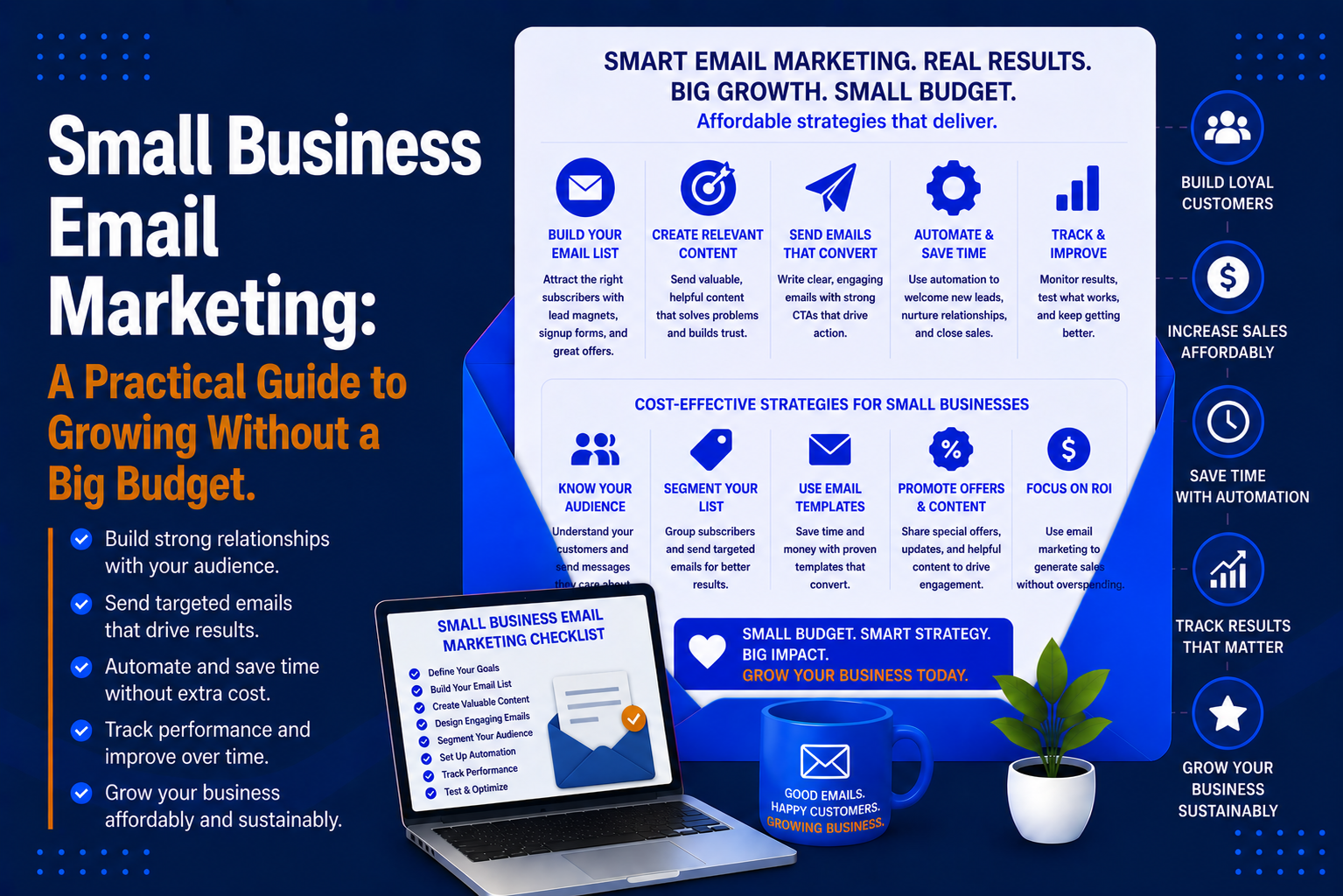
It’s impossible for small companies to fight with big businesses in terms of advertising spending. But in case of email marketing, the field is absolutely even. Small companies with a carefully managed mailing list of 2,000 can do better than a big company sending to 200,000 unresponsive subscribers.
The guide is designed exclusively for small businesses which aim to promote their businesses via email marketing.
Why Email Marketing Is Perfect for Small Businesses
Small businesses thrive on personal connections and local credibility. Email is the way to expand such networks without sacrificing that personal element.
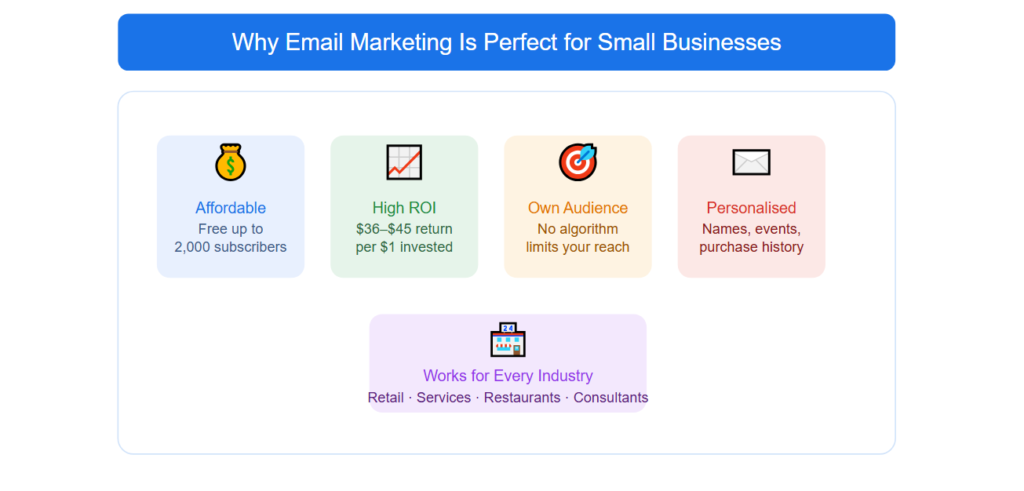
Here’s Why Email Marketing Is the Ideal Channel for Small Businesses
- Affordable pricing: Most solutions are either free or cheap up until 1,000–2,000 subscribers
- High ROI: $36–$45 average return per dollar invested
- Control your audience: No algorithm will ever limit your access
- Easy to customize: Add subscribers’ names, local events, and shopping history
- Industry agnostic: Perfect for retail, services, restaurants, consultants, creative industries
Getting Started: The Small Business Email Marketing Checklist
Before sending out that very first email, lay these foundations:
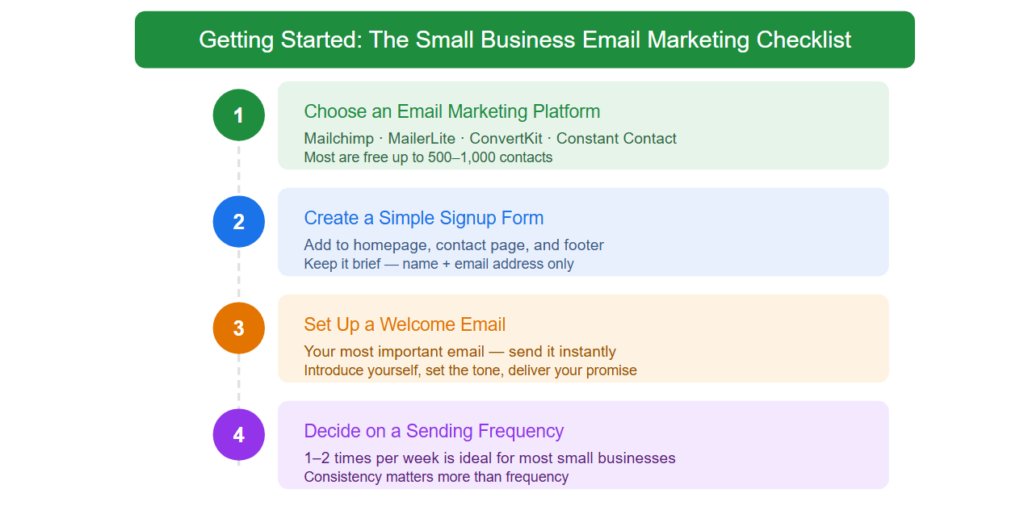
1. Choose an Email Marketing Platform
Small business owners should begin with one of the following:
- Mailchimp (free up to 500 contacts)
- MailerLite (free up to 1,000 contacts)
- ConvertKit (fantastic option for service companies and people who create content)
- Constant Contact (very popular among local businesses)
2. Create a Simple Signup Form
Integrate this into your homepage, contact page, and footer. Keep it brief: name and email address will do.
3. Set Up a Welcome Email
Your most important email ever. Comes at a time when interest is at its peak. Introduce yourself, set the tone, and give away whatever was promised.
4. Decide on a Sending Frequency
One or two times per week is ideal for most small businesses. Being consistent is better than being frequent.
Building Your Email List as a Small Business
It doesn’t cost anything to build an excellent email list. Here are some tactics that will work for your small business:
In-Store and In-Person Tactics
- Get them to join your email list at checkout (in store using tablets or QR codes)
- Get them to join your email list at markets and meet-ups
- Run a “join and win” competition in your area
Online Tactics
- Use a discount/free offer in exchange for their email addresses (“Receive 10% discount on your first purchase”)
- Provide your audience with a relevant and valuable resource in the form of a checklist, guide, or template
- Include a call-to-action for signups in your social media profiles and posts
- Pin a lead magnet blog post to your Facebook/Instagram account
Referral Tactics
- Ask current subscribers to forward your emails to their friends.
- Provide a referral discount (“Refer a friend and receive 15% off each”).
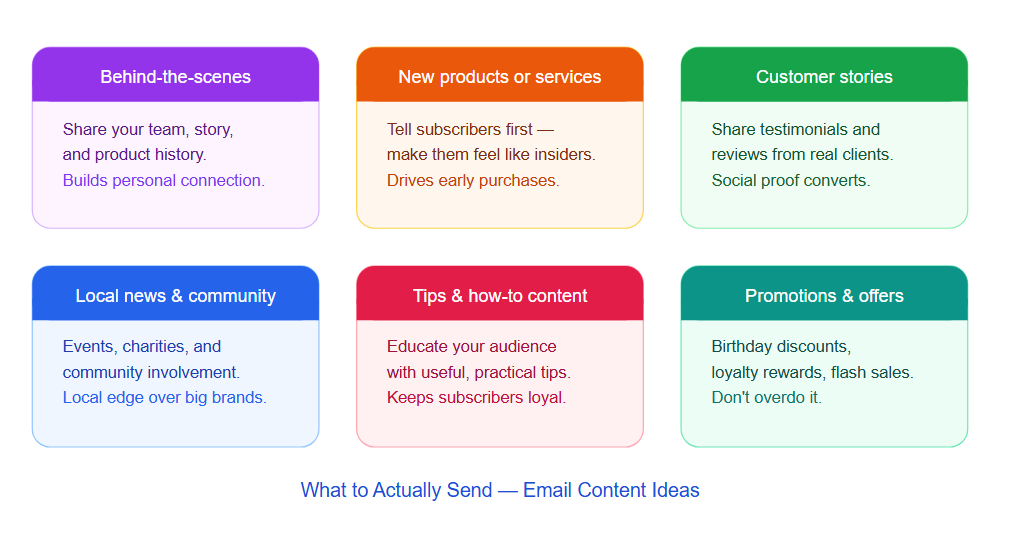
What to Actually Send: Email Content Ideas for Small Businesses
One of the major problems that owners of small businesses have is deciding on the content for emails. Here are some content ideas that always work:
1. Behind-the-Scenes Updates
Your clients will want to know the people involved in the enterprise. Give them some information on you, the team members, the history of the product, and others. It helps establish the personal element that a huge brand cannot provide.
2. New Products or Services
Inform your subscribers about your new products first. Make them feel like insiders.
3. Customer Stories and Reviews
Provide testimonials from satisfied clients. Nothing works better than social proof for conversions.
4. Local News and Community Involvement
Are you participating in a community event? Are you supporting a charitable organization? Promote that! Being a local enterprise gives you an edge.
5. Tips and How-To Content
An example of what a plumber could give is “5 Ways to Avoid Pipe Bursts in Winter.” A baker could provide “How to Keep Your Sourdough Fresh for a Week.” Educate your subscribers and they will stay subscribed.
6. Promotions and Special Offers
Special offers, discounts for birthdays, loyalty programs. Don’t make each email about promotions or your subscribers will ignore them all.
Simple Automations Every Small Business Should Set Up
Not everybody knows how to set up automated emails, but these three are enough for the first step:
1. Welcome Email
Fires when somebody subscribes to your list. Fire it instantly. Start with a nice intro and a little thank-you discount.
2. Abandoned Cart Email (for Online Stores)
When someone leaves products in his cart, send a reminder to him after an hour. Just one automaton will bring back 5-15% of lost sales.
3. Birthday Email
Collect the birthdays from signups and send them an extra discount on his birthday. Such emails have the highest conversion rates among all types of campaigns.
Writing Emails Your Subscribers Will Actually Read
Your small business email subscribers subscribed because they love you. Make sure you do not destroy this with a corporate style of writing.
Tips for Writing Emails That Feel Human
- Write as if you are sending an email to a friend, not announcing to an audience
- Use “you” rather than “we”
- Keep your paragraphs short (two or three lines maximum)
- Put your actual name in the “from” section, “Sarah from Bloom Bakery” is better than “Bloom Bakery”
Subject Lines That Work for Small Businesses
- “We have some news 🎉” (curiosity)
- “This is for our subscribers only” (exclusivity)
- “What’s new in-store this week + a small surprise”
- “A personal message from [your name]”
Tracking Results Without Overcomplicating It
It is not necessary to have a team that will help you analyze the statistics of your emails. Just pay attention to these three statistics:
1. Open Rate
Are your emails opened? A good rate should be 25-40% for small business lists.
2. Click Rate
Are there any clicks? The goal is 2-5%.
3. Revenue or Leads Generated
Do the subscribers really buy or contact you?
Check them every month and change your content accordingly.
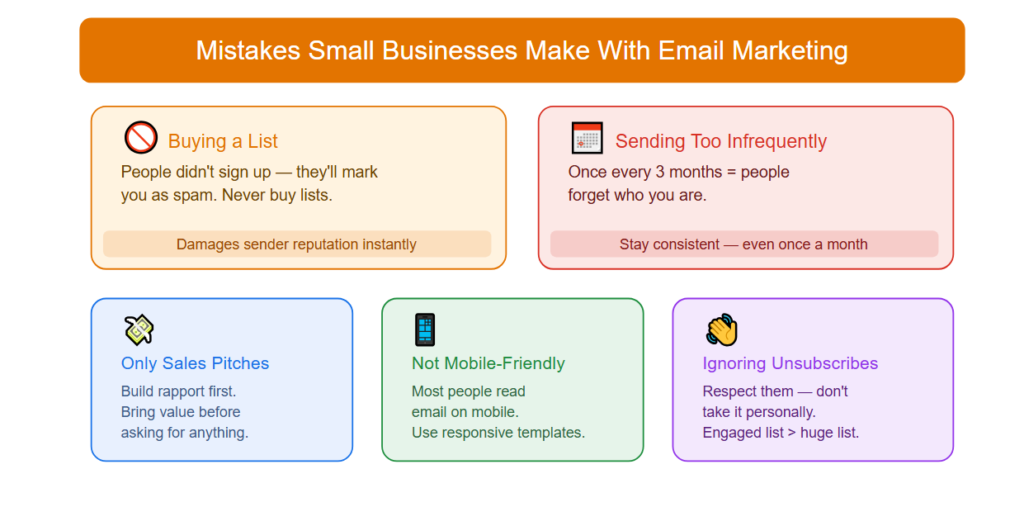
Mistakes Small Businesses Make With Email Marketing
1. Buying a List
Not. At. All. They didn’t ask for your email and will classify you as spam.
2. Sending Too Infrequently
Sending an email once every three months causes people to forget about you. Remain consistent.
3. Making Every Email a Sales Pitch
Develop a rapport before asking for anything in return. Bring value to the table first.
4. Not Mobile-Optimizing
The majority of subscribers read emails through their mobile devices. Select a mobile-responsive template.
5. Ignoring Unsubscribes
Acknowledge and respect them without taking things personally. An engaged list is better than a huge list full of resentment.
Final Thoughts
Email marketing for small businesses does not need to be difficult. Choose an email platform, create a sign-up form, write a welcome email, and set a consistent frequency.
Start small. Send out an email once a month if this is all you can do initially. Once you develop the routine, gradually work on increasing the frequency. The companies that do well with email marketing are not those that use the most advanced technology; rather, they are those that consistently show up with valuable content.