Best AI Chatbots for Customer Service: What Actually Separates the Good Ones

Introduction
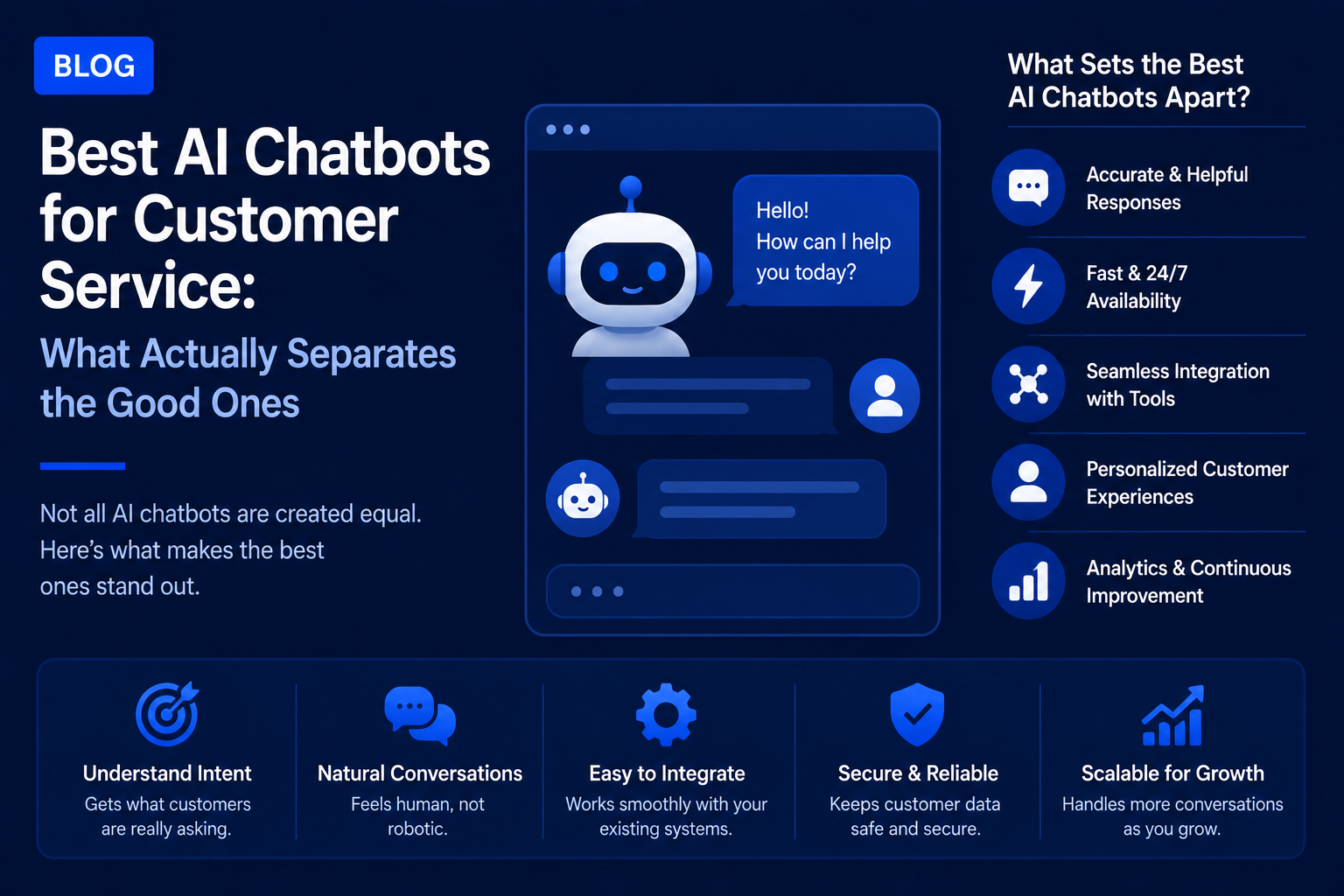
Customer service represents one of the most advanced and voluminous use-cases for AI-powered chatbots, and accordingly, the ecosystem has become increasingly specialized.
These are the things that really matter in an assessment of AI-powered chatbots for customer service, and here’s how the best contenders stack up.
How Modern Customer Service AI Actually Works
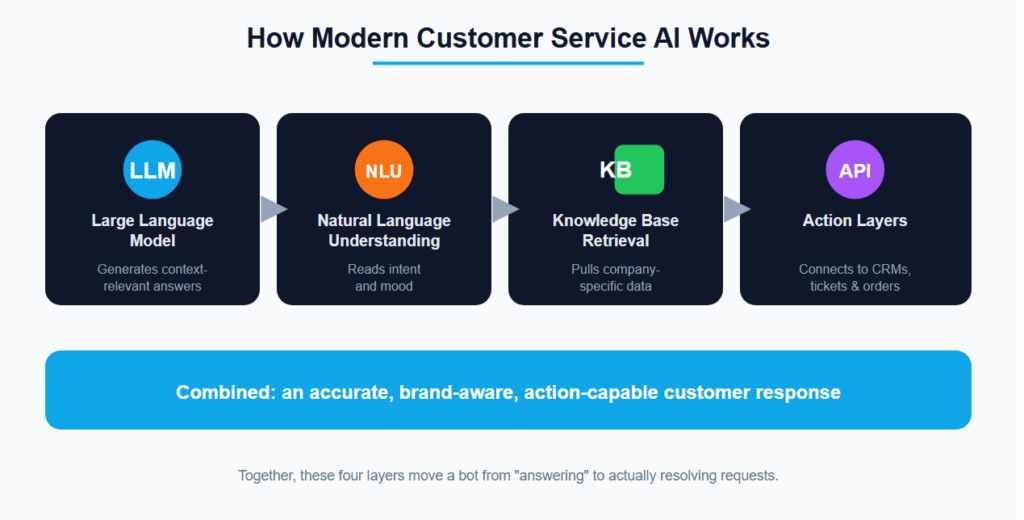
The most modern chatbots for customer service usually incorporate multiple technologies:
- Large language models, which enable chatbots to generate contextually relevant answers
- Natural language understanding, enabling chatbots to understand what a customer wants and its mood
- Knowledge base retrieval, which enables chatbots to find information in the company’s knowledge base and internal documents instead of having only general knowledge
- Action layers, which enable chatbots to access CRMs, ticketing systems, and order databases
Chatbot vs. Agent in a Customer Service Context
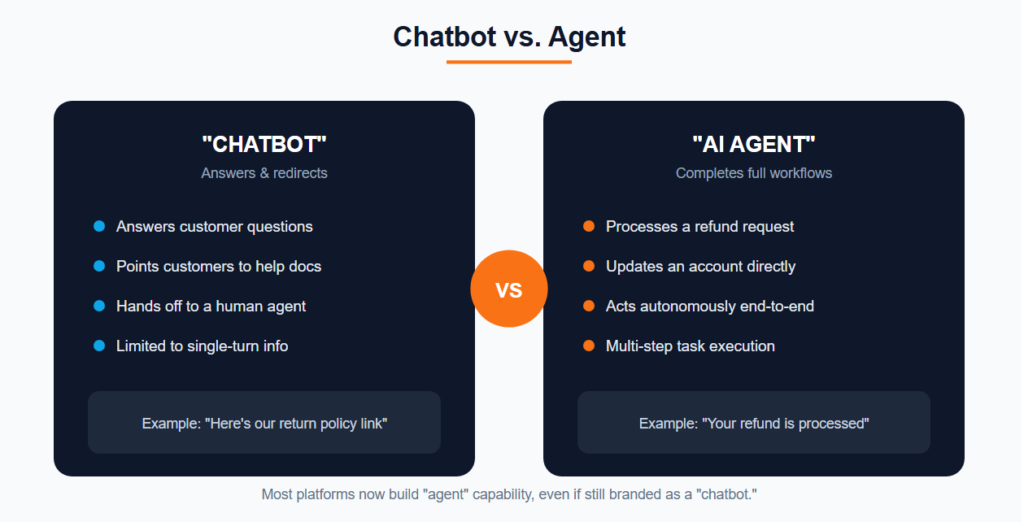
The term itself has gained a new meaning.
These days, most platforms have adopted the use of “AI agent” for advanced bots that can process an entire workflow process (a refund request, updating an account, etc.) autonomously, instead of the “chatbot” for bots limited to answer queries and direct people elsewhere.
It is safe to assume that most popular platforms for customer service solutions have followed this path even if they still call it “chatbot.”
What Separates Strong Customer Service Chatbots from Weak Ones
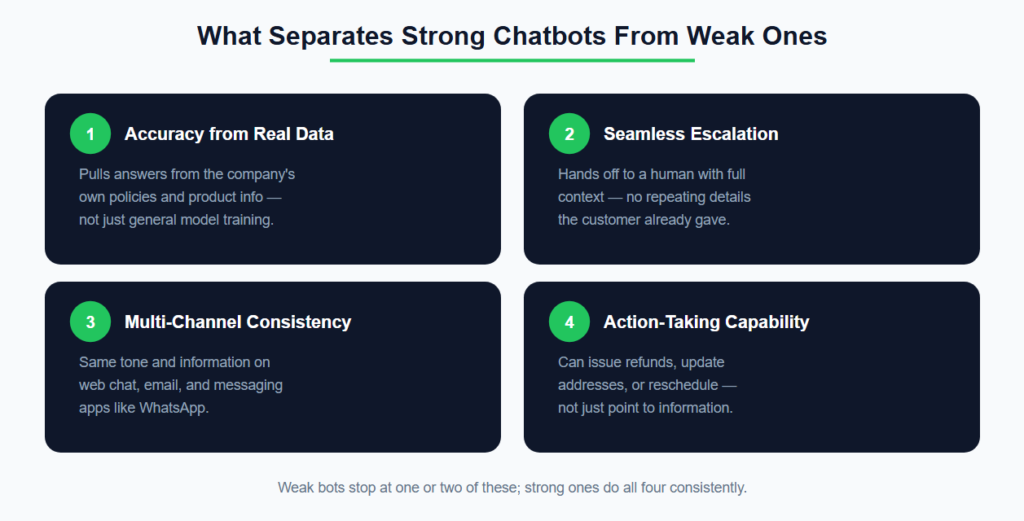
Accuracy Grounded in Real Company Data
The best designs take their information straight from the existing knowledge of the company, its policy, and products, rather than basing themselves only on model training.
It will minimize the likelihood of providing a confident but incorrect answer regarding the specifics of the company.
Seamless Escalation to Human Agents
When a chatbot gets close to the end of its possibilities, the transfer of responsibility to a human should include all of the following information:
- Information provided by the customer
- Steps taken so far
This way, customers won’t have to provide their information again, which is a frequent source of frustration for poorly designed systems.
Multi-Channel Consistency
Most companies require their customer service AI to function seamlessly through:
- Web chat
- E-mails
- Messaging services such as WhatsApp
Using the same information and tone for each platform, not inconsistent experiences.
Action-Taking Capability
In addition to simply answering questions, the more useful applications are able to perform certain tasks such as:
- Issuing a refund
- Updating a shipping address
- Re-scheduling an appointment
These tasks happen within certain boundaries and parameters and not just giving out information or redirecting the customer.
Leading Platforms and Their Typical Strengths
Intercom
The reputation of Intercom lies in integrating its AI chatbot functionality into the wider customer messaging and support platform, as it has become appealing to businesses looking for an integrated stack of support solutions, not just a chatbot alone.
Tidio
Tidio is a good choice for small businesses and e-commerce in particular, where ease of setup and compatibility with e-commerce platforms becomes important.
ProProfs and Similar Platforms
ProProfs and its competitors emphasize ease-of-use and affordability, targeting smaller businesses which need basic support functionality but no customizations.c
Enterprise-Focused Platforms
Enterprise-oriented platforms (Zendesk’s AI products or Salesforce Einstein/Agentforce) are focused on customizability and integration for businesses with a more complex support infrastructure involving multiple products or regions.
Business Benefits Driving Adoption
The customers get instant responses round the clock, which is especially helpful for businesses and their products across the globe with users spread across different time zones.
Answering repetitive and less complex queries using automation also cuts down the total number of tickets that reach the human agents, helping businesses grow their support staff without hiring additional manpower.
This may also help in lowering the cost of resolution if done right without compromising on the quality of service.
In addition, the process also helps in minimizing burnout among human agents, who can then focus more on complex issues and not get tired by having to repeat themselves.
How to Evaluate Options for Your Business
1. Test Accuracy Against Your Knowledge Base
Evaluate test accuracy based on your own knowledge base and common customer questions, not the vendor’s demonstration examples only.
2. Confirm System Integrations
- Check for the ability to integrate with:
- CRM
- Ticketing system
- Your other support systems
3. Evaluate Escalation Handling
Put the bot into an example situation where it cannot help the customer and observe how well it connects with a person.
4. Consider Your Channel Mix
If a considerable portion of your support is done via:
- A particular messaging app
Verify proper support in these apps as opposed to presuming that web chat works effortlessly.
5. Balance Customization and Ease of Setup
Weigh customization needs against ease of setup.
- Larger, more complex support operations generally need enterprise-grade configurability.
- Smaller teams often do better prioritizing quick, simple deployment.
Bottom Line
The right AI chatbot for customer support varies greatly depending on your organization size, channels utilized, and extent to which action-taking rather than information answering capabilities are necessary.
In all cases, the following common characteristics define successful platforms:
- Answers based on actual company data
- Human escalation
- True integration into systems used by support staff