WhatsApp AI Chatbots: How Businesses Use AI on the World’s Most Popular Messaging App

Introduction
As the most extensively used messaging platform across the globe, WhatsApp has become one of the most lucrative avenues for companies to utilize their AI chatbots, especially in foreign countries outside the United States, wherein WhatsApp serves as the main medium of communication between people and business firms.
This is how WhatsApp AI chatbots really work.
Why WhatsApp Specifically
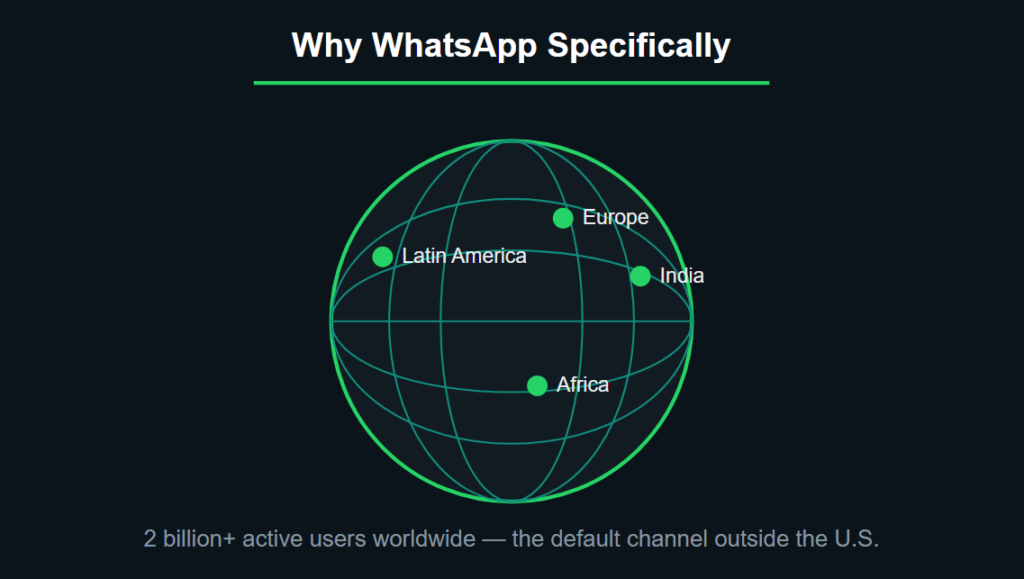
WhatsApp has more than 2 billion active users worldwide and is the leading messaging app in most parts of Latin America, India, Europe, and Africa, places where the use of SMS and email services for business purposes is not as common as it is in the United States.
In such markets, having a WhatsApp account is no longer an option but a necessity, thus making automation using artificial intelligence even more beneficial.
How WhatsApp AI Chatbots Technically Work
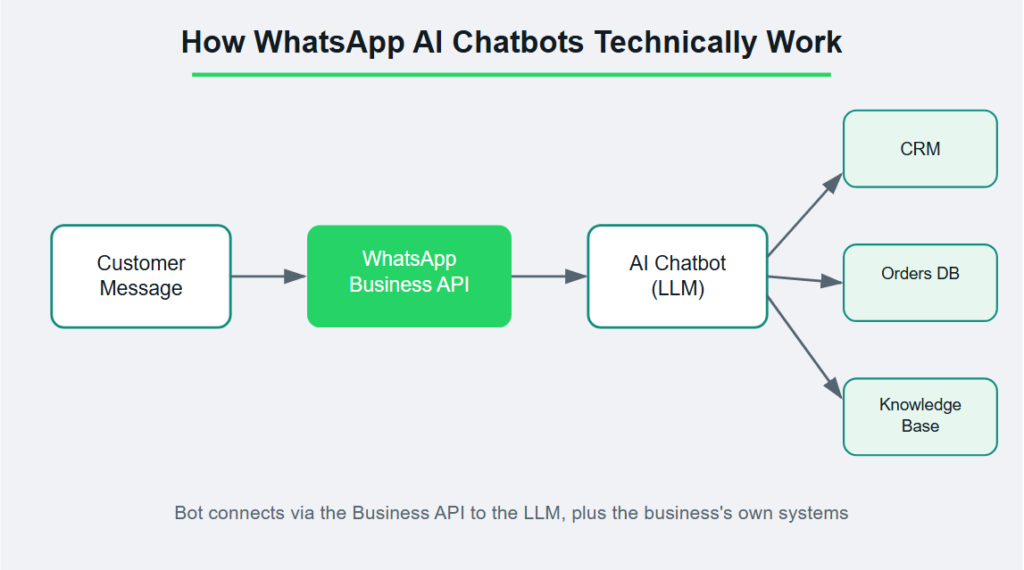
Businesses create WhatsApp bots via the WhatsApp Business Platform (previously called WhatsApp Business API), which lets authorized businesses communicate programmatically on the platform instead of using the conventional consumer WhatsApp platform.
The AI bot is linked to this API, where it uses its language model to understand and respond to messages, while at the same time connecting to the CRM, orders database, or knowledge base of the business.
Common Use Cases for WhatsApp AI Chatbots
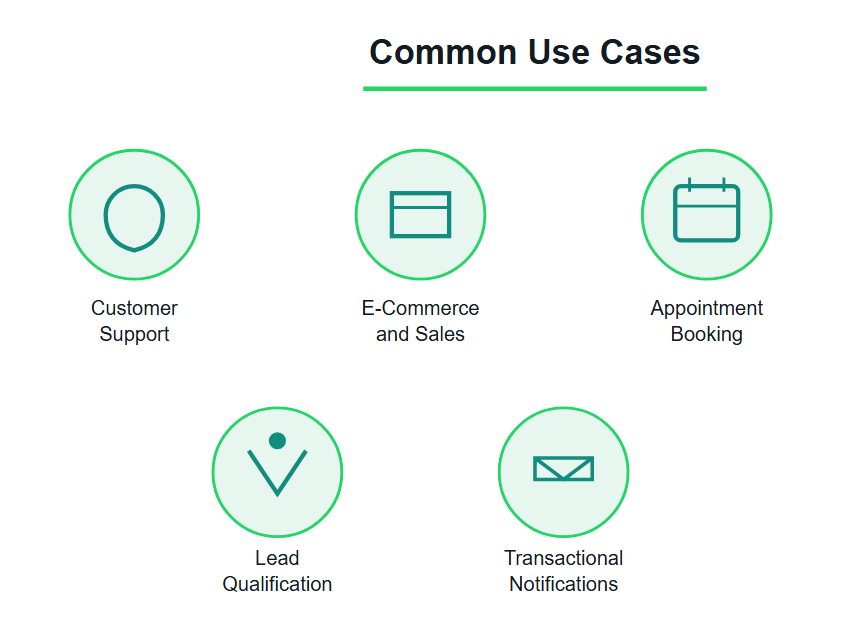
Customer Support
Responding to frequently asked questions, following up on orders, and solving problems in the context of the conversations customers are already used to on WhatsApp, without forcing them to switch to another medium like email or other apps.
E-Commerce and Sales
Helping customers with product-related questions, sending them product catalogues, and even guiding them to make a purchase via WhatsApp, especially useful when WhatsApp is ingrained into customers’ daily purchasing behavior in a market.
Appointment Booking and Reminders
Service-based businesses (hair salons, clinics, repair services, etc.) using WhatsApp bots for appointment bookings, confirmation, and follow-ups, thus cutting down on missed appointments and manual scheduling.
Lead Qualification
Following up on leads coming in from ad clicks or WhatsApp click-to-chat links of the business.
Transactional Notifications
Automated and templated messaging to send confirmations of orders placed, notifications about shipment details, and payment reminders, using AI-powered answers to customer queries raised thereafter.
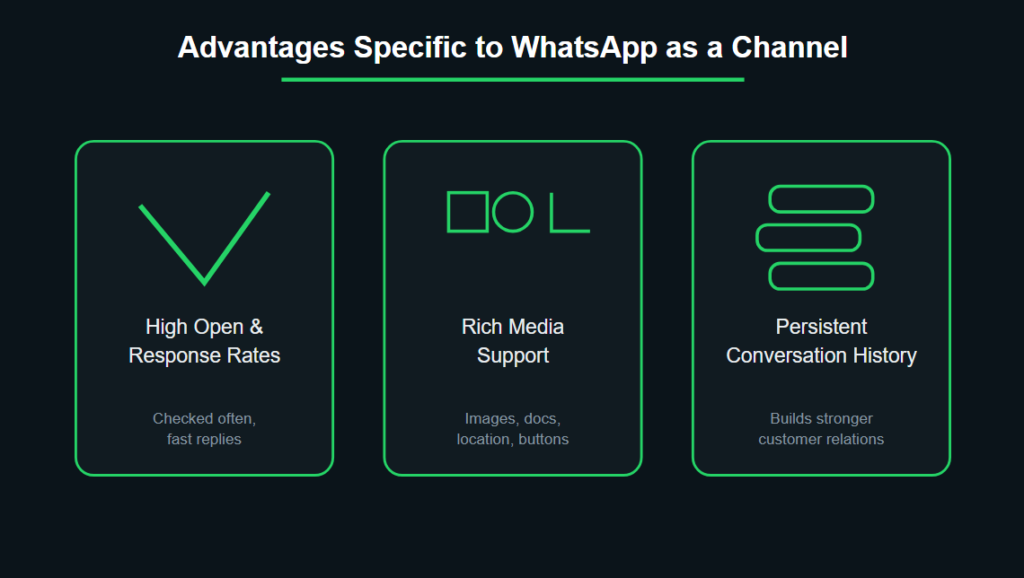
Advantages Specific to WhatsApp as a Channel
High Open and Response Rates
Message open rates for WhatsApp are often much higher than those of emails, and replies come quicker, because it is a platform that people check often and consider an interactive one rather than a mailbox to sort through.
Rich Media Support
The WhatsApp platform provides:
- Pictures
- Documents
- Locations
- Buttons
It enables AI bots to send product catalogues, ask for delivery locations, and give quick reply choices instead of just sending text messages.
Persistent Conversation History
Messages in the WhatsApp platform remain in threads like regular messaging, which can help develop customer relations better than in other platforms.
Key Considerations When Deploying a WhatsApp AI Chatbot
Business Verification and Approval
WhatsApp Business API access requires business verification from Meta, and for template messages (used for transactional notifications), template message approval is necessary.
Take this into consideration while implementing your strategy.
Messaging Policy Compliance
WhatsApp has guidelines regarding unsolicited messages, and in order to send some types of messages, there has to be customer consent or an initial interaction during a specified period of time.
If you are deploying AI Chatbots in this environment, then you must ensure that these guidelines are met.
Localization
In view of the capabilities of WhatsApp in terms of various international markets, the chatbots that are deployed here require multilingual ability and tone that is culturally sensitive.
Choosing a WhatsApp Chatbot Platform or Provider
Some companies develop their own solutions directly on the WhatsApp Business Platform with AI integration.
Some other companies implement a business messaging platform such as Twilio, MessageBird, or customer engagement platform that has out-of-the-box integration with WhatsApp and includes AI chatbot capabilities.
Bottom Line
AI-based WhatsApp bots provide companies the opportunity to reach out to their customers via the channel they have been using all along, especially beneficial for countries in which WhatsApp is used extensively for business communications.
Creating a successful one involves knowledge of WhatsApp’s unique technical specifications and guidelines as well as the typical challenges faced while implementing a chatbot, such as accuracy, integrations, and human takeovers.