Free eSign: What It Actually Covers and Why It’s Easy to Get Wrong

Introduction
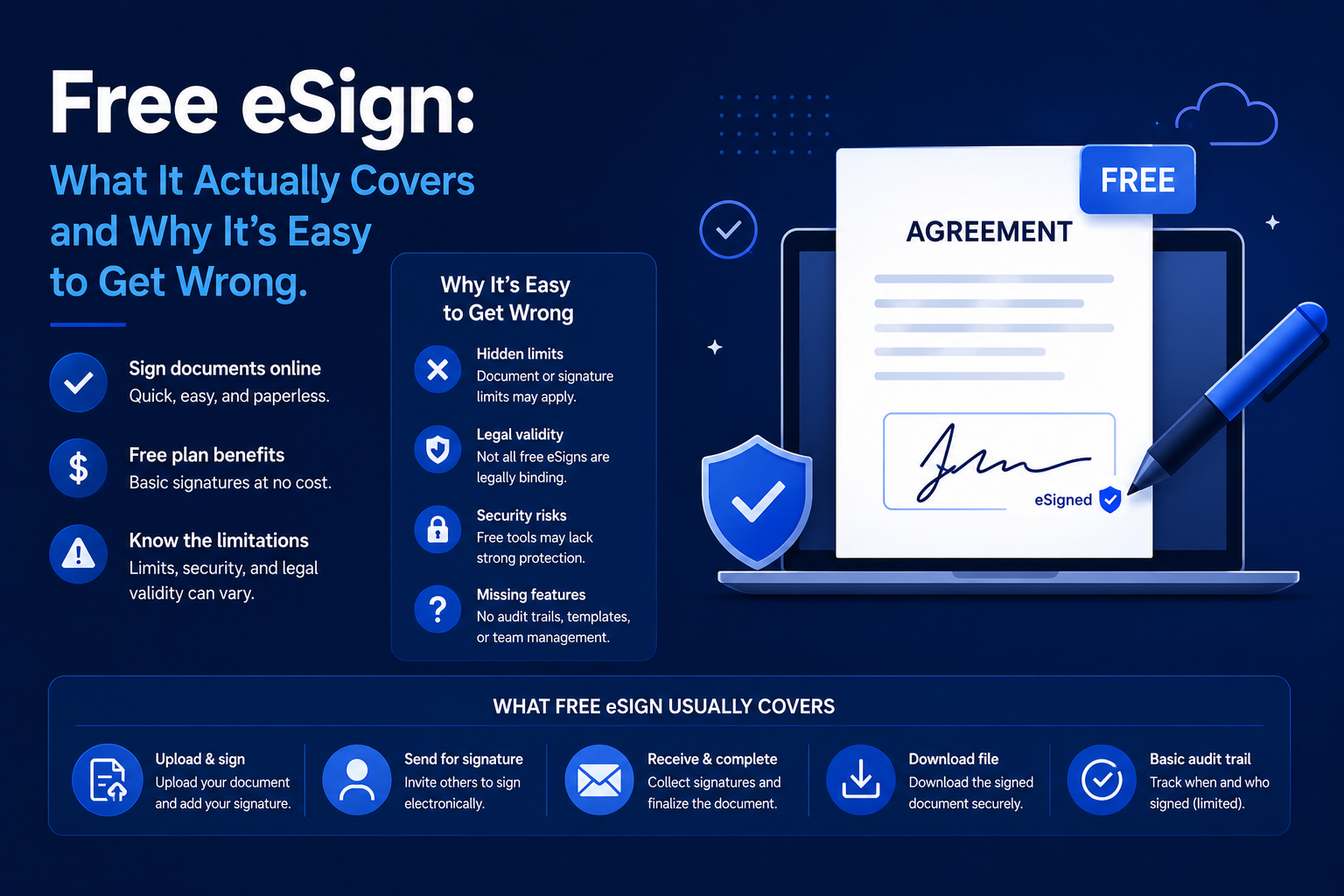
Free eSigns denote those electronic signature programs that are provided free of charge, from minimal OS integration features up to free versions of premium software, instead of a consistently same feature set within each of the free options.
At first glance, it may look quite straightforward; nevertheless, the list of restrictions commonly included in free solutions is pretty long and often surprises users once they start using a particular tool.
Why Free eSign Options Are More Complex Than They Appear
Free online signing systems do not belong to one type of product; rather, they represent a combination of the following types of systems:
- Totally free systems with very basic capabilities
- Free plans in premium software packages with limitations on the number of documents used
- Trial periods that turn into paid subscription later on
Many people think that “free” implies being able to use the software without limitations on anything, and this expectation may cause quite a lot of disappointment at some point.
A person choosing a free eSign product should investigate each of the available solutions independently in order to learn about their limitations.
Major Types of Free eSign Options
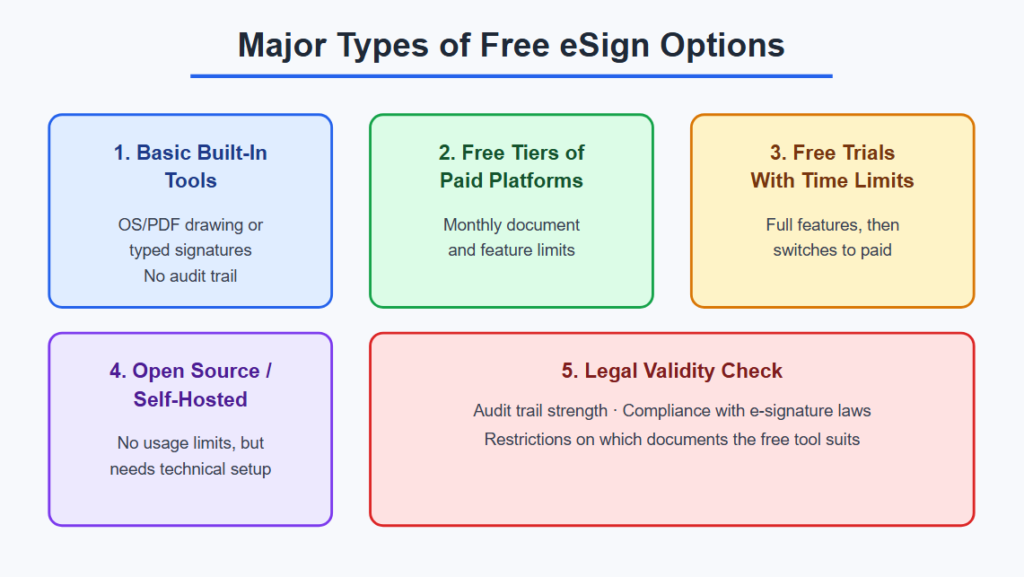
1. Basic Built-In Tools
Rules Governing
- PDF editing tools provided in native PDF annotations or markups on desktop and mobile OSs
- Drawing or typing of a signature using basic drawing capability
- Does not require an account or subscription to use any of these options
Use of purely basic functionalities is probably the least flexible approach as it may lack:
- Audit trail or other evidence validating the signature
- Support for multi-signing process
- Success only for low-stake, unformalized documents
2. Free Tiers of Paid eSign Platforms
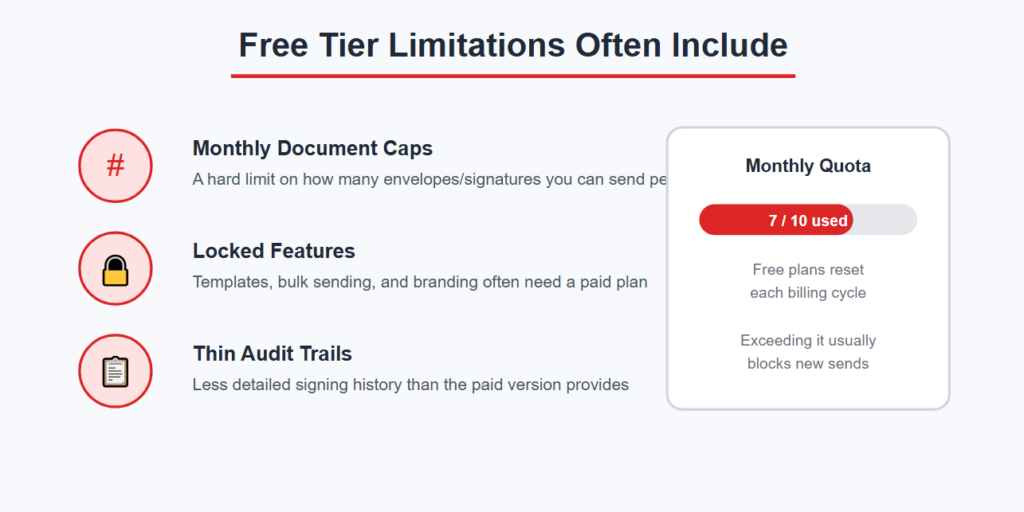
The free tiers in eSigning have usage restrictions, where users are expected to comply with document or signing limits within a month.
Free Tier Limitations Often Include
- Maximum number of documents that may be signed each month
- Limited access to additional functionalities, such as templates and bulk sending
- Lack of detailed audit trails when compared to the paid tiers
3. Free Trials With Time Limits
Handling of the issue encompasses not just the usage-restricted free tiers but also free trials that provide full functionality for a temporary period before switching to a paid version.
Those Trials Usually Vary in Many Respects Including
- Length of the trial period, which usually ranges between a week and a month
- Full access to all functionalities during the trial period
- Disposition of documents/data after the trial period
4. Open Source and Self-Hosted Options
A few examples of eSign services that are available for free include:
- Open-source eSignatures that allow for self-hosting
- Requires installation and maintenance by the user
- No limitations on usage because of the lack of dependency on any vendor’s subscription plan
These services depend on the technical proficiency of the user for their implementation.
5. Legal Validity of Free eSign Tools
Various free eSign services need to be looked into with respect to several issues, such as:
- Does it offer enough audit trail information to make the signature legally strong?
- Compliance with eSignature laws and regulations.
- Restrictions on kinds of documents where using the free service would be appropriate.
These issues should be looked into since if the cost benefits are negated by an ineffective signature, then there is no point in using a free tool.
Why Free eSign Tools Create Problems Even When They Seem Sufficient Initially
Problems with free e-signature not being properly prepared are quite rare because people completely neglect the terms associated with the use of such technology.
However, issues may arise due to the following reasons:
- An increased number of files exceeds the quota available for the free version.
- The free trial expires, making documents unavailable until payment is made.
- Limited audit logs of the free system are insufficient for a dispute about the document signature.
How to Choose the Right Free eSign Option
1. Assessing Actual Usage Needs First
There are situations when individuals and small businesses can calculate their potential document volume, particularly when the usage is likely to exceed the limits of an initial free plan.
2. Practices Supporting Smart Free Tool Selection
The following strategies will help make the right decision about free eSigning:
- Understand the particular restrictions on the free plan before choosing it for your important documents.
- Use the free tool only for low-stakes signing purposes.
- Prepare for switching to a paid plan.
3. Testing Before Relying on a Free Tool
The individuals who are looking at a free online eSign solution will test for:
- Whether the tool gives you sufficient audit trail documentation
- Whether the signing process is smooth for the relevant document type
- What will happen to your documents when the free plan expires
Doing the testing first ensures that you can use the tool when it does what you need it to do.
Common Free eSign Mistakes
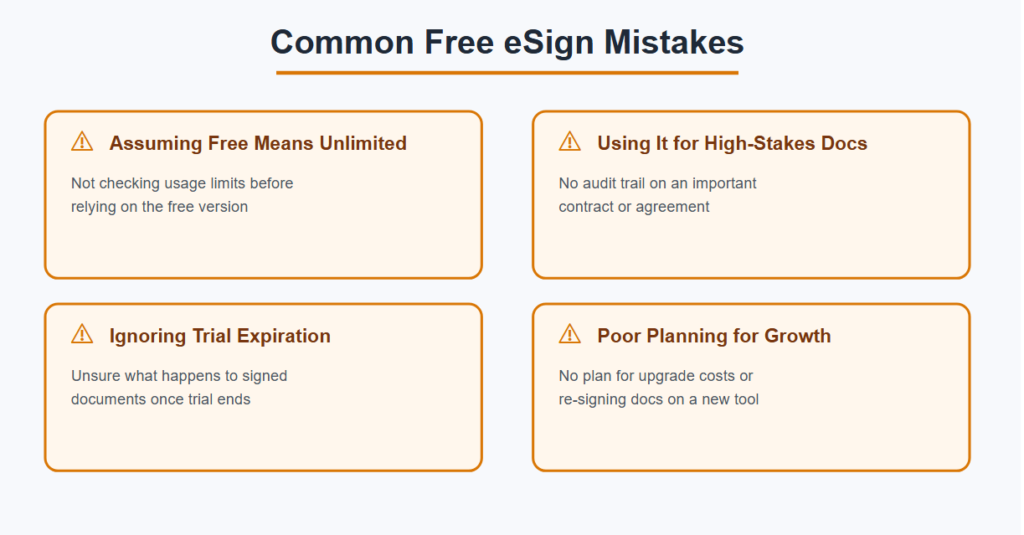
1. Assuming Free Means Unlimited
Failing to verify particular usage limits prior to making use of the free version.
2. Using Free Tools for High-Stakes Documents
Utilizing a free version of a basic application without any auditing trail feature on an important document.
3. Ignoring Trial Expiration Terms
Not knowing what happens to already signed documents after the free trial period expires.
4. Poor Planning for Growth
Lack of thought about:
- How the upgrade process will look after surpassing the limit of the free account
- If moving to other tools later on will entail re-signing any existing documents
- Costs associated with using the software are likely to increase over time
A failure to plan for future growth may result in a costly tool switch.
Bottom Line
The number of free options is pretty wide-ranging, taking into account aspects like free base features, free tier limitations, trial periods, open source solutions, and legality issues.
Given the ease with which one may fall for the trap of thinking that free means all-encompassing, it is more beneficial for people to consider certain restrictions before using a free e-sign solution.