Enterprise Data Protection: What It Actually Covers and Why It’s Easy to Get Wrong

Introduction
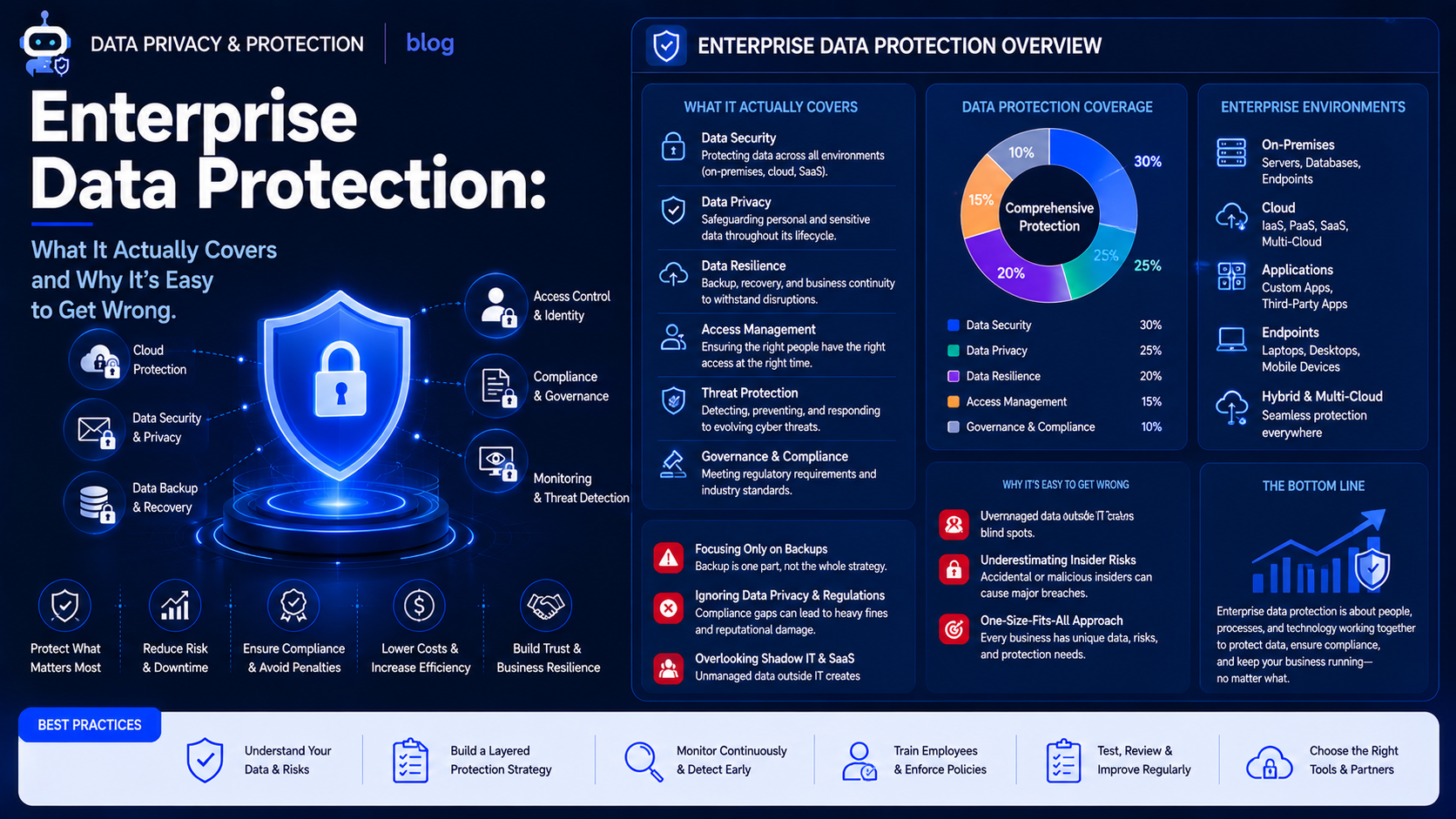
Protecting enterprise data entails protecting data within large and complicated enterprises that have multiple systems, departments, and physical locations, as opposed to employing similar but simple data protection techniques on a broader scale that would be applied to a small enterprise.
It may sound quite simple; but due to the multiple systems and stakeholders involved, it is an area that many enterprises find difficult to manage.
Why Enterprise Data Protection Is More Complex Than It Appears
Data security for an enterprise is not a standardized process. It is a combination of the following:
- Security within the infrastructure that can be on premises, in the cloud, or hybrid.
- Coordination across various departments having diverse requirements for data.
- Compliance with various regulations depending upon the location.
A few organizations implement the department-specific security strategy individually, which results in inconsistency and poor visibility throughout the organization.
For a multi-region enterprise, the security strategy has to be implemented individually for every region.
Major Areas of Enterprise Data Protection
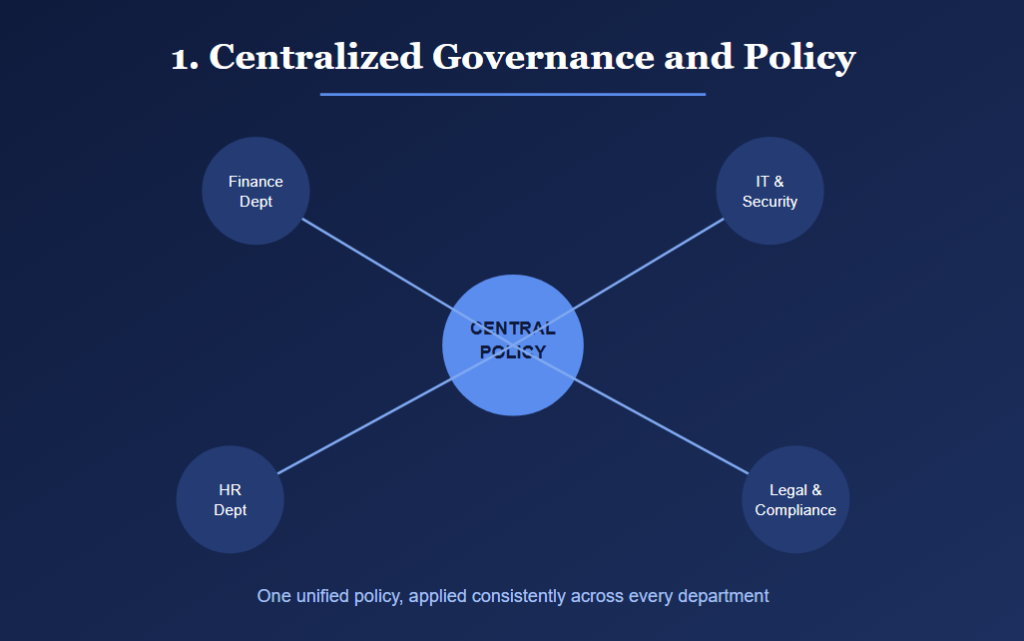
1. Centralized Governance and Policy
Rules Governing
- Unified standards for data classification throughout the company
- Unified access control policy for all systems
- Single pane of glass view of data protection
The most common problem that leads to many costs is fragmented governance by departments since it may lead to:
- Inconsistent security policies which can be exploited
- Compliance difficulty for the entire company
- Waste of effort from duplication of work among departments
2. Infrastructure Protection Across Environments
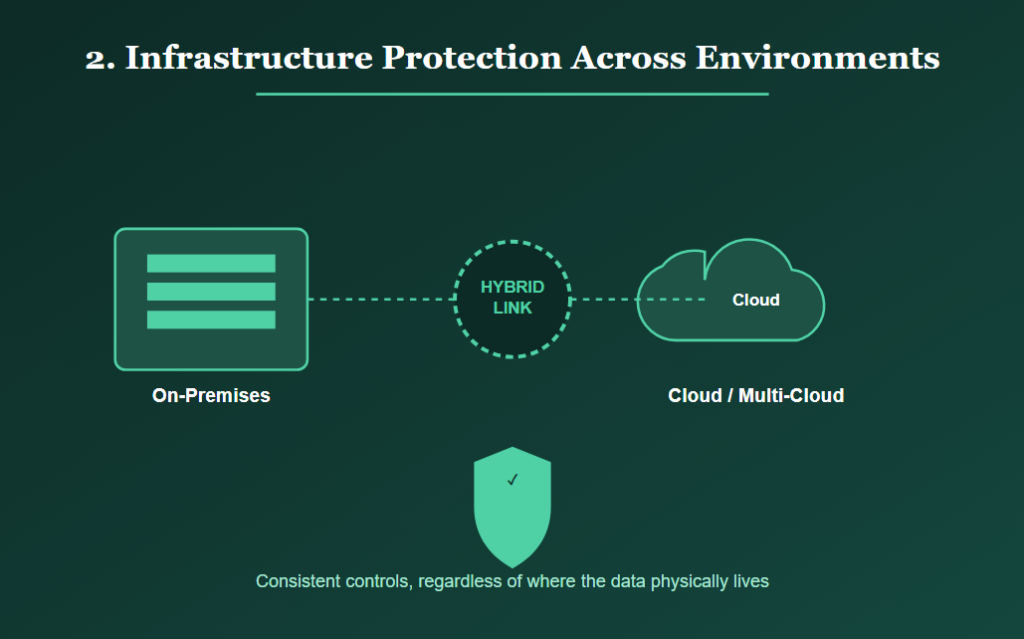
Enterprise data protection generally involves multiple environments and requires consistency with controls to meet the requirements of security standards irrespective of the location of the data.
Infrastructure Protection Often Includes
- On-premises data center security
- Cloud and multi-cloud security approaches
- Consistency of hybrid environment between on-premises and cloud systems
3. Third-Party and Vendor Risk Management
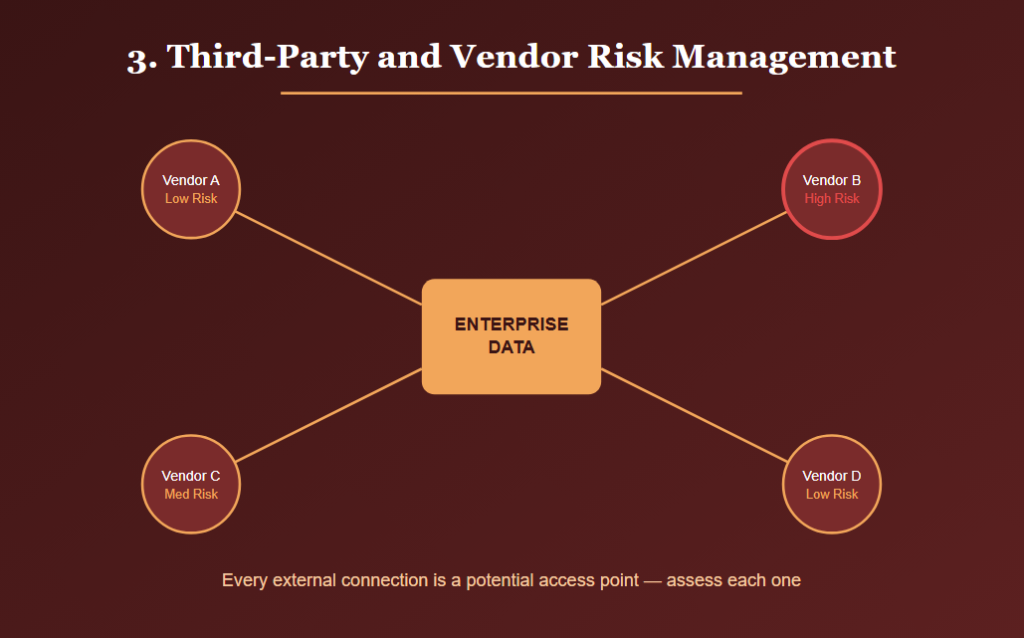
This involves not only the enterprise systems but also the increased vulnerability caused due to vendors, partners, and third-party integrations accessing enterprise data.
Those Third-Party Risks Usually Vary in Many Respects Including
- Access permissions given to each vendor
- Security stance of vendor and certifications
- Protection provided in case of any vendor breach
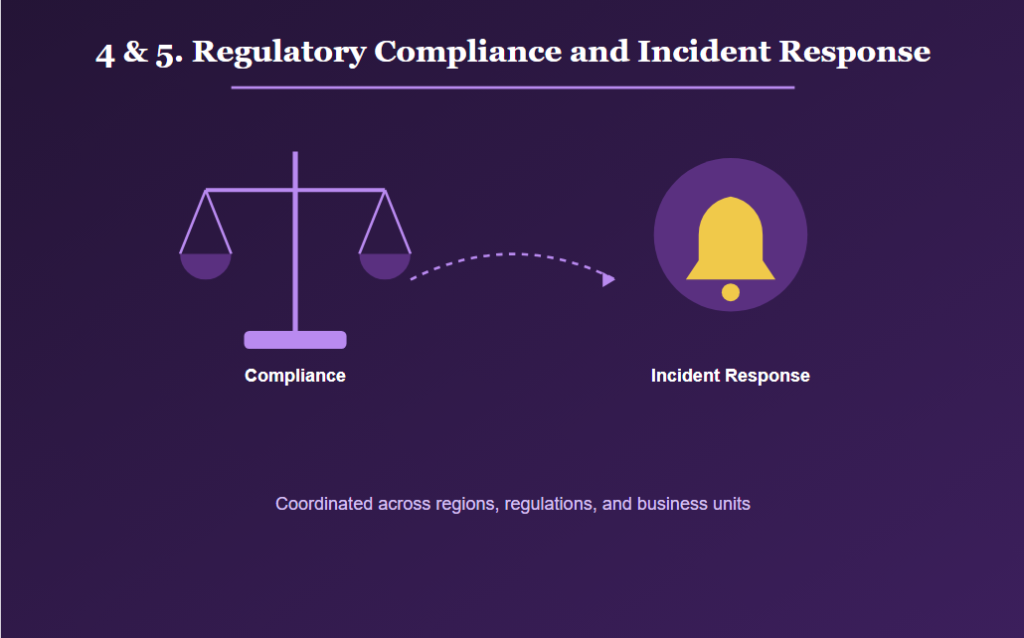
4. Regulatory Compliance at Scale
Data protection needs of enterprises may require:
- Adherence to several regulatory regimes
- Documentation of evidence for different audits
- Collaboration among legal, compliance, and technical departments
The extent of difficulty involved here varies according to the number of jurisdictions and industries the enterprise deals with.
5. Incident Response at Enterprise Scale
Some data security schemes that companies must comply with require them to be ready, such as:
- A well-coordinated incident response in several business units
- Incident escalation procedures in case there are incidents involving different regions
- Communications procedures that consider different notification requirements depending on regulations
This is because large enterprises face more complex notification requirements compared to small organizations.
Why Enterprise Data Protection Fails Even at Well-Resourced Companies
An inability to provide consistent and complete security rarely occurs due to lack of budget for security on part of the business.
Actually, failures might occur due to:
- Individual departments adopt their own systems and policies independently.
- Mergers and acquisitions create systems which were never integrated properly into governance.
- Visibility across infrastructure delays the detection of attacks.
How Enterprises Build Effective Data Protection Programs
1. Establishing Centralized Governance First
For larger organizations, there may be a need to develop data classification and policies prior to the implementation of technical controls, particularly when fragmentation exists at the department level.
2. Enterprise Practices Supporting Consistent Protection
There are various enterprise data protection models that allow for the following:
- Consolidation of visibility into on-premise, cloud, and hybrid systems
- Enterprise-wide vendor risk assessment process
- Coordination of compliance among Legal, IT, and the business
3. Ongoing Enterprise-Wide Reviews
There are regular assessments of:
- Uniformity of security controls across business units
- Third-party vendor access and risks
- Incident response readiness across the entire enterprise
Through regular assessments, enterprises can ensure that their data protection remains consistent despite growth and restructuring of the enterprise through acquisitions.
Common Enterprise Data Protection Mistakes
1. Allowing Fragmented, Department-Level Approaches
Allowing various business groups to deploy their own methods and procedures independent of central coordination.
2. Underestimating Third-Party Risk
Providing unrestricted access to vendors without proper evaluation of the vendor’s own security measures.
3. Incomplete Integration After Mergers and Acquisitions
Incomplete integration of acquired systems into central data protection processes.
4. Poor Cross-Functional Coordination
Insufficient collaboration of:
- The legal and compliance staff working on the regulations
- IT and security staffs setting up technical measures
- And business units controlling the use of data
A lack of effective coordination could result in the mismatch of policies and practice within the company.
Bottom Line
Enterprise data protection is highly varied, and takes into account several aspects such as governance, infrastructure, third party risk, regulations, and incident response.
Given that a fragmented approach can easily cause inconsistent protection, it would be much better for companies to develop governance and coordinate across the entire enterprise.