AI Automation Tools: What They Actually Cover and Why Choosing One Is Easy to Get Wrong

Introduction
The AI automation software can range across a variety of platforms for carrying out tasks that could include simple automated tasks, as well as complicated decisions involving judgment calls.
At first glance, the concept might appear relatively straightforward; nevertheless, the number of skills associated with “AI automation” can be confusing for businesses to assess.
Why AI Automation Tools Are More Complex Than They Appear
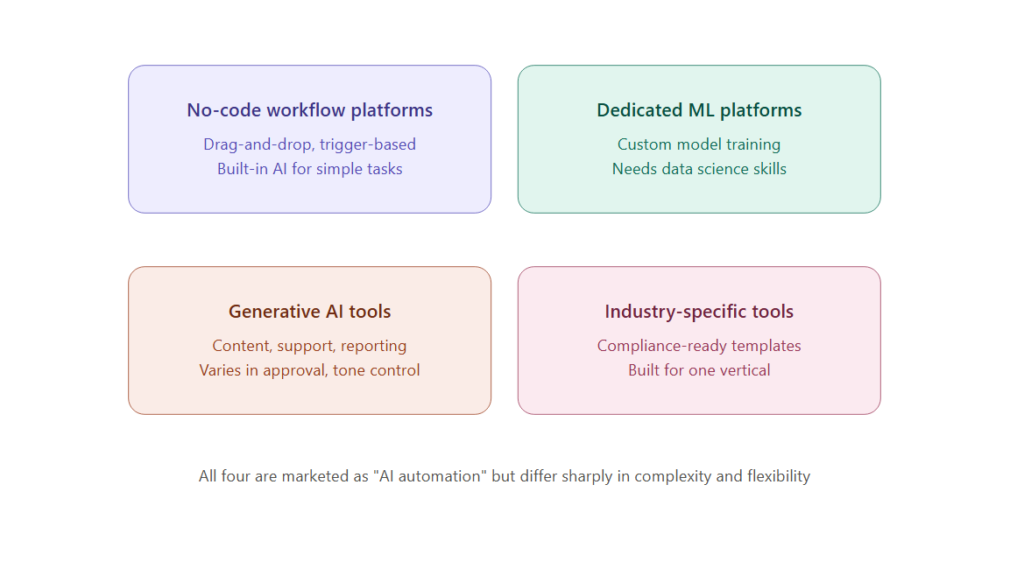
AI automation solutions do not belong to a homogenous market segment, as they form a combined structure that includes the following:
- Workflow automation platforms with no-code options and AI capabilities
- Platforms for the development of customized machine learning models
- Generative AI tools designed for certain business applications
Some customers make decisions based only on either cost or user-friendliness, although such an approach disregards whether a certain technology can support the complexity of the process performed by it.
When a business decides to use several platforms for different purposes, the capability of a tool must be considered individually, as a platform that supports simple triggered actions differs significantly from a platform used for actual predictions.
Major Categories of AI Automation Tools
No-Code Workflow Platforms
Rules Governing
- Workflow builder using drag-and-drop visuals
- Ready-to-use AI integrations to perform tasks such as classification or summarization
- Automation based on events and triggers to connect various applications
Picking a no-code solution without knowing its limitations regarding AI is one of the most common strategies since it can lead to:
- Quick implementation for basic use-cases
- Little flexibility for more complicated or unique requirements
- Relying on the provider’s out-of-the-box AI functionality
Dedicated Machine Learning Platforms
The ML platforms usually provide customized model creation, where technical knowledge is required for the development of models that meet the particular requirements of each business.
ML Platform Features Often Include
- Training of customized models using proprietary data
- Predictive analytics
- Technical knowledge for data science configuration
Generative AI Automation Tools
Handling involves not just data processing but also the rising application of generative AI technologies that are built into certain processes such as content creation, customer support, and reporting.
Those Tools Usually Vary in Many Respects Including
- Integration with existing business operations
- Need for manual approval prior to application
- Extent of customization of tone and format
Industry-Specific Automation Tools
Some AI automation solutions are designed to cater to particular verticals, which includes:
- Automation with compliance
- Workflows designed for particular business processes
- Industry-compliant templates
How customizable these solutions are will vary depending on how particular they were created for one use case or another.
Integration and Ecosystem Compatibility
There are several AI automation software solutions which require businesses to consider the following criteria:
- Integration capabilities with current software solutions
- Ability to connect through API
- Security of data and certificates
These particular criteria need to be carefully considered since even a very effective tool without integration capabilities increases friction instead of reducing it.
Why Choosing the Wrong AI Automation Tool Happens Even at Careful Companies
An improperly matched AI automation solution does not occur because the firm chooses not to conduct any sort of research.
On the contrary, an improper fit can occur because:
- Customers will only compare what the marketing materials say without trying it out themselves.
- The AI capabilities of a software solution can actually be much less complex rule-based automation wrapped in a generative approach.
How Organizations Evaluate AI Automation Tools
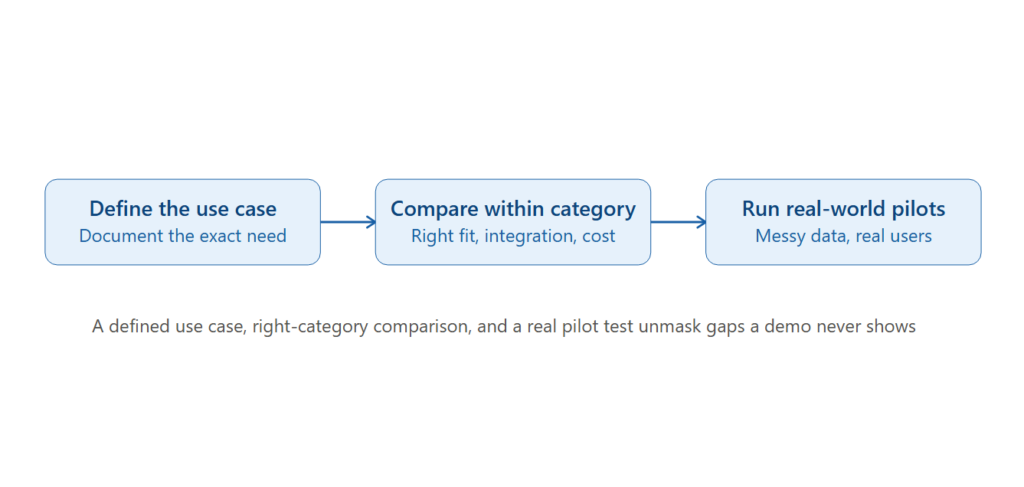
Defining the Specific Use Case First
In large companies, the requirement of automation may be precisely documented first prior to evaluating different tools, particularly when the job entails some degree of judgment.
Comparing Within the Right Category
A number of evaluation methodologies include selecting from among those tools that are:
- Suited to the right complexity level
- Integrated with current systems
- Offered at a price proportional to usage
Running Real-World Pilots
Pilots conducted by organizations include:
- Tests involving actual dirty data instead of clean demo data
- Insight from the users who will be using the tool on a regular basis
- A well-defined test period before implementing across the organization
Conducting pilots with actual tests ensures that the tool works, unlike what is shown in a demo.
Common Mistakes When Comparing AI Automation Tools
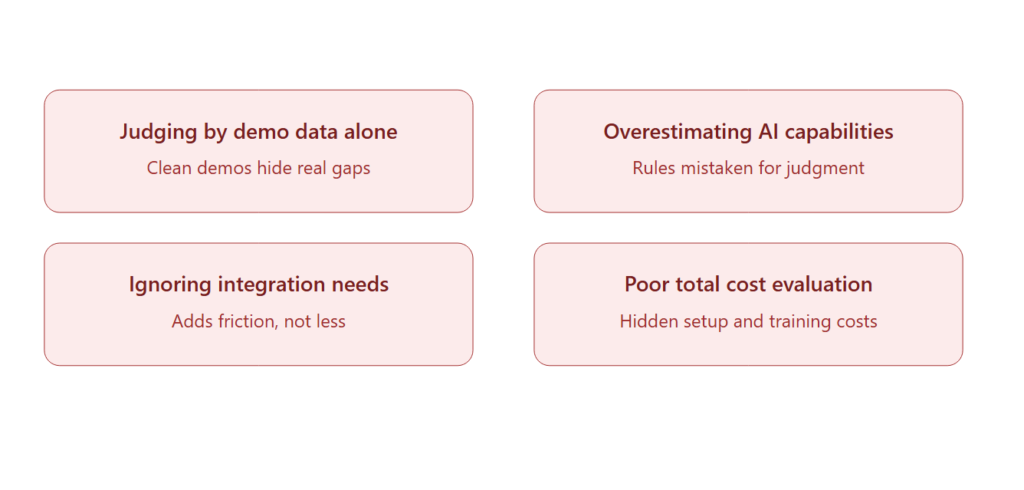
Judging Based on Demo Data Alone
Evaluating tools through the vendor’s clean demo database in place of evaluating them against actual messy internal data.
Overestimating “AI” Capabilities
Believing that an intelligent tool will take care of difficult decisions when in reality, it can only execute predefined rules.
Ignoring Integration Requirements
Selecting a robust tool without verification that it can integrate well with other business processes.
Poor Total Cost Evaluation
Lack of thought into:
- Additional costs apart from the basic subscription
- Time required for implementation and maintenance
- Training necessary for the team to utilize the tool
Inadequate cost analysis may result in overspending much more than the estimated quote.
Bottom Line
The categories that AI automation tools fall into are diverse and varied, such as no-code tools, machine learning tools, generative AI tools, and even specific industry-focused tools.
Taking into account how dissimilar they can actually be despite having the same language used in marketing, it may be better for organizations to understand their specific use case and test out real data first.