CRM for Startup: What It Actually Covers and Why It’s Easy to Get Wrong

Introduction
The CRM that should be chosen by the startup is a solution designed to help manage the very first sales processes and scalable enough to evolve rather than an overcomplicated one created specifically for enterprises that don’t need such complexity at their early stages of business development.
It may sound quite easy but there are a lot of compromises between simplicity and scalability which can often mislead a startup.
Why Choosing a Startup CRM Is More Complex Than It Appears
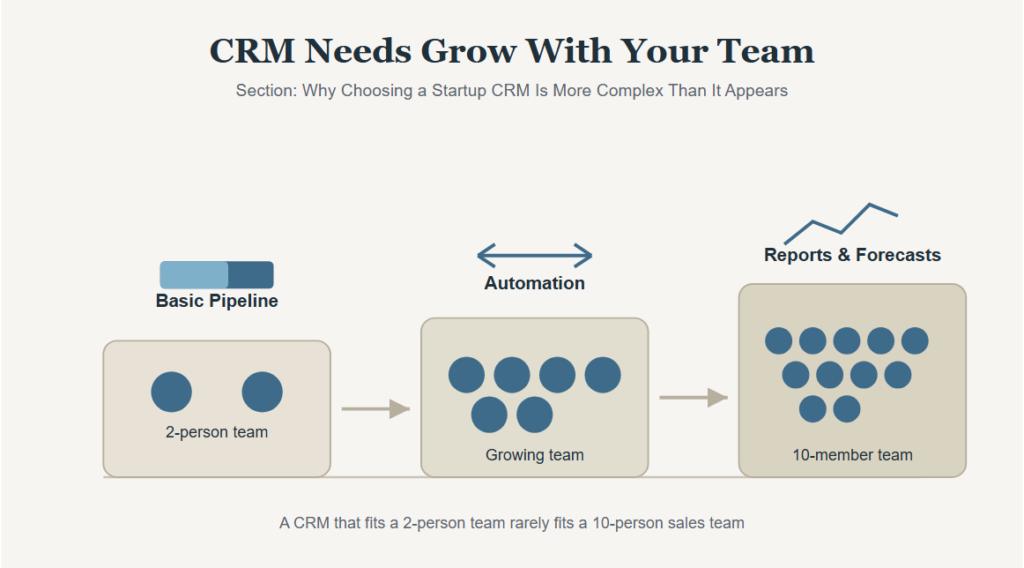
The CRM needs of a startup are not a singular, standardized requirement but are rather a composition of the following:
- Basic pipeline management in the initial phase
- Increasing demand for automation with increasing number of leads
- Requirement of reports and forecasts with increasing team size
Some startups pick their CRM based solely on the current team size, but this limited perspective often ends up making a costly transition when the startup outgrows the CRM’s capabilities.
When startups raise money and grow their sales team size, there should be an individual assessment of CRM requirements in each growth phase as the CRM that works well for two people will not work well for a ten-member sales team.
Major Areas of Startup CRM Selection
Ease of Setup and Adoption
Rules regarding:
- The speed at which a small team can start without any dedicated administration team
- Ease of use of the interface by non-tech-savvy founders
- Availability of templates that help in executing the basic sales process for startups
Risks of Overly Complex Initial Setup
Unnecessarily complex set-up is among the most common and expensive problems since it could cause:
- Wasted time on features the team isn’t using at the moment
- Under-utilization due to complexity
- Lack of CRM use in crucial sales months
Pricing That Scales With the Team
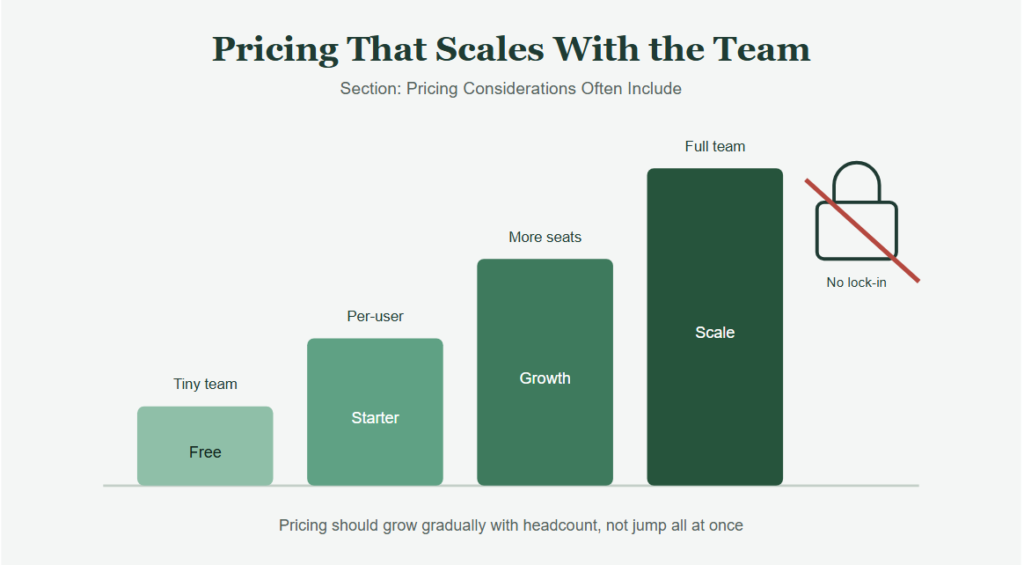
CRM systems usually have multiple pricing levels that mandate founders to stick to a budget that won’t overburden their limited resources at an early stage of business operations.
Pricing Considerations Often Include
- Low or free price level for tiny teams
- Per-user pricing that goes well with scaling by recruiting more staff
- Skipping commitments to lengthy contracts
Basic Automation for Small Teams
Handling includes not just manual pipeline tracking but also the added value of automated processes, which save time without needing any ops personnel.
Automation Needs Usually Include
- Automated follow-up emails
- Basic email sequences
- Basic lead capture from a website/form
Integration With Common Startup Tools
The CRMs for start-ups often have to integrate with:
- Email and calendar services
- Marketing tools for initial outreach purposes
- Communications tools like Slack
These integrations vary based on how important they are for specific startups.
Scalability for Future Growth
There are some considerations that founders need to take into account with respect to several startup CRMs, which include the following:
- Whether the CRM provides additional features as the number of people within the team grows
- The complexity of moving from one CRM to another
- Reporting capabilities that become crucial as forecasting is needed
All of these considerations must be taken into account at an early stage since changing the CRM will mean losing all of the information.
Why Startup CRM Choices Often Go Wrong Even With Good Intentions
Selecting a scalable CRM system rarely goes wrong because the founders do not do their homework.
Instead, the issue might arise due to the following:
- The founders select the cheapest possible solution without thinking about growth.
- The startup team does not use the CRM system at all and continues to use spreadsheets.
- They pick an easy-to-use solution which lacks necessary automation capabilities when the number of leads grows.
How Startups Choose the Right CRM
Starting Simple Without Ignoring the Future
The founders may be focused on usability for the current number of team members, particularly when the sales process itself is in development.
CRM Features Supporting Early-Stage Sales
There are several CRM systems designed for startups that have the ability to allow founders to do the following:
- Get up and running rapidly
- Automate basic follow-ups without hiring any admins
- Increase price and feature set based on more headcount
Reassessing Needs at Key Growth Milestones
Startups need to carry out periodic assessments in terms of:
- Whether the existing CRM system continues to fit the sales process
- Increasing automation/reporting requirements
- Feedback from the team on limitations of tools
Periodic assessments allow startups to ensure that their CRM selection remains appropriate for their business.
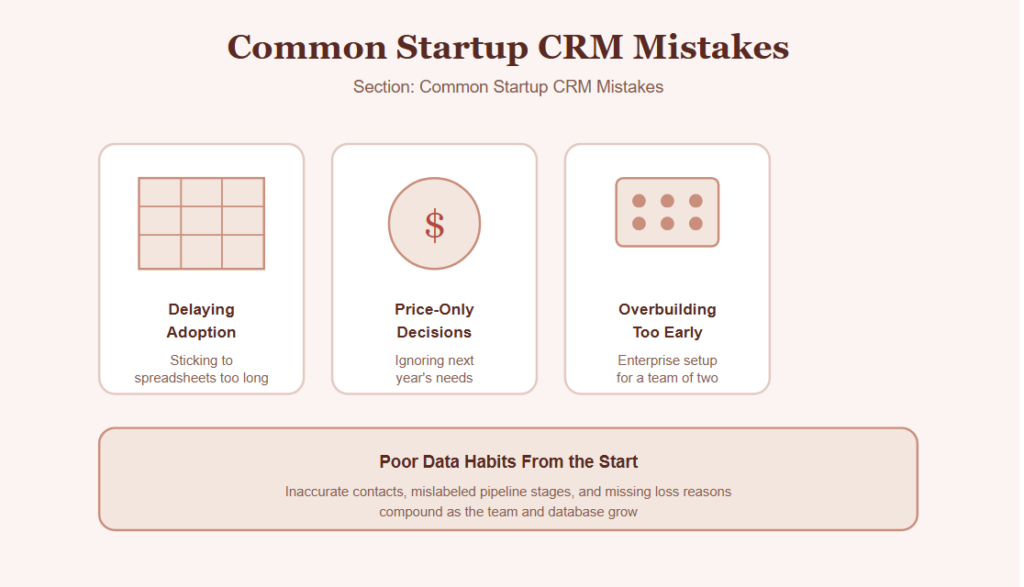
Common Startup CRM Mistakes
Delaying CRM Adoption Too Long
Using a spreadsheet or other manual method long after a CRM would actually make a difference.
Choosing Based on Price Alone
Choosing the least expensive solution without thinking about whether it will meet the team’s needs next year.
Overbuilding for a Team That Doesn’t Exist Yet
Spend a lot of effort setting up enterprise functions when the startup does not need them at that stage yet.
Poor Data Habits From the Start
Problems with discipline concerning:
- Tracking transactions and contacts accurately
- Maintaining accurate information about pipeline stages
- Recording reasons for the loss of deals for analysis purposes later
Early bad data practices become hard to correct when the team and database get bigger.
Bottom Line
The CRM choice for startups is rather varied and includes different things like ease of implementation, scalable pricing, simple automation, integration capabilities, etc.
Taking into account how fast needs may evolve at startups, it is better for founders to pick a CRM that combines simplicity and scalability rather than focusing on the small size of the team only.