Employee Engagement Software: Measuring and Improving What’s Hard to See

Introduction
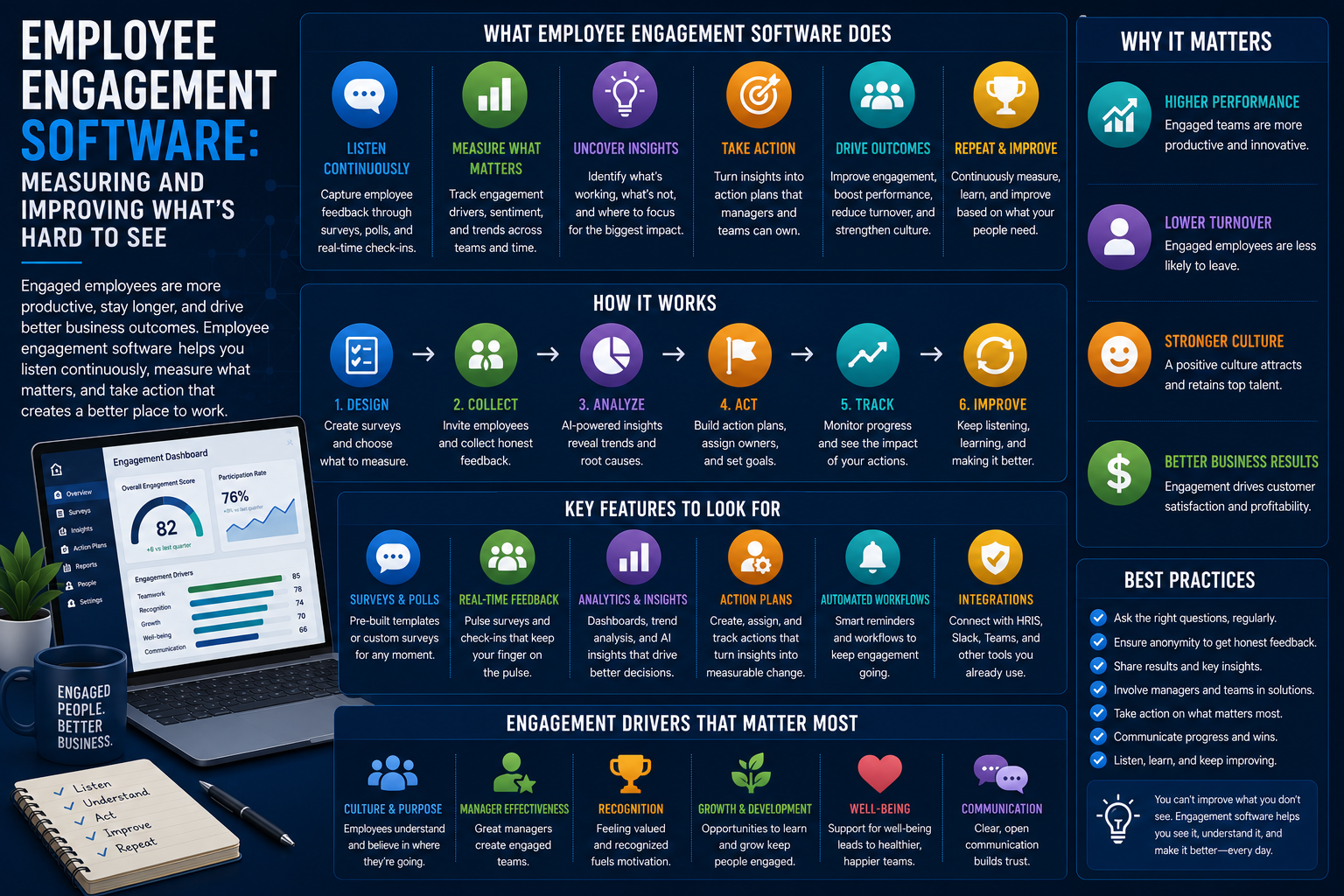
Employee engagement can be described as the level of satisfaction, motivation, and connectivity that employees have within their job. This can be quite hard to measure through informal means and thus the existence of employee engagement software to assist in making this process much easier.
Why Engagement Is Worth Measuring Deliberately
Employees who feel disengaged tend to be turnover-prone, less productive when they remain, and influence team spirit in ways that cannot easily be observed.
If organizations wait until an exit interview to discover what went wrong, they have done nothing except to react to issues that are no longer preventable.
Employee engagement software tries to uncover issues at a stage where preventive measures can still be taken.
Core Functionality of Employee Engagement Software
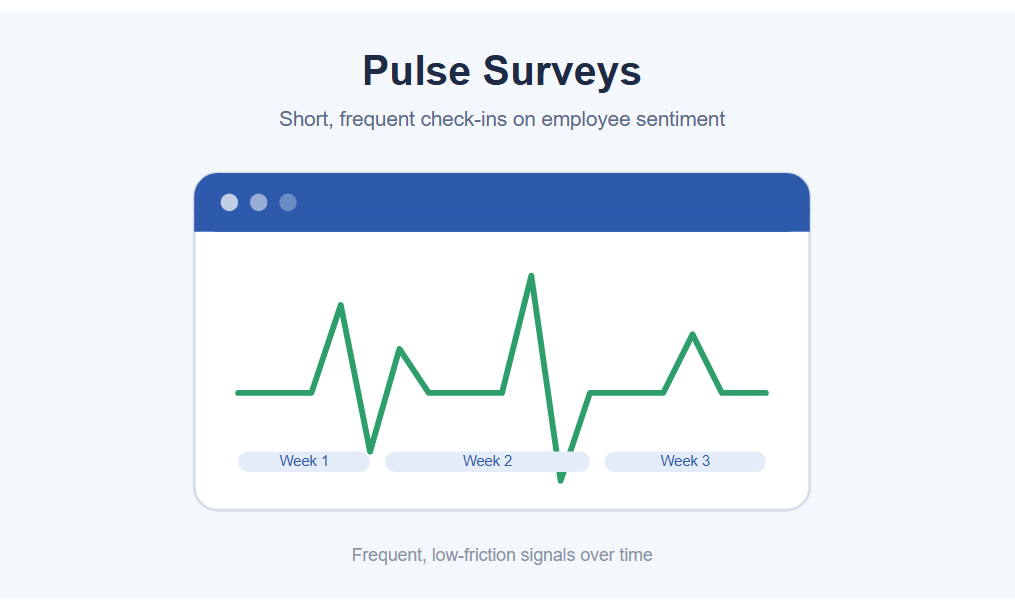
Pulse Surveys
Surveys that are short, but done often (weekly or bi-weekly) and focus on a few specific questions, which will allow tracking of engagement levels over time without survey fatigue.
Annual or Comprehensive Engagement Surveys
Longer and more comprehensive surveys that are done less often, thus providing diagnostic data on many dimensions of employee engagement (relationship with the manager, opportunities for career advancement, compensation satisfaction, and more).
eNPS (Employee Net Promoter Score)
A very simple indicator measuring the probability of employees recommending their company as an employer, commonly measured repeatedly over time.
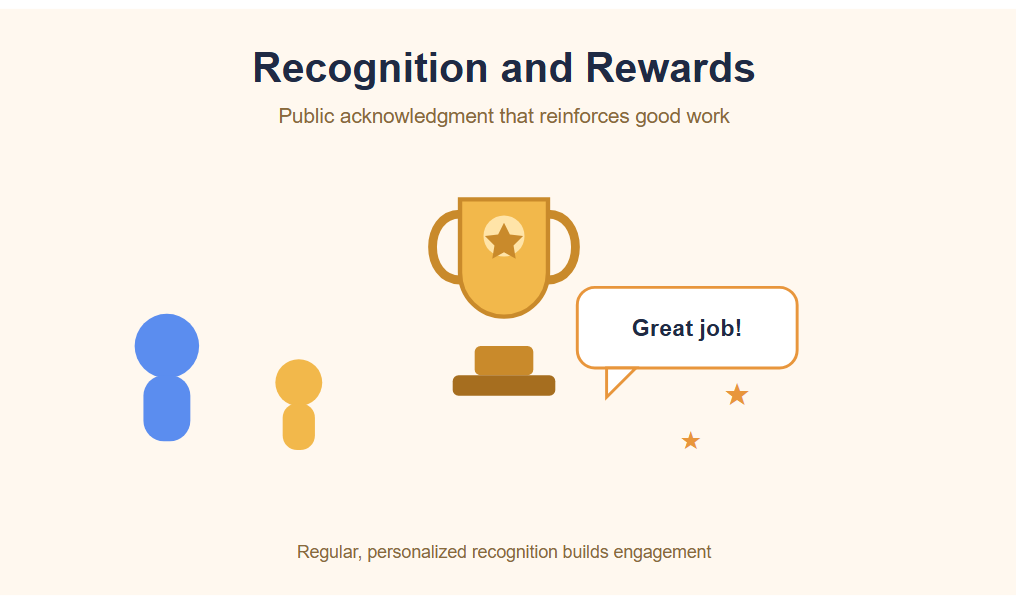
Recognition and Rewards
Reward tools that facilitate the public acknowledgment of good performance by employees and managers, a practice that has been proven to increase engagement especially when it is regular and personalized.
Anonymous Feedback Channels
Enabling the workers to give their opinions anonymously, thus enabling any critical opinion to get through the management that might have been held back due to various reasons.
Action Planning and Tracking
Advanced platforms do not only give you survey data, but they also enable the manager to create an action plan based on that feedback.
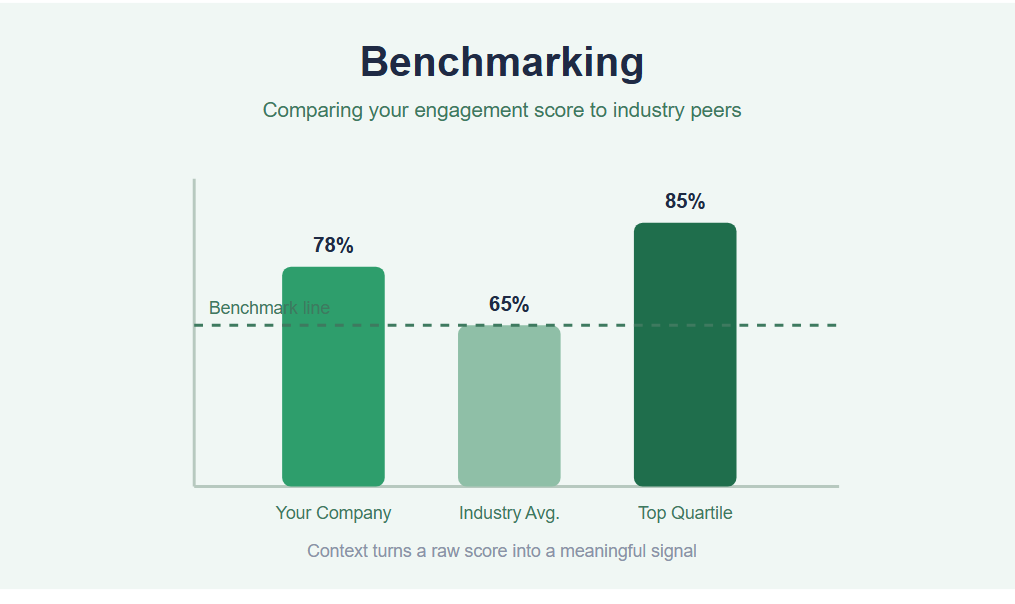
Benchmarking
Measuring your employee engagement score against benchmarking from similar organizations within the same industry or on the same platform, thereby providing the context behind your engagement score.
Popular Platforms and Their Emphasis
Culture Amp and Glint
Culture Amp and Glint specialize in complete survey analysis and design, often preferred by large corporations because of their diagnostic capabilities.
15Five and Lattice
15Five and Lattice integrate employee engagement surveys with continuous performance feedback systems, which is part of the current trend in bringing these two HR functions together.
Officevibe and TINYpulse
Officevibe and TINYpulse prioritize conducting frequent surveys called pulses that are easy to administer, unlike the more complex surveys.
Choosing Employee Engagement Software
1. Decide What Cadence Fits Your Organization
Continuous pulse surveys work well for organizations that need an ongoing real-time signal; comprehensive surveys that are done less frequently work better for organizations that require more in-depth periodic diagnoses.
2. Evaluate Action-Planning Features, Not Just Reporting
A survey platform that provides a score without offering any guidance on what managers can do with the score is not going to be very useful at all.
3. Consider Anonymity and Trust
For employees to feel safe, there must be a clear sense that anonymity will be guaranteed when it is intended.
4. Check Integration with Your Broader HR Systems
Engagement information linked to your HRMS may be useful to find correlations between engagement trends and other workforce information, such as turnover or performance patterns.
Common Mistakes with Employee Engagement Software
- Conducting surveys frequently without using the results or not doing anything about them, which destroys trust and reduces participation rates in the future.
- Conducting too many surveys, thus creating fatigue that results in poor-quality quick responses.
- Considering an increasing or decreasing score is self-explanatory and not exploring the underlying reasons.
- Concerning only the overall company-wide score and not taking into account differences between particular teams/departments.
Bottom Line
Employee engagement technology provides organizations with a methodical means of tracking an issue that can easily be overlooked until it rears its head in the form of employee attrition.
It is not the technology itself, but rather the willingness of the organization’s leaders to take action based upon the information provided through that technology that will provide the value. Reporting of scores without taking the next step does little good, regardless of the sophistication of the analytics behind the report.