HR Compliance: What It Actually Covers and Why It’s Easy to Get Wrong

Introduction
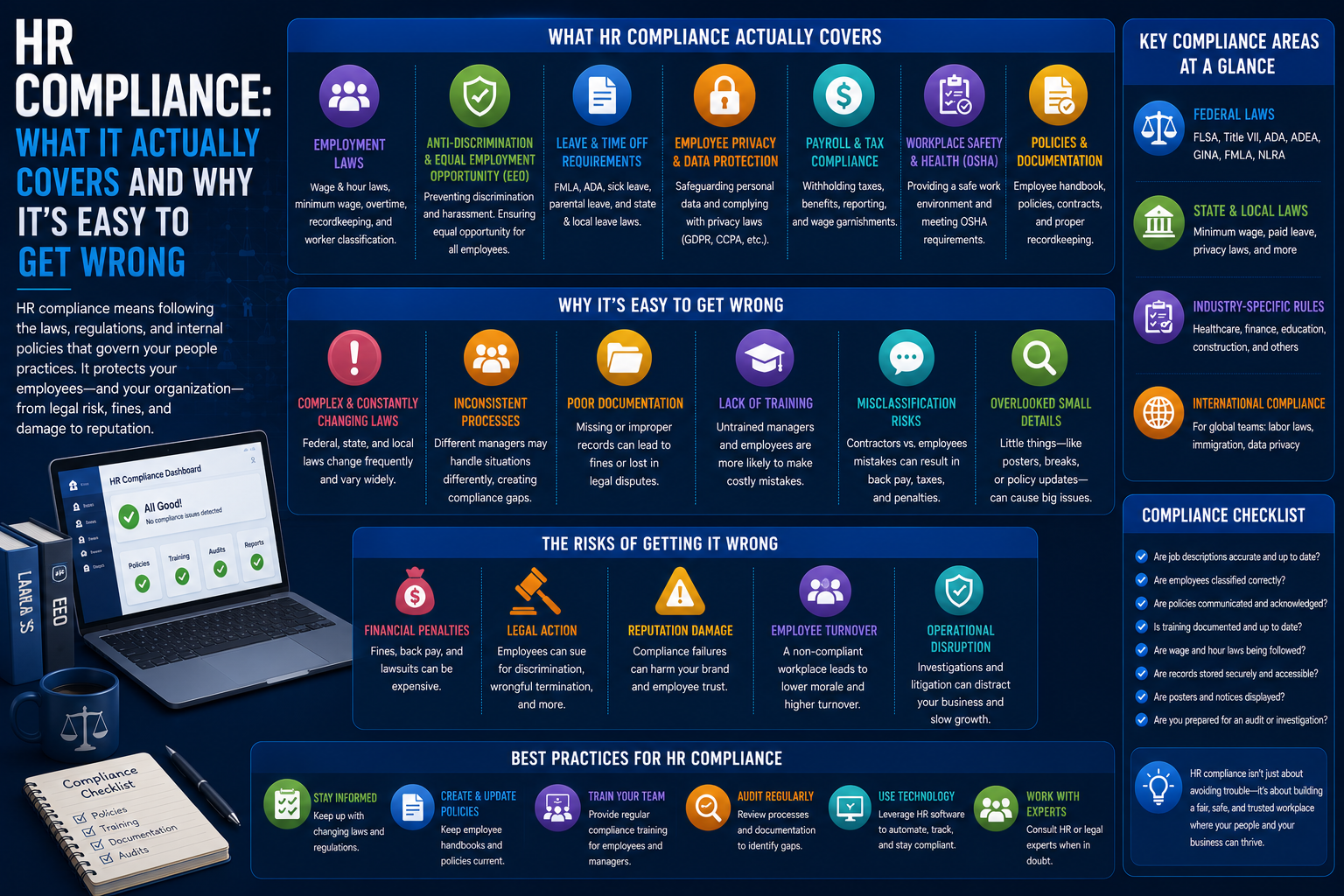
HR compliance involves adhering to the various employment-related laws and regulations, ranging from minimum wages and hours worked to equal opportunity legislation to workplace health and safety.
This might seem fairly simple; however, the number of overlapping laws at the national, state, and local level makes it an area that businesses frequently make expensive mistakes in.
Why HR Compliance Is More Complex Than It Appears
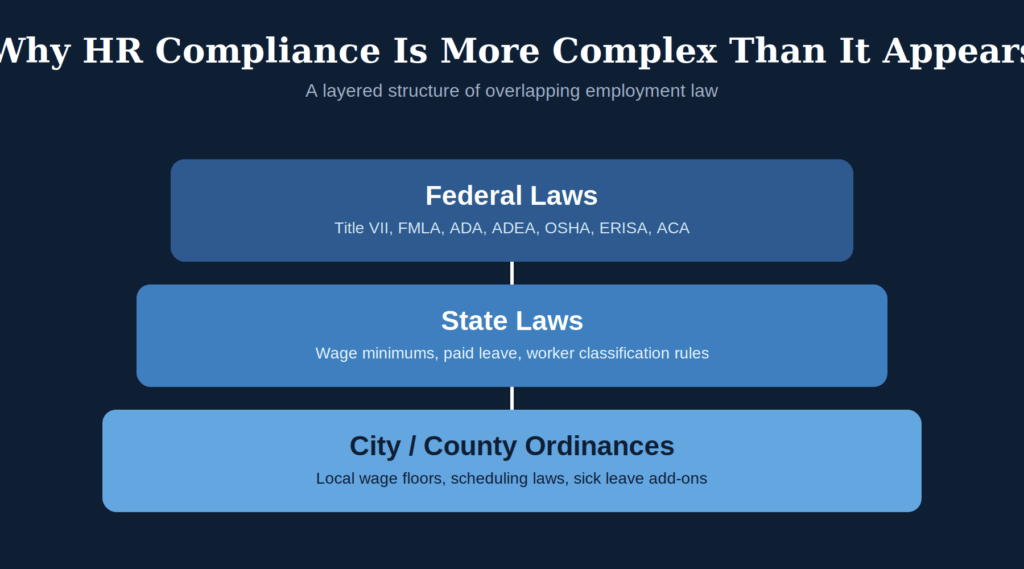
Employment law is not a single body of law but rather a composite structure made up of the following:
- Federal laws
- State laws
- City/county ordinances
Several state and city/county laws place other obligations on employers than what is required by the federal laws.
For a business that operates in several states, compliance needs to be done on an individual basis in each state because employment laws differ widely in these jurisdictions.
Major Areas of HR Compliance
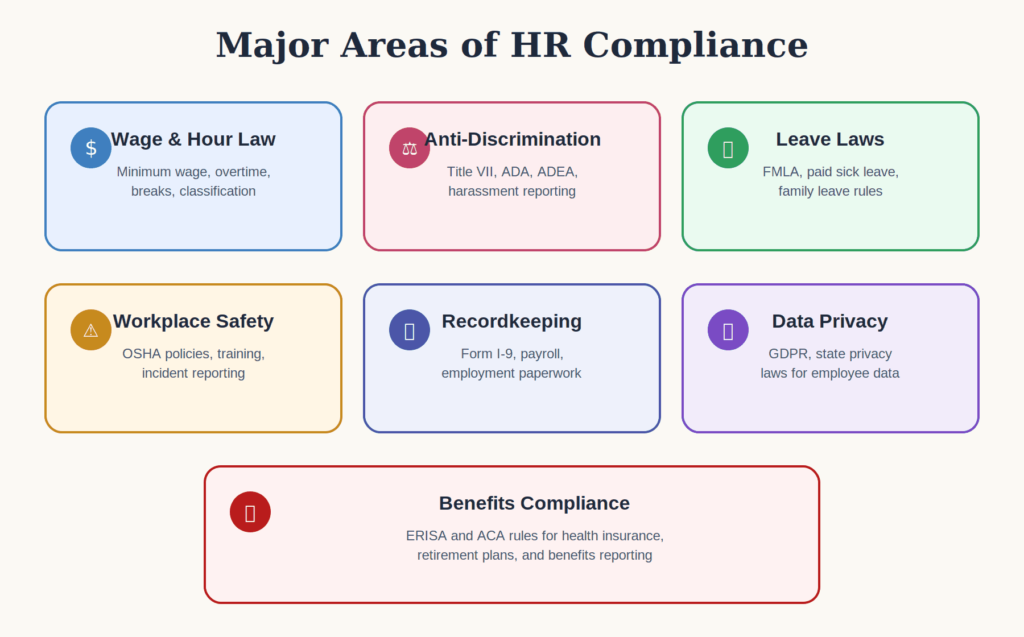
Wage and Hour Law
Rules governing:
- Minimum wage
- Eligibility for overtime
- Meal and rest breaks
- Classification of employee (exempt/non-exempt)
- Classification of worker (employee/independent contractor)
Misclassification is one of the most frequent and costly compliance errors because it may result in:
- Back pay
- Penalties
- Taxation
Anti-Discrimination and Harassment Law
Federal laws like Title VII, ADA, and ADEA, as well as more stringent state and local laws, prevent discrimination by protecting employees from discrimination against their protected classes, requiring employers to adhere to certain procedures for processing harassment complaints.
Compliance Areas Include
- Equal employment opportunities
- Anti-discrimination regulations
- Reporting of harassment
- Investigations in the workplace
Leave Laws
Compliance consists of not only mandatory provisions of federal law such as FMLA but also the increasing amount of state and municipal paid sick leave laws and family leave laws.
Those laws usually vary in many respects including:
- Eligibility criteria
- Leave period
- Documentation procedures
Workplace Safety
Employer responsibilities under OSHA include the provision of safe workplaces by:
- Safety policies
- Training of employees
- Reporting of incidents
The requirements differ depending on the industry and the hazard.
Recordkeeping Requirements
Several labor laws require companies to maintain certain documents, including:
- Form I-9
- Payroll documentation
- Incident reports for safety reasons
- Employment paperwork
Such documents have to be maintained for a specific time period.
Benefits Compliance
Requirements for handling and reporting employee benefits are set out by laws like ERISA and the ACA, especially for larger employers.
Benefits Compliance Includes
- Administration of health insurance
- Retirement plans
- Reporting of benefits
- Documentation
Data Privacy
Given the highly sensitive nature of employee information in HR systems, firms have to adhere to data privacy laws like:
- GDPR (for EU residents)
- US State Data Privacy Laws
Data Privacy Laws regulate employee data that is:
- Collected
- Stored
- Processed
- Protected
Why Compliance Failures Happen Even at Well-Intentioned Companies
Failure to comply seldom happens as an act of violating rules.
In fact, noncompliance may happen because:
- The laws regarding employment have been modified, but there are no updates made on company policy.
- A company ventures into another state without knowing what employment laws govern that place.
- Managers make decisions, whether scheduling or employee classification, without considering their legal implications.
How Organizations Manage HR Compliance
Dedicated Compliance Expertise
Larger companies may have specialized HR compliance professionals on board or work closely with employment lawyers, especially in cases where they operate in multiple states and countries.
HR Software with Built-In Compliance Support
Several HR software solutions have compliance modules that enable companies to:
- Identify possible misclassifications of employees
- Implement location-based wage and leave laws
- Maintain employment records
- Perform compliance reporting
Regular Policy Audits
Organizations conduct periodic reviews of:
- Employee manuals
- Classification rulings
- Leave policies
- Workplace procedures
Periodic audits enable organizations to make sure that their policies are consistent with the latest employment laws.
External Consultants or PEOs
Small organizations tend to work with:
- Professional Employer Organizations (PEOs)
- HR consultants
These professionals assist organizations in managing their compliance needs.
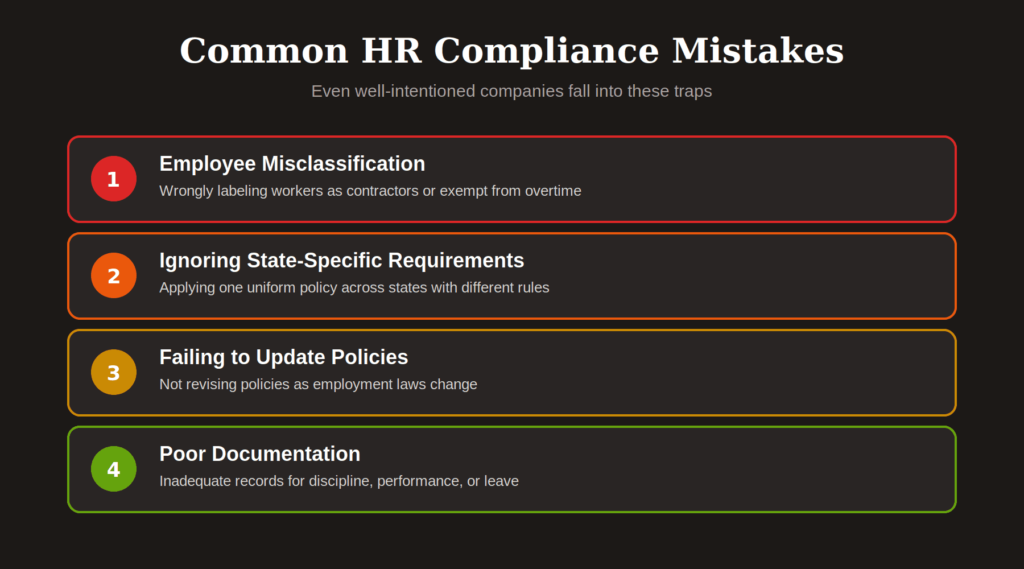
Common HR Compliance Mistakes
Employee Misclassification
Classifying employees as independent contractors and misclassifying employees as being exempt from overtime pay requirements when not legally entitled to such a classification.
Ignoring State-Specific Requirements
Using one uniform policy throughout the company without regard for state or local legislation that might require something else.
Failing to Update Policies
Failure to review employment policies based on changes in employment legislation, especially at the state or local level.
Poor Documentation
Inadequate record keeping for:
- Disciplinary action
- Performance concerns
- Leave of absence
Poor record keeping can lead to greater liability risks if there are any disputes.
Bottom Line
Compliance with employment laws is quite diverse and encompasses various types of regulations such as minimum wage and hours, discrimination, leave laws, health and safety, benefits management, record keeping, and employee data privacy.
Considering how often employment laws are updated and differ from one jurisdiction to another, it would be more advantageous for organizations to have compliance expertise combined with an HR system that will automate application and tracking of relevant laws.