Digital Marketing Software: Categories, Use Cases, and How to Choose

Introduction
Digital marketing software means applications that have been created for helping businesses in planning, performing, automating and measuring their marketing efforts on the digital medium. Even though there is a close connection between “digital marketing software” and “digital marketing tools,” the former implies paid and usually subscription-based platforms, not free tools.
This article aims at offering a thorough overview of the major types of digital marketing software, as well as the way of choosing it by companies.
What Digital Marketing Software Covers
Software programs for digital marketing come in various forms, from software for controlling a particular channel, like email marketing, to more comprehensive programs that integrate different types of marketing functions.
Businesses typically employ more than one platform, which means that the use of many software platforms is more common among companies.
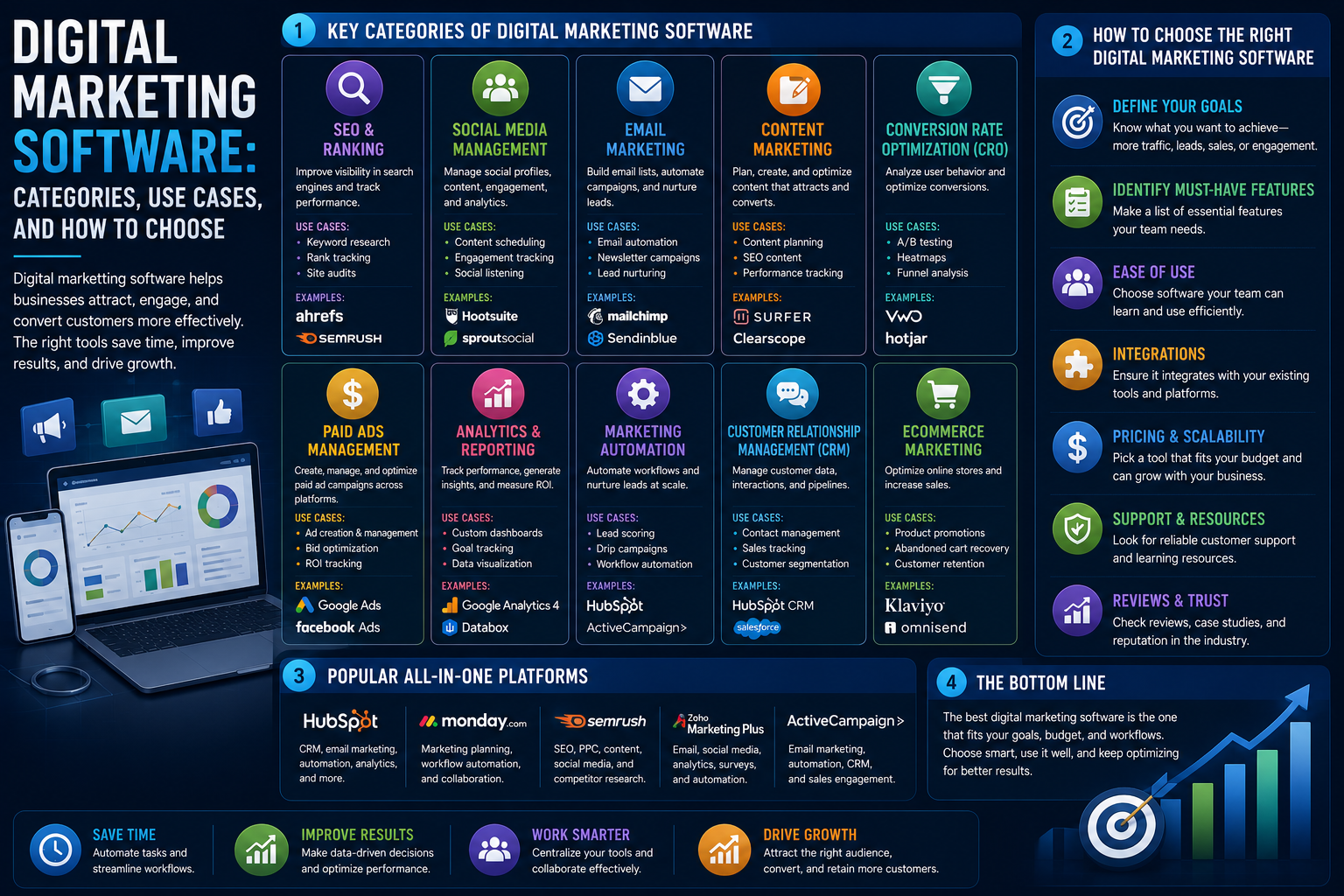
Main Categories of Digital Marketing Software
Marketing Automation Platforms
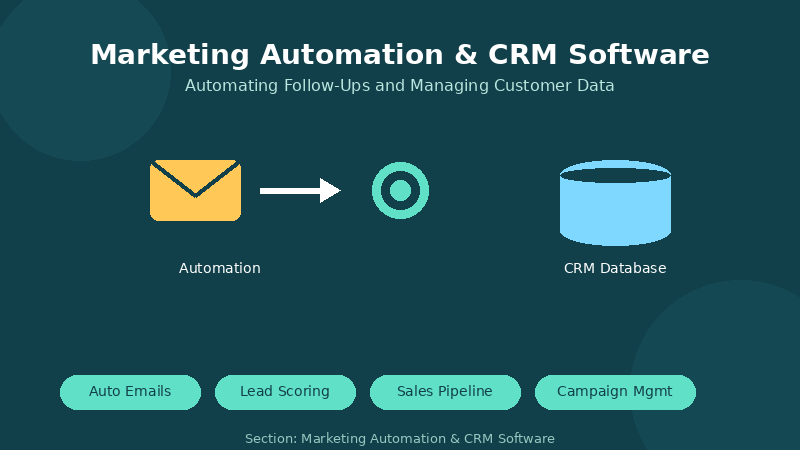
Automation software that can be used to perform tasks related to marketing that involve repetitive actions like following up with users through emails and lead scoring according to their engagement. Some examples of such automation software include HubSpot and Marketo.
Marketing Automation Features
- Automatic emails
- Lead scoring
- Automation based on behavior
- Integration with CRM system
Customer Relationship Management (CRM) Software
Although CRM systems are predominantly used for sales, they are related to marketing applications, as CRM stores customer information that can be used for marketing purposes and for tracking the customer’s way through the sales process.
CRM Functions
- Customer Data Management
- Lead Management
- Sales Pipeline Management
- Marketing Campaign Management
SEO Software
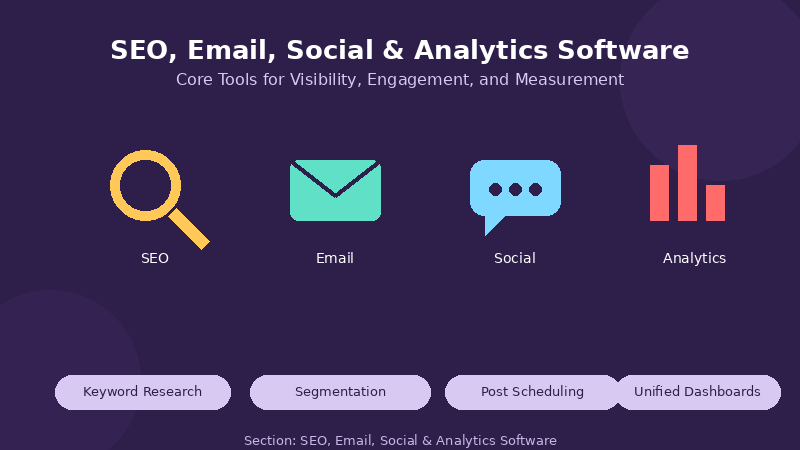
Used for keyword research, ranking monitoring, website audits, and competitor analysis. This class encompasses solutions like Ahrefs and Semrush, which bundle several SEO-related functions under one monthly fee.
SEO Software Capabilities
- Keywords Research
- Ranks Tracking
- SEO Technical Audits
- Competitor Analysis
Email Marketing Software
These are used for designing, sending, and automating email campaigns, segmentation of subscribers, and calculating engagement indicators like open rate and CTR.
Email Marketing Features
- Creation of email
- Automation of campaigns
- Segmentation of subscribers
- Monitoring of open rate
- Analysis of click through rate
Social Media Management Software
Used for scheduling of posts in multiple social media sites and monitoring their engagement and mentions.
Social Media Features
- Following schedule
- Monitor engagement
- Brand mention monitoring
- Performance reporting
Advertising Management Software
Tools used in the administration of paid campaigns in one or more advertising networks, which could involve the use of automatic bidding, budget pacing, and cross-platform reporting.
Advertising Management Functions
- Campaign management
- Automatic bidding
- Budget pacing
- Cross-platform reporting
Analytics and Data Visualization Software
Used for monitoring the effectiveness of websites and marketing campaigns, although some tools focus exclusively on web analytics, whereas others consolidate information from all marketing channels into one dashboard.
Analytics Features
- Website analytics
- Campaign effectiveness
- Data visualization
- Unified dashboards
Content Management Systems (CMS)
The software that is used for constructing, publishing, and organizing website content, thereby providing the core structure upon which most of a company’s digital marketing efforts, including SEO and content marketing, rest.
CMS Capabilities
- Website management
- Content publishing
- Content organization
- SEO support
Landing Page and Conversion Optimization Software
This tool is utilized to construct independent landing pages as well as conduct A/B testing, usually applied specifically to paid marketing campaigns that necessitate an independent landing page from the primary website of the business.
Conversion Optimization Features
- Landing page creation
- A/B testing
- Conversion tracking
- User experience optimization
How Businesses Typically Select Digital Marketing Software
1. Functional Fit
If the software solves a particular problem or requirement like email automation or SEO tracking and not just because it is popular or comes fully loaded.
2. Integration Capability
If the software integrates well with the existing set of tools, since lack of integration of different platforms is a major cause of duplicity of work and fragmented data.
3. Scalability
The ability of the software to scale up together with the organization, especially for a growing business that might soon outgrow the restrictions of a cheaper version.
4. Ease of Use
As any complex and hard-to-use software often leads to underused capabilities and long training periods for the staff.
5. Total Cost of Ownership
Not only the costs incurred by subscription services but also the cost involved in setting up, training, and managing.
All-in-One Platforms Versus Best-of-Breed Software
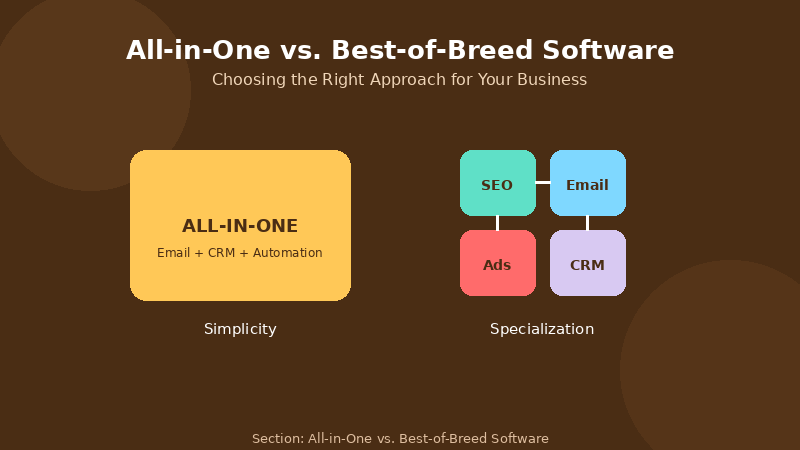
Some organizations want an all-round marketing software solution where different functionalities like email, CRM, and automation are integrated into one, and ease of use, among other considerations, is more important than specialization in one functionality.
Some organizations choose the best tool for every particular functionality and integrate them with each other using various integrations.
Which option is better would usually depend on:
- Number of employees
- Technical ability of the organization to do integrations
- Depth of needs of the organization in every functionality
Common Challenges When Adopting Digital Marketing Software
Tool Sprawl
Having too many software subscriptions that the team is unable to manage effectively resulting in wasted licenses.
Data Silos
Lack of proper integration of the software platforms will lead to scattering of the marketing data making it difficult for the team to analyze it properly.
Underinvestment in Training
This is because the quality of software selected will yield little benefits when the team lacks proper skills to fully utilize its features.
Choosing Based on Features Alone
Relying mainly on a lengthy list of features offered by software instead of considering the extent to which those features address the needs of the business’ marketing operations.
Bottom Line
There is a large variety of digital marketing software including marketing automation software, CRM systems, SEO solutions, social media, email, and analytics software each tackling a certain part of the process.
The choice will usually involve understanding the functional requirements, integrating between the different programs, and not making the mistake of acquiring too much software that cannot be utilized.