ZeroGPT AI Detector: What It Is and How It Works

Introduction
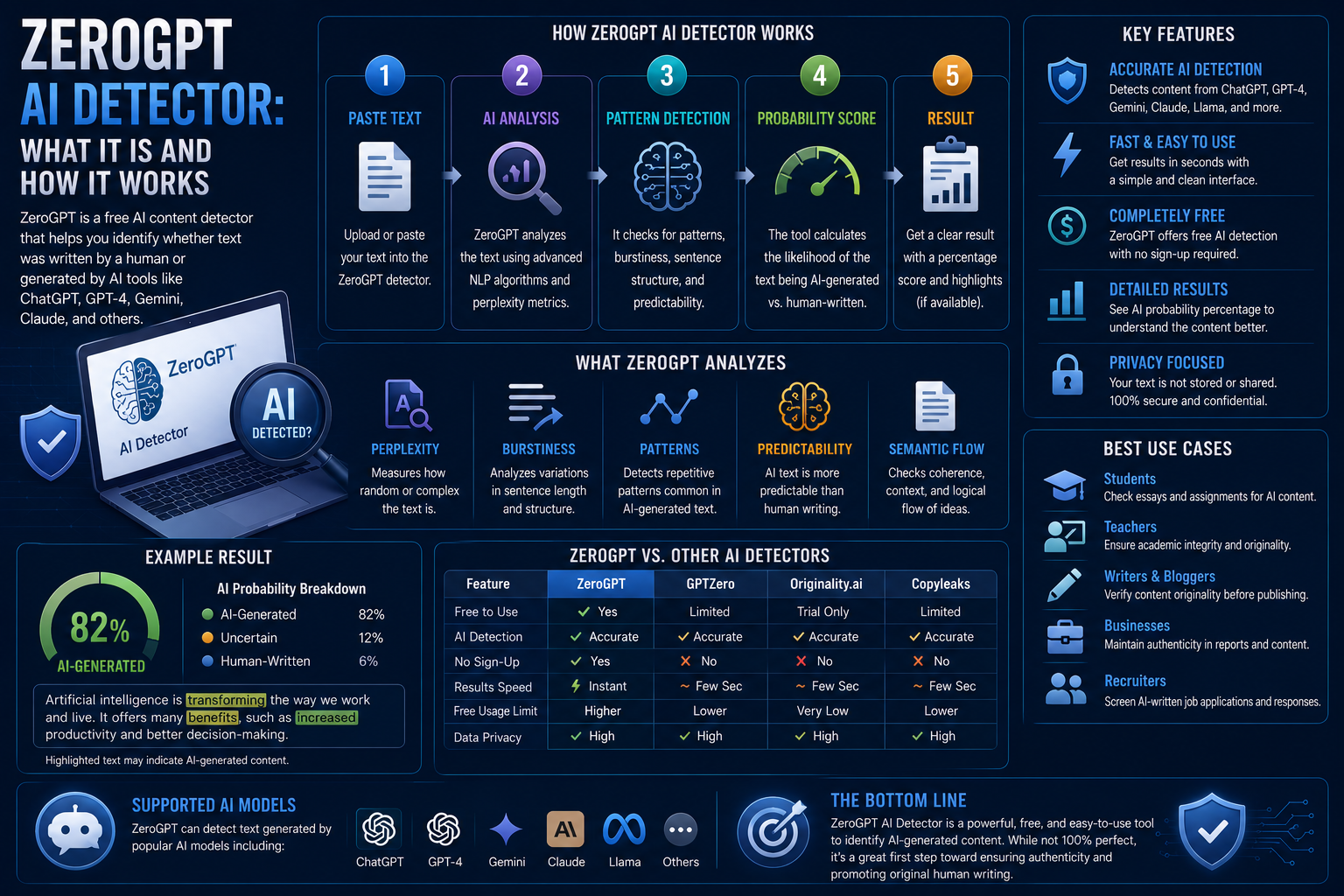
ZeroGPT is an AI-based text detector which provides a score percentage based on the analysis of text submitted by the user indicating the amount of text that is generated using AI technology. In this article, we will provide a complete analysis of the ZeroGPT AI detector, along with its functioning, effectiveness, and its comparison with similar tools.
What ZeroGPT Is
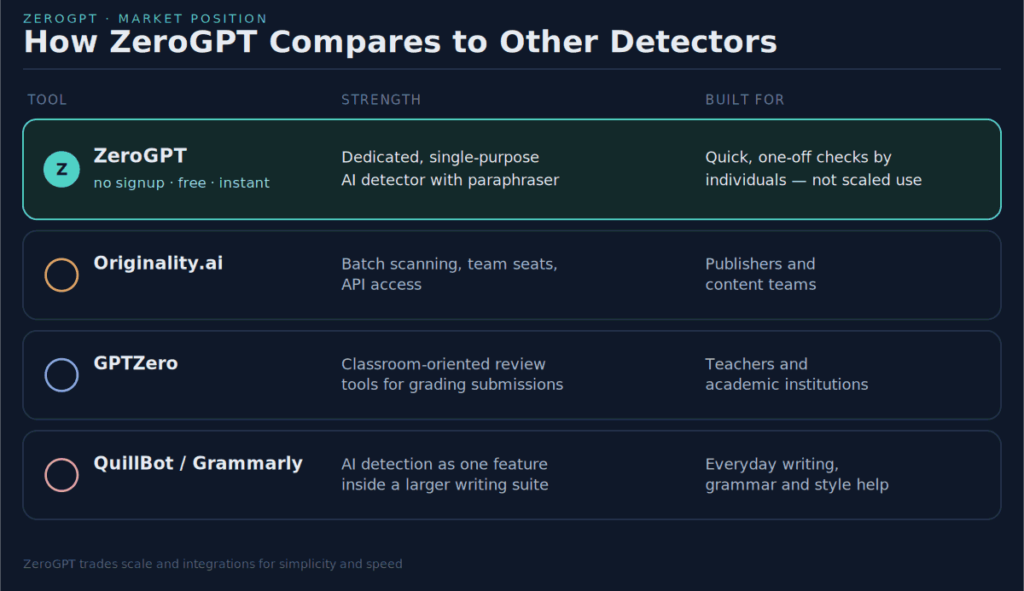
ZeroGPT is a single AI detection tool that can be accessed online through its website without needing to sign up for an account. The tool differentiates itself from other platforms such as QuillBot and Grammarly in terms of the features that it offers to users. In contrast to Quillbot or Grammarly, ZeroGPT focuses on AI detection as its main tool and also has some adjacent tools including a paraphraser and plagiarism checker.
How ZeroGPT Works
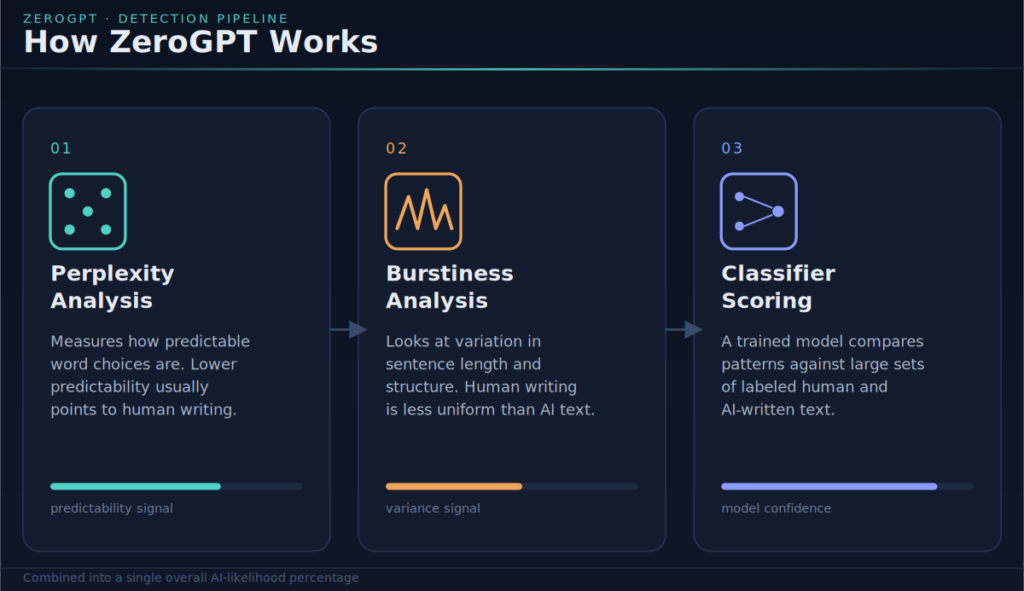
ZeroGPT is based on the use of similar techniques that are used in the vast majority of AI text detectors:
1. Perplexity Analysis
Assessment of predictability of word selection in a text sample, whereby less predictability is typical of texts written by humans.
2. Burstiness Analysis
Analysis of sentence length and sentence structure variations because human-produced text is not as consistent as AI-produced text.
3. Classifier Scoring
Using a pre-trained machine learning model that can differentiate between human and AI patterns in text based on huge amounts of annotated training data.
The software provides an overall score expressed in percentage along with visual analysis, showing the particular sentences or pieces of text that have contributed most to the AI likelihood score.
ZeroGPT’s Accuracy in Practice
It is very typical for results produced by ZeroGPT independently and by users who run the same text through the tool several times to vary greatly. Like most of the available detectors, ZeroGPT does not work so well with:
- Texts that were altered in any way after they were written by an AI model.
- Short texts that do not provide enough words for calculating the statistical significance of perplexity and burstiness.
- Writings produced by non-native English speakers, which may have similar structures to AI-produced texts and therefore generate false positive results.
The problem with ZeroGPT is that it has not released any data about its accuracy, which has become a standard drawback of almost all detectors in the market. Thus, its results are to be considered estimates rather than facts.
How ZeroGPT Compares to Other Detectors
Against Originality.ai
Originality.ai is mainly designed for publishers and content teams as it has batch scan capability, team account and API integration. Whereas ZeroGPT is designed for individual one-time scans as it does not provide the same level of functionality as Originality.ai.
Against GPTZero
While GPTZero has made itself more towards academic usage with functionalities that are meant for teachers to evaluate the submissions of their students, ZeroGPT is a more versatile platform that lacks such functionalities.
Against QuillBot and Grammarly
While QuillBot and Grammarly have an AI detector as part of their larger writing assistance service, ZeroGPT provides a specialized and dedicated AI detector that is not a part of any other writing assistance system except for its own unique set of services.
Why ZeroGPT Is Frequently Searched
The high popularity of ZeroGPT can be attributed, among other factors, to the program’s costless, rapid, and convenient use without registration, making it a preferred choice for students and individuals looking to conduct an instant check without using any paid services. Moreover, the tool enjoys high recognition of its brand within the industry, with its name acting as a sort of colloquialism in discussing AI detection.
Who Uses ZeroGPT
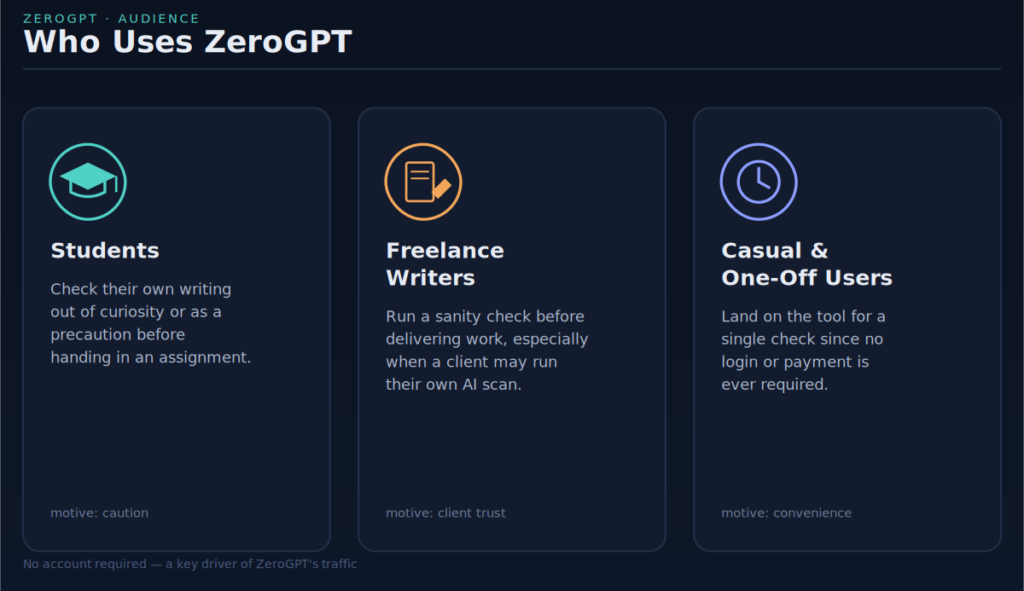
Students
Usually employed by writers to analyze their writing for AI impact unofficially, whether out of curiosity regarding the extent of that influence or as a precaution before submitting.
Freelance Writers
Employed as a means of sanity check before handing in work to a client, especially in cases where the client might conduct his/her own AI detection analysis.
Casual and One-Off Users
Because no login or payments are necessary to use the service, ZeroGPT receives much of its traffic from people who just use it once and not as part of any regular routine.
Limitations to Keep in Mind
Like all other AI detection tools out there, ZeroGPT is not capable of delivering an absolutely precise result either; in addition, it can give both false positive and false negative results. The tool’s ease of use and the fact that it does not require users to have accounts make it good for casual usage, but not suitable for professional purposes.
Bottom Line
ZeroGPT is an open-source AI text detector which is more appropriate for occasional, single user checks, and not for high scale professional checks. This tool uses a similar algorithm as the rest of its competitors when it comes to how it detects AI generated content, namely the perplexity and burstiness techniques. This tool has the same drawbacks that other similar tools have, mainly low accuracy in detecting paraphrased AI text.