GRC Solution: What It Is and How to Choose One

Introduction
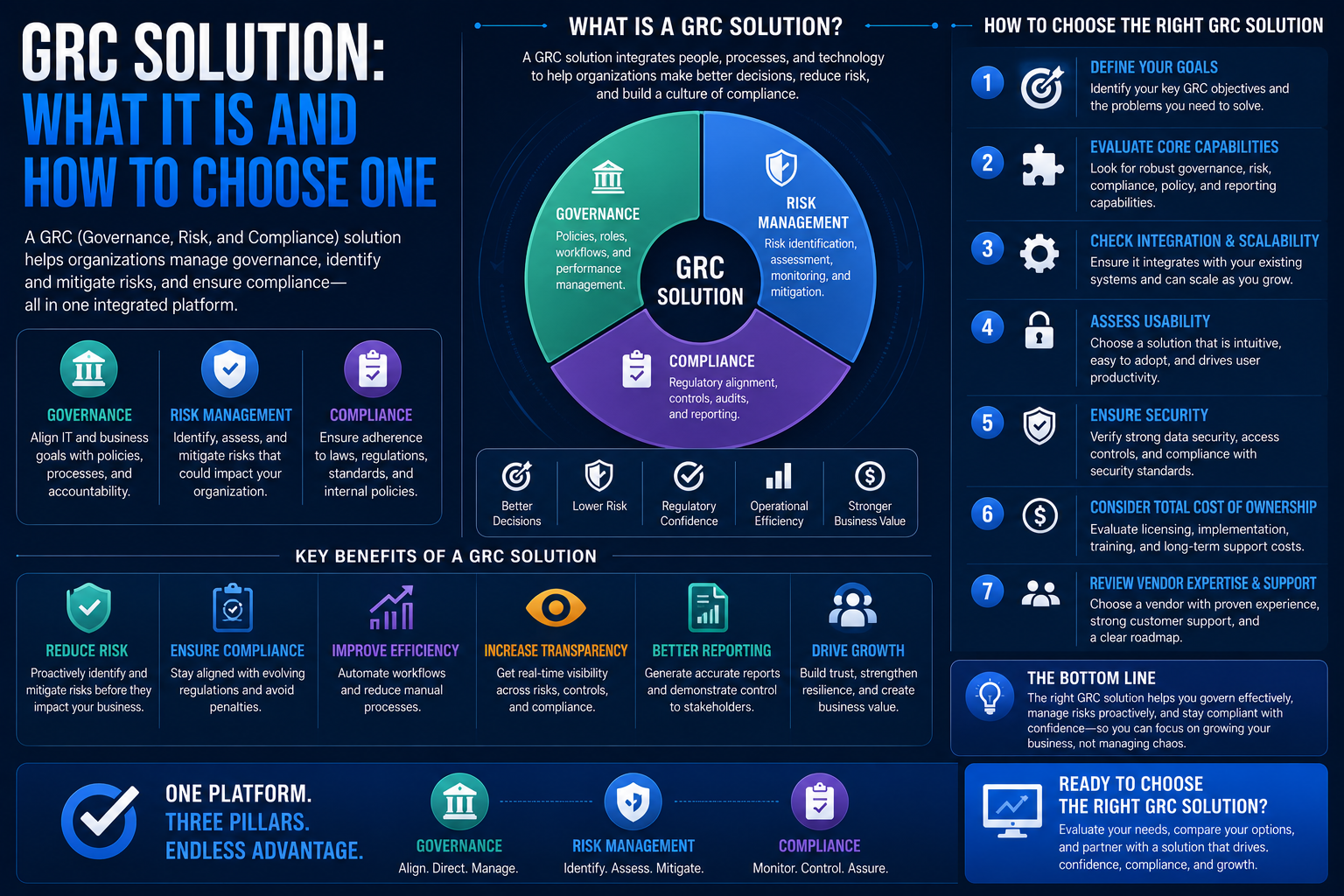
What I mean by GRC solution is any process, software, framework, or combination thereof that is utilized within an organization to ensure that GRC management is performed holistically, rather than in separate areas. Below is what this really entails and how you should be thinking about implementing it in your organization.
Why Organizations Look for a GRC Solution
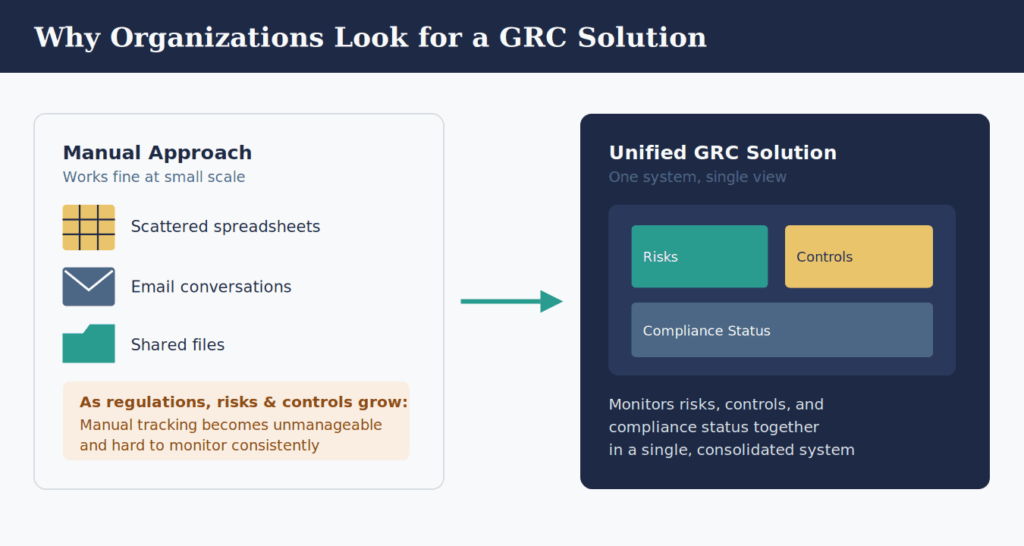
Organizations generally initiate the process of governance, risk and compliance management with the manual approach, which may include use of spreadsheets, shared files and e-mail conversations. Such an approach functions quite well when used on a small scale. As the number of regulatory requirements, risk categories and controls increases, it becomes difficult to manage the process through such manual means.
A GRC solution, which refers to a GRC software application at this level, is meant for consolidating this effort into a single process, which can monitor risks, controls and compliance status altogether in a single system.
What a GRC Solution Typically Needs to Do
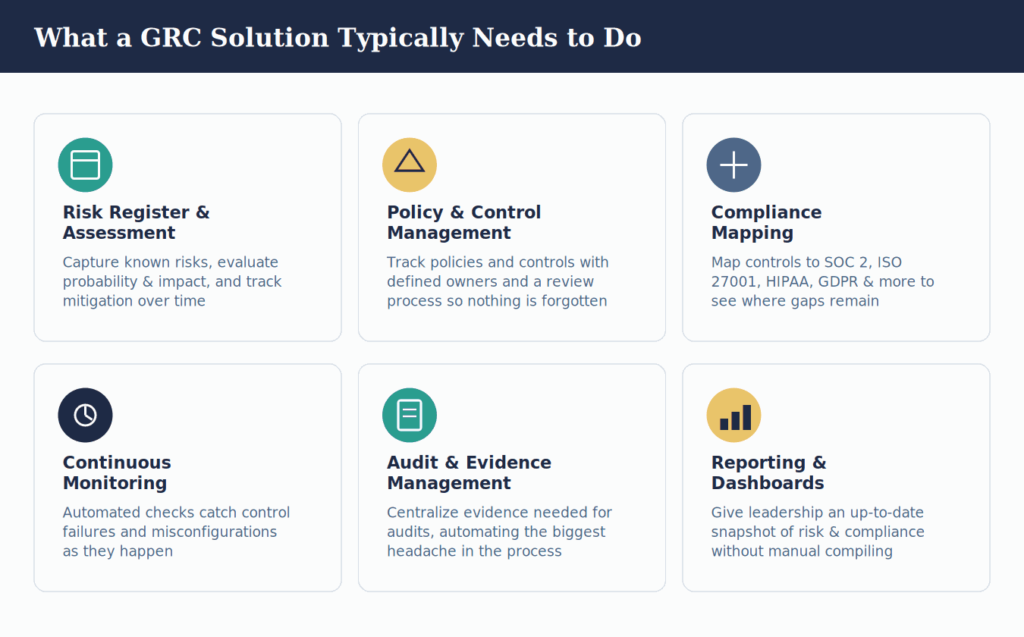
Risk Register and Assessment
A key location to capture known risks, evaluate their probability and impacts, and monitor the state of mitigation over time, not just risk assessments floating around in separate spreadsheets on different teams.
Policy and Control Management
Keeping track of policies and the controls that are used to implement those policies, including having a defined owner and review process to ensure no controls are forgotten.
Compliance Mapping
Make sure you understand how each of your controls meets your different compliance requirements (SOC 2, ISO 27001, HIPAA, GDPR, and others similar), and whether or not you meet, partially meet, or fail to meet any particular requirement.
Continuous Monitoring
With cybersecurity-based GRC programs, this is particularly important since automated monitoring can detect control failures and misconfigurations as soon as they occur, instead of waiting months until an auditor finds the problem.
Audit and Evidence Management
Centralization of evidence required for proving compliance during the audit process because gathering evidence is often one of the biggest headaches that GRC systems try to solve through automation.
Reporting and Dashboards
Providing management and the board with an up-to-date snapshot of risk and compliance status without having to compile a full report manually each time.
Types of GRC Solutions
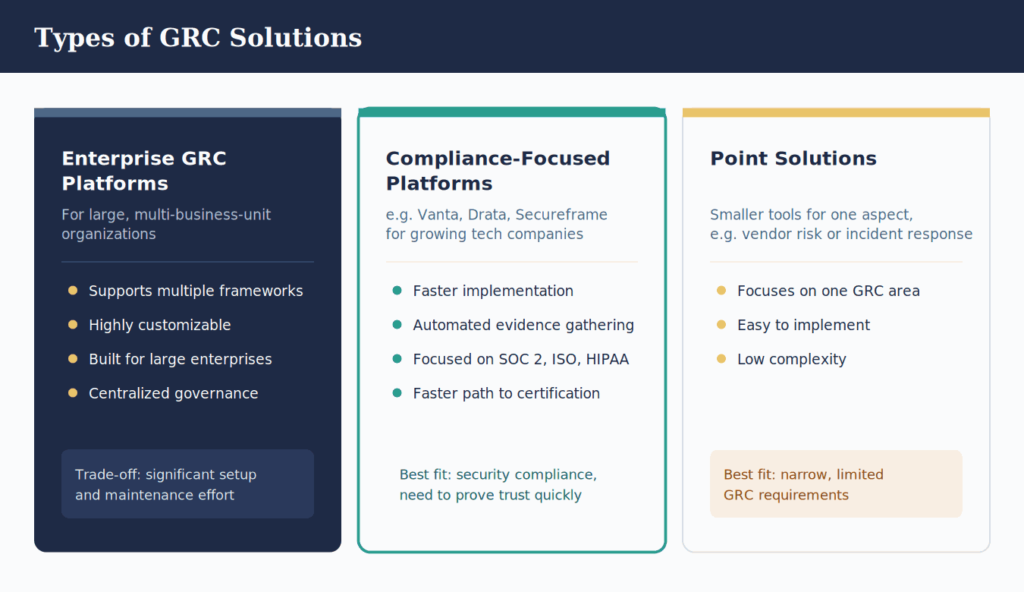
Enterprise GRC Platforms
Enterprise-wide compliance management systems are designed for enterprises and involve complicated compliance management procedures involving several business units. Such systems are highly flexible but require much effort to be set up and maintained.
Key Benefits
- Supports multiple compliance frameworks
- Very customizable
- Designed for large enterprises
- Centralized governance and risk management
Compliance-Focused Platforms
Security compliance framework solutions such as Vanta, Drata, and Secureframe deal only with security-related compliance frameworks (such as SOC 2, ISO 27001, HIPAA) and are commonly used by growing technology companies which must prove their compliance to clients rapidly, often using automated collection of much evidence from cloud platforms and internal systems.
Advantages
- Implementation at a faster rate
- Automated gathering of evidence
- Compliance with security standards
- Facilitates quick certification process
Point Solutions
There are some companies that rely on smaller solutions focused on particular aspects of GRC, vendor risk management solution, policy management solution, incident response solution instead of a single solution, especially if the GRC requirements of the company are limited to one aspect.
Why Choose Point Solutions
- Focusing on particular aspect of GRC
- Easy implementation process
- Low level of complexity
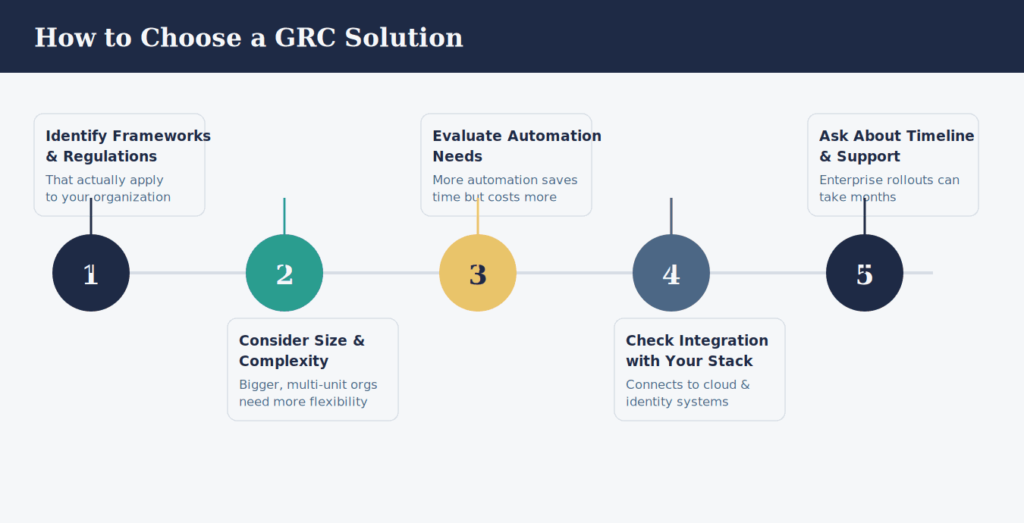
How to Choose a GRC Solution
1. Identify Which Frameworks and Regulations Actually Apply to You
An automated solution that revolves around SOC 2 and ISO 27001 will not be suitable for an organization where the main concern is financial services compliance, and the reverse can also be true.
2. Consider Your Organization’s Size and Complexity
A bigger company with multiple business units and varying regulatory compliance requirements will require a more customizable platform compared to a medium-sized firm focusing on particular standards.
3. Evaluate How Much Automation You Actually Need
Some platforms allow for automatic evidence collection from cloud computing systems and software-as-a-service applications; some require you to manually upload the data and track it. Automation requires less time spent doing things manually but costs more.
4. Check Integration with Your Existing Tech Stack
A GRC solution which will automatically collect evidence from your cloud computing platform, identity management application, and other core applications cuts down significantly on your time and effort.
5. Ask About Implementation Timeline and Support
It is particularly important to note that GRC solutions for enterprises require months to be properly implemented; be aware of this fact before making any commitments, especially when working toward an impending deadline for an audit.
Common Mistakes When Adopting a GRC Solution
- An excessive complexity of the solution before the company really requires it
- An underestimation of the implementation period and effort, especially if this solution is quite big
- The belief that the solution works all by itself without the necessary process management
- A failure to match the solution with the appropriate framework or regulation
Bottom Line
The GRC solution should be aligned with the true level of complexity and regulation that your business is operating in and not with the most complex solution available in the market. Emerging businesses that are concerned about security compliance are best suited for simpler and more automated solutions, whereas large organizations working within multiple frameworks require an enterprise GRC solution.