Lead Generation Tools: A Practical Breakdown by Category

Introduction
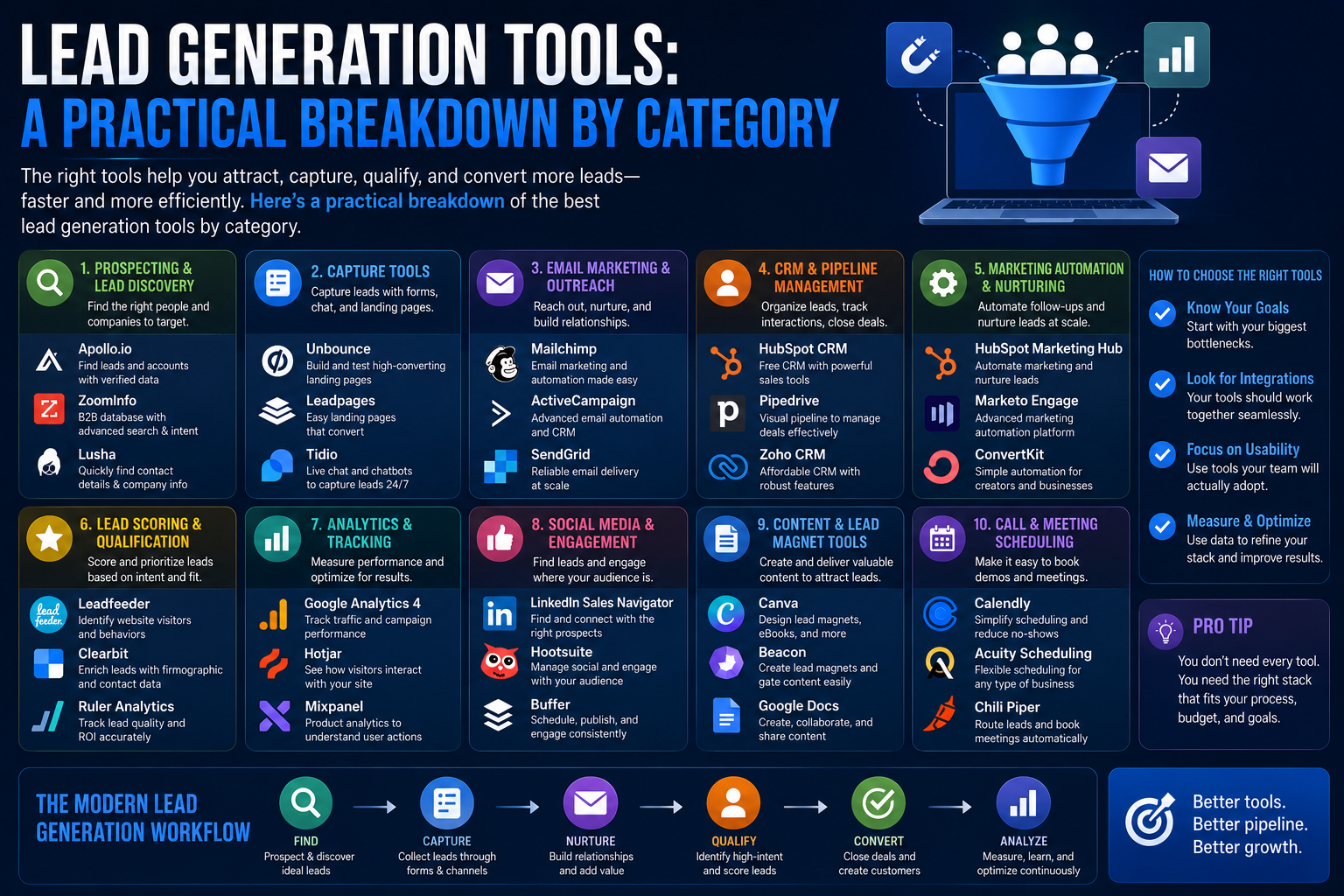
While there is no scarcity of “lead generation tools” that are available for companies to buy and use, most of them are categorized based on their type. Understanding which tool caters to what kind of need makes it simpler to curate an efficient stack for oneself.
Prospecting and Data Enrichment Tools
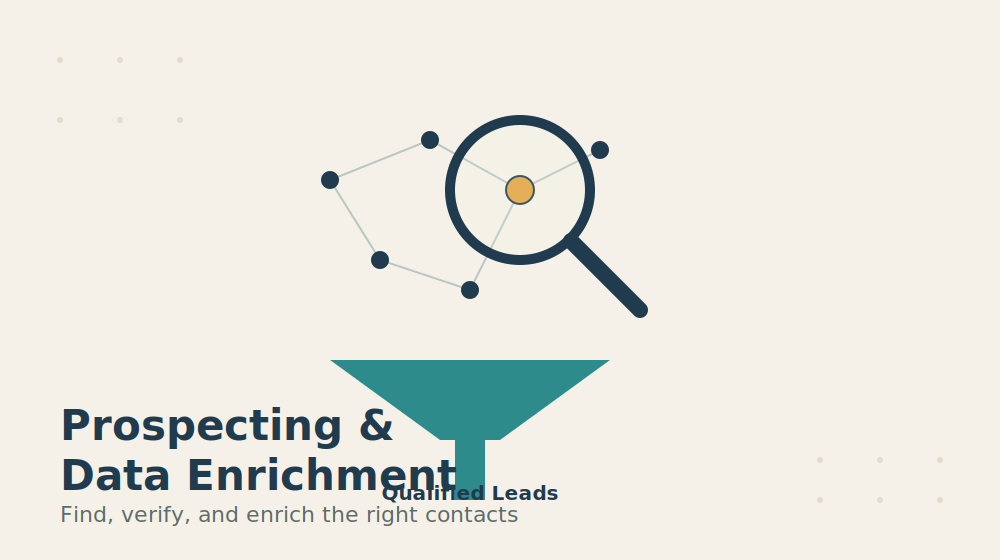
Finding contacts or companies based on your target customer is made possible through Apollo, Zoominfo, and Clay, all of which can even use intent data, such as fundraising, hiring, or technology. This is the first step that people take when they start generating leads.
Key Benefits
- Qualified lead generation
- Enhancement of contact/company information
- Identification of purchasing intent indicators
- Creation of targeted lead lists
Email and Outreach Automation Tools
Immediately, Outreach and Salesloft run multi-stage outreach campaigns using email and even LinkedIn, automating follow-up actions while monitoring the number of opens, replies, and appointments made.
Advantages
- Automation of follow-up sequences
- Monitoring of engagement metrics
- Increase in meeting schedule
- Improvement of sales efficiency
Landing Page and Form Tools
Platforms like Unbounce and Leadpages make it easy to build and A/B test custom landing pages that turn visitors into leads without having to hire developers for each new initiative.
Benefits
- Quick landing page building
- Lead generation optimization
- A/B testing feature
- Simplified web development process
Chatbot and Live Chat Tools
Tools like Drift and Intercom, along with an increasing trend of AI-powered chat functionalities, allow for real-time interactions with visitors on your website through a few questions and direct booking links for qualified visitors.
Why They Matter
- Engage prospects right away
- Automatically qualify leads
- Respond quickly
- Enhance user experience
CRM and Pipeline Management Tools
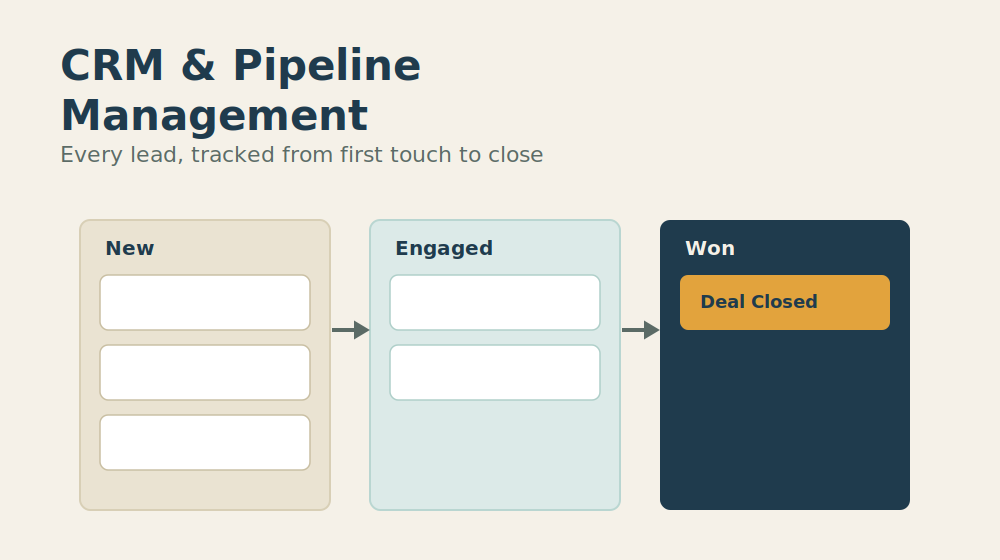
HubSpot, Salesforce, and Pipedrive serve as the system of record for all your leads, with information such as source, history of engagement, and where they currently stand in the pipeline. All other components in your lead generation tech stack should feed into the CRM eventually.
Core Functions
- Lead management
- Pipeline management
- Customer interaction history
- Reporting
SEO and Content Tools
Tools such as Ahrefs and Semrush will assist you in understanding what queries your potential clients use, how your content ranks, and how to take advantage of organic traffic.
Key Advantages
- Keyword research
- Tracking SEO performance
- Content optimization
- Organic lead generation
Social Media and LinkedIn Tools
Software solutions such as Sales Navigator (LinkedIn) can be used to connect and communicate with decision makers, especially in B2B outbound and social selling scenarios.
Benefits
- Decision-maker reach
- B2B prospecting improvement
- Social selling assistance
- Targeted connection building
Webinar and Event Platforms
Zoom, Livestorm, and others make webinars and virtual events possible, which continue to be effective for lead generation due to the fact that simply registering shows genuine interest.
Advantages
- Qualified Lead Generation
- Expertise Display
- Audience Engagement
- High Intent Prospects Capture
Analytics and Attribution Tools
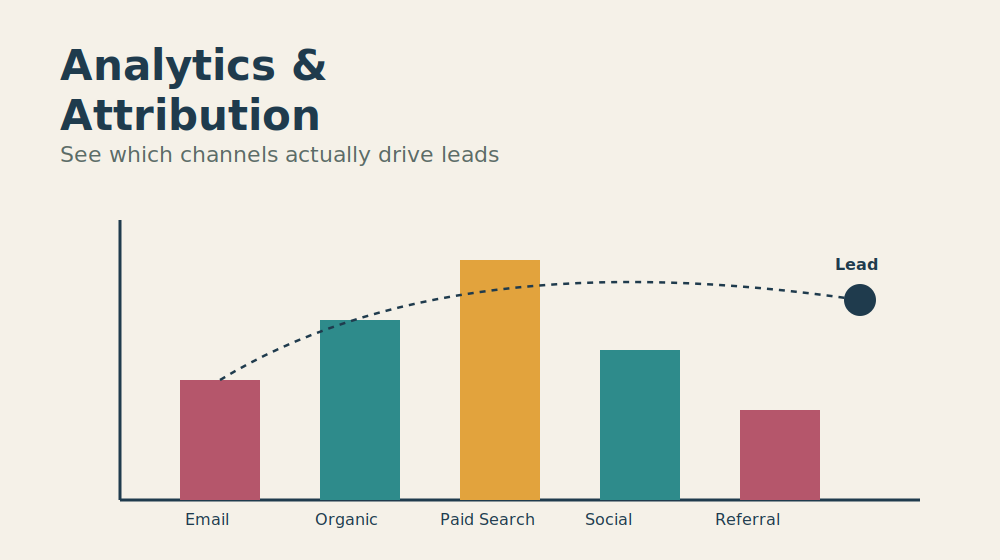
Google Analytics and other specific tools for attribution help to see what kind of channels and campaigns drive your leads (or sales, in case we move farther along the conversion funnel).
Key Benefits
- Evaluate the effectiveness of campaigns
- Lead source tracking
- Revenue attribution analysis
- Marketing budget optimization
How to Choose Tools for Your Specific Situation
This will depend greatly on the business model and sales cycle of your organization. A B2B company that is working with a more complicated sales cycle would need to have good CRM, outreach, and lead scoring solutions. The local service company will probably not need an advanced stack and could get away with just a good call tracking solution, a light CRM and Google Business Profile optimization.
Free and Budget-Friendly Options
Most of the above-mentioned categories have good free versions, HubSpot free CRM, free version of chatbots, and free trials for most of the outreach and prospecting software. If you are working with a small company and trying to establish the process of lead generation, then it would be more beneficial to start with free and affordable tools first.
Common Mistakes When Choosing Lead Gen Tools
- Buying several tools for the same purpose, an extra expense but nothing much to show for it
- Choosing tools that are not compatible with your CRM, creating trouble by requiring manual intervention and reporting
- Getting fooled by the hype of the latest AI tools while basics are still not solved
- Never bothering to see what you have purchased before and allowing your subscriptions to become redundant
Integration Matters More Than Any Single Tool
The actual value of a lead generation tool stack lies in its ability to integrate. Ideally, a lead generated by a landing page should automatically get imported into your CRM system, the correct nurture sequence triggered, and the lead scored, without any manual data input in between each process step. Native integrations work better than those facilitated through middleware, such as Zapier, particularly for volume critical processes.
Bottom Line
Lead generation tools include everything from prospecting to capturing leads and nurturing leads and even analytics. What set of tools to use depends completely on how you sell and how long your sales cycle is. The first step would be to identify the biggest problem area at present, select a solution that works well with your system, and refrain from over-engineering.