Lead Generation Software: The Tools That Actually Power Modern Pipelines

Introduction
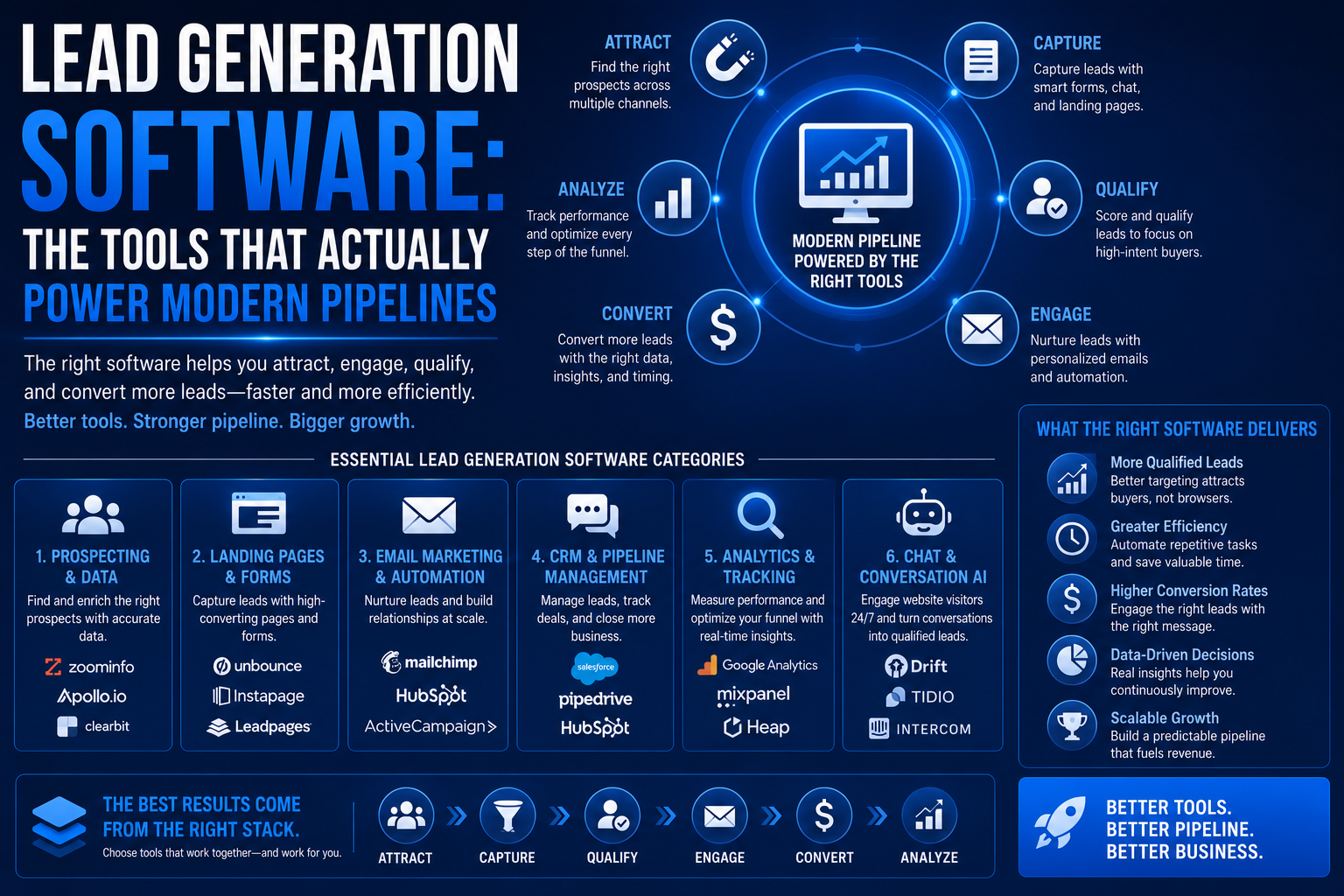
“Lead Generation Software” is not a single tool category, but rather an entire stack that includes all phases from lead generation to analysis. Grasping the functions of each layer will allow you to make sure you don’t end up purchasing overlapping or insufficient tools.
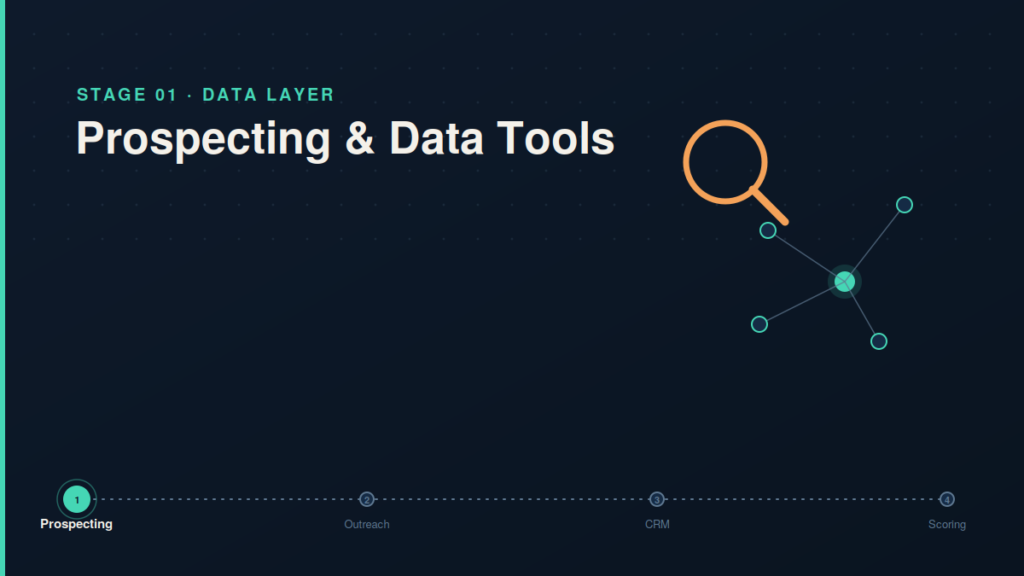
Prospecting and Data Tools
Tools such as Apollo, ZoomInfo, and Clay allow one to identify and enhance information on contacts and companies that fit into the mold of your ideal customer profile, have the correct job roles, company size, industry, technology stack, and intent data such as just having secured a round of funding or hiring personnel. This is because they are the building blocks for outbound prospecting.
Key Benefits
- Quickly locate qualified leads
- Enhance your contact and company data
- Detect buying intent signals
- Generate accurate outbound lists
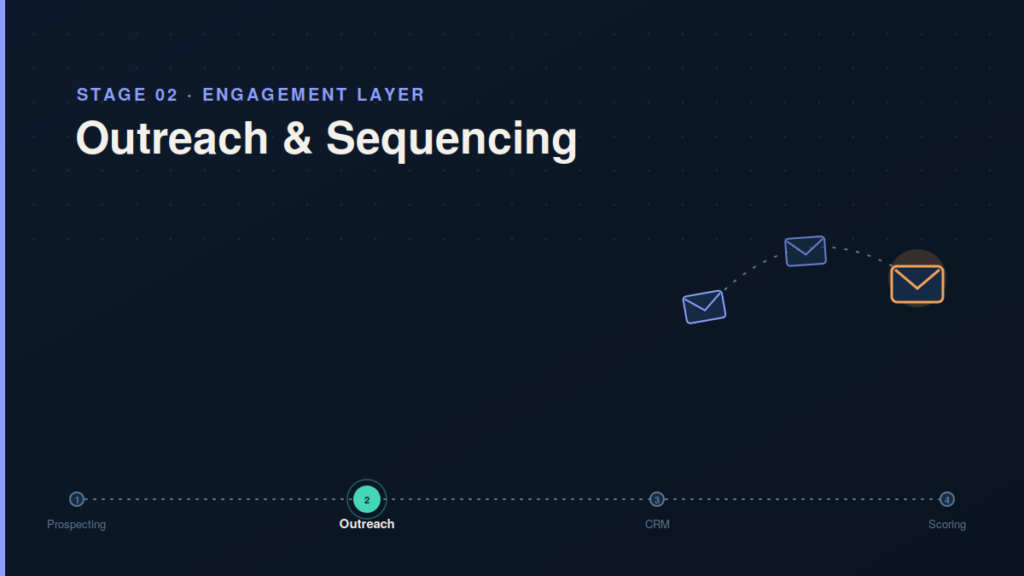
Outreach and Sequencing Tools
When you have your list ready, marketing automation software such as Outreach, Salesloft, and Instantly will enable you to send multistep emails and LinkedIn connections automatically. The best among these will integrate into the CRM to ensure seamless communication and lead tracking.
Advantages
- Automated follow-up campaigns
- Monitor engagement stats
- Boost meeting bookings
- Integrate with CRM systems
Landing Page and Form Builders
Unbounce, Leadpages, or any native site builder can enable you to easily develop landing pages dedicated to converting traffic into leads without having to employ a developer each time you do so.
Benefits
- Landing pages built swiftly
- Conversion rate optimization
- A/B test various page versions
- Save time on development
Chatbots and Conversational Tools
The AI-powered chat (Drift, Intercom, and also AI chat that’s native in many platforms now) can qualify the visitor right away and direct the higher-intent visitor to the booking URL or the sales pitch.
Why They Matter
- Immediate visitor engagement
- Lead qualification in real time
- Quicker response times
- Better customer experiences
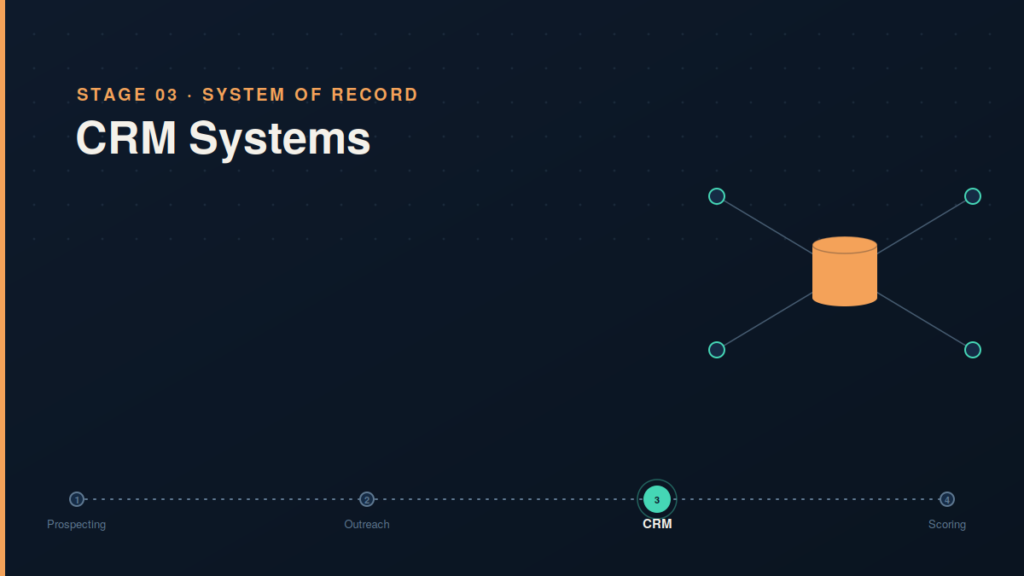
CRM Systems
HubSpot, Salesforce, and Pipedrive are the system of record for capturing all leads, where they came from, how they engaged, and their progress through the sales funnel. Practically every other component of a lead generation stack should be sending information to (or from) the CRM.
Core Functions
- Lead management
- Tracking of sales pipeline
- Customer interaction history
- Reporting
Email Marketing and Nurture Platforms
Automated nurture campaigns can be managed by tools such as ActiveCampaign, Mailchimp, or HubSpot’s marketing hub, which sends out emails depending on the behavior of the lead.
Key Features
- Automated email campaigns
- Behavior-based workflows
- Lead nurturing
- Personalized communication
Lead Scoring and Analytics
Most CRMs have lead scoring functionality, but dedicated solutions as well as AI-driven scoring algorithms can use tens of indicators to define which leads to contact first based on their behavior and company profile.
Benefits
- Identify high-value leads
- Increase sales efficiency
- Evaluate lead behavior
- Enable data-driven decisions
Advertising Platforms
Google Ads, Meta Ads Manager, and LinkedIn Campaign Manager continue to be fundamental components for generating leads in their own right, especially for those businesses that use paid platforms for lead volume.
Advantages
- Drive Targeted Traffic
- Generate Qualified Leads
- Scale Campaigns
- Target Audiences
How to Choose the Right Software for Your Business
The correct stack is largely dependent on your sales motion. For a self-service SaaS product, you require great landing pages, automated onboarding, and in-product leads generation tools. For a B2B company that has a more drawn-out sales process, CRM, sequencing, and lead scoring tools will be essential. For a local services business, less software will be required, CRM, call tracking, and a good Google My Business account will do the job.
Common Mistakes When Building a Lead Gen Software Stack
- Purchasing duplicative tools for tasks performed by other tools (e.g., purchasing two different sequencing tools)
- Using tools that are incompatible with your existing CRM, resulting in difficulties in entering and generating reports
- Putting too much emphasis on automation and artificial intelligence without having your basic needs covered first
- Neglecting to consider the reporting and analytics component, making it difficult to measure the effectiveness of your tools
Free and Low-Cost Starting Points
Most of the tools mentioned here provide free and low-cost plans that can be used by small firms trying to set up their lead generation processes, like the free CRM plan offered by HubSpot or the free tools for bots and forms. It is always better to begin with basic tools and then gradually add more specialized tools when specific problems occur.
Integrating the Stack
The true power of the lead gen tools actually lies in their integration and not in individual use. Any prospect identified using the landing page tool must be able to flow seamlessly to the CRM, get the appropriate nurturing process kicked off and then scored according to their activity levels without any need for manual data entry. Tools such as Zapier or Make allow integration between non-integrated systems although native integrations are better.
Bottom Line
There are software for lead generation that includes prospecting, capturing, nurturing, and analyzing, but the type of software to use will depend on the sales cycle and motion. One can begin by using the software that helps to resolve his bottlenecks at the moment, and ensure that they integrate smoothly with the CRM first before adding others later on.