B2B Lead Generation: How It Actually Works

Introduction
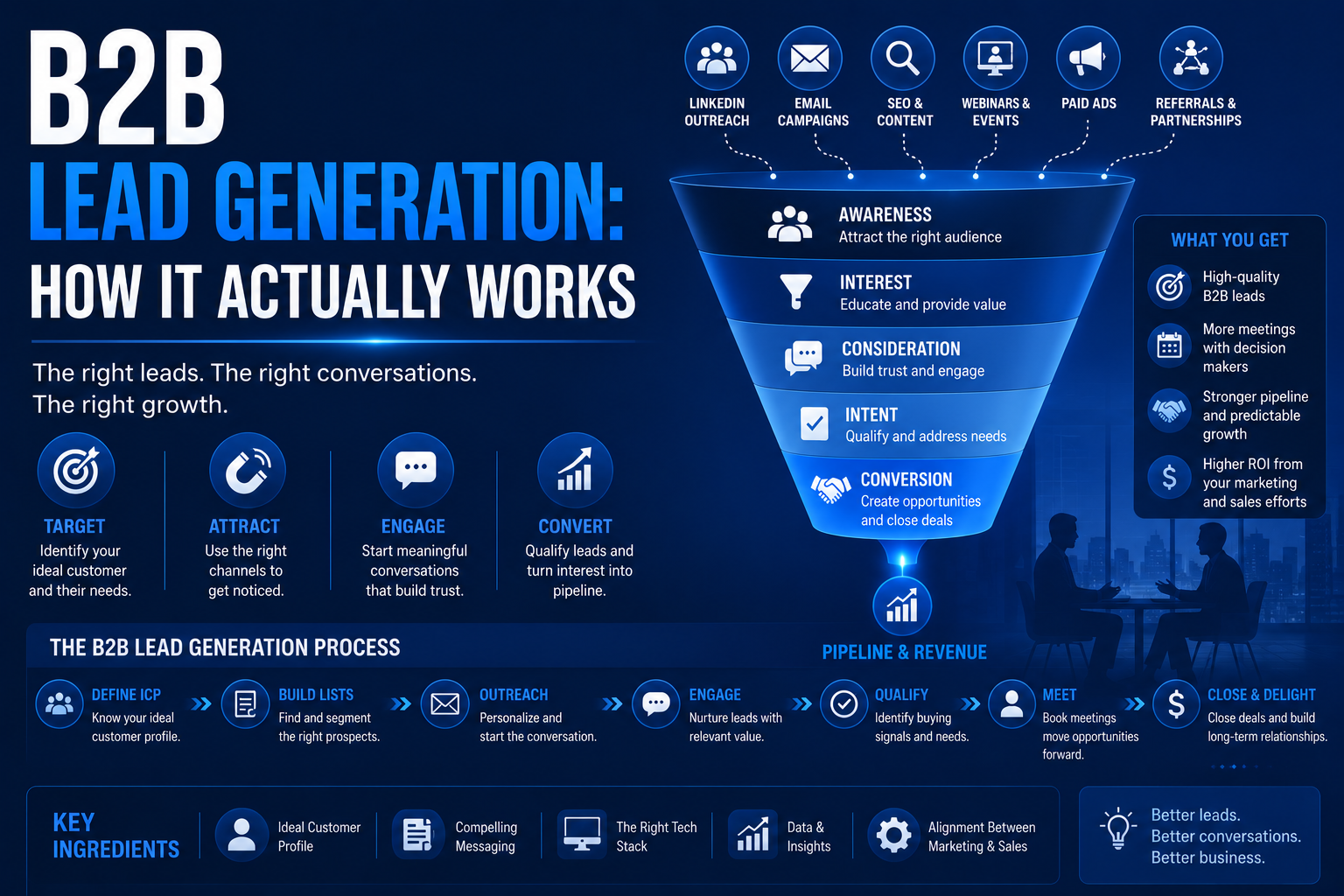
Lead generation for business-to-business transactions is quite different from marketing to consumers. Transactions are lengthy, involve more people in the decision-making process, and are more expensive. As such, methods that are likely to produce a flurry of leads from consumers do not necessarily work in business-to-business environments.
Why B2B Lead Generation Is Different
It is common practice for a B2B purchasing decision to involve several stakeholders, an end user, someone who holds the purse strings, IT/Legal, each with their own agenda. A sales cycle could range from a few weeks to well over a year, depending on the size of the deal. This clearly implies that there is a need for a different approach for lead generation in a B2B context.
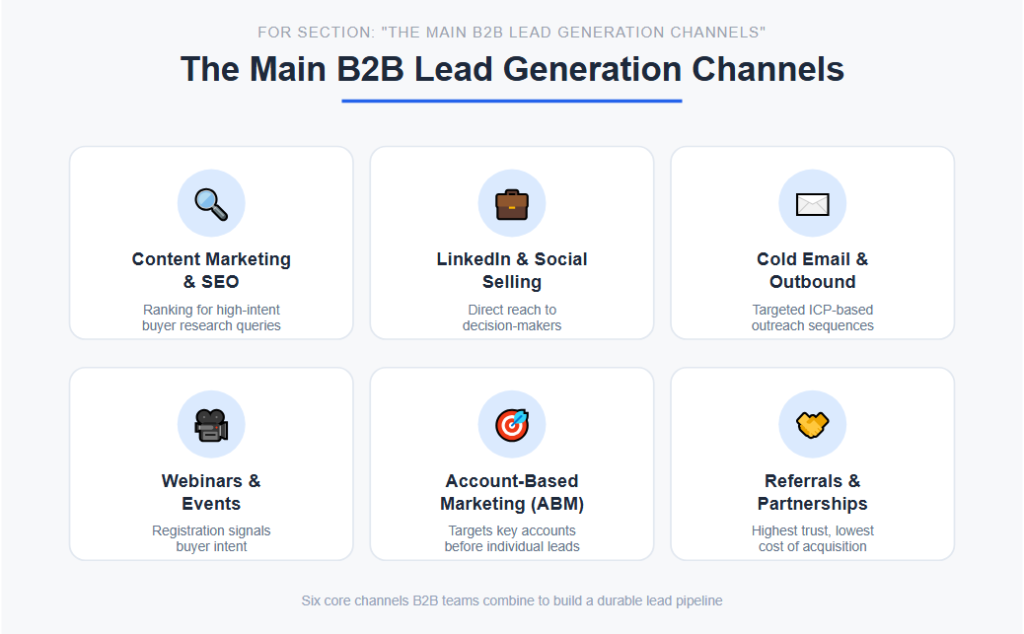
The Main B2B Lead Generation Channels
Content Marketing and SEO
Prior to any contact with sales, B2B buyers do plenty of research through reading comparison articles, technical manuals, and case studies. If your website ranks for these search queries made by B2B buyers (“best software for [category],” “solving [specific problem],”) then you have already established a pipeline of knowledgeable leads.
Key Benefits
- High-intent prospect acquisition
- Long-term organic traffic generation
- Prospect education prior to the conversation
LinkedIn and Social Selling
LinkedIn is one of the most effective B2B channels in terms of organic content (gaining visibility through decision-makers) and outbound outreach (directly connecting and messaging to prospects based on their roles, companies, and industries).
Why It Works
- Directly reaches decision-makers in business
- Can be used for inbound as well as outbound campaigns
- Facilitates personalized networking and outreach
Cold Email and Outbound
Outbound targeting, such as compiling a list of prospects based on an ideal customer profile using Apollo or ZoomInfo and sending personal sequences, is still a vital component of B2B marketing.
Advantages
- Targeted at ideal customer profiles
- Generates leads beyond inbound marketing
- Makes possible scalable lead generation campaigns
Webinars and Events
Webinars give B2B customers an opportunity to analyze a solution in greater depth before any sales pitch, and the mere act of registering serves as a good qualification indicator. Industry events and trade shows continue to create viable sales pipelines in many B2B verticals.
Benefits
- Shows expertise
- Attracts highly motivated leads
- Facilitates authentic buyer engagements
Account-Based Marketing (ABM)
For higher-value sales opportunities, most B2B organizations turn the funnel around by first targeting accounts, then creating specific content and running specific ads at key decision-makers within these accounts, as opposed to acquiring a lead and then qualifying them as an account.
Why Companies Use ABM
- Focuses on valuable accounts
- Provides personalized marketing
- Enhances sales effectiveness
Referrals and Partnerships
Existing clients and complementary companies (firms that market to the same people without being direct competition) represent a largely untapped business-to-business lead generation strategy, providing higher quality leads than just about any paid approach.
Benefits
- More trust
- Increased conversion rates
- Lower costs of acquisition
Qualifying B2B Leads
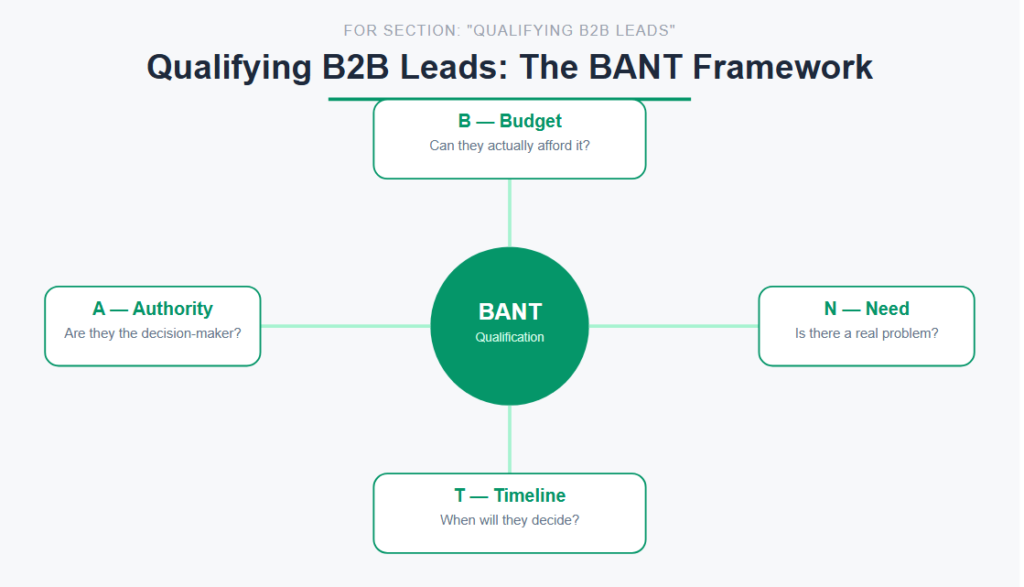
Due to the fact that sales cycles for business-to-business sales tend to be expensive to maintain, the question of qualifying becomes extremely important. The typical tool to perform this task is BANT, Budget, Authority, Need, and Timeline, helping to understand if there is a need to spend time on working with the lead further.
Lead Scoring in B2B
In addition to the manual scoring process, many firms rely on lead scoring mechanisms that factor in both the fit of the company (size of firm, industry, technology), as well as the behavior of the customer (website pages visited, content downloaded, emails opened).
The Role of Marketing and Sales Alignment
One of the major shortcomings in the field of business-to-business (B2B) lead generation can be the mismatch between the functions of marketing and sales: the former being happy about the quantity of generated leads while the latter thinks that these leads are poor quality, or sales are not quick enough to react to the leads generated by marketing. It is crucial to have a clear and mutual understanding of the criteria of qualification of leads and timely follow-up.
Measuring B2B Lead Generation
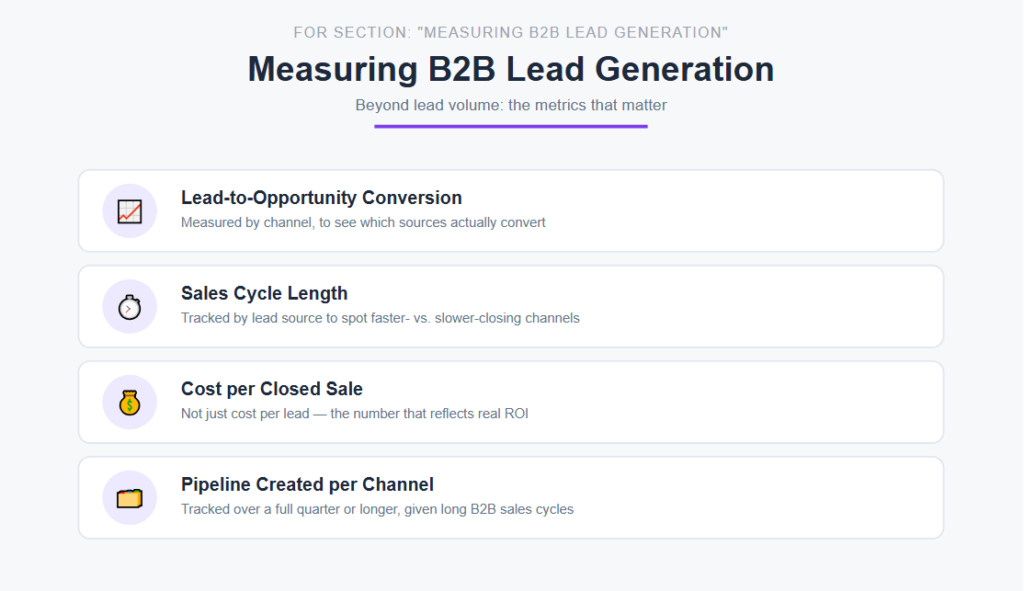
Due to long sales cycles, it is necessary to measure beyond lead volume alone.
Important Metrics
- Conversion from leads to opportunities, by channel
- Length of sales cycles, by lead source
- Cost per closed sale, not just cost per lead
- Pipeline created per channel, over an entire quarter or longer, because B2B performance often takes much longer than the marketing efforts preceding it
Common Mistakes in B2B Lead Generation
- Pursuing lead volume only and forgetting about downstream quality
- Spending less on content and SEO due to their slower payoff but more on channels with quick but short-lived impact
- Poor transition from marketing to sales of generated leads
- Neglecting customers and business partners as sources of leads
Bottom Line
Lead generation for B2B companies works best when multiple marketing channels are combined over a longer period, content and SEO build a pipeline with compound growth effect, direct outreach and ABM approach reach the target accounts, and referral marketing uses existing relationships. Companies that succeed in generating leads measure quality and pipeline value, not just volume of leads, and have good alignment between marketing and sales about lead quality.