What Is Lead Generation? A Clear Definition (With Examples)

Have you ever filled in your details to receive a free guide or quote for a project from a contractor? If yes, then you have already participated in someone else’s lead generation process. What exactly is lead generation? Let’s find out.
The Simple Definition
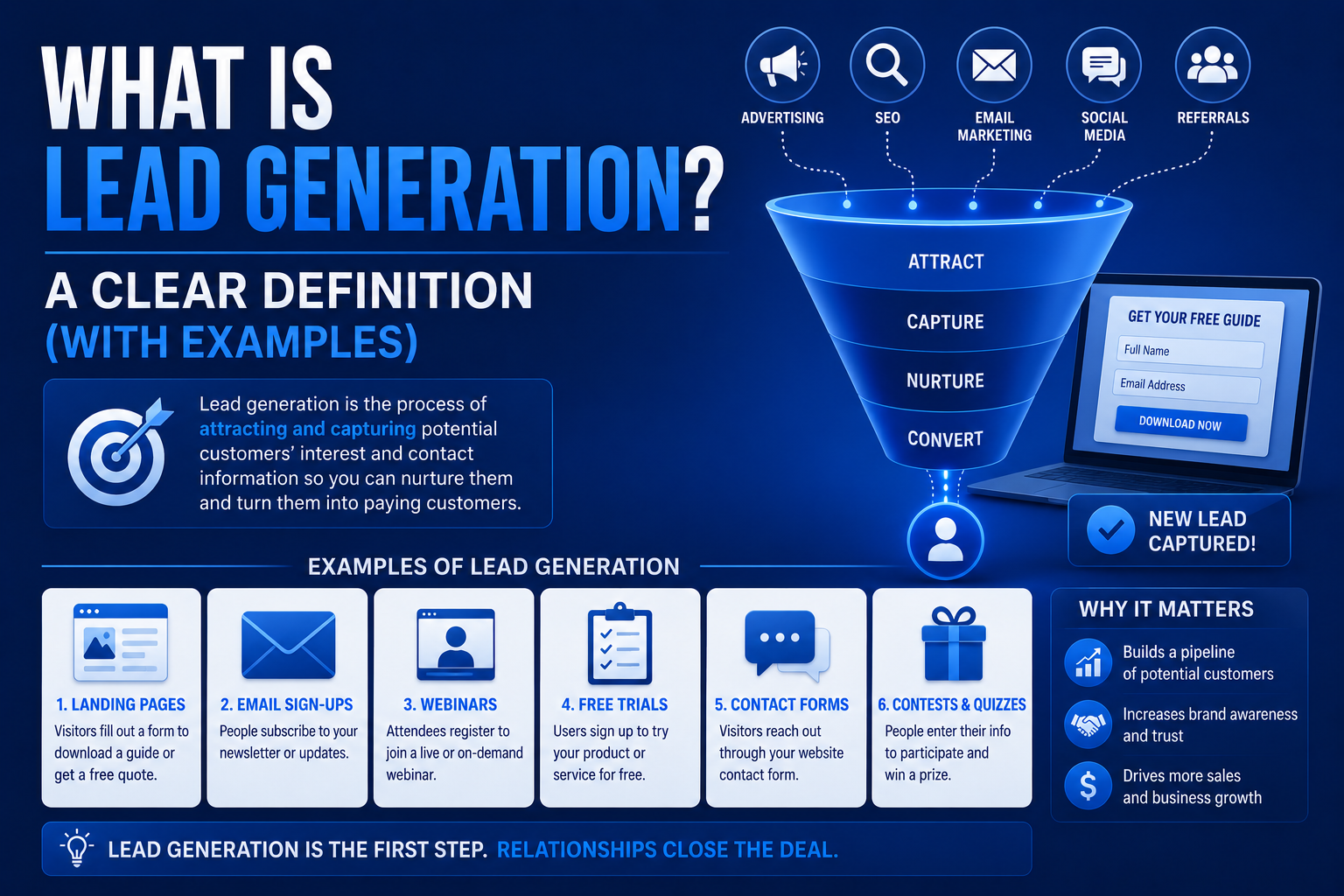
Generating leads is the act of finding prospects and collecting their contact information (along with their interest), so that a company can then reach out to them directly.
In marketing terms, a “lead” refers to this prospective client, who exhibits sufficient interest to be a valuable lead but has not made a purchase yet.
The lead is the stage between the “stranger who knows nothing about your company” and “customer.”
All businesses need a variation of this system in place to grow.
A Simple Example
Now think about a small accounting business.
An individual searches for “How to File Taxes as a Freelancer” and comes across a blog post by the firm addressing the issue; they then read it, and at the end of the page, see an offer that says “Get a Free 15-Minute Consultation.” They enter their name and email address on the contact form.
This is how lead generation works from the beginning to the end of the process.
Why Lead Generation Matters
In the absence of any lead generation process, a company will depend solely on luck, referrals or personal connections for their clients, which doesn’t usually scale well.
The process of lead generation allows for a more consistent and trackable process of building the funnel, which is why most marketing and sales efforts revolve around it.
Types of Leads
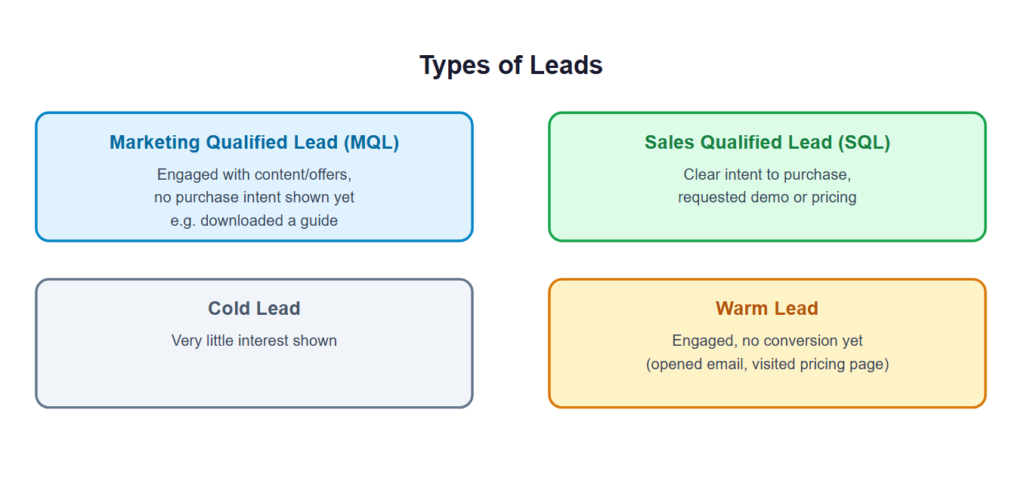
Not all leads are alike. The typical practice is to classify leads into a few groups.
Marketing Qualified Lead (MQL)
This individual shows some level of engagement with the company’s content and offers, but does not display any intent yet; this person may have downloaded a guide.
Sales Qualified Lead (SQL)
This person has made it clear that he/she intends to purchase the product/service and has already requested a demo or pricing information.
Cold Lead
Very little interest has been displayed by this lead.
Warm Lead
Engaged but no conversion (email opened, visited pricing page, webinar attended).
Knowing what category your lead fits into will determine how the business needs to respond, an SQL may be called back within the hour, an MQL may start a nurture process.
How Lead Generation Actually Works, Step by Step
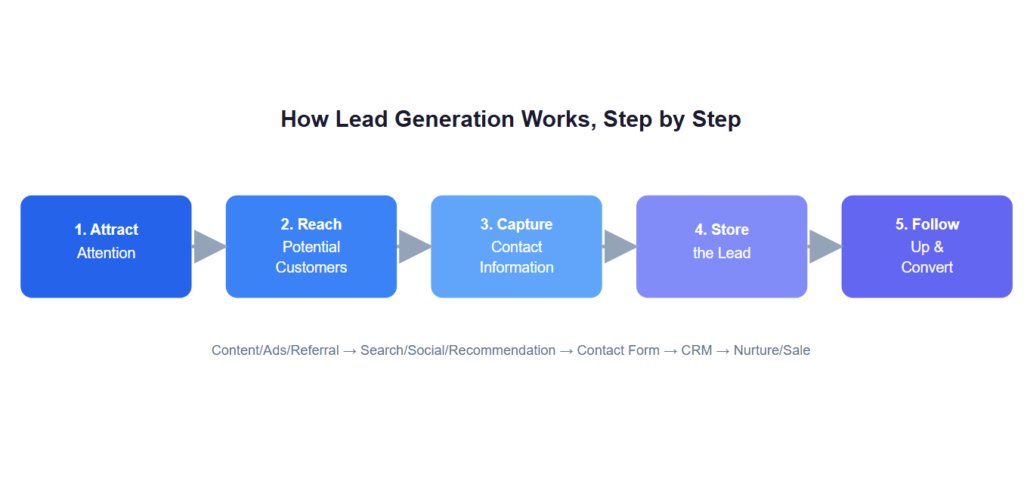
1. Attract Attention
A business creates something valuable enough to attract attention, content, an ad, a free tool, a referral relationship.
2. Reach Potential Customers
A potential customer encounters that content or offer, usually through search, social media, an ad, or a recommendation.
3. Capture Contact Information
The organization asks for something in exchange for getting more value, generally in the form of contact details.
4. Store the Lead
The lead then goes into the system, which is most commonly a CRM system that will be able to track and follow up with the lead.
5. Follow Up
Following up takes place, including email nurturing, calling the person to sell something, demonstrating, and moving towards purchasing.
Common Lead Generation Channels
Search Engine Optimization (SEO)
Ranking in Google for relevant searches.
Paid Advertising
Google Ads, social media ads.
Content Marketing
Blog posts, guides, videos.
Email Marketing
Nurturing an existing list.
Social Media
Organic posting and engagement.
Referrals
Existing customers recommending you.
Cold Outreach
Email or calls to people who haven’t engaged yet.
Events and Webinars
In-person and virtual events that generate qualified prospects.
Inbound vs. Outbound Lead Generation
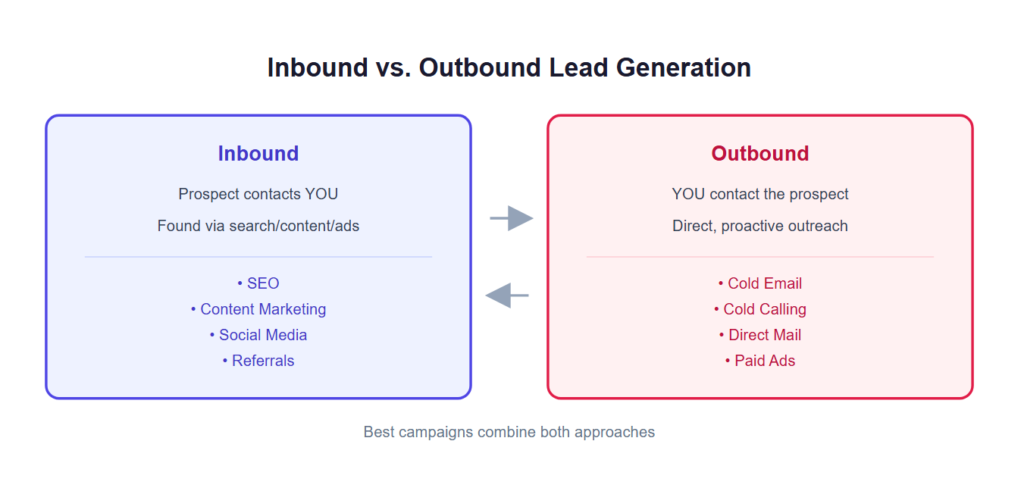
Inbound Lead Generation
With inbound lead generation, it is the prospect that contacts you; this generally occurs when the prospect finds your content or advertising while searching for a solution to their problem.
Outbound Lead Generation
Outbound lead generation involves reaching out to the prospect yourself through cold emailing, cold calling, or direct mailing.
The most successful lead generation campaigns incorporate elements of both.
B2B vs. B2C Lead Generation
B2B Lead Generation
Lead generation in business-to-business sales tends to have longer sales cycles and often involves more than one decision maker, explaining the heavy use of methods such as outreach on LinkedIn, webinars, and account-based marketing.
B2C Lead Generation
On the other hand, business-to-consumer lead generation has shorter decision cycles and more volume, using more social media and paid advertising.
How Lead Generation Is Measured
- The key metrics that companies measure include:
- No. of leads generated, per channel
- Cost per lead
- Lead-to-customer conversion rate
- Cost per customer acquisition (the critical metric in the end)
Bottom Line
Lead generation is basically how a business goes about discovering potential customers and engaging them before they become buyers.
All the methods of getting leads, content marketing, advertising, referrals, email campaigns, etc., exist only for the purpose of achieving this single objective.