Home Improvement Lead Generation: Filling the Pipeline for Remodels, Renovations, and Big-Ticket Jobs

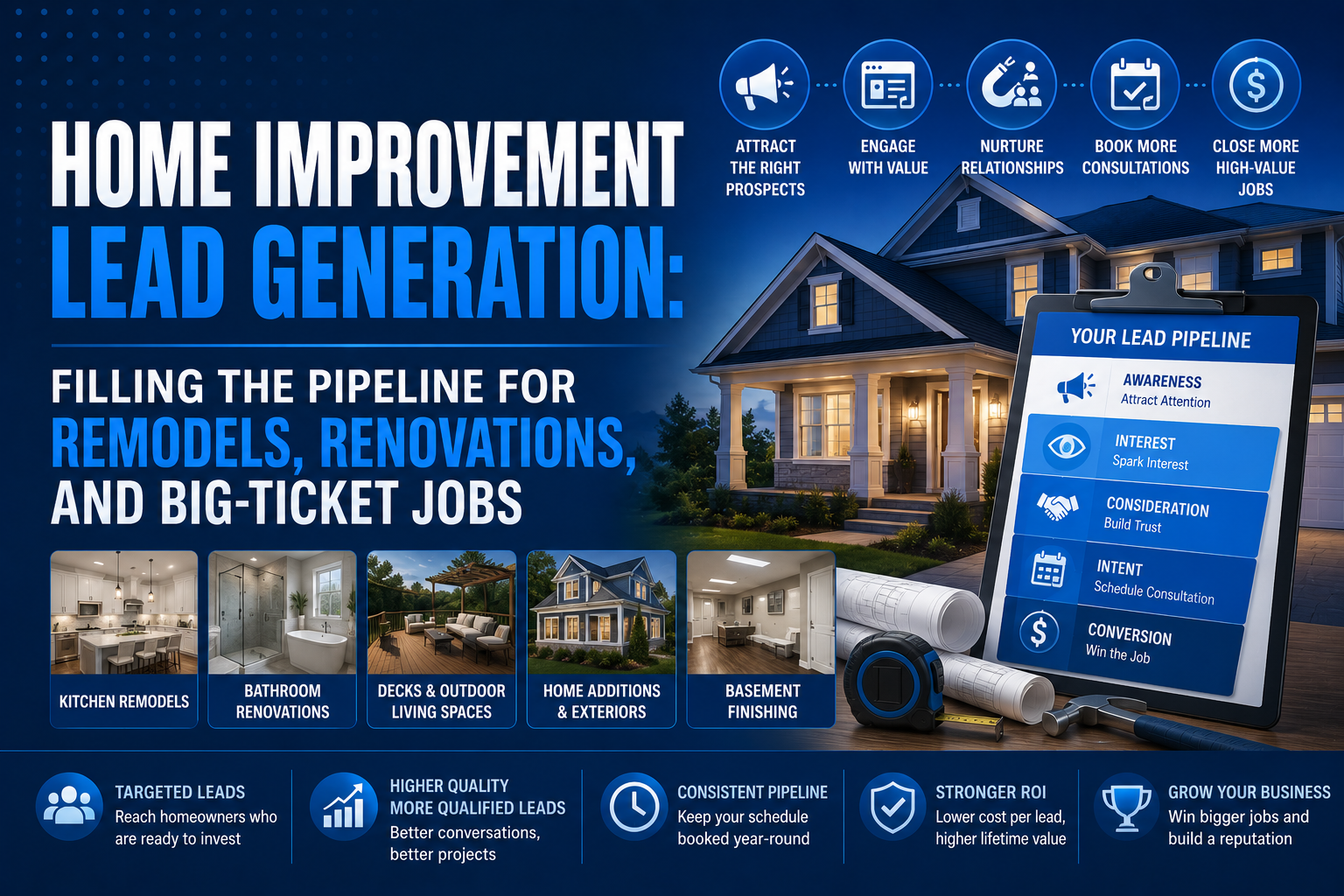
Home renovation is a high-consideration decision where people do a lot of research and evaluate many different contractors before making up their mind after several weeks or months. This impacts what constitutes good lead generation for such businesses.
Understanding the Home Improvement Buyer
A person who is looking for information on a kitchen renovation or replacement of a roof is not going with the spur of the moment. They browse through portfolios, read reviews, compare estimates, and have to build their confidence before even making a call.
Marketing techniques that yield results in lead generation for emergency services such as plumbing and HVAC breakdowns do not yield similar results when used for marketing home renovations.
Visual Proof Matters More Than Almost Any Other Trade
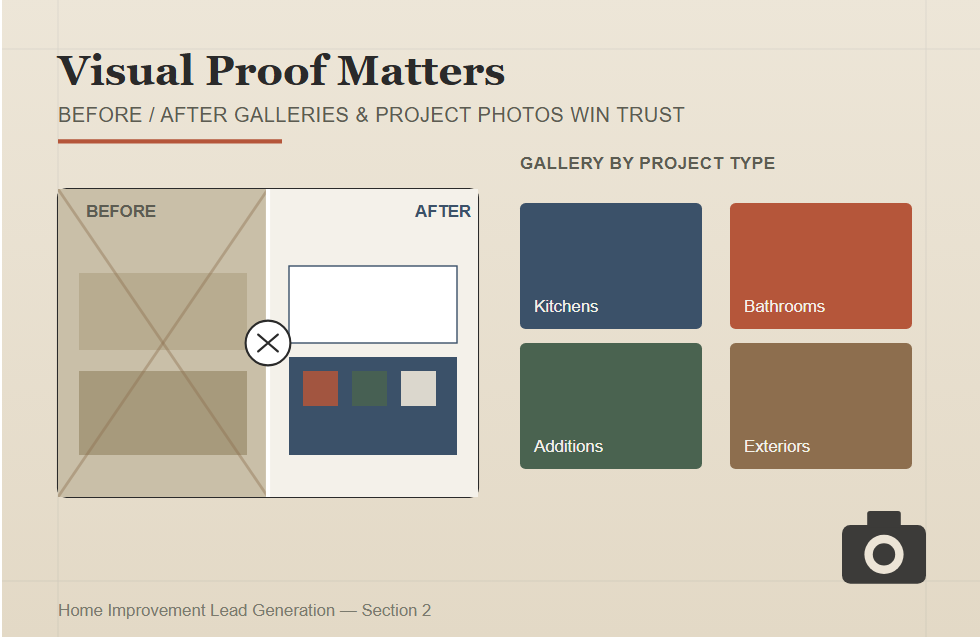
Due to the nature of home improvement being an inherently visual industry, the conversion rates of before/after images, project galleries, and video tours will always be more effective than any other form of marketing that uses text as its medium.
One of the most leveraged assets that can be created for a home improvement company is a photo gallery of their previous projects based on project types (e.g. kitchens, bathrooms, additions, exteriors).
Google Business Profile and Local SEO
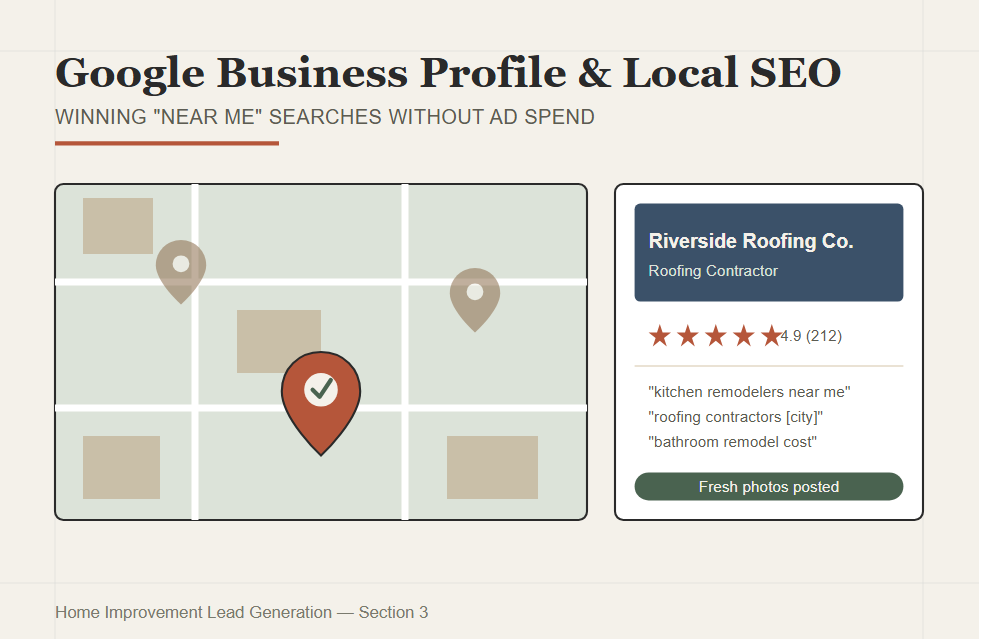
Home improvement inquiries are predominantly local, “kitchen remodelers near me,” “roofing contractors.”
An optimized Google Business Profile with a lot of reviews and current job pictures continually delivers highly-intentioned local leads without spending money on ads, and is always what homeowners check first.
SEO content for local keyword phrases, projects pages, pricing guides, “how much does it cost to do a bathroom remodel in,” and neighborhood-specific landing pages catches homeowners when they’re still researching before contacting anyone.
Paid Ads and Lead Marketplaces
Local Services ads in Google and paid search campaigns work well in the case of home improvement, especially for those types where there is a distinct set of high-intent keywords.
The other channel that we should look at here is lead markets (which are just like the ones for the home services vertical), though with the same cost and conversion considerations.
Referrals and Past-Client Marketing
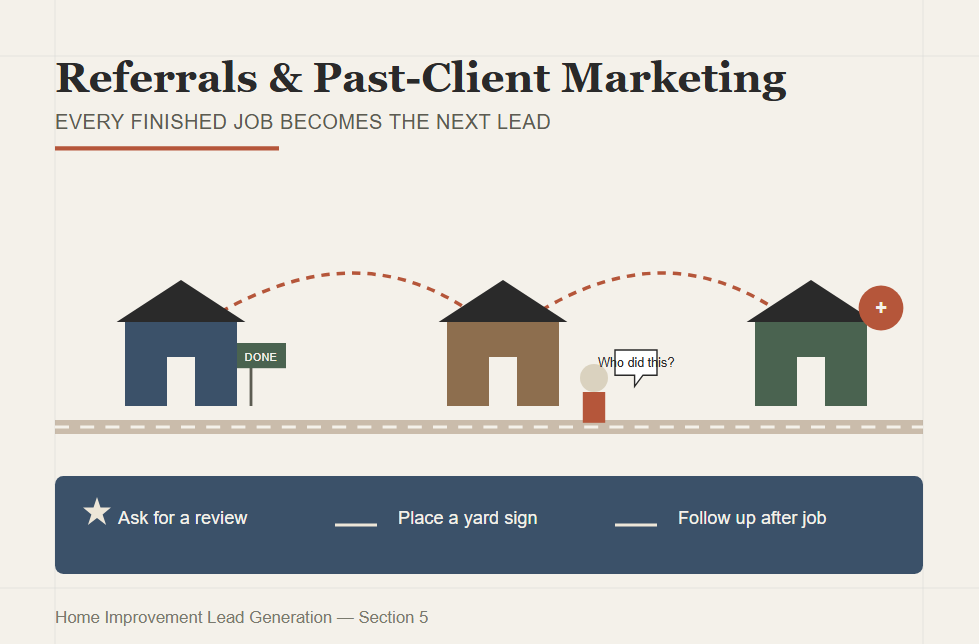
Referrals occur naturally when it comes to home improvement; neighbors see completed work and ask who did it.
By encouraging such referrals, and by asking for reviews and referrals from satisfied clients, placing a yard sign on bigger jobs, and following up after each job is completed, these companies turn every completed job into a lead generator at virtually no additional cost.
Financing as a Lead Generation Lever
Since most home improvement projects cost upwards of $10,000, providing financing or working with a financing company could prove to be an important lead-generation and conversion tool all by itself.
Prospects who may have otherwise delayed the project or sought several quotes due to budget constraints will find it easier to take the next step, and even the presence of financing messages will help boost conversion.
Trade Shows, Showrooms, and Local Partnerships
Exhibitions and home and garden shows, visits to showrooms, as well as collaboration with other businesses that deal with homes (for example, realtors, interior decorators, and real estate photographers), continue to be highly effective ways of lead generation, although not necessarily scalable ones.
Nurturing Longer Decision Cycles
The decisions taken for home improvements take some time; one wrong follow-up could cost you your prospect due to your competitor maintaining contact throughout.
The nurturing campaigns through emails or SMSes that send images of projects done, financing information, or other promotional campaigns during seasons maintain visibility among homeowners for a period of weeks or months.
Measuring What Matters
The sales process being a longer one and with higher value projects, it should be monitored using more than just the number of leads:
- Cost per signed project, and not just cost per lead or estimate request
- Project value per lead source, as certain sources of leads (referrals, previous clients) tend to result in projects with higher value than other sources
- Lead time to signing of contract
Bottom Line
Lead generation in home improvements pays off for companies who first establish trust, followed by providing evidence, have good local SEO, and receive constant reviews all done with quick persistence following through a long decision process.
Paid media may supplement these sources with volume, but those with the highest margins over time are usually the companies whose primary sources are organic and referral-based.