Automate Lead Generation: What You Can (and Can’t) Take Off Your Plate

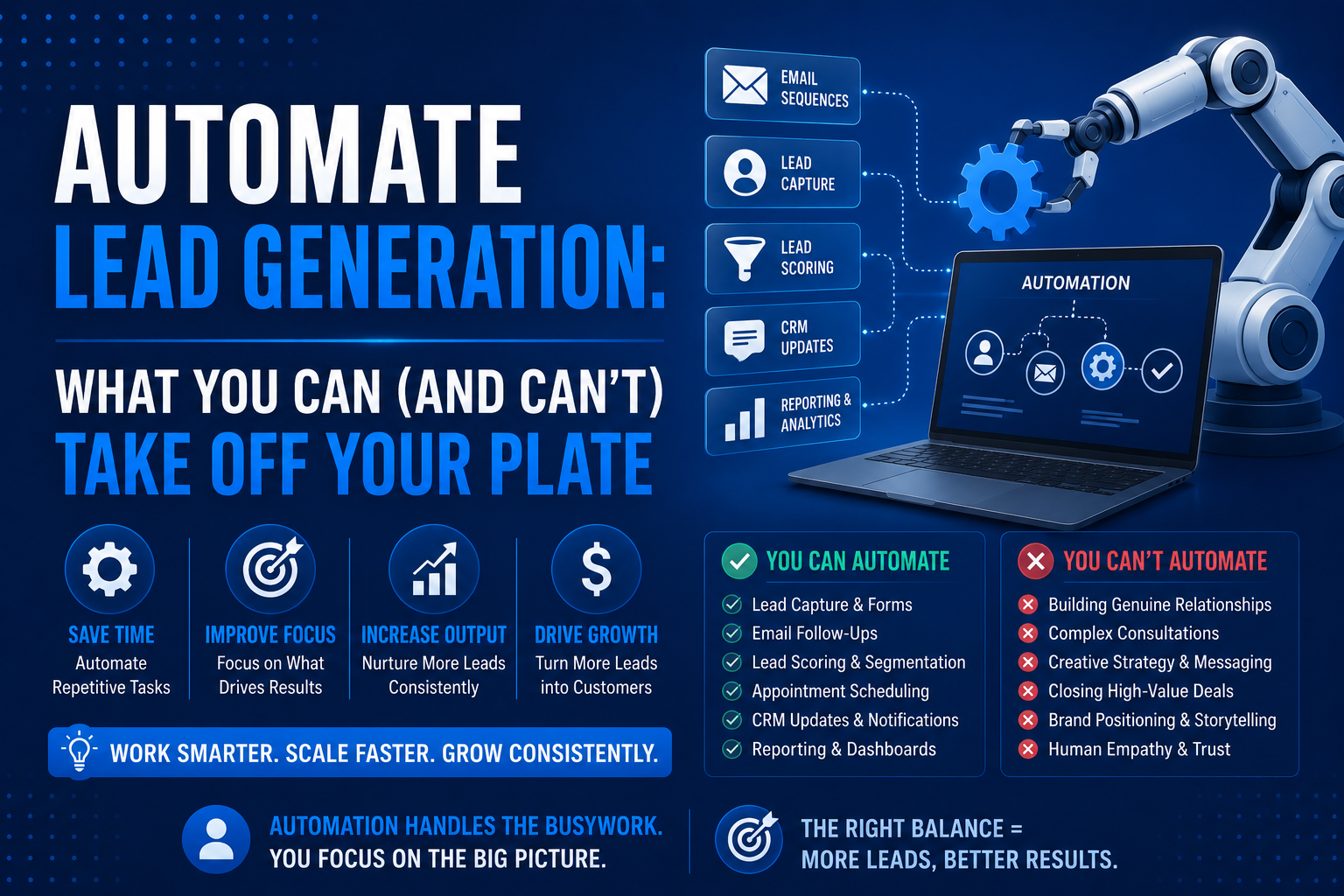
Lead generation has been impacted by automation more than perhaps any other facet of marketing. However, “automating lead generation” can mean quite different things based on where in the funnel it is used, and the attempt to automate certain facets tends to backfire. This is an overview of what should be automated, what should not, and building a non-robotic system of leads.
What Automation Actually Solves
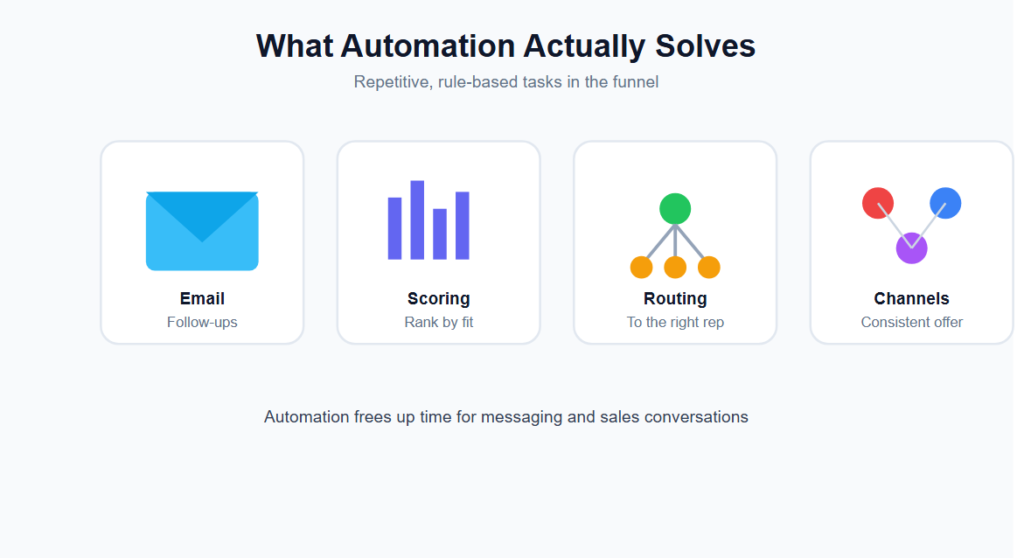
There are many tasks involved in lead generation that are repetitive and rule-based:
- Sending an email follow-up message
- Scoring a lead according to the information provided in the form
- Assigning leads to the appropriate representative
- Posting the offer in the same manner across various channels
The power of automation comes from eliminating repetitive tasks and creating more time for those aspects of lead generation that require decision-making and human touch, including messaging creation and sales conversation.
Automating Outbound Prospecting
A tool which combines the capabilities of lead databases (Apollo, ZoomInfo, Clay) with email/LinkedIn automation can help in finding prospects who fit into the target profile and automate multiple-stage communication with them.
It will certainly provide good results, but badly executed automation will be easily recognizable and non-specific sequences will just be ignored.
The best way to solve this problem is when automation is employed in sequencing and sending but the real-life data (news from the company, technology stack, hiring) is used to make sequences unique; sometimes AI is used even to personalize the very first line.
Automating Lead Capture and Follow-Up
A landing page, a chatbot, or even a form can generate a lead and set off an instant response, an automated email, a text message, or even a booking for a meeting, without any human intervention.
Speed plays a key role here; leads that are approached immediately have much more chance of conversion than those contacted after hours. Automation is the only possible solution for assuring speed in such situations.
Automating Lead Scoring and Routing
When leads begin streaming in from multiple sources, choosing manually which leads deserve the attention of a sales rep cannot be a sustainable option anymore.
Lead scoring through automation, taking into account fit and level of engagement, as well as concrete actions taken by a lead, can be an effective way to send top-intent leads directly to the sales team and to put low-intent leads into nurturing.
Automating Nurture Sequences
Every lead may not be in a position to buy right away.
Using automated nurture campaigns like email or SMS through behaviors (viewed pricing page, opened three emails), rather than time-based, nurtures the leads without needing follow-ups from a salesperson.
Where Automation Still Falls Short
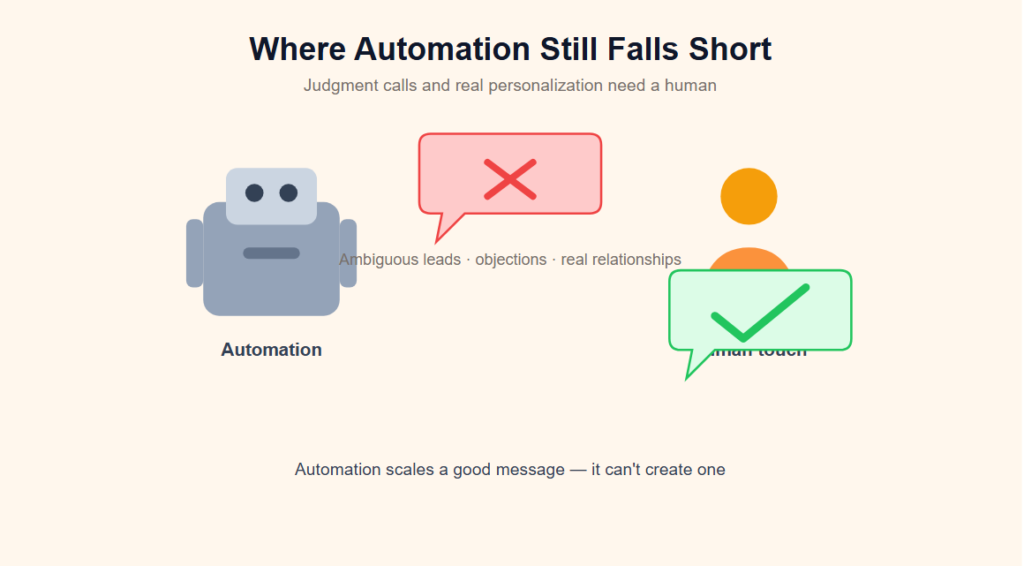
A fully automated system does not work well with anything that involves judgment calls or true personalization beyond just the use of a first name and firm.
Some examples of tasks where the human approach beats automation:
- Interpretation of complex or ambiguous leads (Is this really an issue for which we have a solution?)
- Handling objections and unusual queries in the sales pitch
- Building real connections with quality clients, in whom any kind of automation will be recognized as such
- Creating the initial message and the offer itself, automation helps to scale a good message, but cannot create it
A Realistic Tech Stack for Automated Lead Generation
- CRM as the core system of record (HubSpot, Pipedrive, Salesforce)
- Lead generation layer (forms, chatbots, landing pages) which connects directly to the CRM
- Outbound sequencing and outreach (Apollo, Outreach, Instantly)
- Automation/Workflows which connect all of these layers (Zapier, Make, or even CRM native automation), so that leads pass from one system to another without manually inputting their information
- Tools such as AI layered in for scaling personalization, creating first touch communication, summarizing calls, etc.
Common Mistakes When Automating Lead Generation
- Outreach automation that is not personalized and kills engagement, putting your domain on the blacklist
- Creating automated follow-ups that have no way out after leads reply or convert, leaving you vulnerable to the “I am still receiving emails even though I replied” scenario
- Over-automation of qualification, qualifying leads improperly and sending them straight to the sales team
- Complete lack of audit of existing workflows that become obsolete or flawed and continue working for many months
Bottom Line
Automated processes are best employed in dealing with volume, speed, and repetition: generating leads immediately, responding promptly, qualifying and distributing effectively, while people should take care of strategic messaging, difficult qualification, and sales dialogues.
The firms that get the most out of automated lead generation see it as a process that needs to be constantly monitored and tweaked rather than something that is set up and then forgotten about.